
China's Captive Giant Panda Population Reaches 830
2026-11-03 18:34:44 by Queenie Tan
The giant panda is a flagship species endemic to China and a global icon for biodiversity conservation. On Nov. 3, it was announced at the Global Panda Partners 2026 that China's captive giant panda population has reached 830 individuals, with genetic diversity within the population continuing to improve.
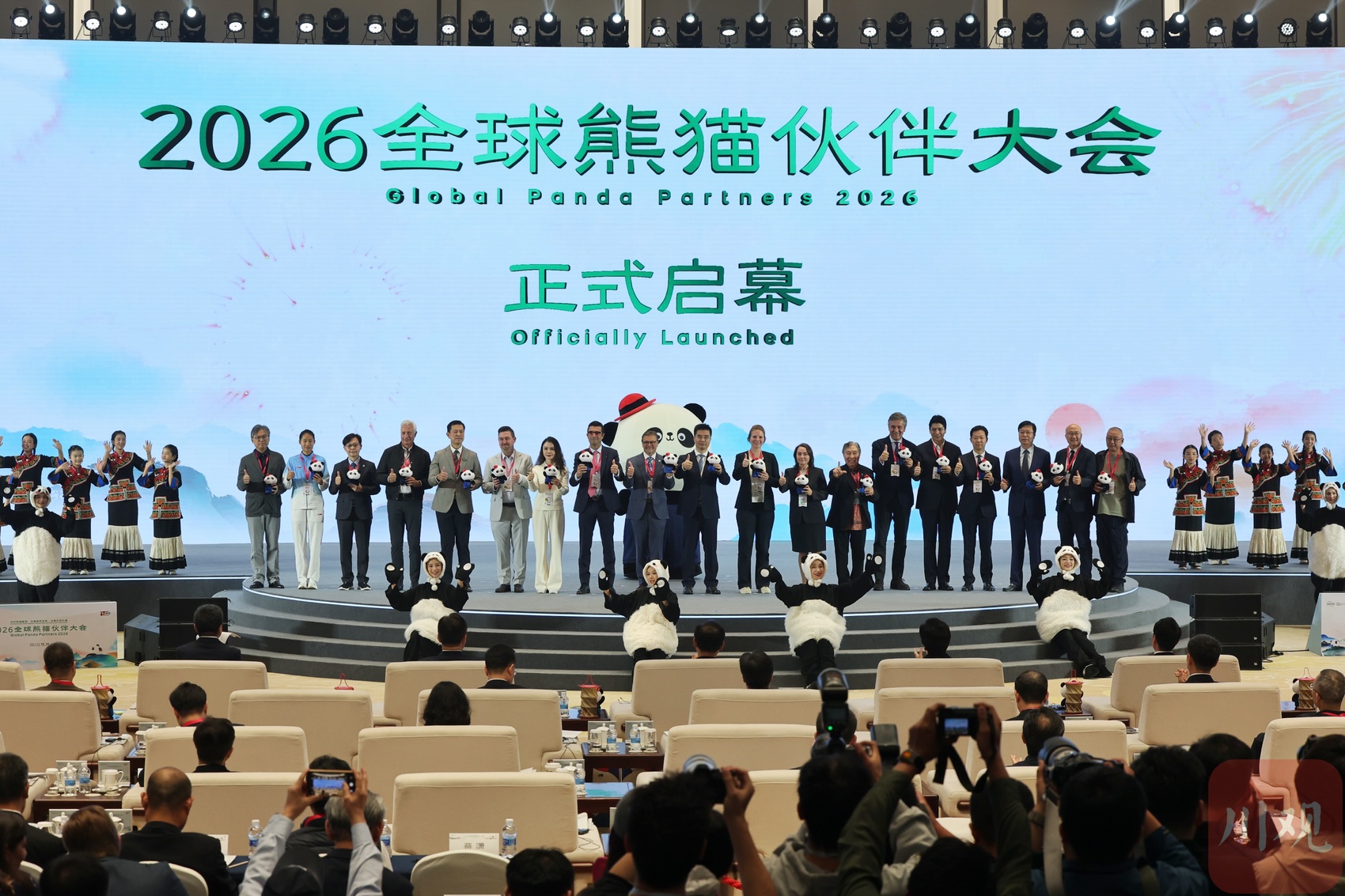
2026 Global Panda Partners Conference. Photo by Hua Xiaofeng
In terms of conservation research, the National Giant Panda Conservation Research Center has continued to expand basic and cutting-edge research, promoted the application of new technologies such as unmanned aerial vehicles and artificial intelligence, and continuously optimized its integrated "air-space-ground" monitoring system. Meanwhile, by drawing on established medical research findings in fields such as genetics and rehabilitation, the center has enhanced its capabilities in giant panda husbandry, care, and medical rescue.

Giant pandas "Haojing" and "Haoyu" are pictured foraging together. (File photo)
International cooperation has also yielded positive results. China has successively engaged in giant panda cooperation with 26 institutions across 20 countries. A total of 69 giant pandas have lived overseas, resulting in the successful breeding of 45 litters comprising 73 cubs. This initiative has set a benchmark for transnational conservation of rare and endangered species worldwide, with the cumulative number of global visitors viewing giant pandas exceeding one billion.
Moving forward, China will strengthen territorial spatial management, formulate a territorial spatial plan for the Giant Panda National Park, and implement major projects for the development of natural protected areas, including national parks, as well as for wildlife and plant conservation. The country will also carry out a nationwide wildlife and plant conservation program, enhance disease surveillance, and bolster research and response capacities for major diseases. Furthermore, China will improve long-term mechanisms for ecological compensation and explore new models for gateway community development around national parks, fostering a more harmonious habitat for giant pandas.
【本篇文字部分内容由 AI 辅助写作,特此声明。Please note: the text in this article was created with the help of AI.】
