
Sichuan Forum: How Li Bai's Poetry Resonated With 19th-Century France
2026-11-02 17:06:27 by Queenie Tan
"The gathering of experts and scholars with diverse academic experiences, cultural backgrounds, and intellectual traditions is in itself a vivid manifestation of the diversity of world civilizations." On the afternoon of October 31, the parallel forum titled Respect of the Diversity of World Civilizations, part of the 2026 Chinese Culture Tianfu Forum, was held in Chengdu. In his address, Cao Shunqing, an academician of the European Academy of Sciences and Arts and a distinguished professor at Sichuan University, emphasized that such a convergence of diversity serves as a vivid portrayal of civilizational plurality.
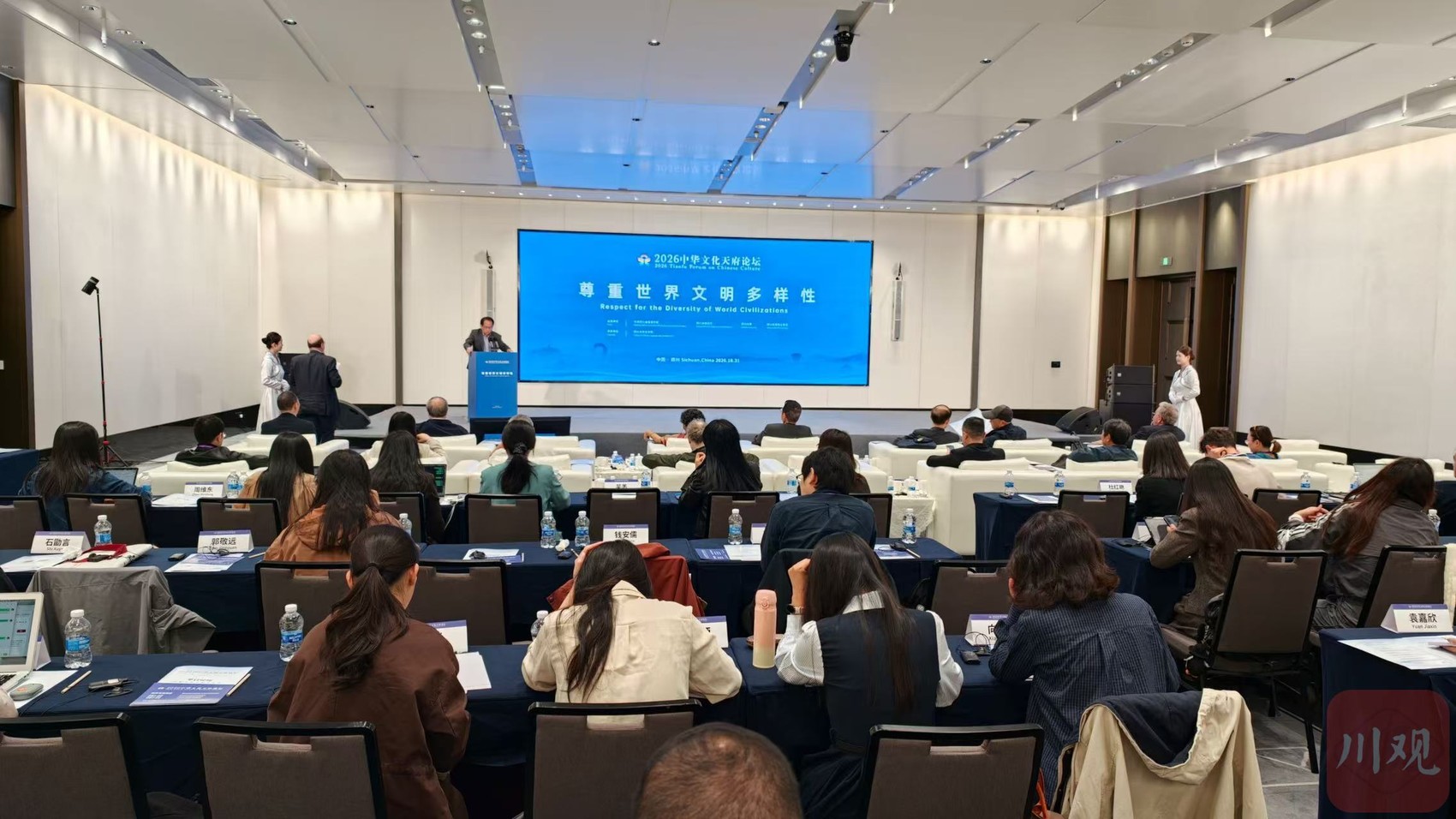
Scene at the parallel forum on Respect of the Diversity of World Civilizations. Photo by Xiang Yu
How can this theme be approached from the perspective of humanities research? Many foreign scholars present spontaneously focused their discussions on the interactions between Chinese literature and culture and the wider world, seeking resonance and inspiration through cross-cultural dialogue.
A case study presented by Theo D'haen, an academician of Academia Europaea and a professor at KU Leuven, drew significant attention: Li Bai's poem "Quiet Night Thought". He noted that in 1867, French poet Judith Gautier published "Le Livre de Jade". a collection of Chinese poetry translated into French which included this poem. This publication stemmed not only from France's heightened interest in China following the Opium Wars but also coincided with the French poetic community's search for new styles. The French translation offered an alternative to Romantic poetics and resonated with the emerging Symbolist movement.
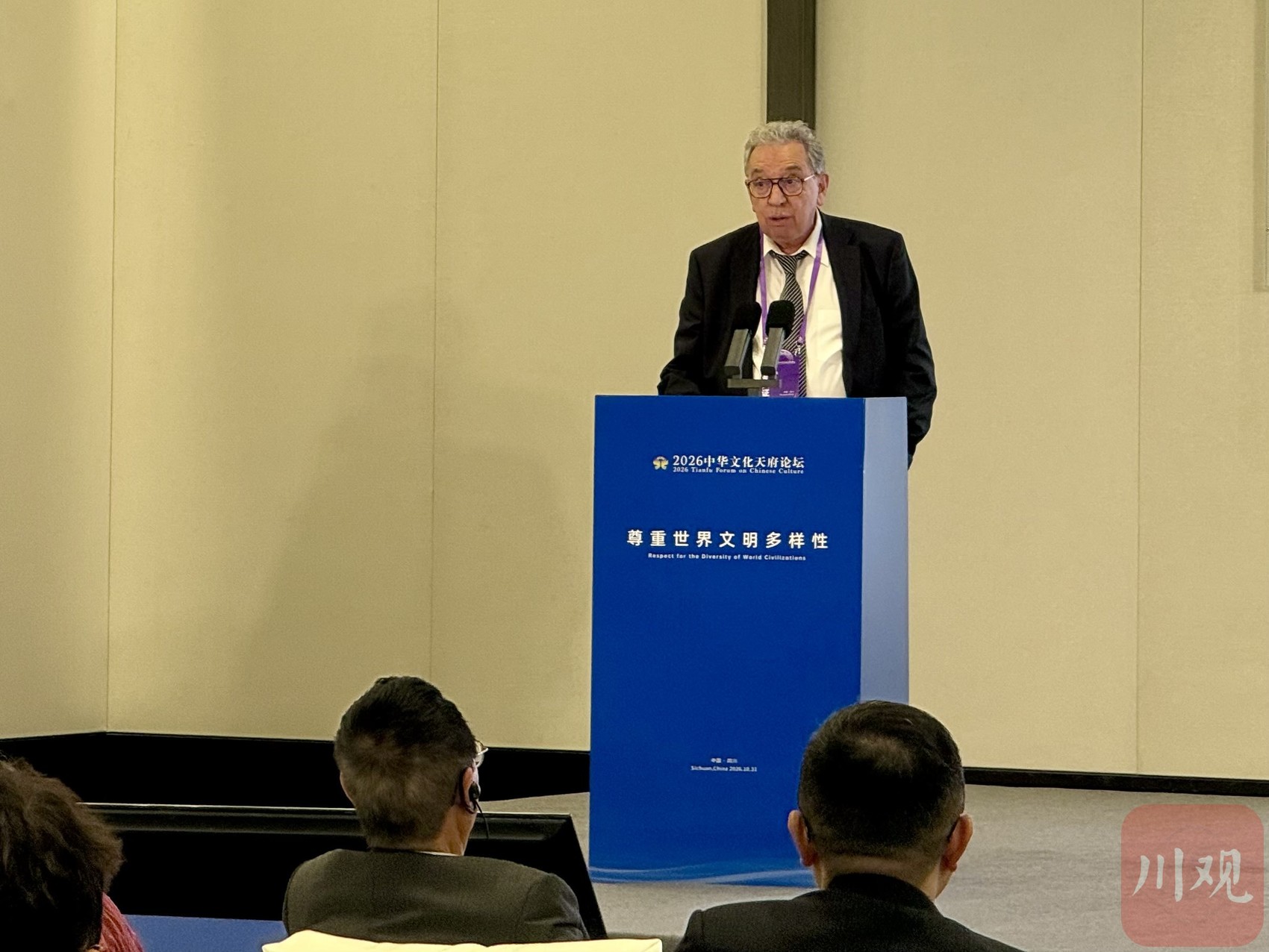
Theo D'haen delivered the keynote speech. Photo by Yu Rubo
Bernard Franco, former president of the European Comparative Literature Association and a professor at Sorbonne University, further pointed out that "Le Livre de Jade" was not a literal translation but rather a "re-creation" based on source materials. It advocated for suggestive lyricism and stylistic simplicity while opposing the grand narratives of Romanticism. He argued that the vitality of foreign cultures must be understood within their specific socio-cultural and ideological contexts. The fascination with China in French literature during the second half of the 19th century was rooted in the translational narratives of early missionaries and the intellectual legacy of the Enlightenment.
Enlightenment pioneers such as Leibniz and Voltaire were profoundly influenced by Chinese thought. With the development of French Sinology in the 19th century, translations of classics like "The Doctrine of the Mean" and "Tao Te Ching" entered France, providing a new scholarly foundation for the image of China. Franco stated that the reception of Chinese culture by 19th-century French writers afforded them the possibility of reflecting on their own culture in different ways.

Bernard Franco delivered a keynote speech. Photo by Xiang Yu
The influence of Chinese poetry on Western literature extends beyond these examples. Theo D'haen explained that in the early 20th century, American poet Ezra Pound translated and published "Cathay". By drawing upon the content, form, and imagery of classical Chinese poetry, Pound exercised considerable creative freedom, playing a pivotal role in the formation and consolidation of Anglo-American Modernism.
Similar examples abound in the realm of popular literature. Robert van Gulik, a Dutch diplomat and sinologist, drew inspiration from Chinese gong'an fiction to create the "Judge Dee" series. While his early works mimicked the traditional Chinese chapter-based novel structure, his later works integrated the structure of Western detective fiction with original cases, striking a balance between the two literary traditions.
Notably, in the 1980s, van Gulik's works were translated back into Chinese and reintroduced to China, inversely sparking a new wave of detective fiction writing and creating a unique phenomenon of cultural reflux.
Turning the focus back to the East, Ipshita Chanda, president ofComparative Literature at the Department of Comparative Literature at the English and Foreign Languages University, Hyderabad, India, noted that Rabindranath Tagore viewed the cultural flow between India and China as bidirectional, with the Nobel laureate drawing much wisdom from China. She stated that Tagore emulated Chinese calligraphy in his handwritten manuscripts, believing it possessed a unique interplay of light and shadow akin to a lantern. Imagery such as Chinese lanterns and envoys frequently appearing in Tagore's poetry symbolizes a gentle, non-aggressive cultural exchange, standing in stark contrast to the modernism prevalent in Europe at the time.
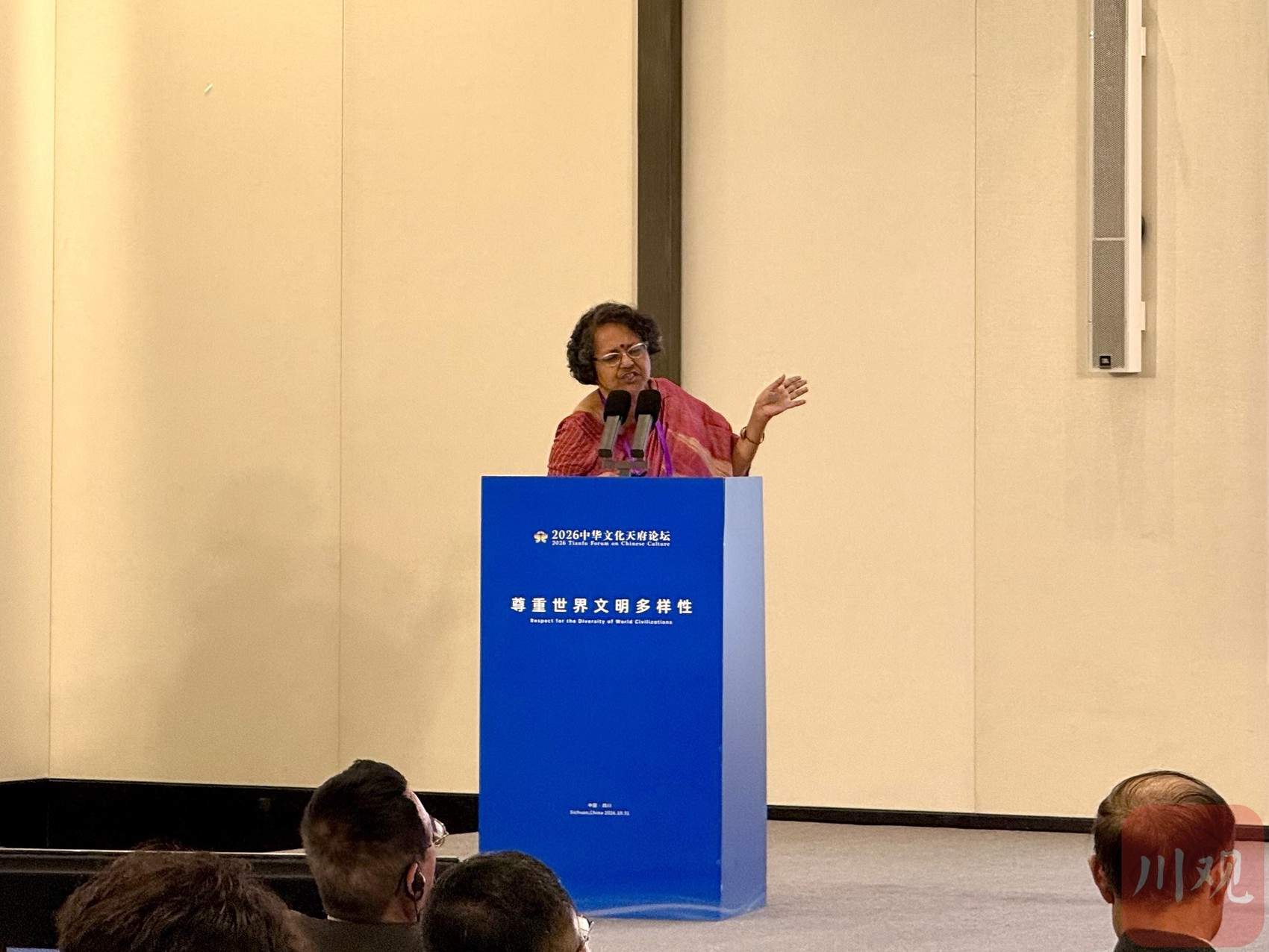
Ipsita Saha delivered a keynote speech. Photo by Yu Rubo
"Difference is not an obstacle, but a prerequisite for innovation and a more valuable foundation for communication," Cao Shunqing stated, emphasizing that "respecting the diversity of world civilizations" holds significant practical relevance and profound academic implications. He suggested "treating differences as treasures", transcending the perspective of a single civilization, understanding the value of different civilizations with a more open and equal attitude, and jointly exploring the multiple possibilities for the development of human civilization.
【本篇文字部分内容由 AI 辅助写作,特此声明。Please note: the text in this article was created with the help of AI.】
