
New Species 'Corydalis wolongensis' Discovered in Sichuan
2026-10-30 18:38:36 by Queenie Tan
On Oct. 30, researchers from the Wolong Administration Branch of the Giant Panda National Park, in collaboration with a team from the Kunming Institute of Botany of the Chinese Academy of Sciences, confirmed the discovery of a new plant species in the genus Corydalis of the family Papaveraceae within the Wolong section. The species has been officially named "Corydalis wolongensis". T
he relevant findings were published on Oct. 20, 2026, in Taxon, an authoritative international journal. This marks the first discovery of a new plant species within the jurisdiction since the establishment of the administration branch.
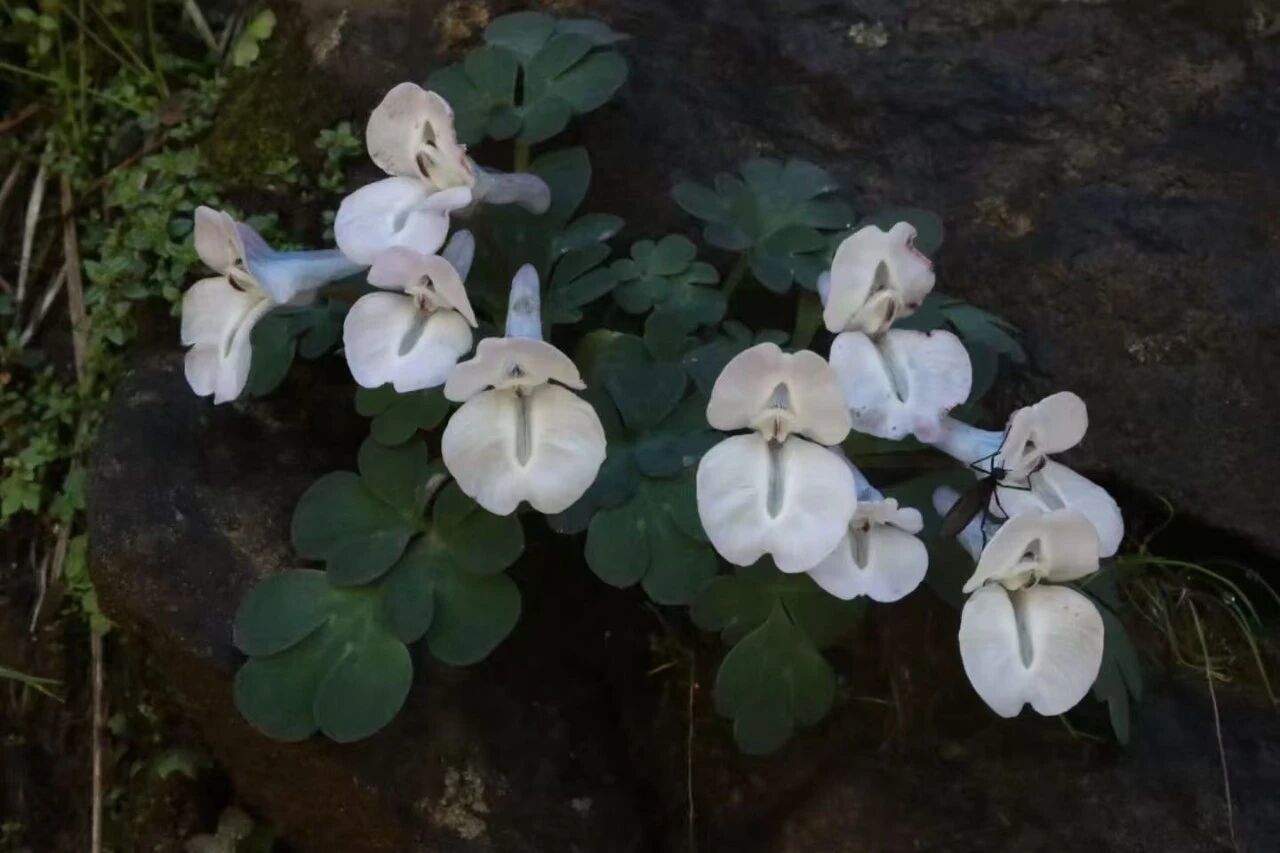
The discovery originated in June 2022, when the research team encountered a Corydalis species during a field survey in Yinchanggou that differed markedly from existing regional records. The team promptly photographed, documented, and collected specimens of the plant. Following preliminary identification by Dr. Chen Juntong of the Kunming Institute of Botany, Chinese Academy of Sciences, the plant was recognized as a putative new species.
To confirm its taxonomic status, the team returned to Yinchanggou in June 2023 and discovered another adjacent population, collecting additional specimens and molecular materials. Subsequently, through literature review, morphological studies, and molecular phylogenetic analysis, the plant was definitively identified as a new species in the genus Corydalis of the family Papaveraceae. As the type locality is situated within the Wolong section of the Giant Panda National Park, the species was named "Corydalis wolongensis".
Corydalis wolongensis grows on moist alpine cliffs at elevations between 3,800 and 3,900 meters at the upper reaches of Yinchanggou, with a flowering period from June to July. Continuous surveys conducted from 2023 to 2025 indicate that only two adjacent populations have been found to date, characterized by a narrow distribution range and a small population size.
Given the limited scope of current surveys, Corydalis wolongensis has been provisionally assessed as Data Deficient (DD) under the criteria of the International Union for Conservation of Nature (IUCN). Further investigation and assessment are required to determine its population status and level of threat.
【本篇文字部分内容由 AI 辅助写作,特此声明。Please note: the text in this article was created with the help of AI.】
