
Sichuan Tea Heir: Turning Heritage Into Rural Prosperity
2026-10-30 18:38:25 by Queenie Tan
While milk baths and red wine baths are well-known, have you ever heard of a tea bath? At the homestay run by Tan Dan, an inheritor of Qingcheng tea culture, this has become an immensely popular experience. "We offer tea leaves, fresh flowers, and herbal plants that can be used for bathing or brewed directly as a beverage", Tan said with a smile. She noted that guests initially loved taking the tea bags home, so they began offering them as complimentary gifts. However, due to overwhelming demand, they eventually switched to selling them at cost.
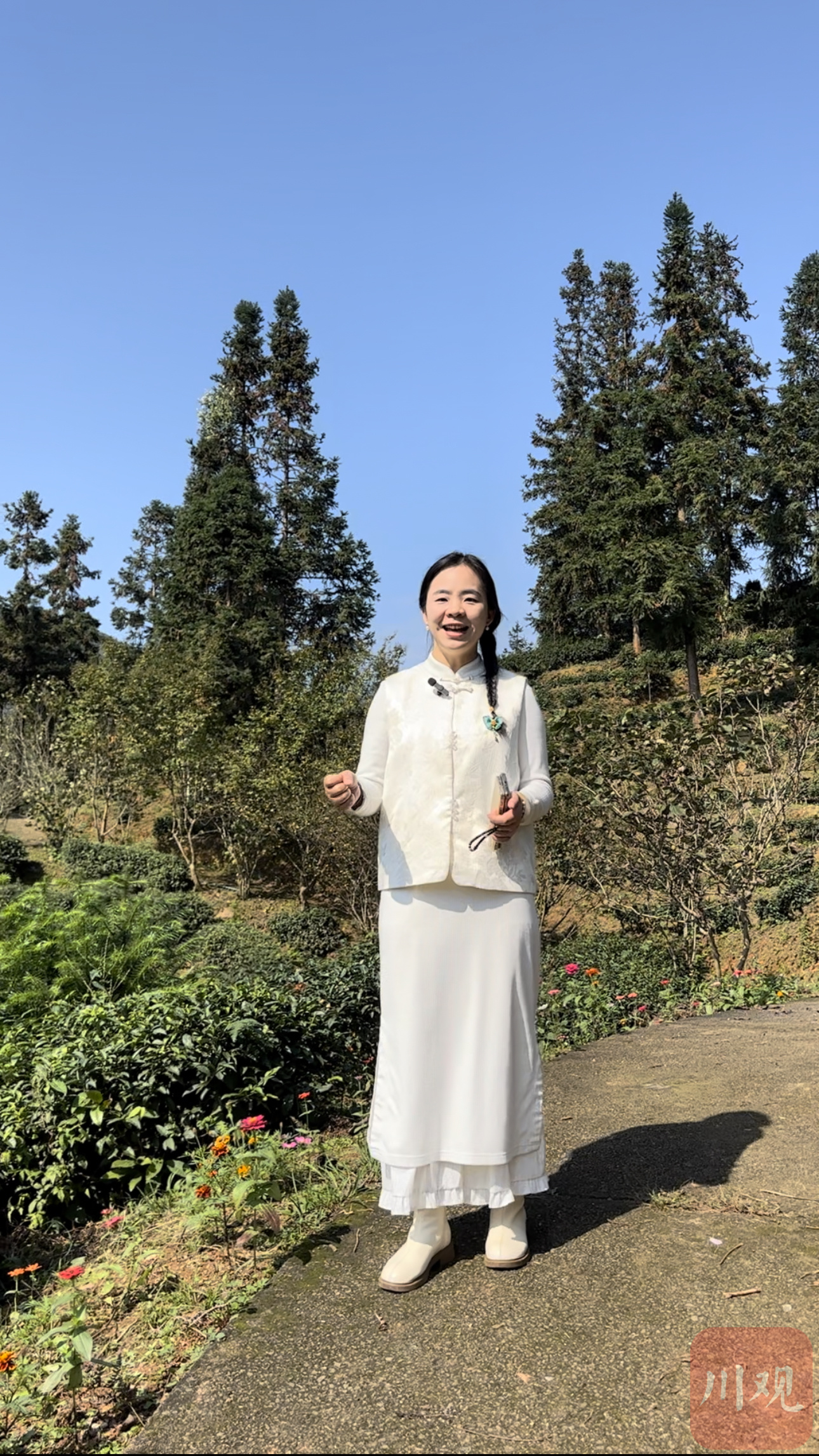
Tan Dan
On Oct. 29, at the foot of Mount Qingcheng, reporters visited Tan Dan's tea plantation.
The inheritance of intangible cultural heritage should not be confined to display cabinets and certificates. A native of Chongqing, Tan came to Dujiangyan in 2014 as a volunteer teacher and subsequently settled down there to start a family. Her bond with the tea mountains was forged through her husband's stewardship of the historic Guanxian Tea Factory and her own passion for tea culture. She dedicated herself to mastering the craft: rising before dawn to pick tea alongside workers, learning that it takes thousands of hand movements to harvest just half a kilogram of fresh leaves; maintaining precise control over pan temperatures exceeding 200 degrees Celsius and hand positioning during roasting; and gauging pressure solely through the feel of her palms during rolling. After years of arduous study following her marriage, she officially became the second-generation inheritor of green tea processing techniques. Qingcheng Taoist tea was once a tribute item during the Tang Dynasty but vanished for a millennium following a tea farmers' uprising in the Song Dynasty. It was redeveloped at the turn of this century and was added to Chengdu's Intangible Cultural Heritage list in 2020.
As an inheritor, Tan actively promotes this intangible cultural heritage. She has been invited to primary and secondary schools to spark students' interest and teaches an elective course on tea knowledge at Neusoft University Chengdu, which fills up every year. Rejecting "performative" teaching methods, she insists that students engage in hands-on practice, taste tea, and learn to distinguish aroma profiles. She believes that the craft truly lives only when young people drink tea seriously and can articulate its nuances, noting that "this kind of genuine appreciation is more tangible than anything else". In her view, if intangible cultural heritage exists only in display cases and on certificates, it truly becomes nothing more than a relic of the past.
To boost rural incomes, visitor traffic must be converted into revenue for local farmers. Tan acknowledges that in the internet era, quality alone is insufficient, citing the proverb that "even fine wine fears being hidden in a deep alley". She has optimized her business model: tourists can pick and process their own tea to take home; her homestay offers free tea ceremony classes for both guests and villagers; and private hot springs are supplied with food-grade tea bags. During the peak spring season, daily visitor numbers can reach 3,000, with annual arrivals totaling approximately 300,000.
Tan's efforts have tangibly benefited 130 surrounding farming households. Diligent tea pickers can earn around 10,000 yuan annually, while positions such as pruning offer even higher wages, with some households earning up to 20,000 yuan. Two years ago, during a payout session, an elderly woman holding over 7,000 yuan remarked emotionally that she could finally earn money independently to give red envelopes to her grandchildren, a moment that deeply reinforced Tan's sense of purpose.
After being elected as a deputy to the Chengdu Municipal People's Congress, she proposed at the 2025 Chengdu Two Sessions to "transform tourist traffic to tea mountains into income channels for local residents", suggesting a benefit-linkage mechanism involving "government, enterprises, and farmers", as well as leveraging AI and virtual tea gardens to expand rural cultural tourism. To capture online traffic, she traveled to Guangzhou to study short-video livestreaming and established a family-run livestream team. She candidly stated that embracing the internet is inevitable, though she is still exploring the best approach, emphasizing that quality is the root and promotion is the foliage, requiring both to resonate in harmony.
As the tea mountain business evolves, so does Tan's strategic positioning. She believes the most significant variable introduced to the tea plantation is a shift in "concepts and mindset"—cultivating a cultural atmosphere, utilizing new media for dissemination, and designing experiences ranging from "day trips" to "in-depth tours". Although initial results are promising, she feels the current tourism offerings remain inadequate and aims to further enrich them in the future.
【本篇文字部分内容由 AI 辅助写作,特此声明。Please note: the text in this article was created with the help of AI.】
