
Liu Shenggang, Terahertz Pioneer and Sichuan Academic Leader, Dies at 92
2026-10-30 18:36:21 by Queenie Tan
On Oct. 30, reporters learned from the University of Electronic Science and Technology of China (UESTC) that Comrade Liu Shenggang, an outstanding member of the Communist Party of China (CPC), a founder of vacuum and microwave electronics in China, a distinguished physical electronics scientist and educator, a delegate to the 12th CPC National Congress, a member of the seventh and eighth CPPCC National Committees, an academician of the Chinese Academy of Sciences (CAS), and former president and professor of UESTC, passed away at the age of 92 in Chengdu at 7:26 a.m. on Oct. 30, 2026, following unsuccessful medical treatment.
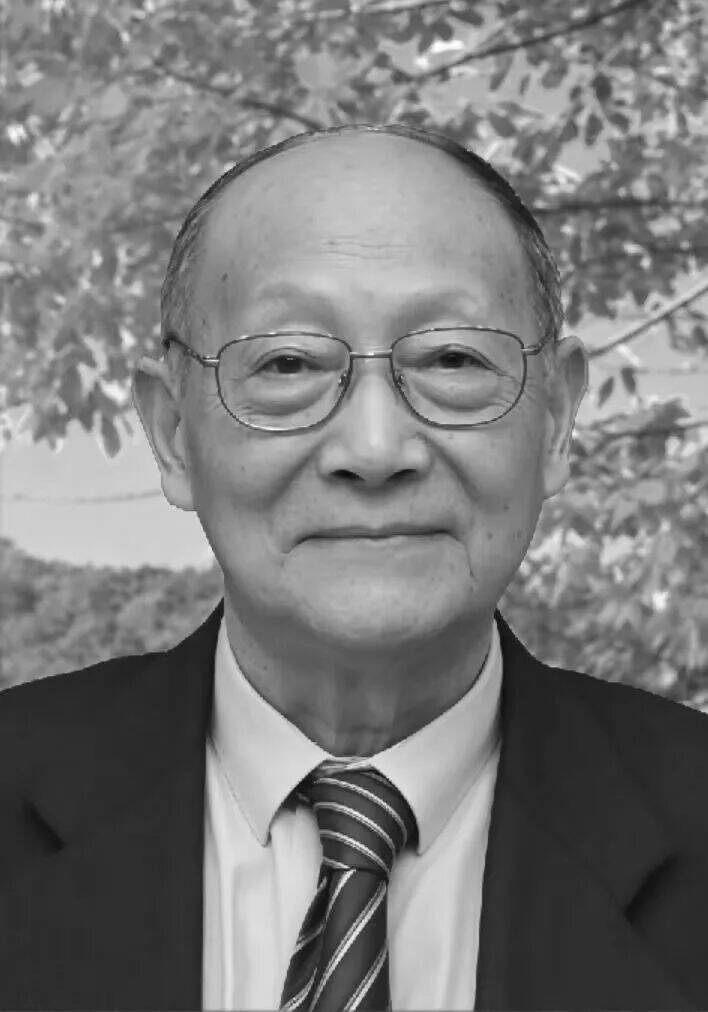
Born in Hefei, Anhui Province, in December 1933, Liu joined the CPC in 1954. He graduated from the Department of Radio Engineering at Nanjing Institute of Technology in 1955, majoring in electron vacuum technology, and remained at the institute as a faculty member. In 1956, he was transferred to the Chengdu Institute of Telecommunication Engineering, where he worked for the rest of his career. During this period, he pursued postgraduate studies under Soviet experts and earned a Candidate of Sciences degree. He was promoted to professor in 1978 and elected as a member (academician) of the CAS Division in 1980. Beginning in August 1984, he successively served as vice president and president of the Chengdu Institute of Telecommunication Engineering, and later as president of UESTC.
Liu made pioneering and foundational contributions to the fields of microwave electronics, relativistic electronics, and terahertz science and technology. He was widely recognized by the international community as the "Terahertz Pioneer" and the "Father of Vacuum and Microwave Electronics in China". The kinetic theory he established, based on the electron cyclotron center coordinate system, has become one of the mainstream methods in international research on electron cyclotron devices. He led his team in developing a series of high-power devices, including China's first gyrotron, with technical levels matching or surpassing the advanced international standards of the time.
Around 2000, he took the lead in proposing to the national authorities the development of terahertz science and technology, organized relevant Xiangshan Science Conferences, and spearheaded the establishment of the Terahertz Expert Committee. In the field of terahertz radiation source research, he proposed the concept of coaxial double-electron-beam gyrotrons, successfully developed China's first terahertz gyrotron, and introduced a novel terahertz radiation principle combining electronics and photonics, making original contributions to technological advancement.
Liu was honored with titles including National Model Worker, National May 1 Labor Medal, and National Outstanding Educator. He received numerous awards, such as the National Science Conference Award, the State Natural Science Award, the State Technological Invention Award, and the Tan Kah Kee Science Award. In 2003, he was awarded the K. J. Button Prize, the highest scientific honor in the international infrared, millimeter-wave, and terahertz field, and in 2016, he received the Distinguished Contribution Award in the same field. He was also nominated for the International Marconi Prize and served as a nominator for both the Nobel Prize in Physics and the Albert Einstein World Award of Science.
Deeply devoted to the Party's educational cause, Liu was passionate about teaching and mentoring students and dedicated himself selflessly to his work. Over more than seven decades in education, he cultivated a large number of outstanding talents in physical electronics for China, many of whom have become academic leaders and industry elites in the electronic information sector. The textbook "Introduction to Microwave Electronics," which he edited, won the Special Prize for Excellent Textbooks from the Ministry of Electronics Industry and the First Prize for Outstanding Higher Education Textbooks from the State Education Commission. He also led his team to be selected among the first group of "National Huang Danian-style Teacher Teams" in universities. In 2008, he established the "Academician Liu Shenggang Science and Technology Education Fund" to encourage faculty members and students to achieve excellence in terahertz-related research.
During his 15-year tenure as president, Liu made significant contributions to the overall development of UESTC. He prioritized educational reform and vigorously fostered innovative talents; built academic pinnacles and established a series of high-level scientific research platforms; refined the university's distinctive features and successfully secured approval for multiple national key disciplines; and promoted open education, guiding the university onto the global stage. Under his leadership, the university's comprehensive strength increased significantly, its academic standing at home and abroad rose substantially, and it became one of the first universities designated for priority construction under the national "Project 211".
【本篇文字部分内容由 AI 辅助写作,特此声明。Please note: the text in this article was created with the help of AI.】
