
Sichuan Unveils World's Longest Debris Flow Test Facility
2026-10-29 14:40:54 by Queenie Tan
Recognized by the industry as the world's longest and most fully functional field test platform for debris flows, the facility has been officially put into operation in Sichuan Province. Video footage captured the entire process of the inaugural simulated debris flow, demonstrating the platform's robust scientific research capabilities.
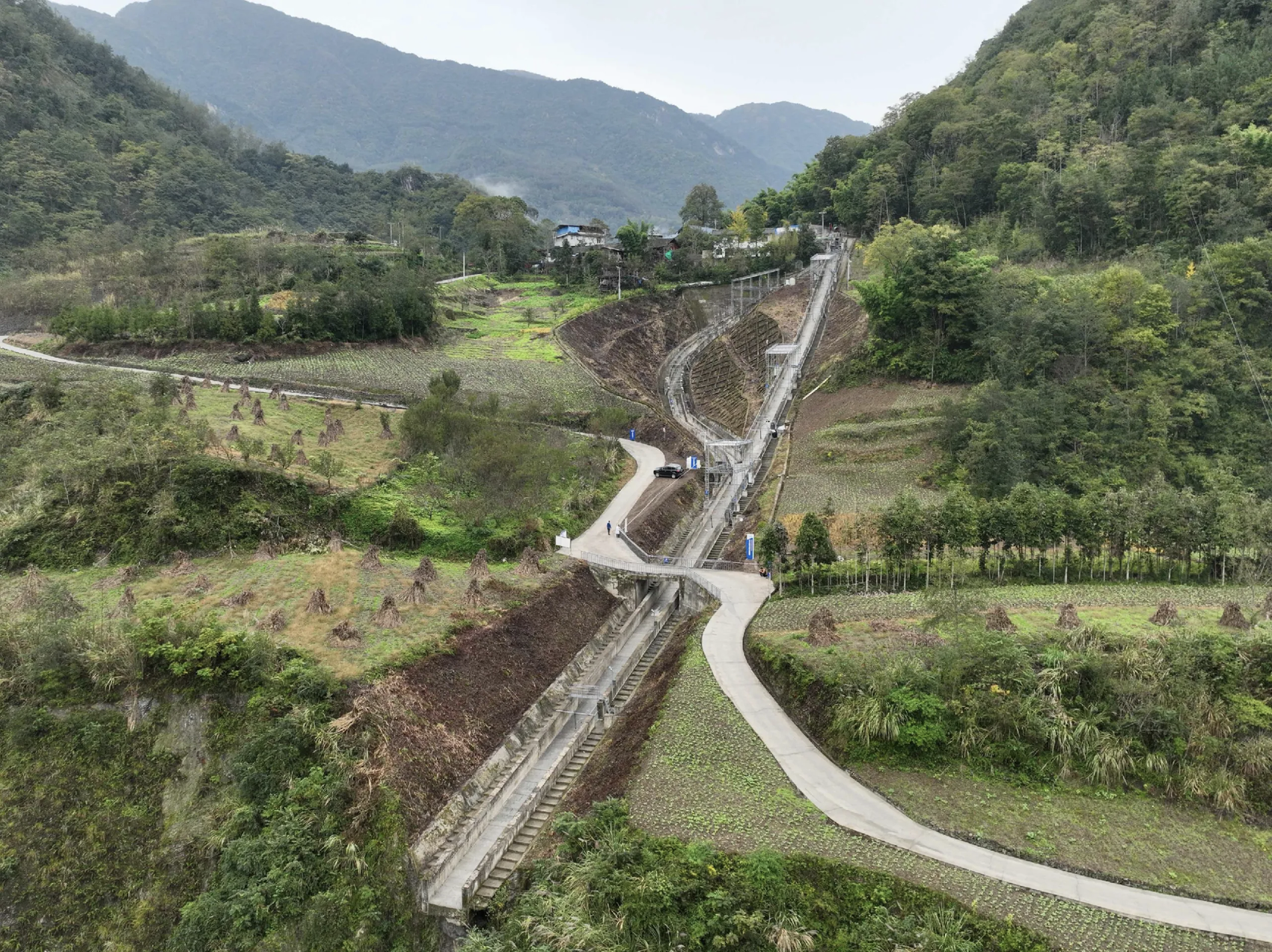
A large-scale field test base for debris flows has been completed and put into operation in Beichuan
Why was this test base constructed?
Located in Beichuan County, Mianyang City, Sichuan Province, the site sits on the eastern margin of the Qinghai-Tibet Plateau, a region characterized by well-developed fault structures and frequent rainstorms, making it one of China's provinces most prone to geological disasters. Situated along the Central Fault Zone of the Longmen Mountains, Beichuan was among the areas hardest hit by the May 12 Wenchuan earthquake. Its complex geological environment makes it a natural testing ground for studying debris flows in seismically disturbed zones and the evolution of compound disaster chains. Following multiple rounds of site selection, the base was ultimately established in Beichuan, adjacent to a remediated debris flow gully with abundant material and water sources, making it ideal for large-scale debris flow simulation experiments.
Fan Xuanmei, Director of the State Key Laboratory of Geohazard Prevention and Geoenvironment Protection, noted that due to the combined effects of seismic disturbance, extreme weather, and climate change, the risk of long-chain compound geological disasters in China's western mountainous regions continues to rise. Large-scale field experiments are crucial for uncovering the mechanisms behind such disasters. The completion and commissioning of the Beichuan Large-Scale Debris Flow Field Test Base fills a global gap in large-scale physical simulation experiments for compound disaster chains.
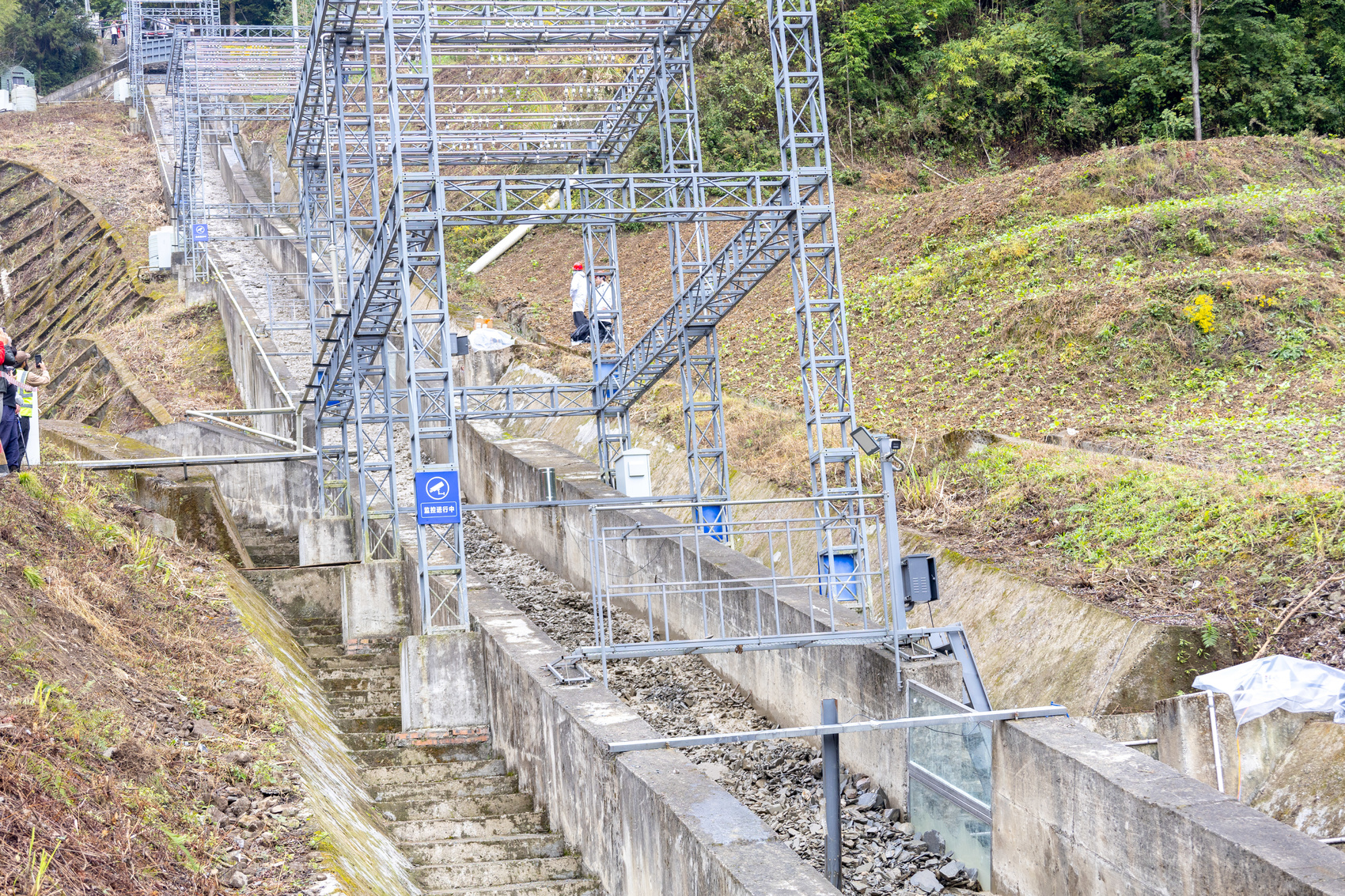
Test Base Water Tank
The Beichuan Large-Scale Debris Flow Field Test Base features the world's longest experimental flume for debris flows with variable gradients and dual-channel confluence. With a total length of 240 meters, the flume incorporates four different gradient sections and is complemented by a 142.5-meter curved flume, enabling the simulation of real-world gully conditions such as dual-channel confluence and curvilinear motion. The experimental gate system allows for rapid material release within 1.5 seconds. Coupled with four adjustable artificial rainfall systems and a comprehensive suite of high-precision synchronized monitoring equipment, the facility can replicate the entire evolutionary process of long-chain compound geological disasters, overcoming challenges that previous small-scale laboratory tests could not address, particularly in reproducing disaster convergence and chain progression.
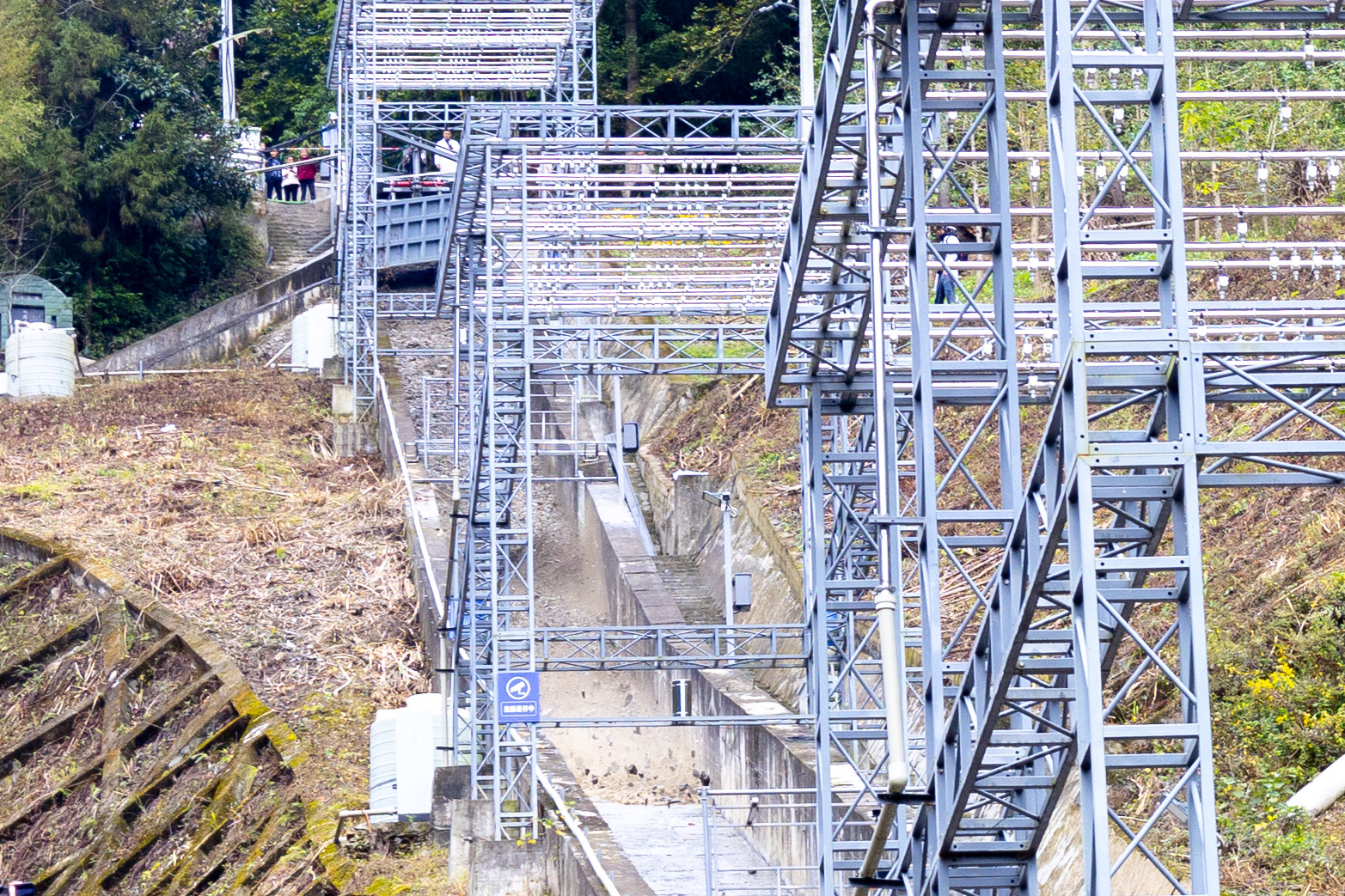
Test Site Trench
What are the key features of the test base?
First, the main experimental flume spans 240 meters, significantly exceeding the length of existing large-scale facilities of its kind. Second, it adopts a dual-channel confluence flume design. Third, it offers comprehensive capabilities for experimental control and data acquisition.
On the day of its commissioning, the base conducted its first official debris flow simulation experiment. Under the operation of technical personnel, debris flow material surged down the experimental gully, faithfully recreating a real-world disaster scenario.
Test Site Trench
Tolga Gorum, Dean of the Faculty of Earth Sciences at Istanbul University, who observed the experiment on-site, stated that the Beichuan Large-Scale Debris Flow Field Test Base is the most comprehensively equipped geological disaster field test facility of its kind he has ever seen. It establishes a complete experimental system centered on the dual-channel flume, integrating water supply and material mixing, material release, artificial rainfall, and high-precision monitoring and data acquisition. This provides an exceptionally valuable scientific research platform for global studies on the dynamic mechanisms of debris flows and compound disaster chains, as well as for the verification of prevention and control technologies.
Moving forward, the Beichuan Large-Scale Debris Flow Field Test Base will leverage the Global Partnership for Mountain Chain Hazards with Intelligent Early Warning and Risk Management (M-CHAIN) and the International Research Alliance on Large Landslides (iRALL). Adhering to the principle of open sharing, the base will make its research platform accessible globally, continuously pooling international scientific expertise to build a world-class field test platform for geological disasters that integrates scientific research, technological transfer, international academic cooperation, and science popularization.
【本篇文字部分内容由 AI 辅助写作,特此声明。Please note: the text in this article was created with the help of AI.】
