
China's 'Cloud Sentinel' Airship Completes Maiden Flight in Sichuan
2026-10-27 15:09:18 by Queenie Tan
On Sept. 22, the Yunshao M1000-CNS made its global debut. This was followed by structural assembly, envelope transfer, and buoyancy adjustments. On Oct. 14, taking advantage of a window of strong winds, the team completed mooring tethering and tail fin trimming. On Oct. 15, the aerostat achieved its first low-altitude hover and successfully transmitted data. On Oct. 16, more than 30 test items were completed and data was recorded. From Oct. 17 to 19, attitude tests under various wind conditions were conducted, bringing the maiden flight campaign to a successful conclusion.
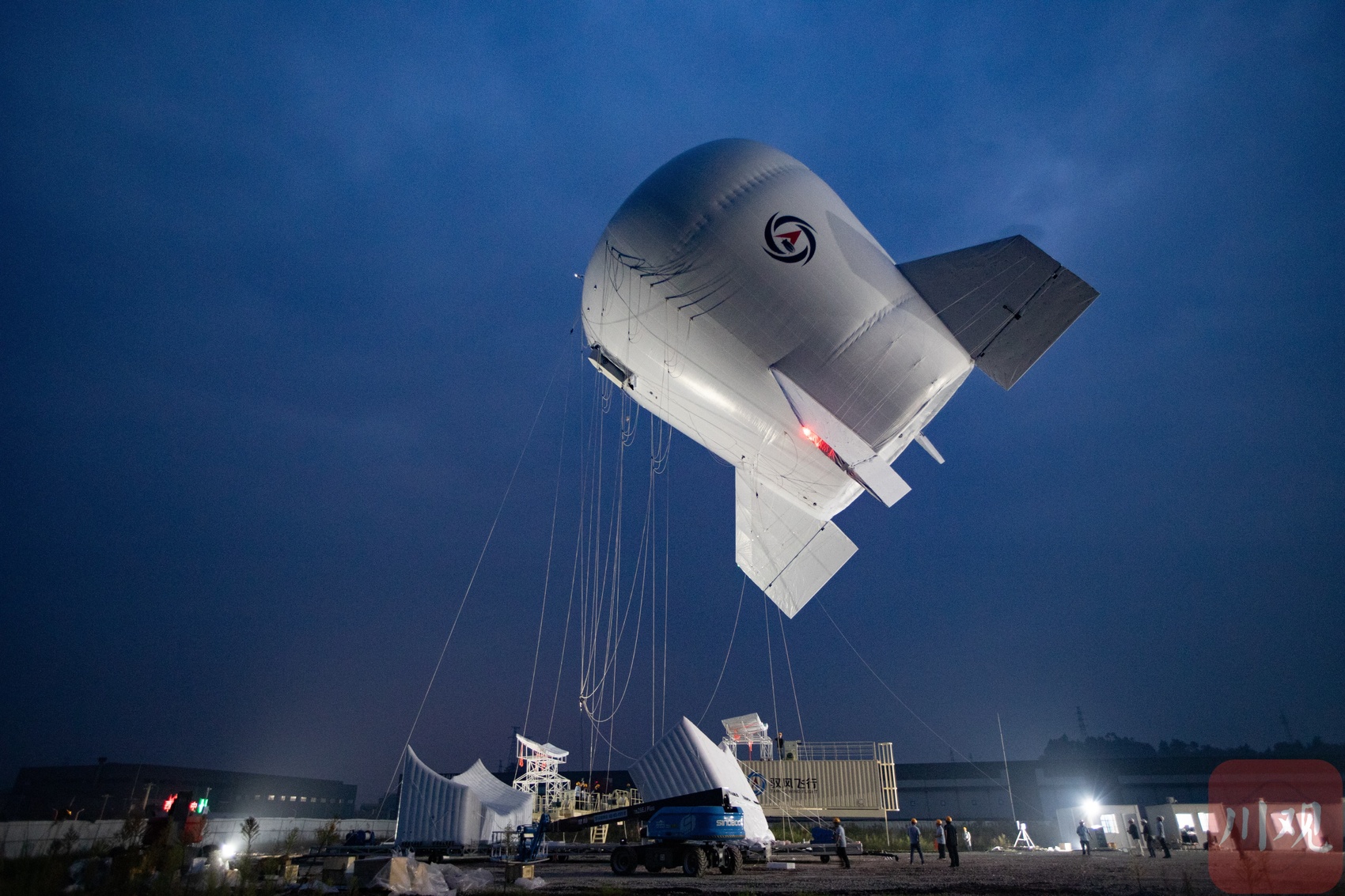
On Oct. 15, an all-weather aerostat conducted a low-altitude hovering test in Zigong
On Oct. 13, the domestically developed Yunshao M1000-CNS all-weather aerostat commenced a series of maiden flight tests in Rongxian County, Zigong City. By the evening of Oct. 19, all test items—including dual-tail hovering, attitude correction, and comparative loitering under multiple wind conditions—had been successfully completed, marking the successful conclusion of the mission and yielding more than 30 valuable sets of field measurement data. Currently, the research and development team is refining the system and optimizing parameters based on the field data to advance product finalization. Subsequent testing will gradually increase the operational altitude, and once full verification standards are met, mass production and network deployment will commence.
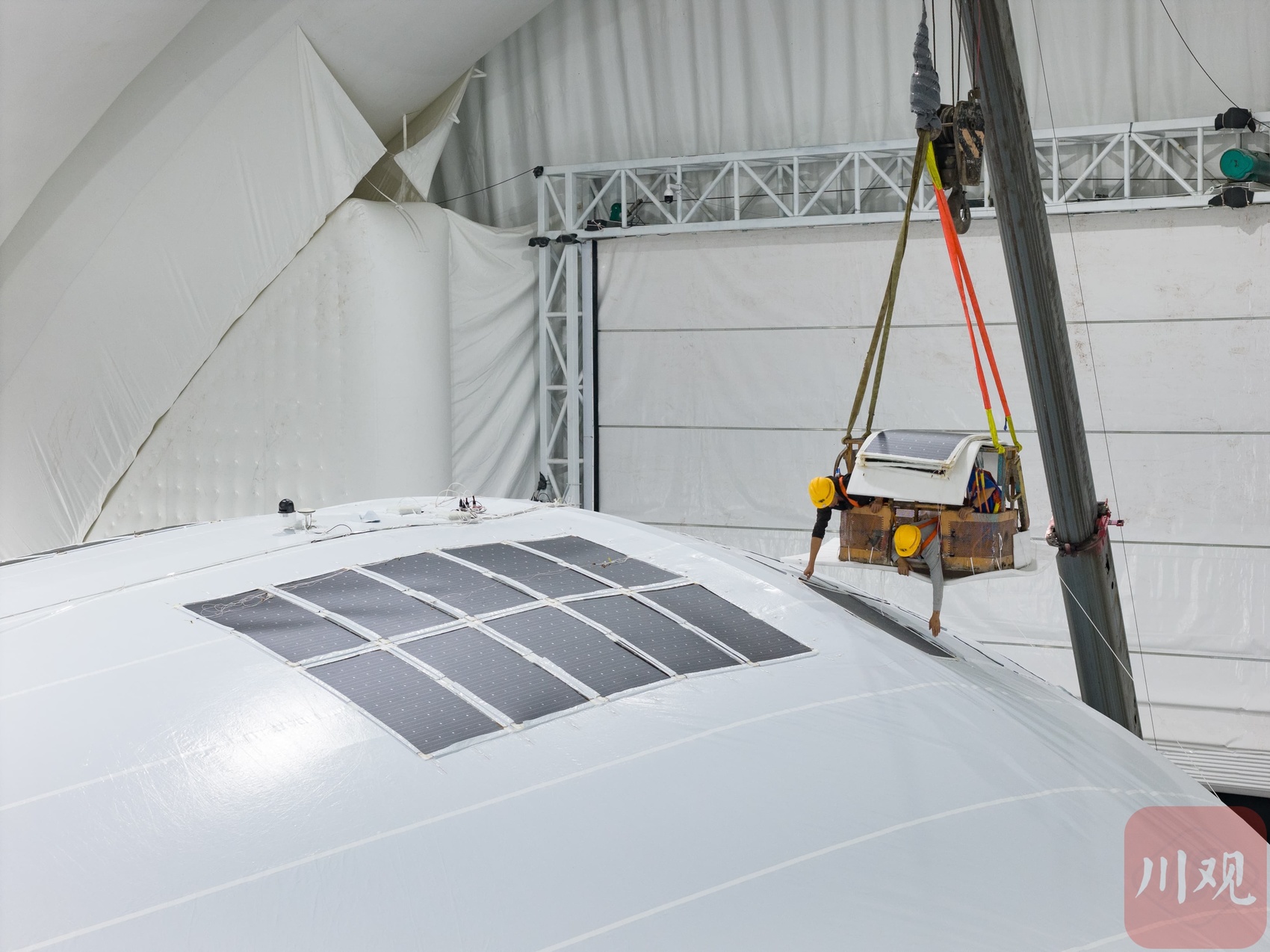
On the night of October 13, engineers were installing solar panels on an all-weather aerostat
Behind this success lies an intensive effort against time. At 4:00 a.m. on Oct. 13, the hangar at the Yunshao Aerostat Industry-Education Integration Headquarters Base in the Rongxian Economic Development Zone was brightly lit as engineers conducted final pre-launch inspections and calibrations. This 5,000-square-meter air-supported assembly hangar is the largest of its kind in Asia. Previously an empty lot, the site was transformed by the Yufeng Flight Team in just 20 days into a 33-meter-tall, weather-resistant giant hangar through the erection of the air-supported structure and installation of production lines, turning blueprints for aerostat equipment into physical reality.
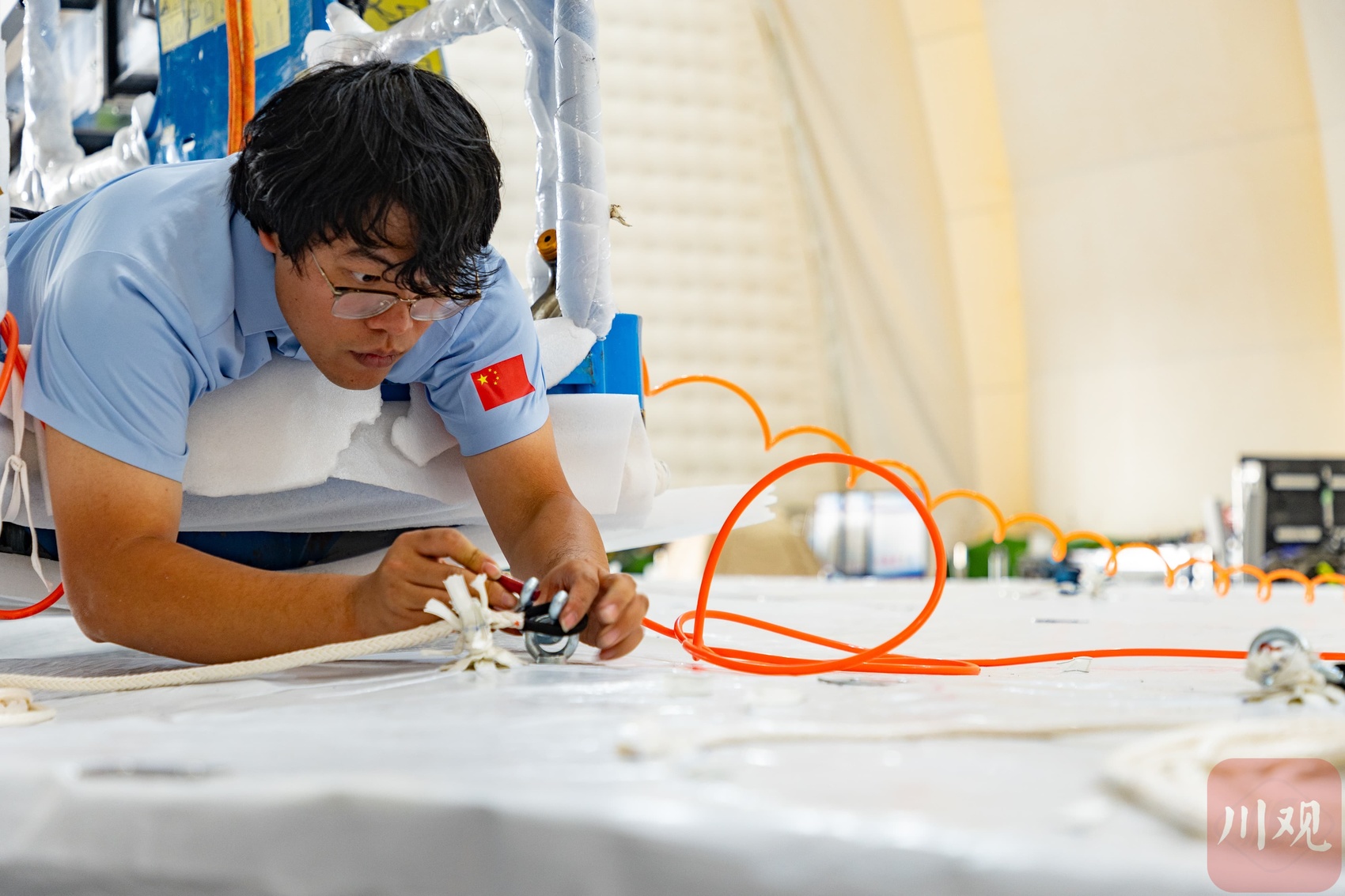
On Oct. 13, Senior Engineer Lin Shanghe was fabricating tail fins for an all-weather aerostat
Although aerostats are not entirely new, they have long faced challenges such as vulnerability to weather changes, difficulty in sustaining prolonged hover, and limited payload capacity. The Yunshao M1000-CNS tested in this flight employs second-generation rigid-flexible coupling technology, integrating a flexible skin, rigid frame, payload bay, power supply, and tethering system. Multiple envelopes ensure airtightness, while the outer skin is aging-resistant and wear-resistant, capable of withstanding wind, rain, lightning, and temperature fluctuations, making "all-weather" capability more than just a specification. Founder Shi Zhiguang stated that the primary objective of the maiden flight was to demonstrate that the aerostat can ascend reliably, maintain stable buoyancy, and hold its position firmly.
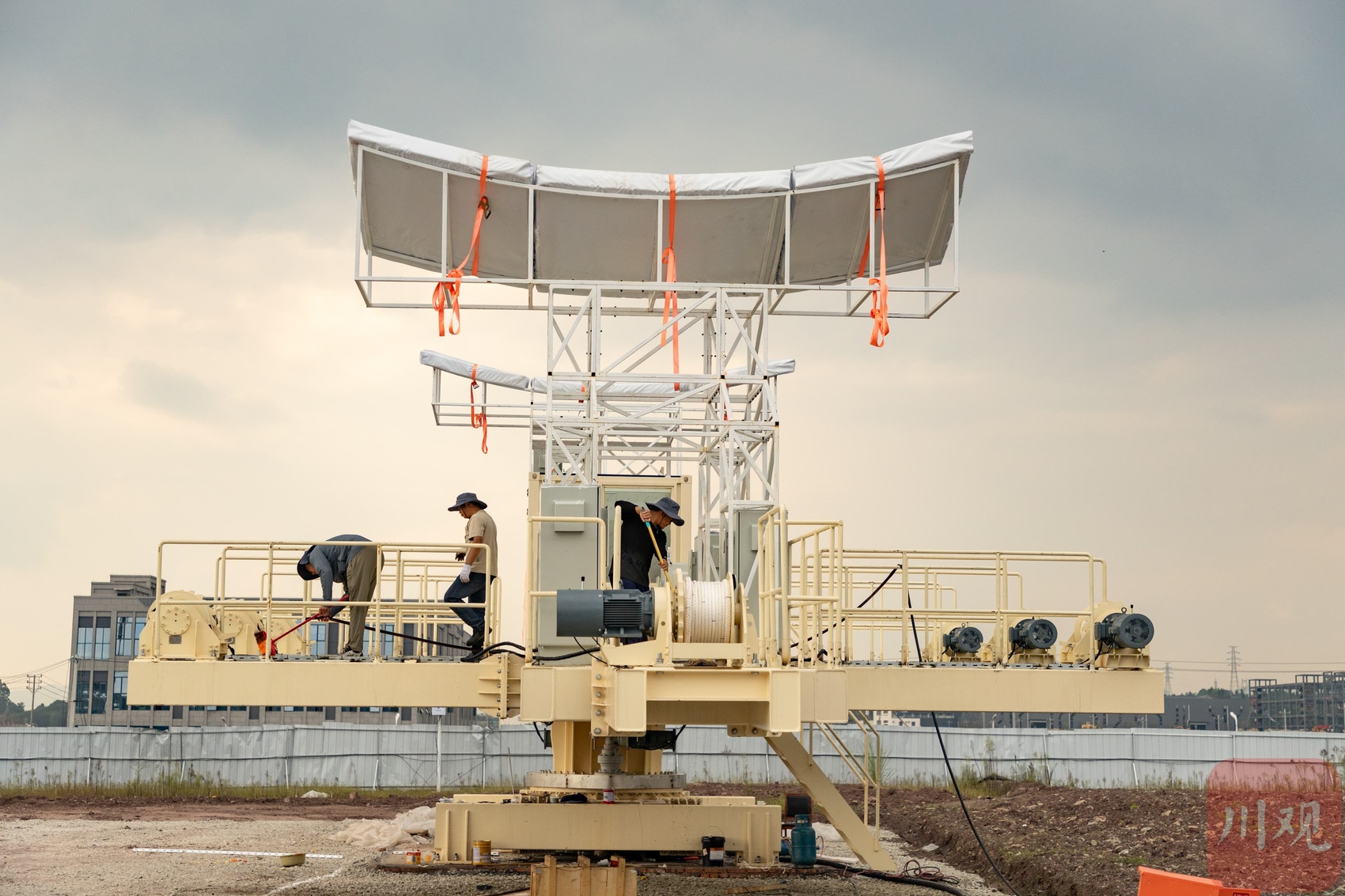
On Oct. 13, staff members were clearing the mooring site to make final preparations for the launch of an all-weather aerostat
Functioning as a high-altitude "aerial tower", it can remain stationed stably at altitudes of up to 1,000 meters, with a designed continuous service life of five years and a total lifespan of 20 years, supporting a maximum payload of 300 kilograms. Powered by a self-sufficient wind and solar energy storage system, it integrates five core capabilities: communications, navigation, surveillance, meteorological monitoring, and countermeasures. A single unit can cover approximately 2,000 square kilometers, delivering positioning augmentation services with optimal accuracy of up to 20 centimeters.
These performance metrics stem from meticulous attention to millimeter-level details. On the eve of the test flight, engineers repeatedly adjusted the tension of the tether cable: excessive slack risks yaw deviation, while excessive tightness may damage the structure. Tuning the rigid-flexible coupling system demands exceptional patience, as minor deviations in envelope seams can be amplified in flight; buoyancy fluctuates with diurnal temperature variations, requiring precise trimming; and cables must be secured against wind-induced entanglement to prevent signal interruption. The team broke down these complex challenges, with the assembly, control, payload, and mooring teams conducting rigorous cross-checks to ensure zero defects before authorizing launch.
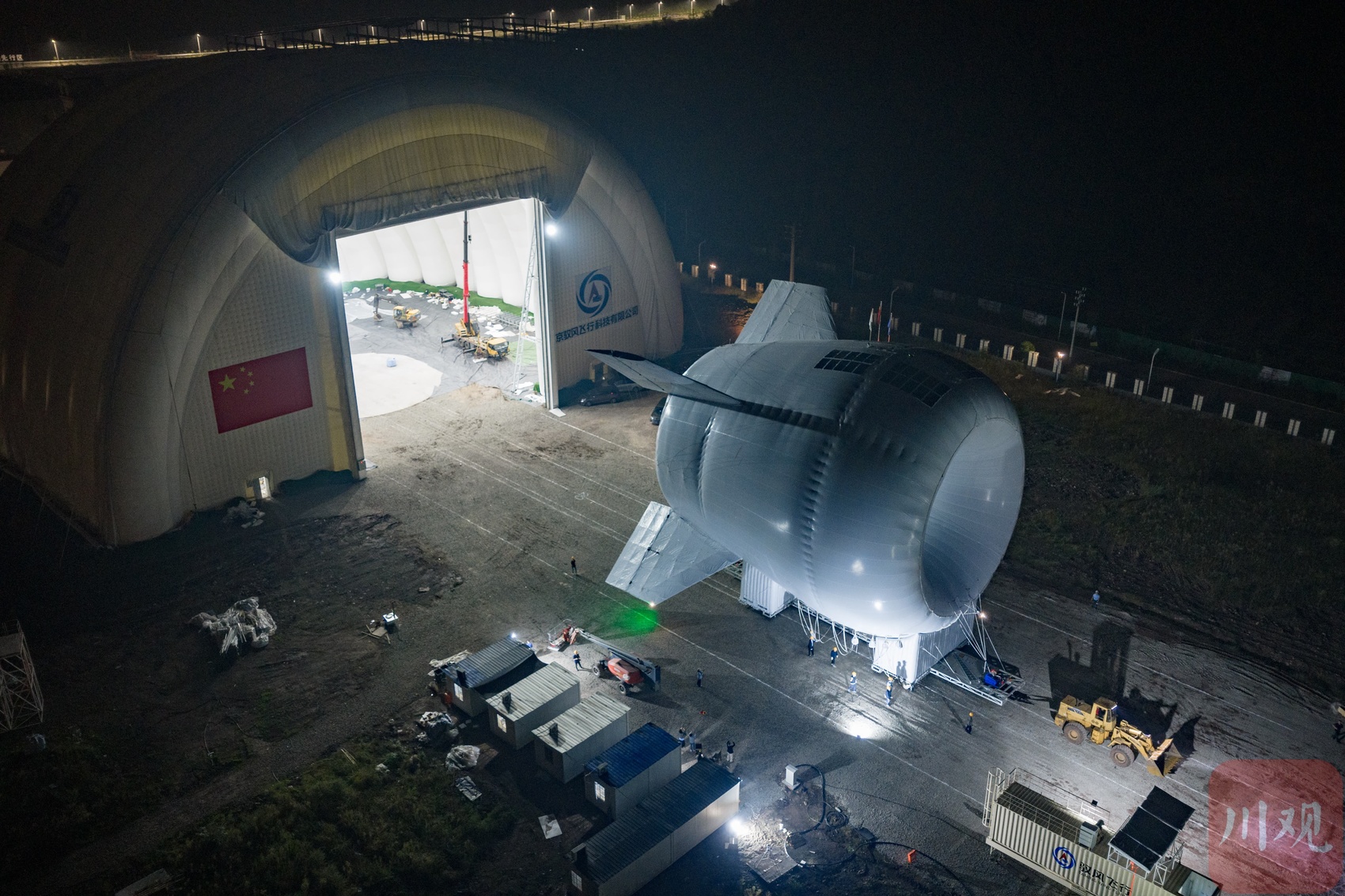
On October 15, an all-weather aerostat was moved out of Asia's largest high-span-ratio air-supported assembly hangar to conduct a nighttime rollout and transfer test
The project team is primarily composed of members born in the 1980s and 1990s, with core personnel drawn from the stratospheric airship development team of the China Aerospace Science and Industry Corporation's "Gaofen" program, who have been dedicated to core aerostat technologies since 2010. Their strategy is clear: first resolve the fundamental issues of stability, precise control, and sufficient power; then integrate multiple types of equipment onto a single platform; and ultimately achieve multi-unit networked coordination through modular design.
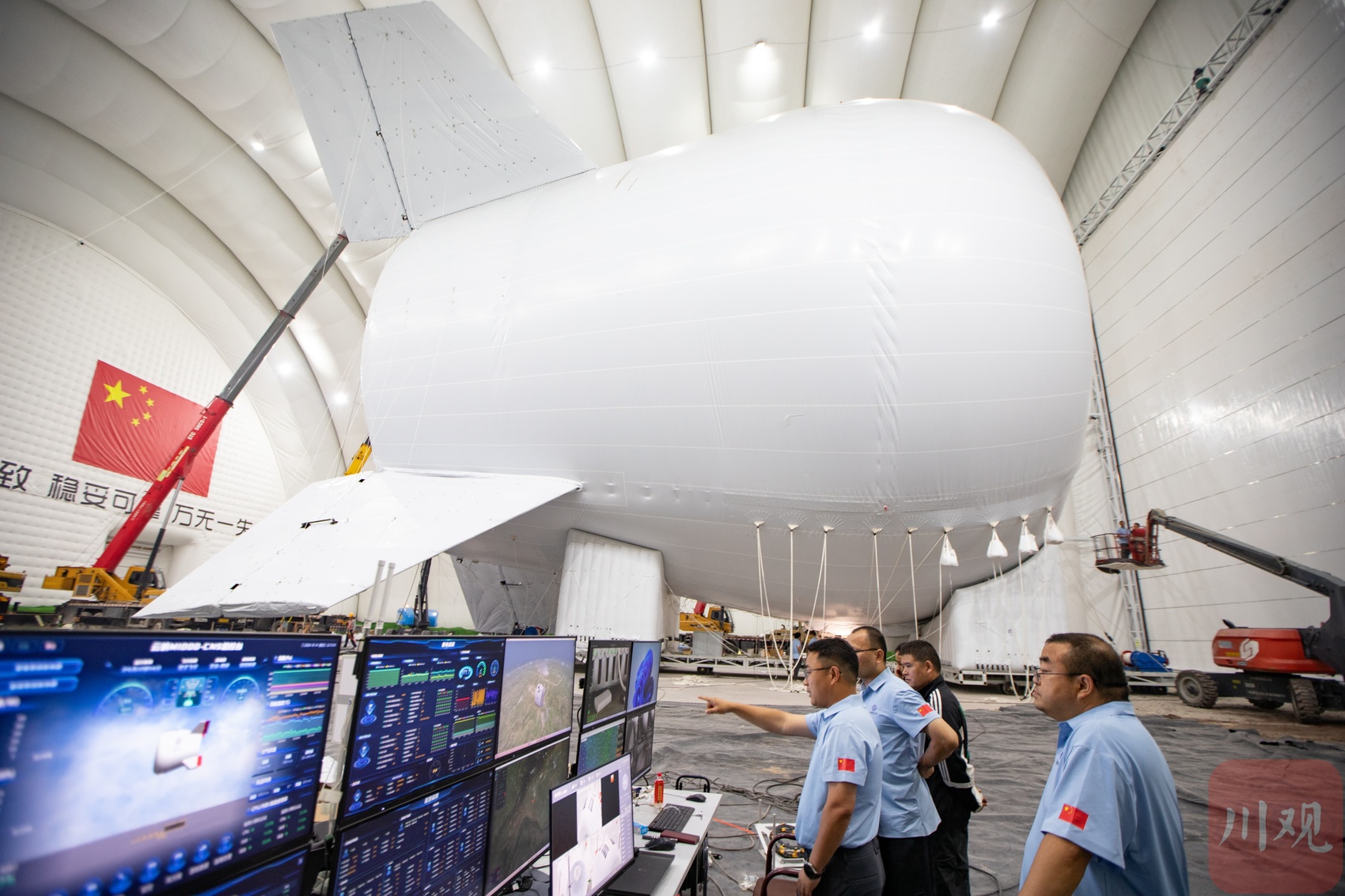
On the evening of Oct. 14, engineers were troubleshooting difficulties encountered during the installation of the all-weather aerostat
The outline of the 15th Five-Year Plan calls for strengthening low-altitude management and accelerating the application of core technologies. Though devoid of roaring engines or dazzling exhaust plumes, the Yunshao M1000-CNS steadily anchors five critical capabilities—communications, navigation, surveillance, meteorological monitoring, and countermeasures—in the sky, serving as a vivid testament to the development of Sichuan's low-altitude equipment industry.
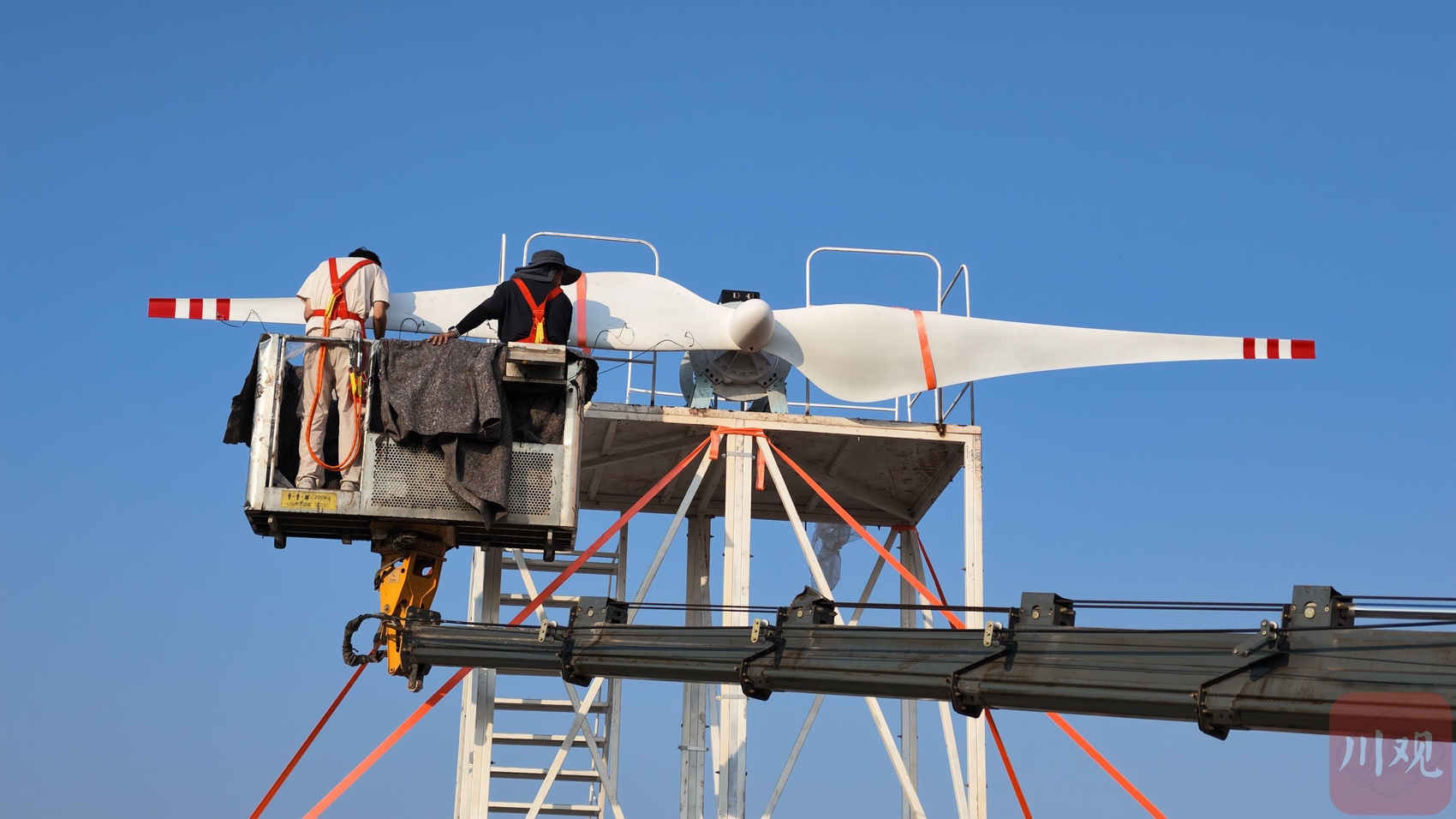
On Sept. 3, engineers conducted final inspections on the carbon fiber frame of an all-weather aerostat in preparation for hoisting operations
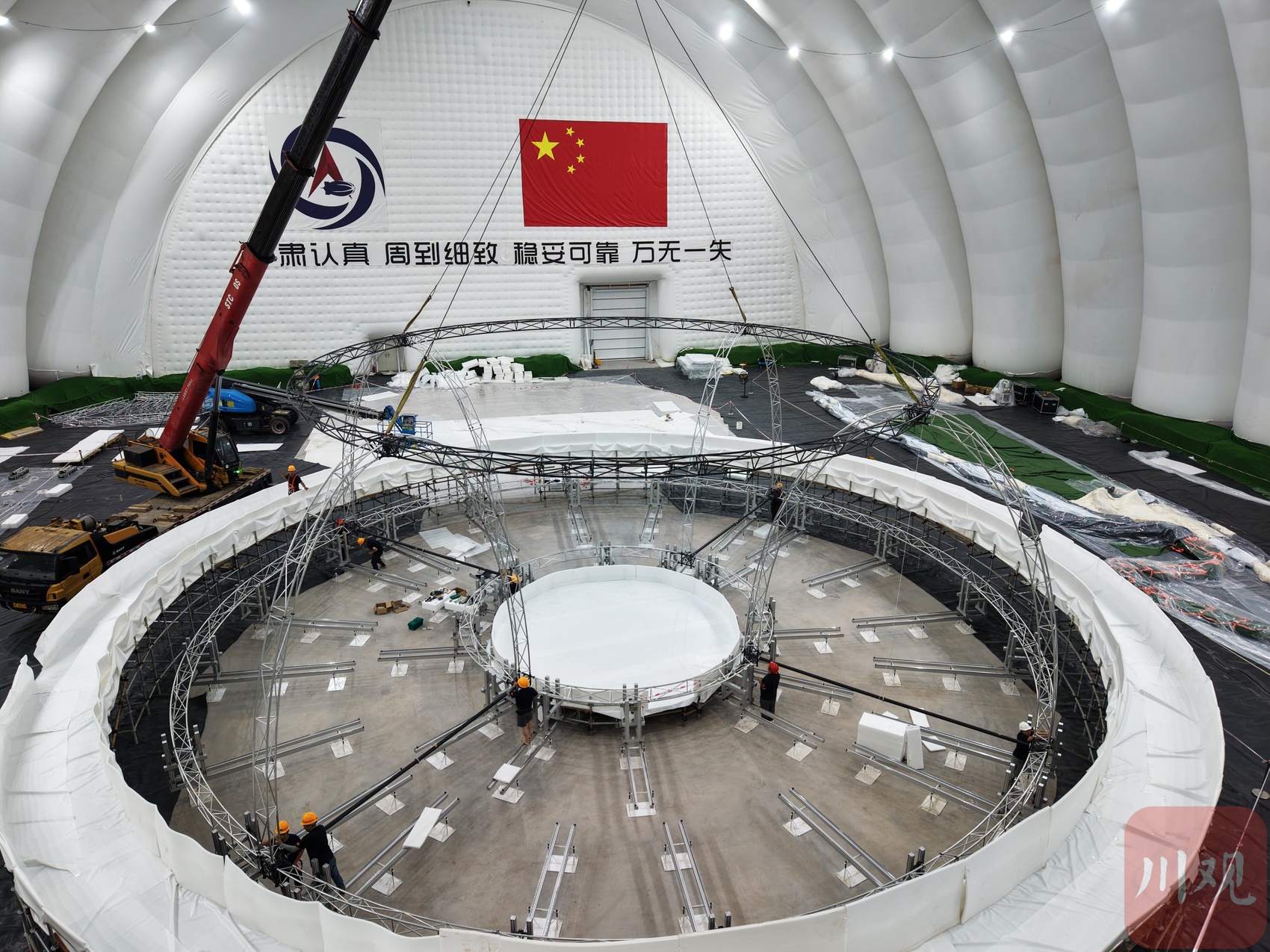
On Sept. 8, inside an air-supported assembly hangar, engineers and workers were hoisting the outer envelope skeleton system of an all-weather aerostat
【本篇文字部分内容由 AI 辅助写作,特此声明。Please note: the text in this article was created with the help of AI.】
