
Sichuan's AI Guide Dog: From Navigation to Smart Companion
2026-10-27 15:06:16 by Queenie Tan
On October 26, the "Spokesperson on Site" program, hosted by the Provincial Government Information Office and organized by Sichuan Daily All-Media, visited the Chengdu Cultural and Creative Industry Park for Persons with Disabilities. At the event, a futuristic "Made in Chengdu" intelligent guide dog robot made its debut, drawing significant media attention. What functions does this robotic dog possess? How will it transform mobility for persons with disabilities?
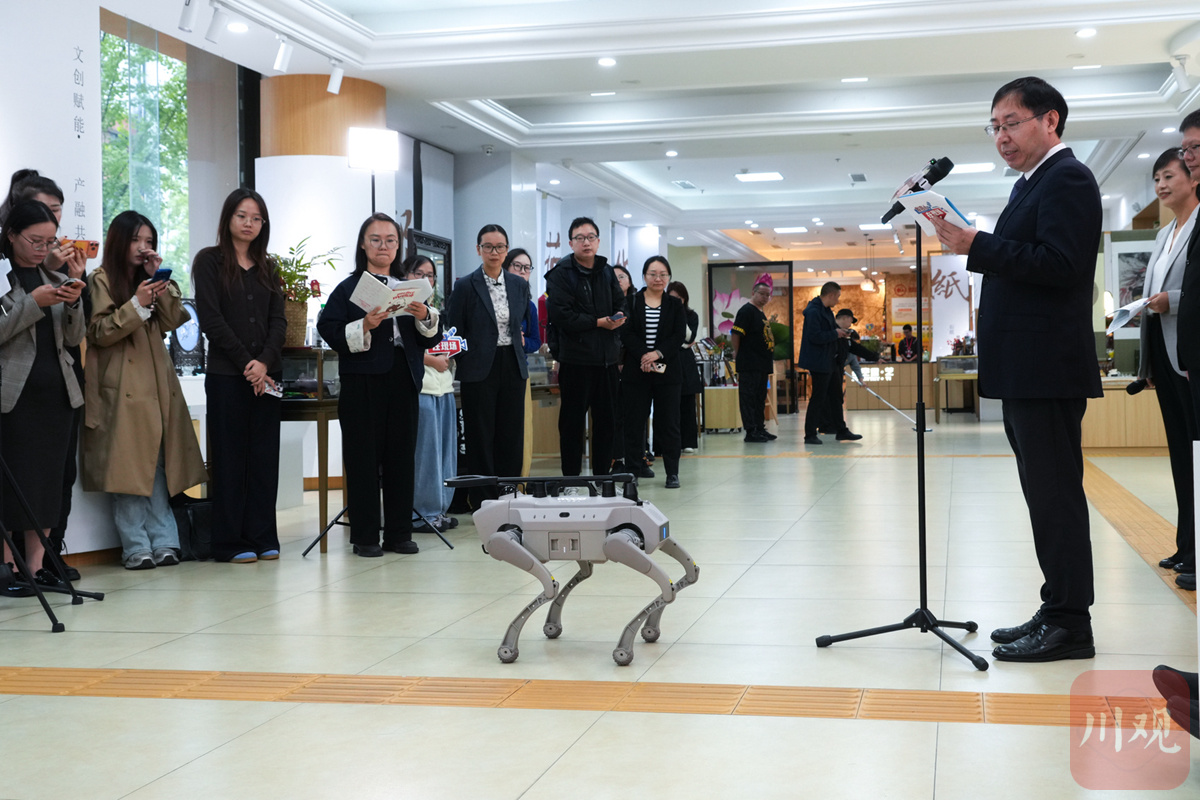
"Made-in-Chengdu" Intelligent Guide Robot
Hardware upgrades and algorithm evolution are making the guide dog robot "smarter with use". Nie Peng, brand manager of Chengdu Chuqian Technology Co., Ltd., noted that over the past year, the product has undergone profound iteration, evolving from mechanical connectivity to human-machine integration and expanding from simple navigation to intelligent companionship. Following comprehensive upgrades in hardware, algorithms, and large model interaction, reporters testing the device felt immediate haptic feedback through the traction bar upon activation, enabling the robot to enter working mode quickly and respond promptly if accidentally released.
Since its launch last December, the team has conducted intensive trials involving nearly 1,200 visually impaired participants across 11 cities and prefectures in the province. From the plateaus of Aba Prefecture to the Chengdu Plain, extensive feedback data has been used to continuously optimize algorithms, enhancing the robot's intelligence in obstacle avoidance and navigation. By the end of this year, the team plans to use Chengdu as a hub to gradually expand coverage to residential compounds, community service centers, parks, shopping malls, and government affairs centers. The product supports both individual ownership and shared usage through social resources.
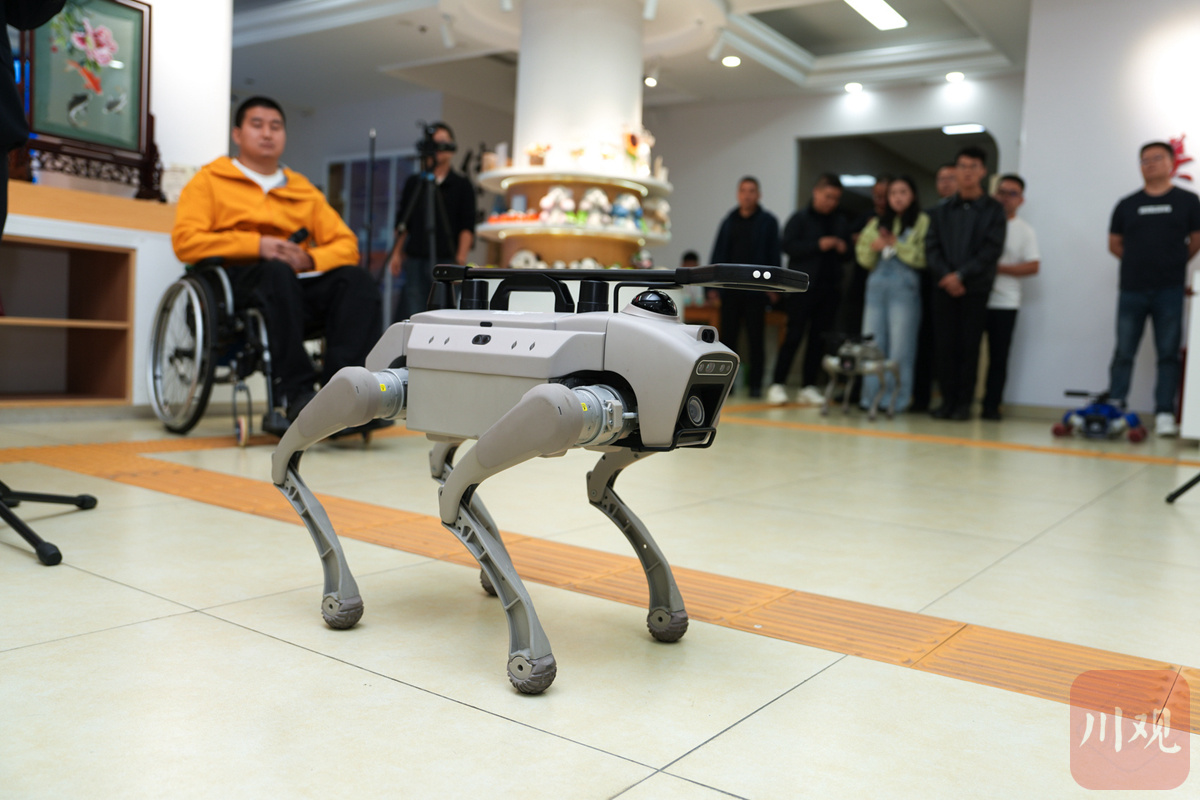
"Made-in-Chengdu" Intelligent Guide Robot
The robotic dog serves not only as a mobility aid outdoors but also transforms into a companion at home, dynamically addressing the emerging needs of persons with disabilities. Nie Peng stated that following the large model upgrade, the robot can engage in conversation, retrieve information, and provide weather updates. It can even offer travel recommendations based on weather forecasts; for instance, if rain is expected within an hour, it suggests postponing or rescheduling outings. Additionally, the team has developed compatible anti-slip footwear to handle various road conditions, including wet surfaces after rain, tiled floors, and unpaved ground.
During usage, visually impaired users have expressed further expectations, such as recognizing surroundings, identifying vegetables at markets, and distinguishing products in supermarkets. The R&D team acknowledged that the personalized needs of the visually impaired are far more diverse than anticipated. Nie Peng observed that many of these needs were previously suppressed or overlooked. Today, empowered by technology, persons with disabilities can pursue their ideal lives just as able-bodied individuals do, which embodies the true significance of technology-assisted disability support.
【本篇文字部分内容由 AI 辅助写作,特此声明。Please note: the text in this article was created with the help of AI.】
