
Sichuan Artisan Spends 40 Years Restoring Sanxingdui Relics
2026-10-26 17:56:15 by Queenie Tan
In late autumn, inside the cultural relic restoration studio of the Sanxingdui Museum, Guo Hanzhong, a National Moral Model, is guiding assistant Yin Huan in coloring bronze artifacts. Molds, pigments, and custom-made tools are neatly arranged on the workbench, while a desk lamp clearly illuminates the patterns on the vessel's surface. As Yin Huan gently applies color with her brush, Guo explains that the coloring process must be done in layers. It is the most meticulous task in restoration, embodying the principle that 'fine craftsmanship requires patience'.
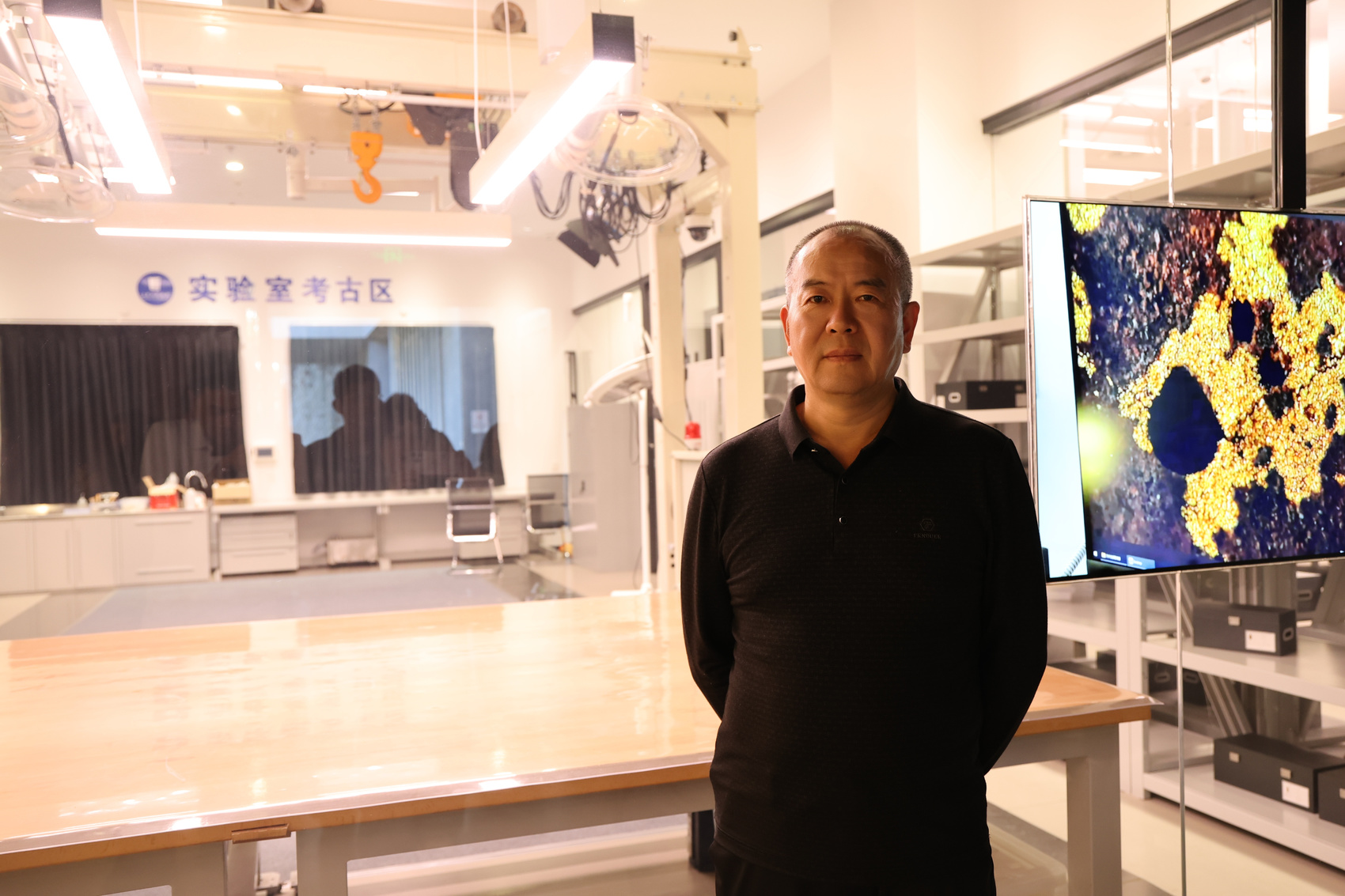
Guo Hanzhong. Photo by Han Jiawei
The 58-year-old Guo currently serves as deputy director of the Cultural Relics Preservation Department and senior technician at the Sanxingdui Museum. Over more than four decades, he has restored the luster of over 6,000 precious cultural relics. The heritage site he safeguards encompasses ruins including city walls and sacrificial areas dating from 4,500 to 2,900 years ago, providing compelling evidence of the diverse yet integrated nature of Chinese civilization.
From its opening in 1997 to the inauguration of the new museum building in 2023, national treasures such as the giant standing bronze figure and the bronze sacred tree have told the story of ancient Shu to the world. As a 'National Civilized Unit', the museum places equal emphasis on protection, research, and public education. Through regular guided tours, science popularization, and volunteer services, it has burnished its reputation as a beacon of civilization with its profound cultural heritage and high-quality services.
In 1984, a 16-year-old Guo started as an apprentice on an archaeological team, taking the initiative to learn the trade. Two years later, he became a disciple of master restorer Yang Xiaowu. His master had him sweep floors for three months to temper his character: 'Restoring cultural relics is about cultivating one's mind. If you cannot endure solitude and patience, you will never piece together fragmented history.'
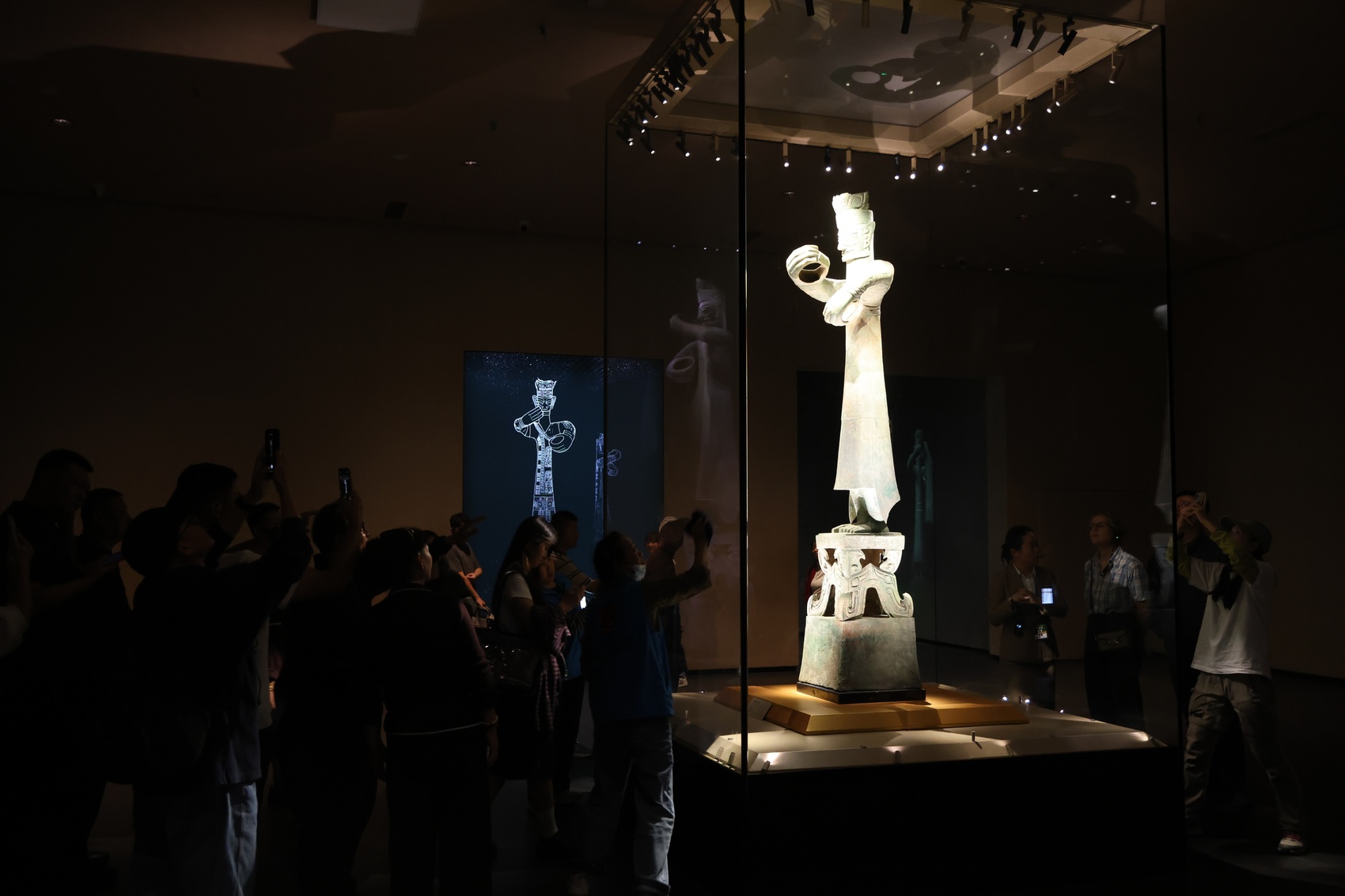
The Bronze Standing Figure at the Sanxingdui Museum. Photo by Han Jiawei
This lesson resonated deeply with him during the restoration of the No. 1 Bronze Sacred Tree. When unearthed, the nearly 4-meter-tall tree lay in more than 200 fragments, with no blueprints or precedents to guide the work. In search of a single fragment depicting a dragon's tail, he rummaged through waste piles for three days until his fingers were raw. He innovated riveting and casting techniques, spending six years to make the 3.96-meter-tall sacred tree 'stand' again, creating what is now the museum's prized treasure.
Restoration strictly adheres to the iron rule of being 'evidence-based and following ancient methods', forbidding any conjecture. Faced with challenges such as corrosion and powdering, he developed techniques like shaping and filling. For the decayed ivory tusks from Pit No. 3, he pioneered a wax mold reinforcement method, hailed as a textbook-level operation. Additionally, he has crafted nearly 300 custom tools, including wooden calipers, which have become essential instruments for solving complex problems.
Guo emphasizes that traditional craftsmanship must be integrated with modern technology. While 3D scanning and printing have become valuable aids today, core processes such as mold making, casting, and reshaping still rely on painstaking manual work to ensure the safety of the artifacts.
In recent years, Guo has shifted his focus to passing on his skills. More than ten apprentices in his studio spend their first year solely piecing together pottery shards to master basic skills, and he personally steps in when they encounter difficulties. Apprentice Yin Huan, who entered the field in 2016, has restored nearly 1,000 various cultural relics and won provincial awards. In 2022, Guo led the establishment of a Skills Master Studio, and the key personnel he trained have become the backbone of cultural relic preservation efforts.
'I cannot finish restoring all the treasures of Sanxingdui in my lifetime, but my apprentices can.' Guo views restoration as a relay race and advocates against keeping skills secret. What he imparts is not just craftsmanship, but also reverence for cultural relics, aiming to let them 'speak' and pass on cultural codes. The museum has also established a fully transparent restoration hall, allowing visitors to witness firsthand the transformation of fragments into national treasures.
From the bronze mask with protruding eyes to the human head portrait wearing a gold mask, the Grade I cultural relics he has restored have been exhibited in more than 20 countries, telling the story of Chinese civilization. Service measures within the museum have also been continuously improved to optimize the visitor experience. Forty years on, he remains in his studio, meticulously mending the passage of time for a 3,000-year-old civilization stroke by stroke, while more young people are taking up his brushes and carving knives.
【本篇文字部分内容由 AI 辅助写作,特此声明。Please note: the text in this article was created with the help of AI.】
