
Chengdu's Hibiscus: Autumn Blooms in Daily Life
2026-10-23 18:26:24 by Queenie Tan
Over a millennium ago, Chengdu earned the name 'Rongcheng', or 'City of Hibiscus', due to the widespread planting of hibiscus along its city walls. In 1983, the cotton rose hibiscus was officially designated as the city flower, long celebrated by the poetic moniker 'Frost-Defying Flower'.
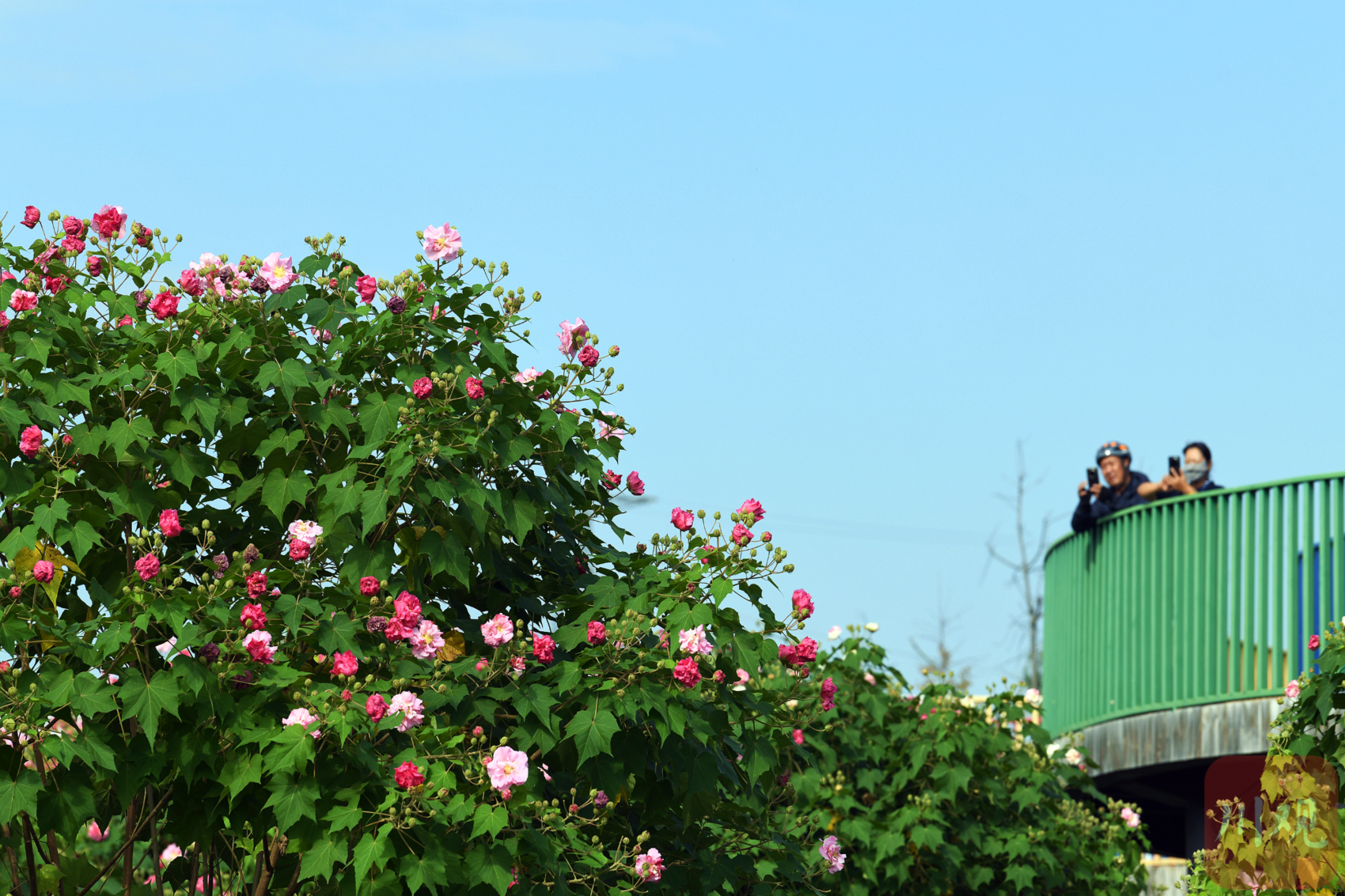
On Oct. 20, hibiscus flowers were in full bloom at Jinshan Forest Park in Jintang County, Chengdu, attracting many residents to visit and take photos. Photo by Jiang Yongping, a contracted photographer for C Vision
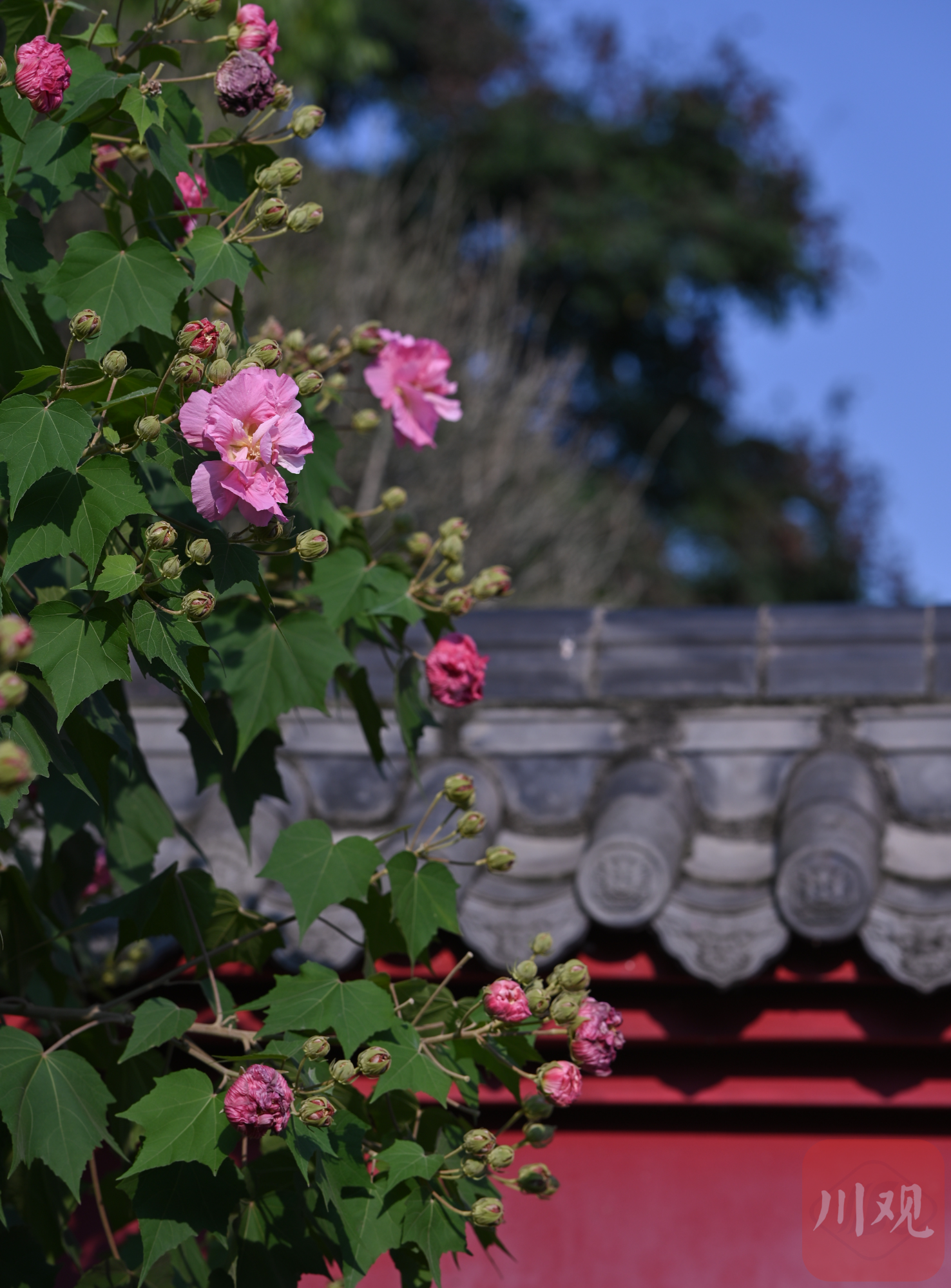
On Oct. 20, hibiscus flowers were in full bloom at Qinglong Lake Wetland Park in Chengdu. Photo by He Haiyang, a contracted photographer for C Vision
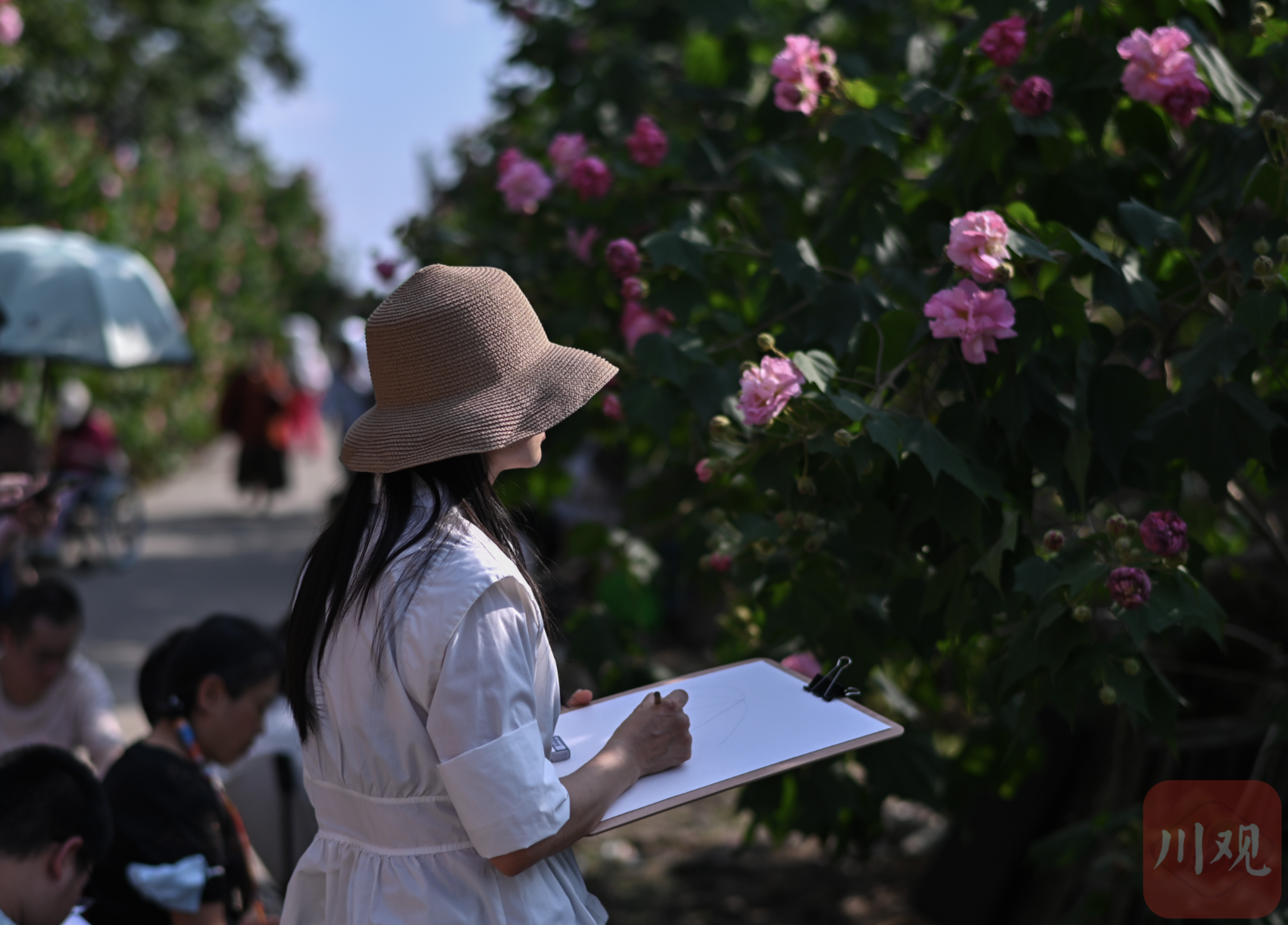
On Oct. 20, citizens sketched under hibiscus trees at Qinglong Lake Wetland Park in Chengdu. Photo by He Haiyang, a contracted photographer for C Vision
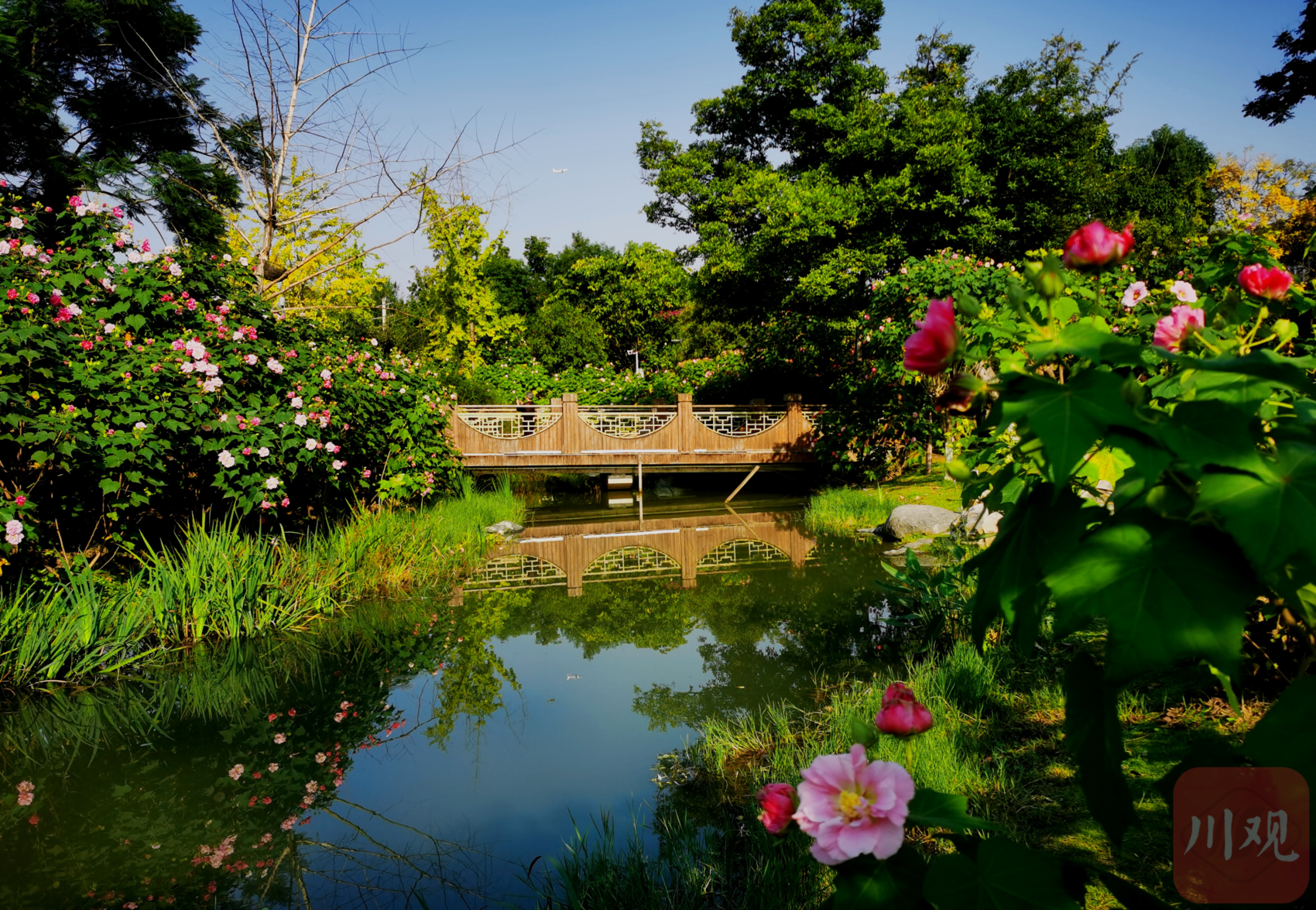
On Oct. 20, hibiscus flowers were in full bloom at Tianfu Furong (Hibiscus) Garden in Wuhou District, Chengdu, with their reflections shimmering on the water within the park. Photo by Zheng Nangui, a contracted photographer for C Vision
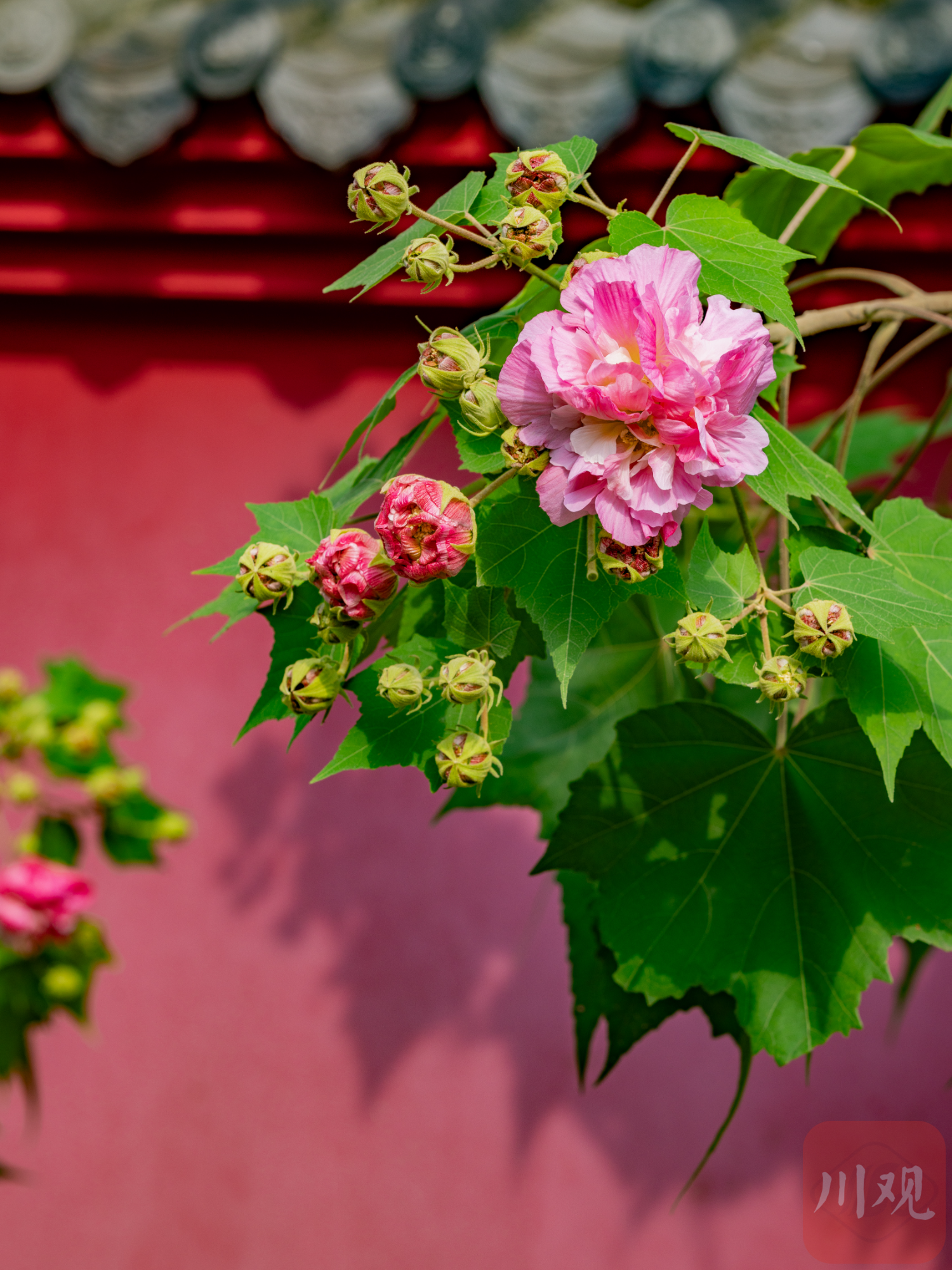
On Oct. 19, outside the Ming Shu King Tomb Museum in Longquanyi District, Chengdu, hibiscus flowers were in full bloom, attracting many residents to take photos and check in at the site. Photo by Jiang Lan, a contracted photographer for C Vision
This October, the autumn blooms have opened on schedule, extending far beyond the confines of parks. Along Hanggang Road in Shuangliu District, continuous walls of hibiscus have become popular photo spots for residents; at the green space near the Hongjiang Road intersection, citizens have moved their birthday parties to the flowerside; and within Central Park, visitors set up tents and enjoy picnics beneath the blossoms. In Baita Community, Huangshui Subdistrict, 105-year-old Granny Fu and 84-year-old Granny Xiang paused before the flowers to admire the city bloom that has accompanied them throughout their lives. In Tianfu Hibiscus Garden, Wuhou District, 35,000 hibiscus plants are blooming in succession as children cycle through the floral corridors, residents stroll leisurely with their pets, and bridge reflections shimmer on water surfaces adorned with hibiscus.
Chengdu's city flower has never been a solitary bloom confined to exhibition halls. It thrives along streets, within communities, and inside parks, seamlessly intertwined with the rhythms of autumn daily life: birthday gatherings, woodland picnics, leisurely dog walks, and moments shared among old friends.
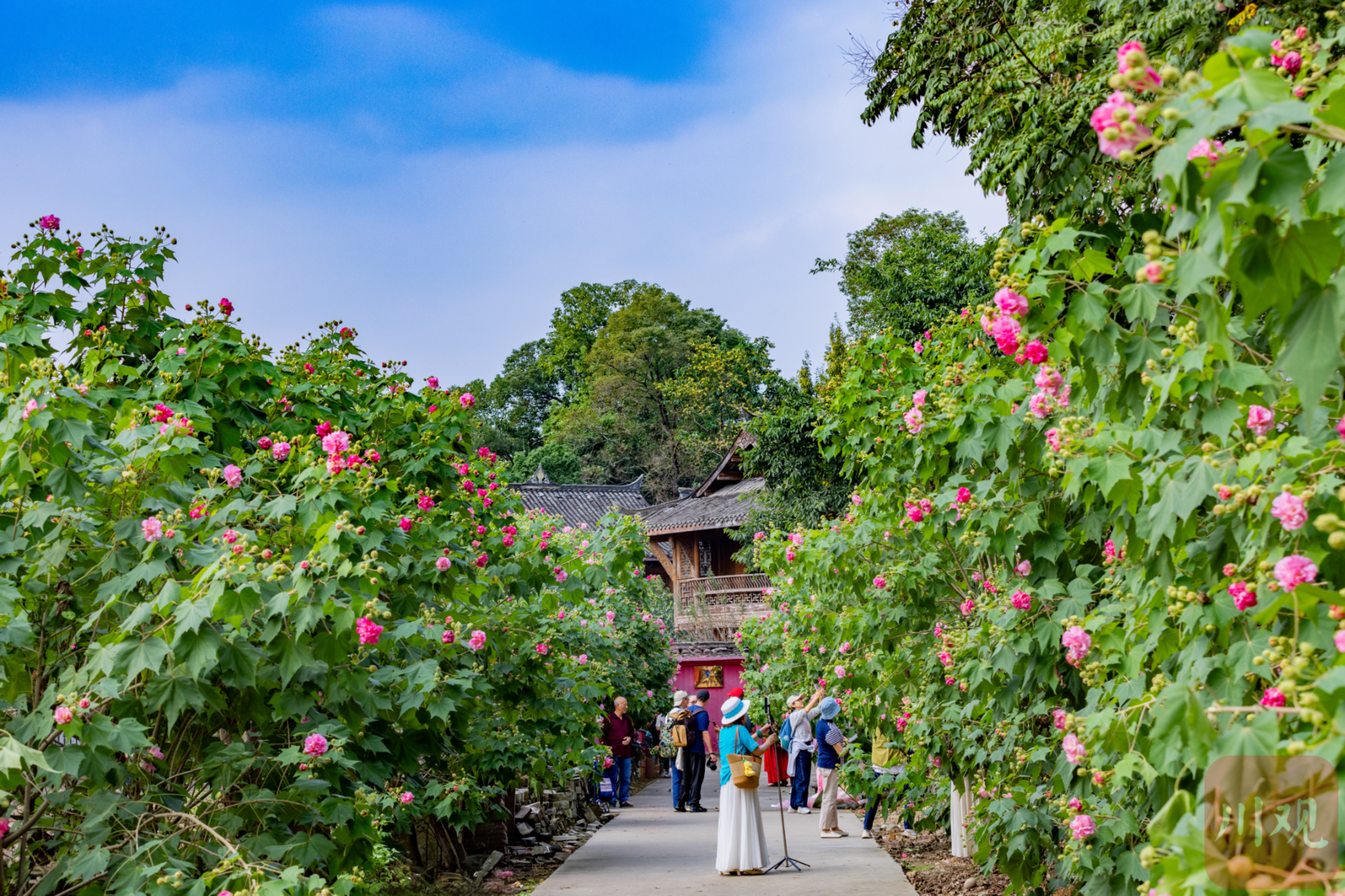
On Oct. 19, outside the Ming Shu King Tomb Museum in Longquanyi District, Chengdu, hibiscus flowers were in full bloom, attracting many residents to take photos and check in at the site. Photo by Jiang Lan, a contracted photographer for C Vision
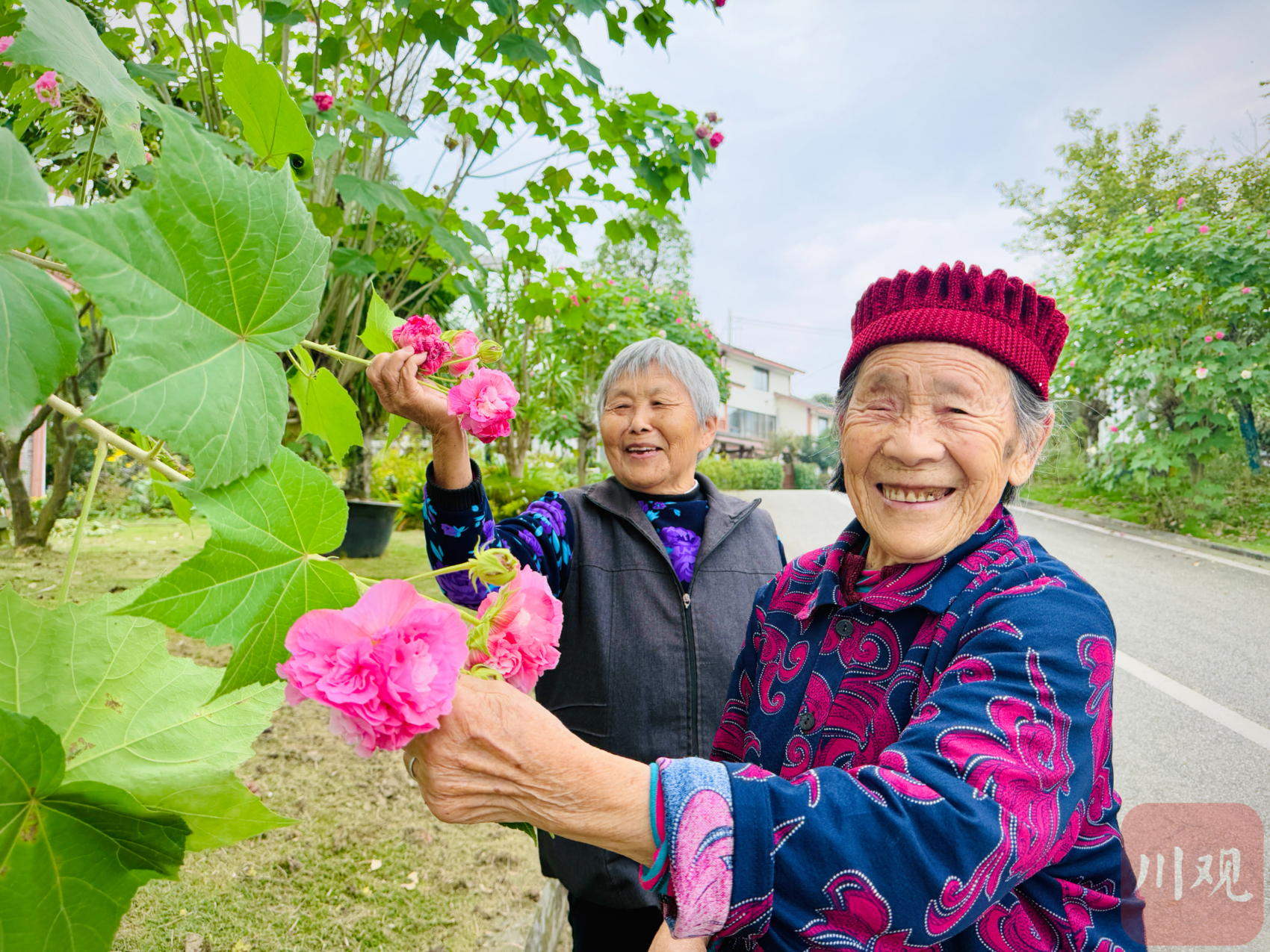
On Oct. 19, in Baita Community, Huangshui Subdistrict, Shuangliu District, Chengdu, cotton roses were in full bloom as 105-year-old Granny Fu and 84-year-old Granny Xiang paused to admire the flowers. Photo by Gong Bangyu, a contracted photographer for C Vision
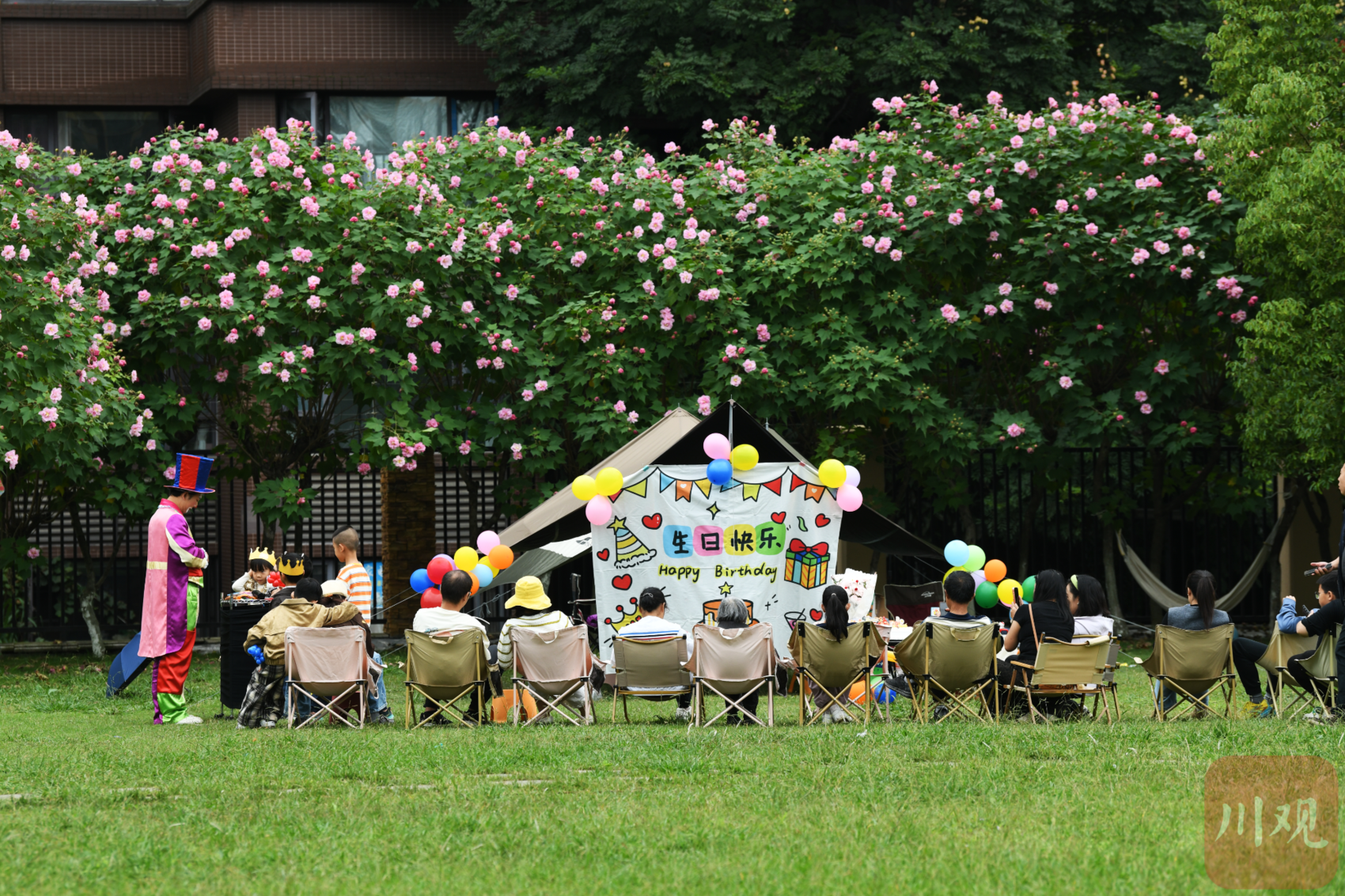
On Oct. 17, at a green space located at the intersection of Hanggang Road and Hongjiang Road in Shuangliu District, Chengdu, Sichuan Province, hibiscus flowers were in full bloom as residents held a birthday party beneath the flowers. Photo by Zhong Shujun, a contracted photographer for C Vision
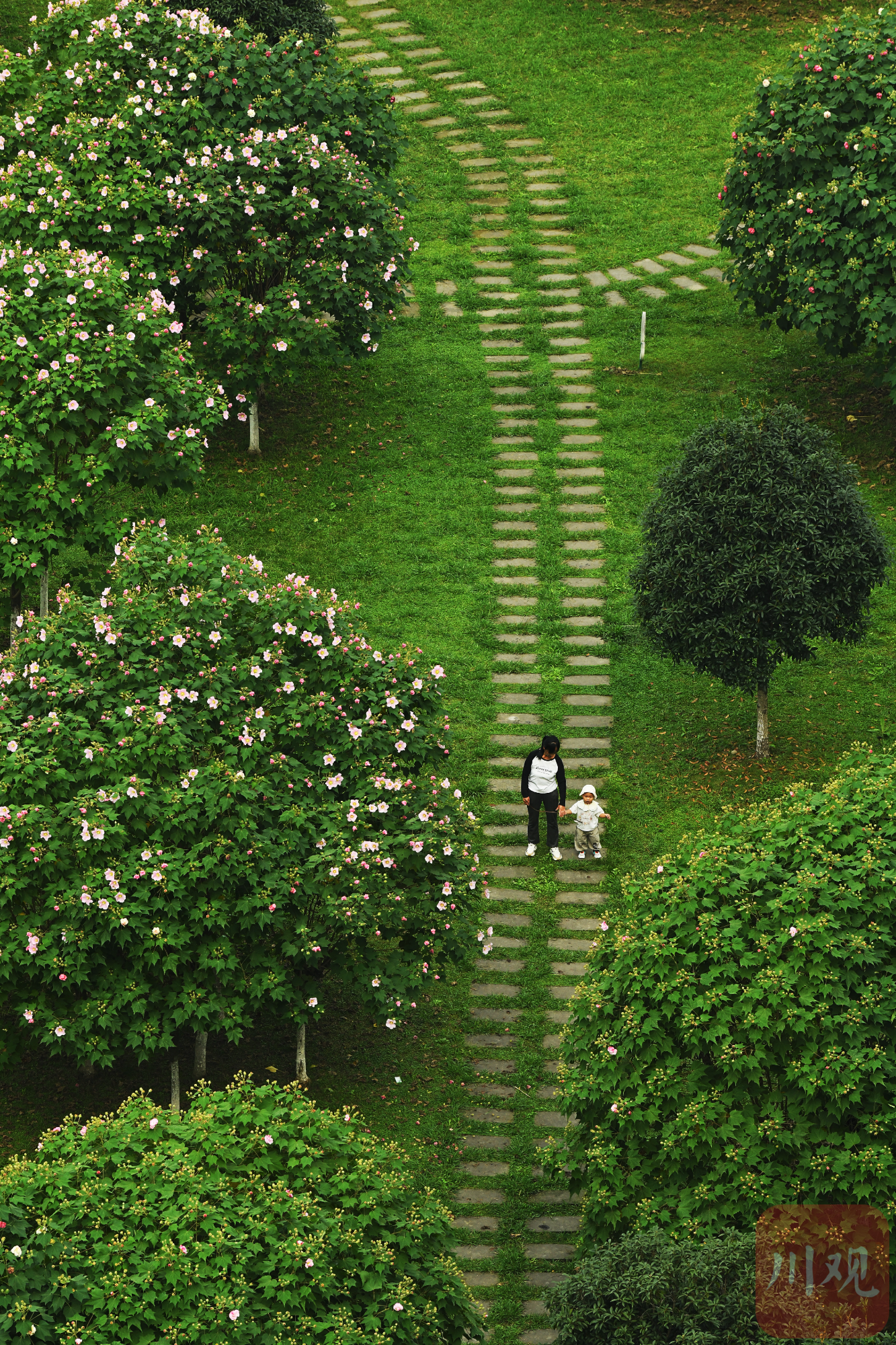
On Oct. 17, hibiscus flowers were in full bloom along the green belt of Hongjiang Road in Dongsheng Subdistrict, Shuangliu District, Chengdu, as residents strolled along the stone paths
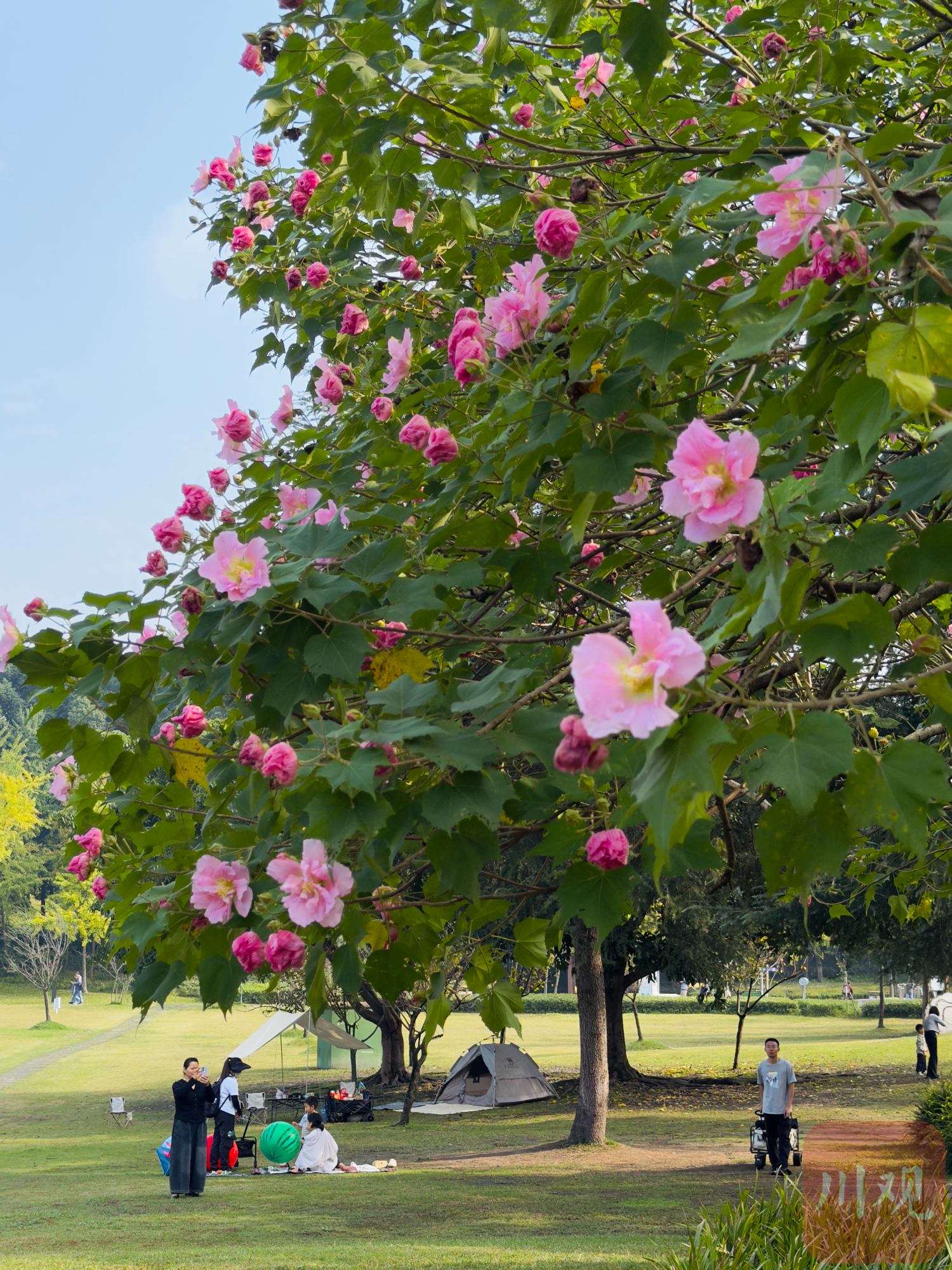
On Oct. 17, hibiscus flowers were in full bloom at Central Park in Shuangliu District, Chengdu, attracting residents to visit and take photographs
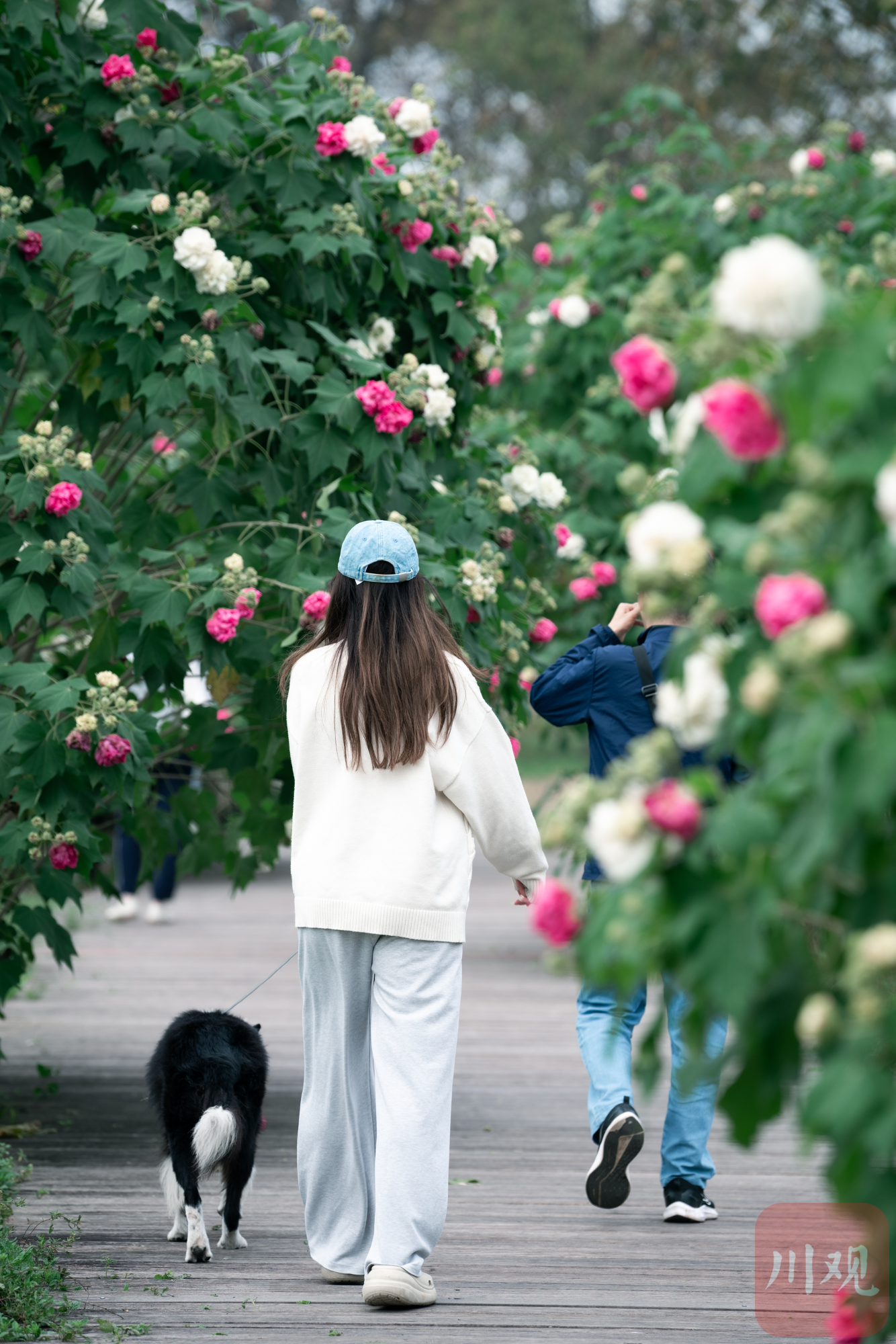
On Oct. 17, hibiscus flowers were in full bloom at Tianfu Furong Garden in Wuhou District, Chengdu, as residents strolled beneath the flowers with their dogs. Photo by Cao Rui, a contracted photographer for C Vision
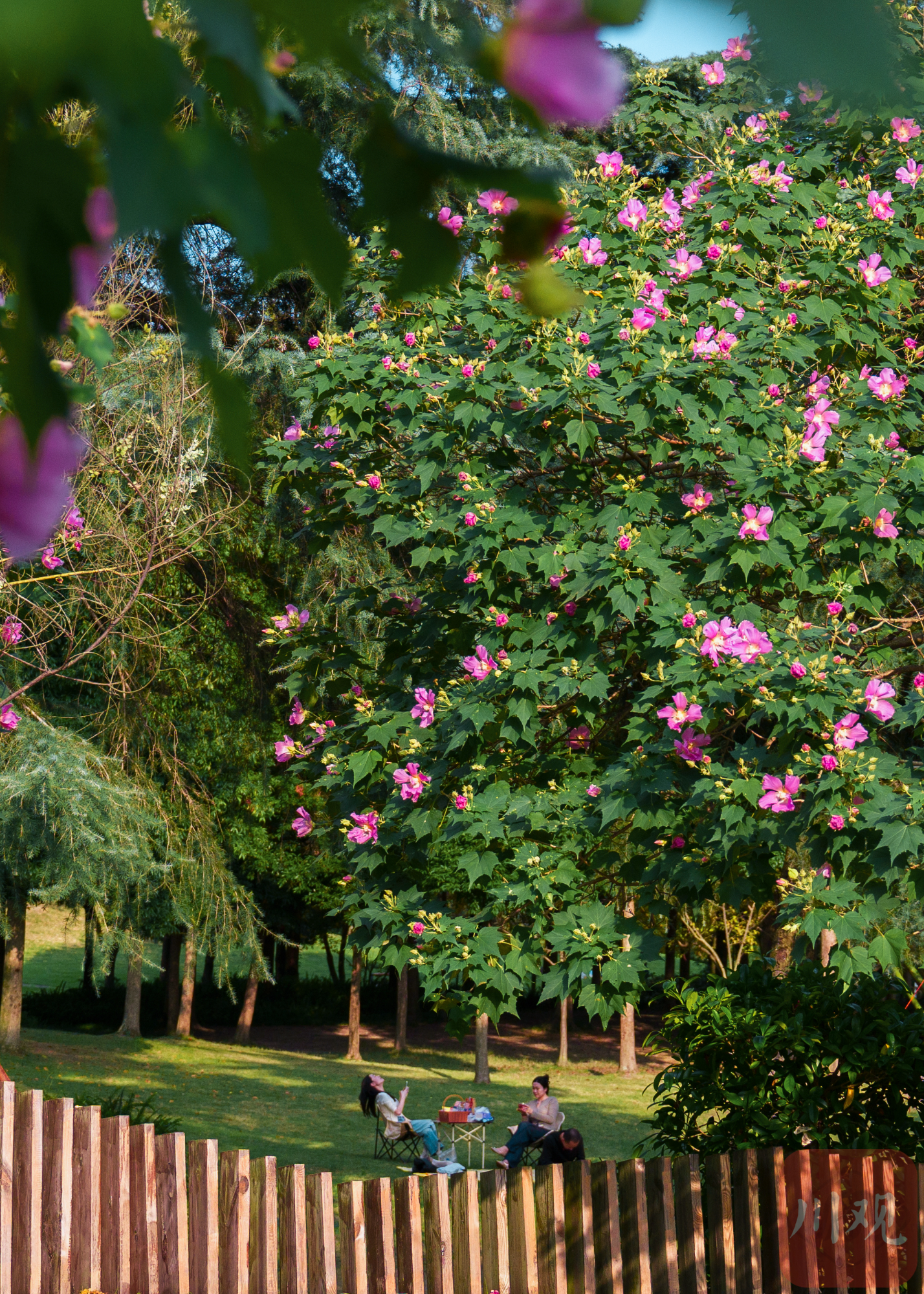
On Oct. 15, at Shuangliu Central Park in Chengdu, hibiscus flowers were in full bloom along the lake as residents enjoyed the flowers beneath the trees. Photo by Li Jia, a contracted photographer for C Vision
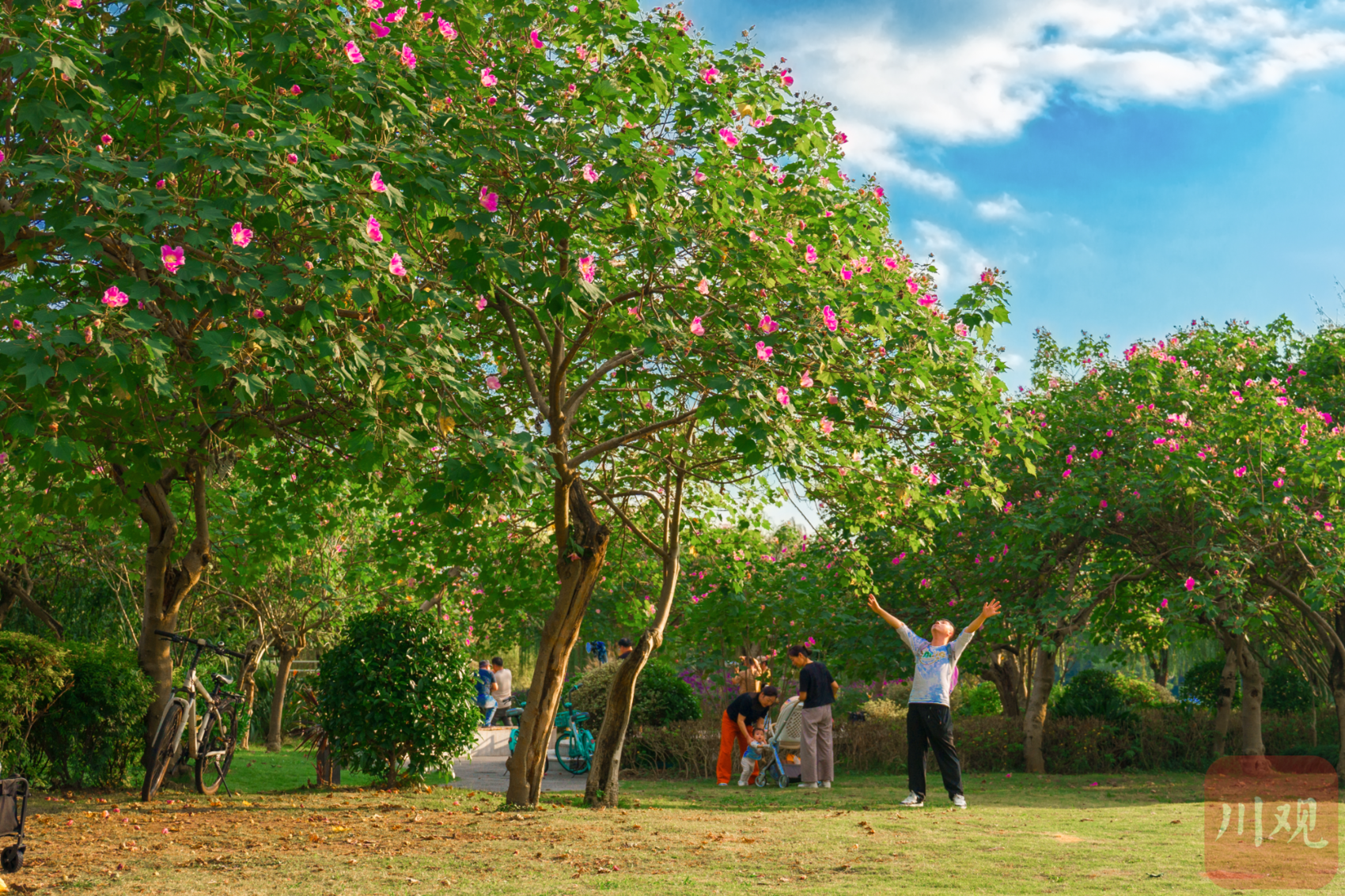
On Oct. 15, visitors enjoyed the blooming hibiscus flowers under the trees on the central lawn of Shuangliu Central Park in Chengdu. Photo by Li Jia, a contracted photographer for C Vision
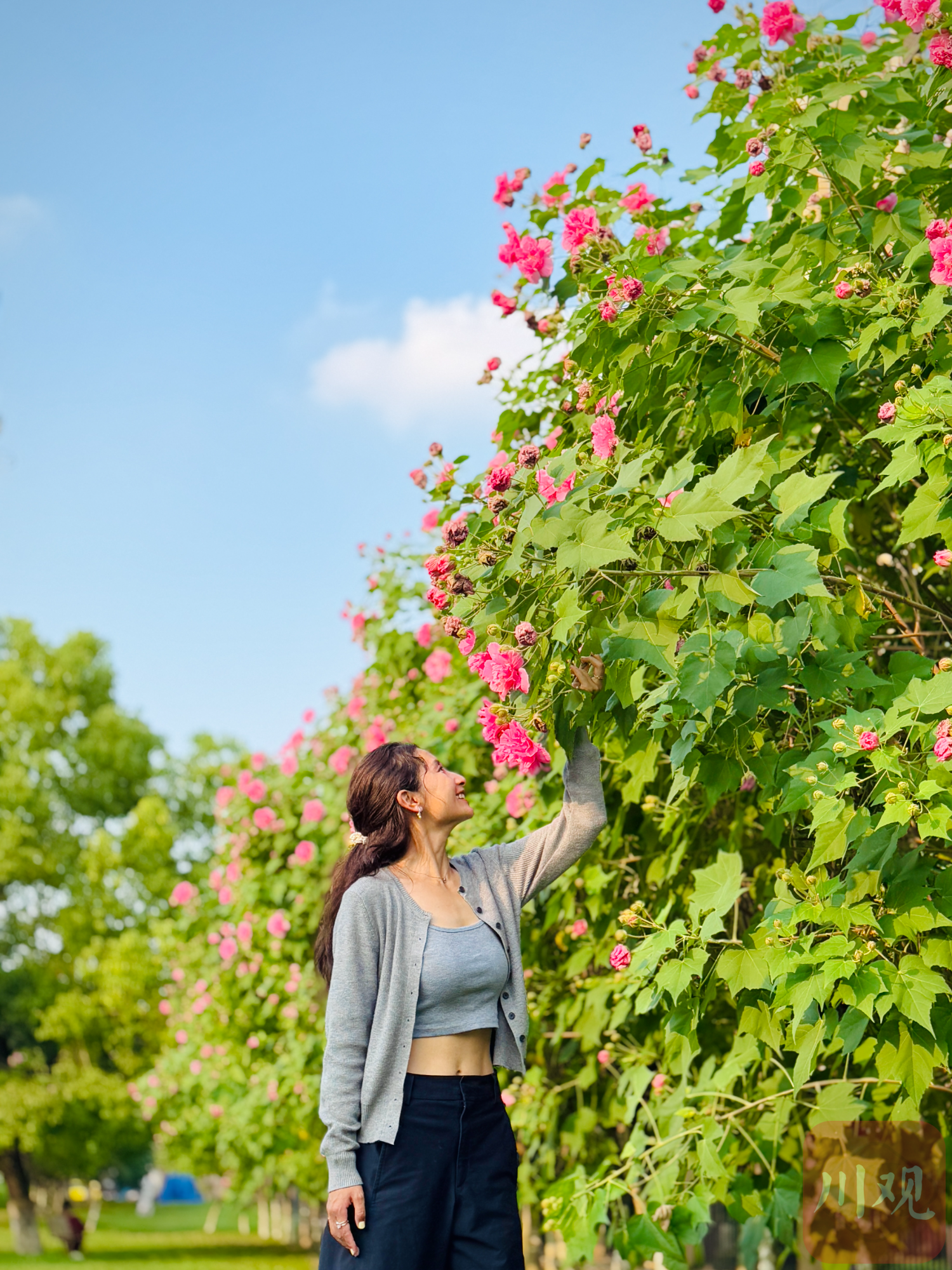
On Oct. 13, residents took photos in front of a wall of hibiscus flowers on Hanggang Road in Shuangliu District, Chengdu. Photo by Gong Bangyu, a contracted photographer for C Vision
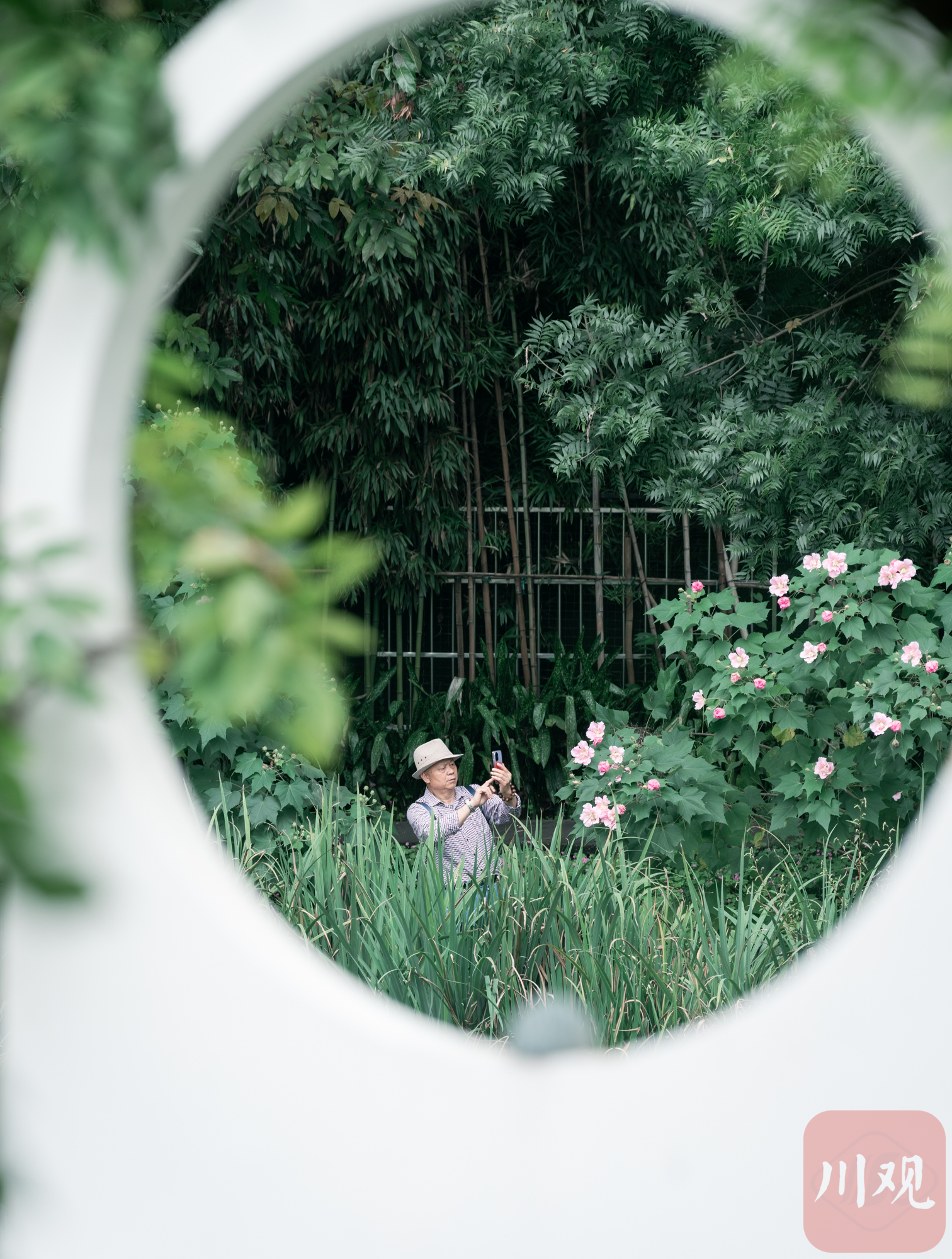
On Oct. 11, hibiscus flowers were in full bloom at Tianfu Furong Garden in Wuhou District, Chengdu, Sichuan Province, as residents strolled through the park to enjoy the flowers and take photographs. Cao Rui, contracted photographer for C Vision
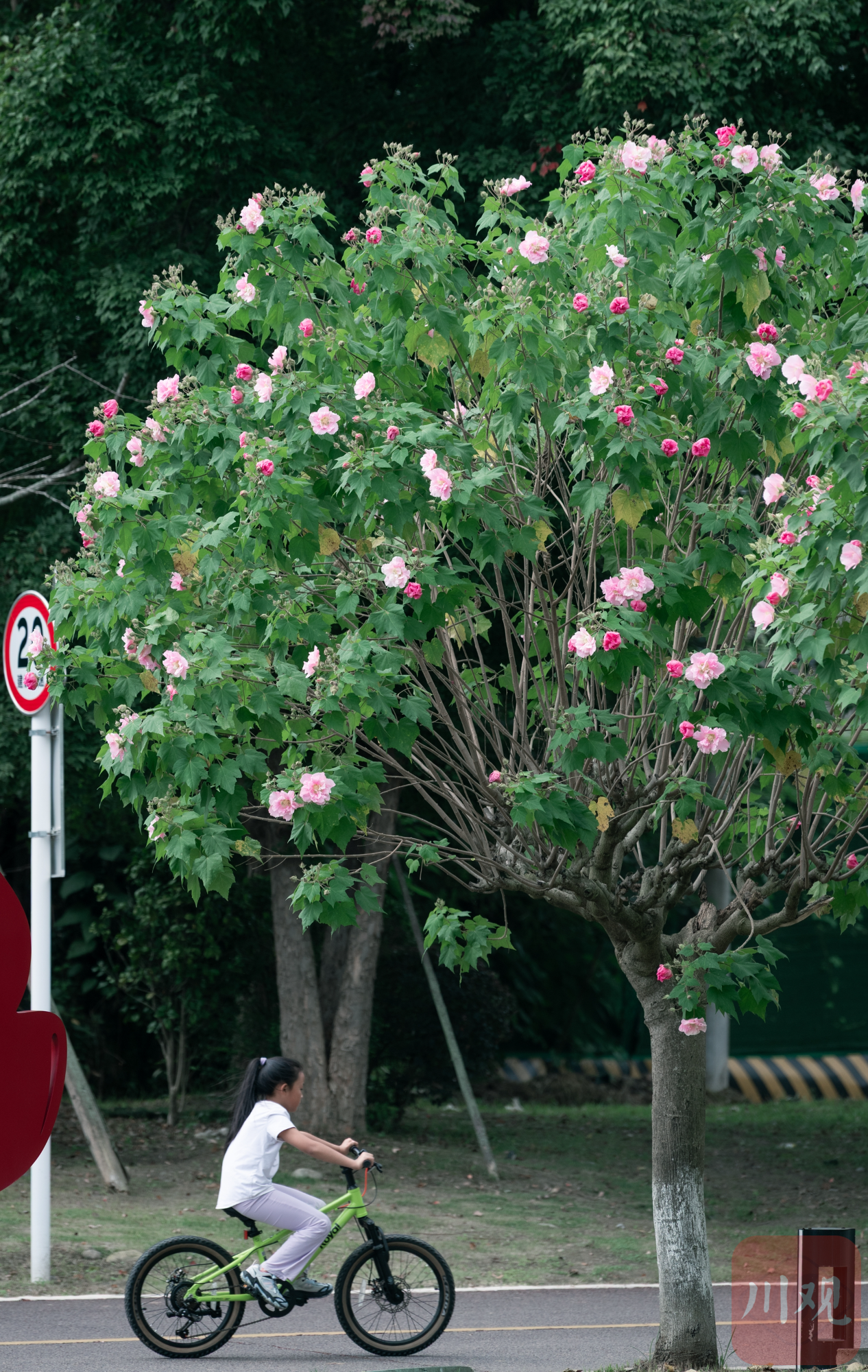
On Oct. 11, hibiscus flowers were in full bloom at Tianfu Furong Garden in Wuhou District, Chengdu, as children cycled beneath the flowers. Photo by Cao Rui, a contracted photographer for C Vision
Photographing the hibiscus requires specific techniques. Regarding optimal timing: morning offers the purest colors with dew-kissed petals; evening provides soft lighting that deepens petals to crimson, ideally paired with sunset glow; and post-rain clarity enhances petal translucency. For lens and parameter recommendations: use macro lenses for texture details and telephoto lenses of 85mm or longer to compress entire branches; employ wide apertures to blur backgrounds; and utilize backlighting or side-backlighting to render petals translucent with golden edges.
In terms of composition, photographers may shoot upward against blue skies; use foreground bokeh to focus on background subjects or architecture; create color contrast by pairing pink blossoms with green water or red walls; and adopt low angles beneath the flowers to frame people, sky, and blooms together. Bonus elements include close-ups of dew-covered petals, compositions featuring fallen flowers on the ground, human interactions beneath the blossoms, and water reflections.
Key pitfalls to avoid include: harsh midday overhead light that washes out petal detail; cluttered backgrounds—instead seek clean backdrops of walls, sky, or water; and missing the fleeting morning color transition, as individual blooms last only a single day.
【本篇文字部分内容由 AI 辅助写作,特此声明。Please note: the text in this article was created with the help of AI.】
