
Reviving Ancient Armor: How a Sichuan Artisan Empowers Rural Women
2026-10-23 16:23:49 by Queenie Tan
Tucked away along a secluded side street in the old town of Shehong, Suining, two red doors open to reveal Cheng Xi's workshop. Recently, seven ministries and departments, including the Ministry of Agriculture and Rural Affairs, jointly announced the list of candidates for the 2026 National Master Rural Artisan Cultivation Program. Thanks to his craftsmanship in designing and manufacturing traditional Chinese armor, Cheng was selected as one of 100 national cultivation candidates.
The approximately 200-square-meter workshop is roughly divided into three sections: a warehouse on the left stacked with fabric and raw materials; a central area furnished with tables, chairs, and displays for receiving clients; and the remaining two-thirds of the space dedicated to design, pattern-making, and production, appearing cluttered yet organized. Although the interior is visible at a glance, passing neighbors often peek in curiously to ask questions. Cheng patiently explains that this is a workshop dedicated to crafting the battle armor worn by generals in period dramas. The owner himself, with long hair and a beard, dressed in traditional attire, blends seamlessly with the armor plates and suits displayed around him, as if he had traveled from ancient times.
As a member of the post-1990s generation, Cheng grew up watching classic period dramas such as "Romance of the Three Kingdoms" and "Ming Dynasty 1566". Scenes of warriors donning armor for battle planted a seed in his heart to carry forward traditional culture.
Ten years ago, he conceived the idea of establishing a studio to handcraft armor. His father, once a renowned blacksmith in the surrounding villages, knew well the hardships of making a living through metalworking and initially opposed the venture strongly. However, passion outweighed the pursuit of a stable livelihood. In 2018, the signboard "Yuhengsi" was hung above the door of a renovated carpentry shed, marking the official establishment of the workshop.
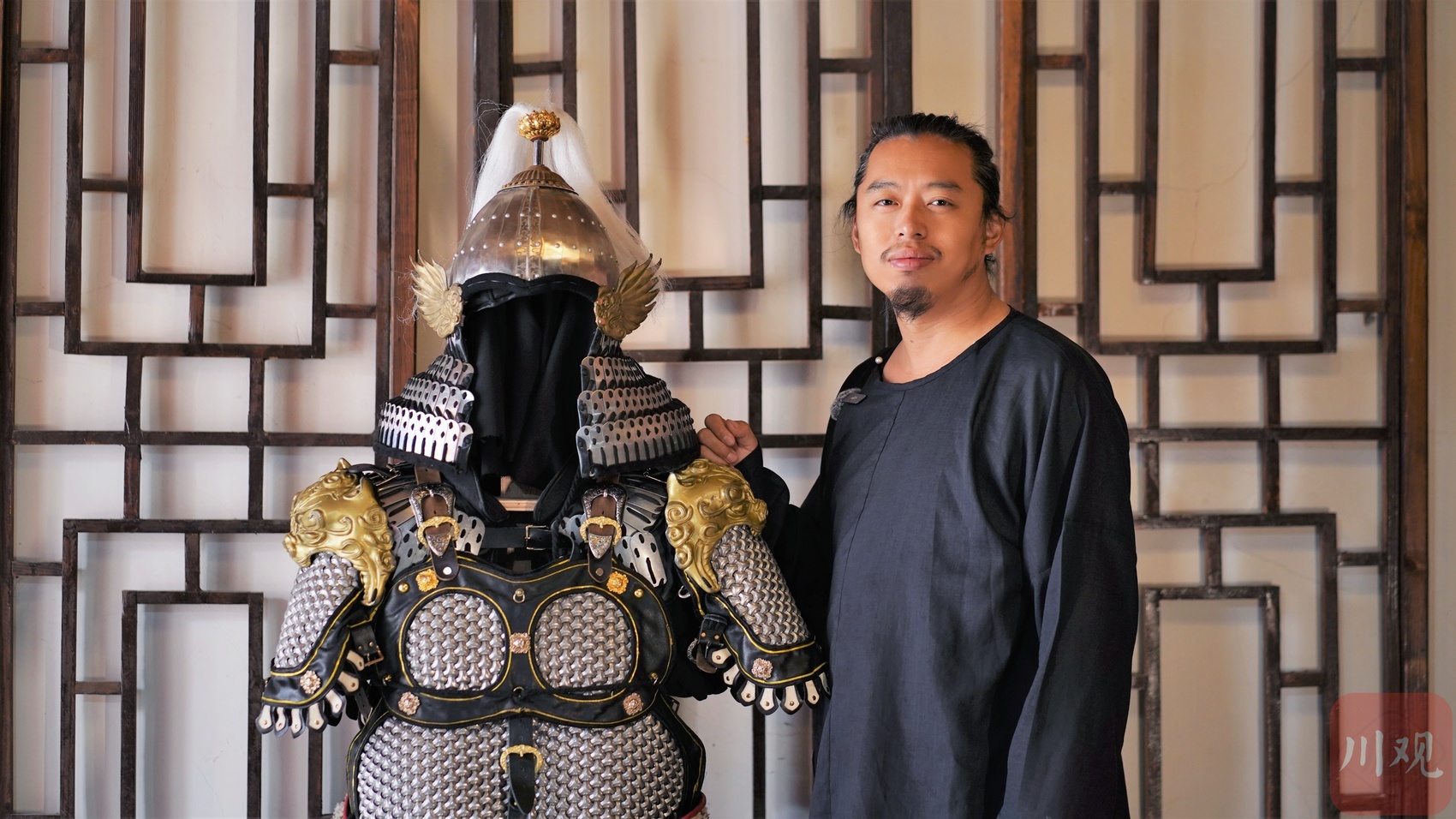
Cheng Xi and the armor he crafted
Although he had watched his grandfather practice blacksmithing since childhood and possessed some basic knowledge of metalwork, Cheng found that armor making was far more complex than he had imagined. Creating a complete suit of armor requires determining its historical style and undergoing more than a dozen intricate procedures, including gathering historical records, selecting materials, smelting, forging, and pattern-making. Due to strict regulations on armor in ancient times, surviving documentation is scarce. Cheng often found himself at a loss when faced with vague historical records stating only things like "several catties of iron to form this shape". He systematically studied historical knowledge by consulting publicly available museum resources, comparing photographs to create drawings, and studying specialized books such as "History of Chinese Armor".
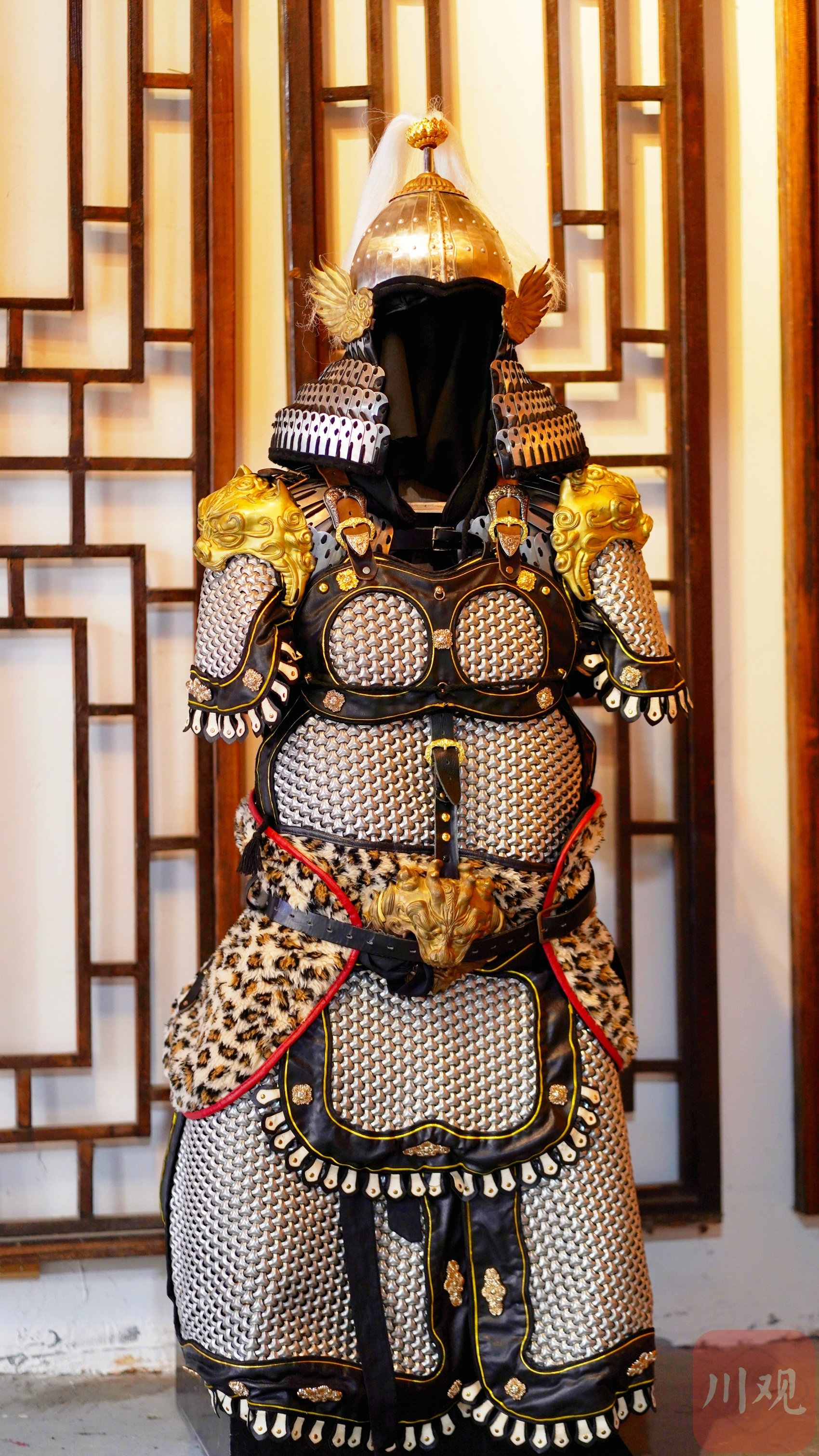
Finished armor
The craftsmanship passed down from his ancestors proved invaluable at critical moments. For instance, when making rivets for helmets, the initial drilling method often resulted in misalignment and rework. He later switched to the punching technique commonly used by his grandfather, which relied on greater explosive force to achieve precise holes. As he systematically mastered the forms of armor from different dynasties—including iron lamellar armor and scale armor—as well as techniques such as hammering, lacing, and punching, Cheng accumulated solid historical knowledge and armor-making skills.
Learning through trial and imitation, and with his finished products becoming increasingly refined, Cheng began listing his works on online platforms, gradually opening up a market for this niche craft. Initially, buyers were merely individual enthusiasts adding pieces to their collections, but later, production crews for period dramas also sought him out. Last year, armor crafted by his workshop appeared on male protagonists in several hit TV series. What surprised Cheng even more was that the rise of the short-drama industry in Shehong brought a surge of orders to his workshop. The influx of hundreds of production crews has created new occupations such as background actors and prop masters, leaving the workshop urgently needing more hands to provide prop services.
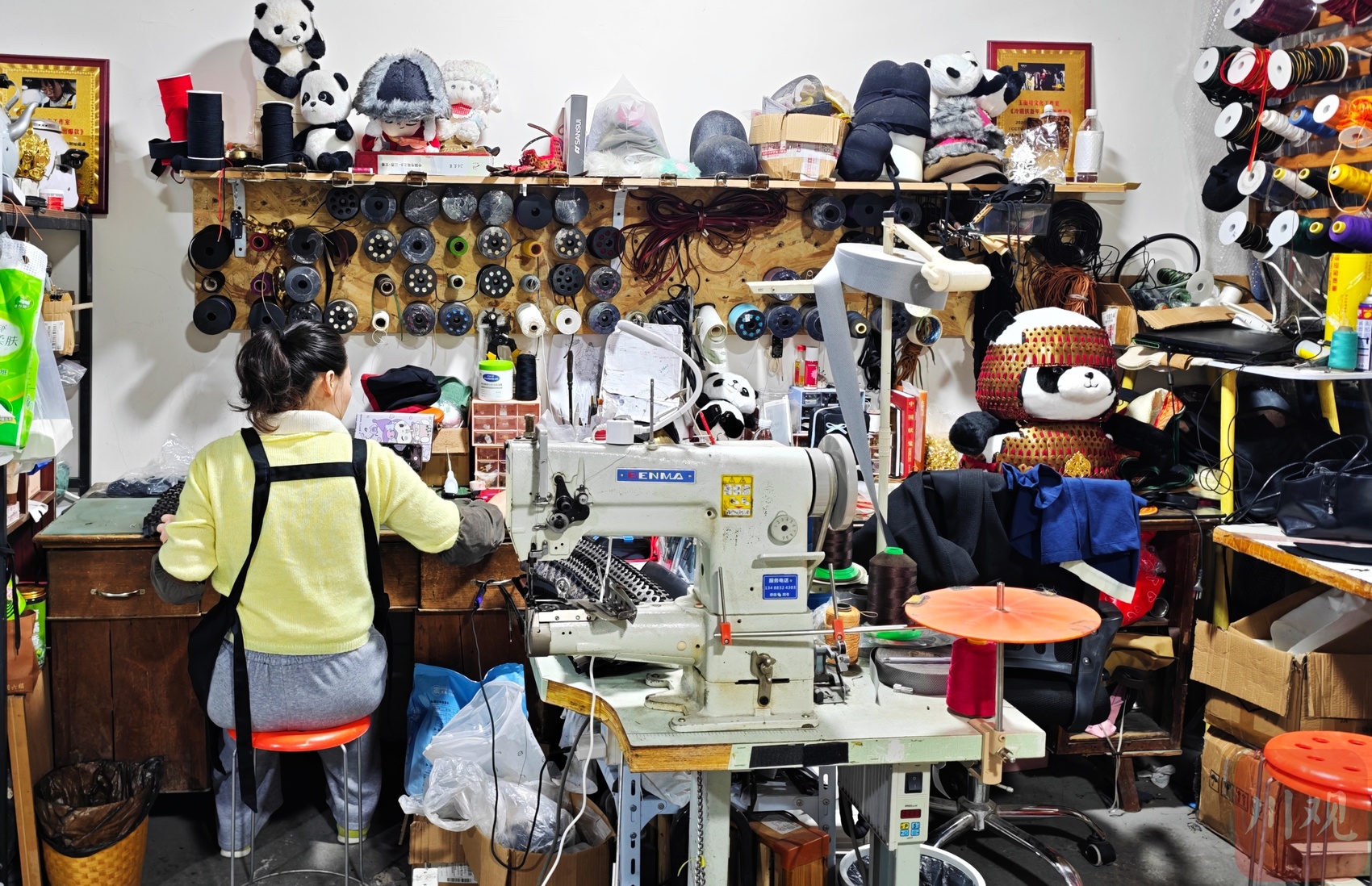
The workshop has provided employment opportunities for left-behind women who need to balance family responsibilities with the need to increase their household income
Shehong exports an average of 330,000 workers annually, leaving behind a group of women who need to balance family responsibilities with income generation. Cheng discovered that simpler tasks in armor making, such as sewing and weaving, suited their needs perfectly. Huang Lila and Shui Ning became the first full-time employees, responsible for polishing and weaving, allowing them to care for their families while earning a stable income. Additionally, the workshop provides materials and tutorials to more than 20 rural women, enabling them to complete orders from home. Women who have signed contracts earn an average monthly income of 2,000 to 3,000 yuan, with the highest reaching over 4,000 yuan.
From being recognized as a Local Cultural Talent of Sichuan Province to becoming a candidate for the National Master Rural Artisan Cultivation Program, Cheng has garnered numerous honors. Last year, his workshop produced nearly 300 suits of armor, priced between 10,000 and 20,000 yuan each. Combined with cultural and creative products, the annual output value reached approximately 3 million yuan. Faced with challenges posed by AI-generated short dramas, the booming popularity of NPC-led interactive tours in cultural tourism parks has opened up new sales channels for the workshop. As the year draws to a close, preparing NPC costumes for Spring Festival park events has kept the workshop busy once again. Cheng plans to delve deeper into the cultural tourism market, carrying forward his craftsmanship while driving employment for more local residents.
【本篇文字部分内容由 AI 辅助写作,特此声明。Please note: the text in this article was created with the help of AI.】
