
Snowy mountains, silent yet eternal monuments
2026-10-22 10:24:51 by SICC
On September 29, the “Snow-Covered Mountains and Treacherous Grasslands: Cultural Relics Exhibition Commemorating the 90th Anniversary of the Victory of the Long March of the Chinese Workers’ and Peasants’ Red Army” opened at the Museum of the Communist Party of China. The immersive scene titled “The Central Red Army Crossing Jiajin Mountain,” together with the relics and specimens on display, silently recounts those arduous and glorious years.

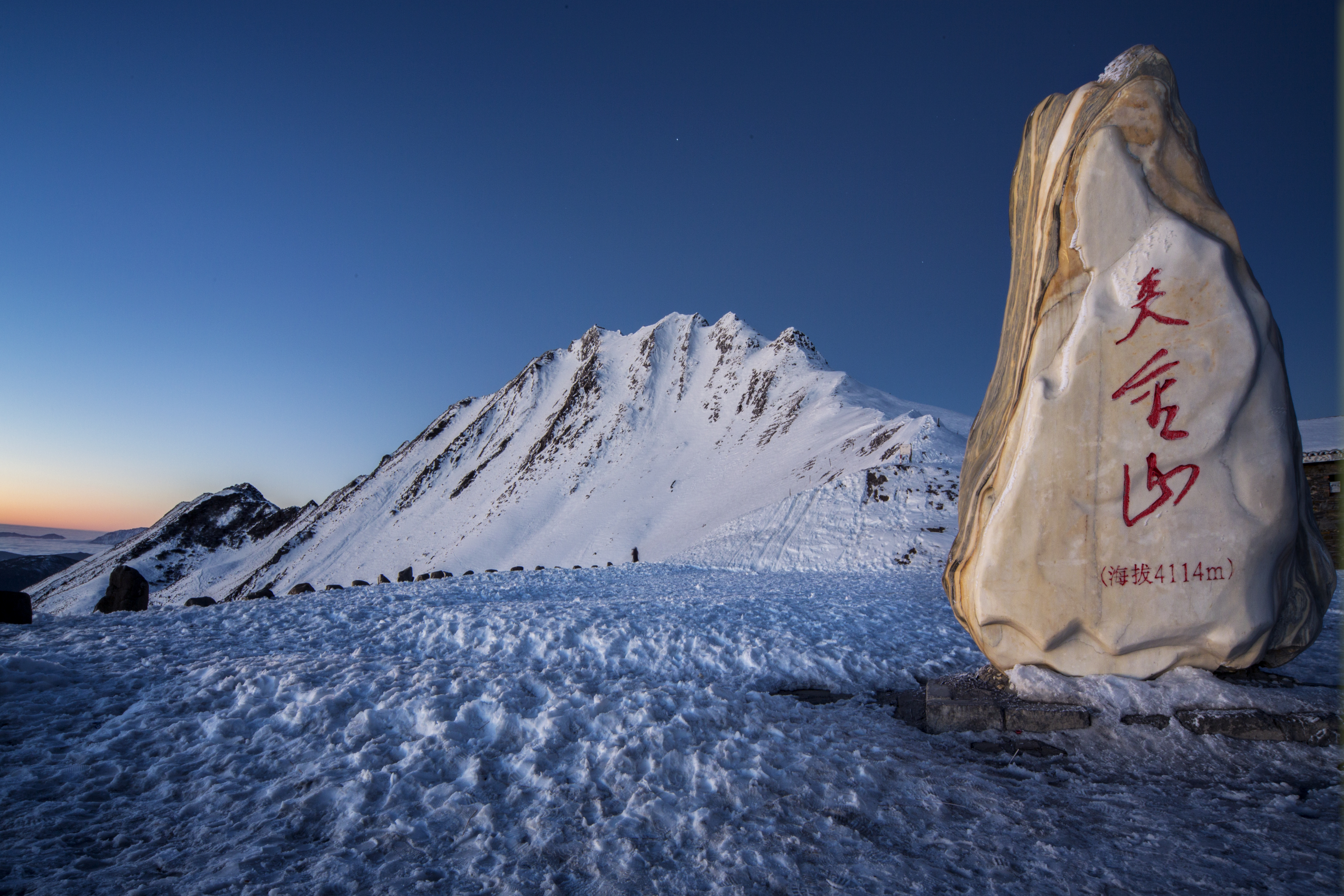
Jiajin Mountain lies on the border between Baoxing County in Ya’an City and Xiaojin County in Aba Tibetan and Qiang Autonomous Prefecture. Rising more than 4,000 meters above sea level, it was the first snow-covered mountain crossed by the Central Red Army during the Long March, and is thus widely known as “the First Snow Mountain of the Long March.” A local folk ballad says: “Jiajin Mountain, Jiajin Mountain, where no bird can fly over and no mortal dares to climb; to cross Jiajin Mountain, one must be an immortal.”
Following the Zunyi Conference in 1935, which established Comrade Mao Zedong’s leadership, the Central Red Army crossed the Chishui River four times and made a skillful crossing of the Jinsha River before entering Sichuan. At the Luding Bridge Meeting, it was decided that the army would march north into northwestern Sichuan to join forces with the Red Army’s Fourth Front Army, making the crossing of Jiajin Mountain inevitable. On June 8, the Red Army broke through the enemy’s defense lines in Lushan and Baoxing and advanced to Qiaoqi at the southern foot of Jiajin Mountain. The enemy had destroyed the Changpianqiao plank road, the only route from Baoxing to Jiajin Mountain. With the help of local residents, the vanguard troops repaired two kilometers of the plank road in just over half a day. Over the next seven days and seven nights, more than 30,000 soldiers of the Central Red Army passed through in succession. Most of these soldiers came from southern China and wore only thin clothes and straw sandals. Some chewed dried chili peppers to ward off the cold, while some sat down and never rose again. At every stage of the march, soldiers made the ultimate sacrifice.
On the afternoon of June 12, 1935, the vanguard of the Central Red Army, having crossed Jiajin Mountain, met the vanguard of the Fourth Front Army, which had come to meet them, at Muchenggou. The two armies subsequently joined forces at Maogong, breaking through the Kuomintang forces’ encirclement, pursuit, and interception. In the memorial hall, the 13 characters carved on a stone stele — “Only the Communist Party of China can save China and the poor” — remain clearly visible to this day. Feng Yuanting, a stonemason from Cangxi, crossed Jiajin Mountain twice. After being wounded, he recarved a merit stele dating from the Qianlong reign of the Qing Dynasty with this Red Army slogan, leaving a silent testament to his faith.
Ninety-one years on, Jiajin Mountain still towers majestically, while the story at its foot is being rewritten by a tunnel. On October 1, 2025, the Jiajin Mountain Tunnel on the National Highway 351 began trial operations. With a 9.35-kilometer main tunnel, it is the longest Class II highway tunnel in China. It has reduced the time needed to cross the mountain from more than one hour to just 10 minutes. The tunnel entrance is 1,134 meters lower than the mountain pass, placing the road below the snow line and thoroughly resolving the long-standing problem of winter travel disruptions caused by snow and ice for more than 110,000 residents living on either side of Jiajin Mountain.
One tunnel through the mountain has unlocked opportunities for a hundred industries. Gari Village on the southern slope was once a provincially designated poverty-stricken village. By contributing their labor, villagers built a road to the summit of Mount Dawagengzha. After the scenic area opened in 2019, 158 homestays sprang up across the village. The village collective invested its forestland in the scenic area as equity, placing its economic income among the highest in Ya’an City. Nengkaman, an inheritor of intangible cultural heritage in Jiajinshan Village, weaves yak hair into scarves and handbags and has developed more than 100 cultural and creative products, creating jobs for more than 50 women. Wang Fubin’s Tibetan fragrant pig processing plant has more than 2,000 pigs in stock, with sales exceeding 4 million yuan. At the other end of the tunnel, the Jinshan Rose Base in Xiaojin County has promoted rose cultivation across more than 15,000 mu (over 1,000 hectares), benefiting over 3,000 rural households. In 2025, the total output value of agriculture, forestry, animal husbandry, and fishery in Aba Tibetan and Qiang Autonomous Prefecture reached 19.966 billion yuan, an increase of 4.5 percent year on year. Mobile clinic vehicles from local health centers now reach remote villages and residential groups, while the rural tap-water coverage rate remains above 97 percent. Through the resolution of these “key everyday matters,” local people are experiencing the warmth of modern life.
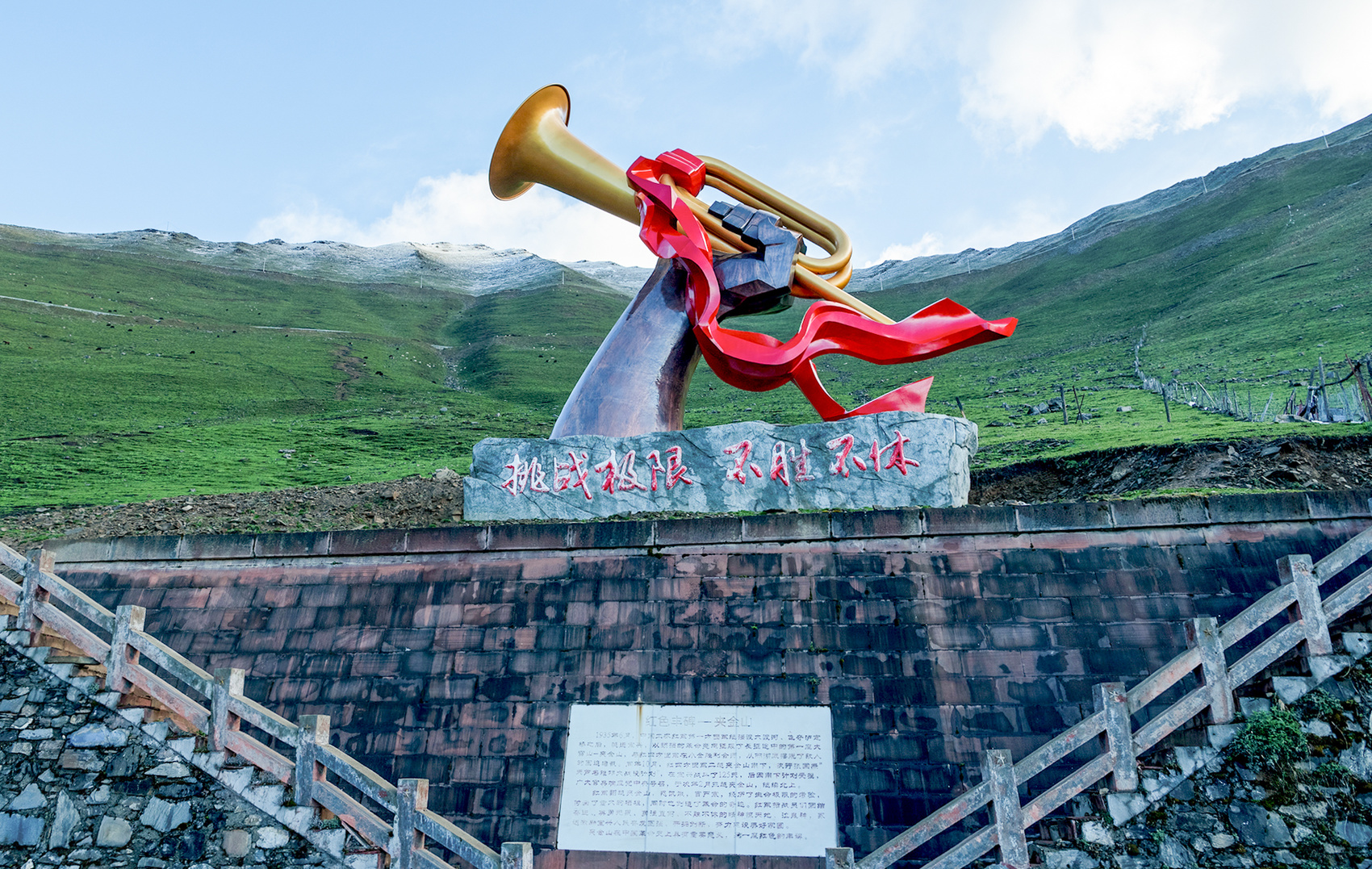
The opening of the tunnel has also brought “Retracing the Long March” into greater public view. Linking the Huishi (Force-joining) Bridge in Dawei Township with Siguniang Mountain, Baoxing has developed a route that combines the “Long March spirit, outdoor activities, and study tours,” attracting more than 2.3 million visits to revolutionary tourism sites. In June this year, 470 hiking enthusiasts reached the 4,114-meter-high mountain pass and sang “Ode to the Motherland” in chorus. University teachers and students have brought ideological and political theory classes to the foot of Jiajin Mountain, while schools have turned the mountain into a “classroom for ideological and political education on the move.” Red is the defining color of the area, and green its natural color. The “sky-air-ground-human” monitoring system in the Baoxing Area of the Giant Panda National Park is being steadily improved, and the area has been designated a provincial-level “Happy River and Lake.” Its mountains and waters are being transformed into “ecological dividends,” turning the once rugged Red Army route into an avenue of hope where industries thrive, the environment flourishes, and the people prosper.
