
M-CHAIN Launches in Sichuan: Global Experts Build Smart Disaster Warning System
2026-10-19 11:40:29 by Queenie Tan
On Oct. 18, the Global Partnership for Mountain Chain Hazards with Intelligent Early Warning and Risk Management (M-CHAIN) was launched at the State Key Laboratory of Geohazard Prevention and Geoenvironment Protection at Chengdu University of Technology.
Led by the laboratory with its director, Professor Fan Xuanmei, serving as chair, the program is being advanced in collaboration with research institutions from multiple countries, including Italy, Nepal, and the United Kingdom. In July this year, M-CHAIN was included in the third list of recognized programs under the United Nations' "International Decade of Sciences for Sustainable Development (2024-2033)". It is the first geohazard-related project led by China to be selected for this initiative and the only project of its kind in this cohort.
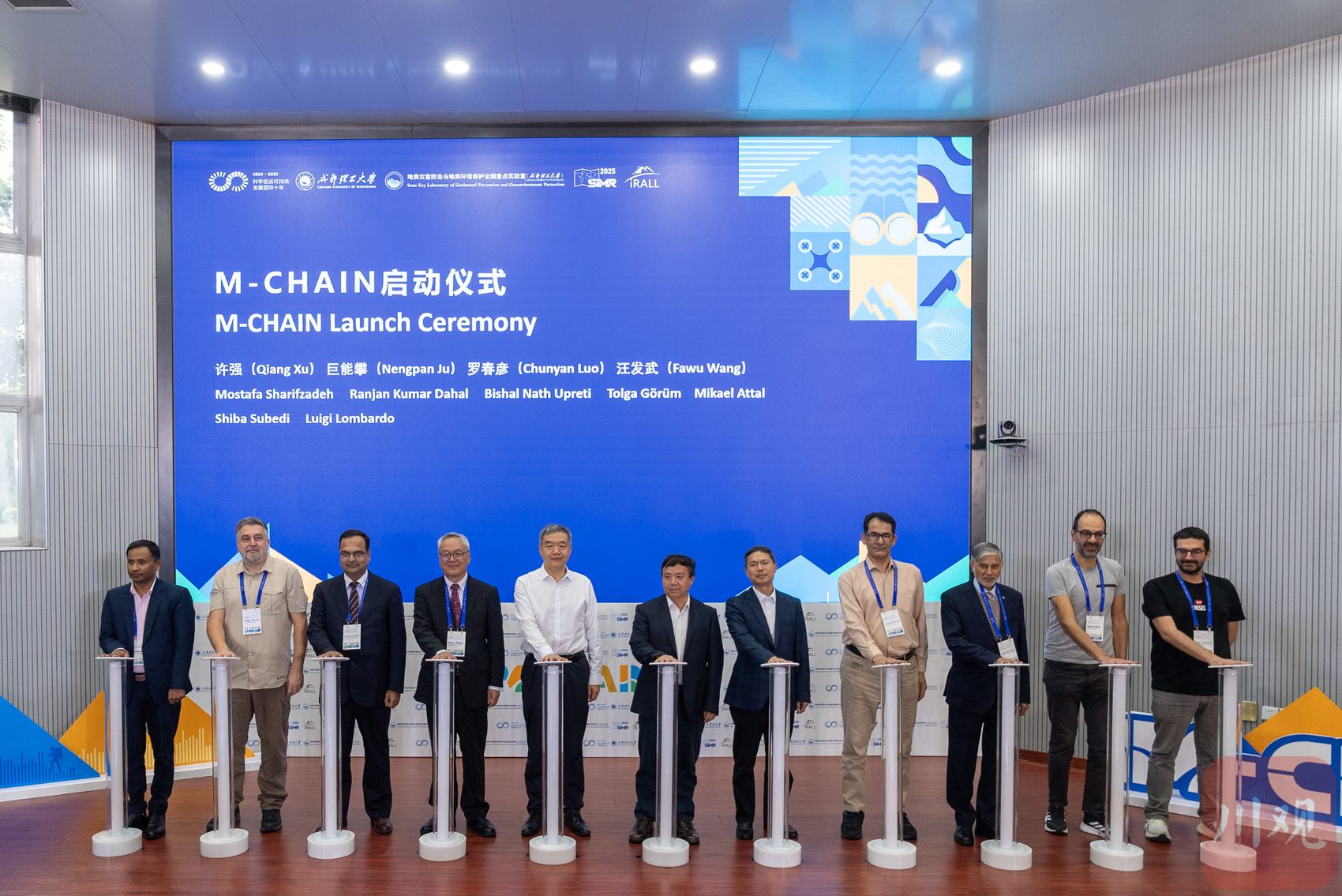
The scene of the launch ceremony
At the launch ceremony, Fan Xuanmei stated that M-CHAIN focuses not only on collaborative research and management of cross-border mountain disaster chains but also on providing scientific and technological support for local disaster prevention. The program aims to bring together global research and governmental resources to deepen scientific understanding of the formation, evolution, and risk propagation mechanisms of disaster chains, promote the development of intelligent monitoring and early warning systems, and enhance disaster prevention and mitigation capabilities through international exchange and talent cultivation. Citing the Aug. 26 China-Nepal ice-rock avalanche-debris flow event as a case study, she illustrated the cascading evolution process from an ice-rock avalanche to flooding.
The initiative has drawn widespread attention from industry experts. Xu Qiang, president of Chengdu University of Technology, noted that the program represents a significant opportunity to integrate international research resources and promote interdisciplinary collaboration, which will help enhance research capabilities and cultivate globally competitive young talents. Hu Shaofeng, director of the Division of Ecological and Earth Sciences at UNESCO's Natural Sciences Sector, delivered a video address recommending that scientific advancements be linked to practical decision-making to ensure sustained investment in capacity building. Wang Fawu, secretary-general of the International Association on Landslides and Disaster Reduction, called for strengthened interdisciplinary innovation to address challenges such as insufficient monitoring, limited early warning systems, and a shortage of experts in high-mountain regions, thereby improving disaster response capabilities in mountainous countries.
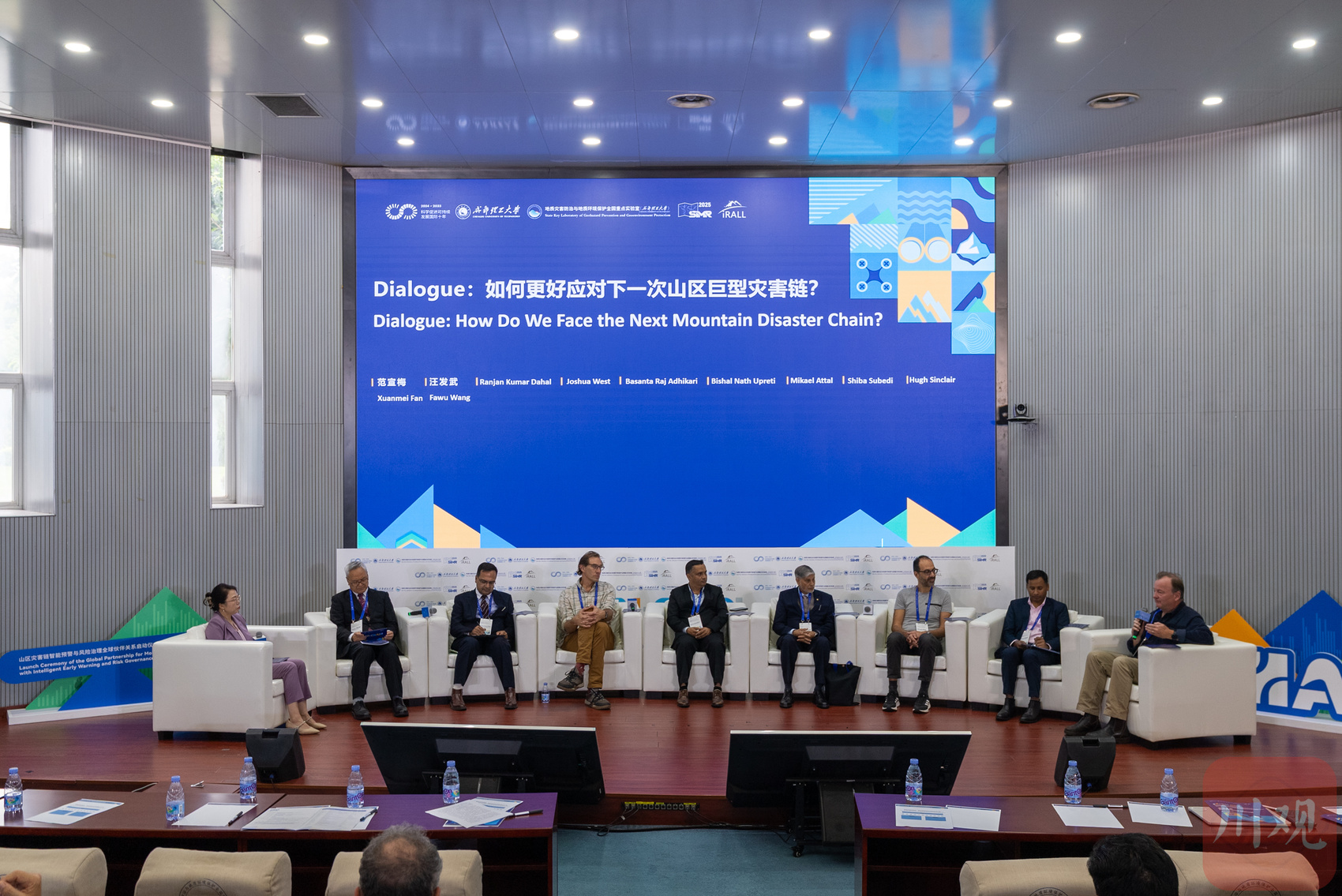
Experts in attendance engaged in discussions
This launch marks M-CHAIN's entry into full implementation. With an eight-year implementation period spanning 2026 to 2034, the program will focus on establishing a global database of mountain geological disaster chains and deploying intelligent early warning pilot projects in representative mountain ranges, including the Himalaya-Tibetan Plateau, the Alps, and the Andes. It will also conduct talent cultivation programs targeting South Asia and Southeast Asia, contributing Chinese expertise and international cooperation to disaster prevention, mitigation, and sustainable development in mountainous regions worldwide.
【本篇文字部分内容由 AI 辅助写作,特此声明。Please note: the text in this article was created with the help of AI.】
