
Sichuan's CRP Robot: Crafting 70+ Robot Models for Smart Factories
2026-10-16 11:06:41 by Queenie Tan
Welding robots spark with arcs as handling and assembly robots operate with precision. On Oct. 13, inside the production workshop of Chengdu CRP Robot Technology Co., Ltd., the long-anticipated vision of robots performing industrial tasks is becoming a reality.
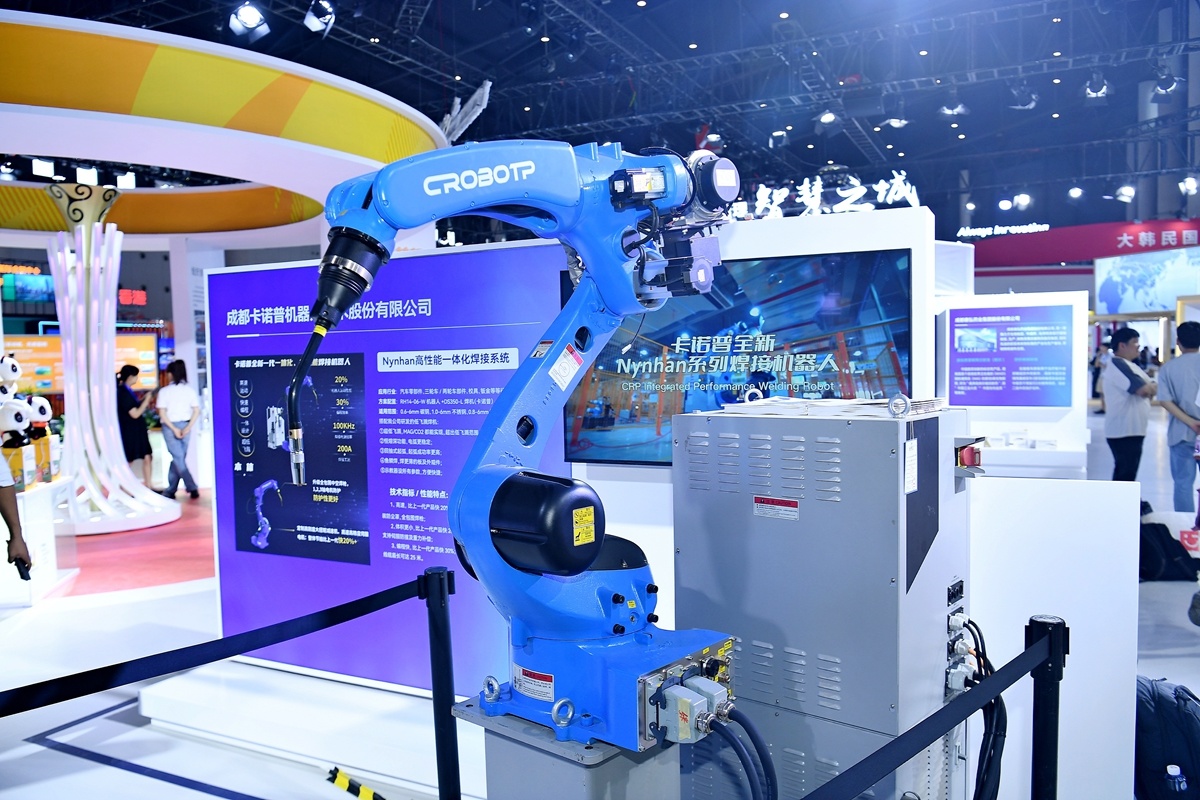
The Nynhan series of intelligent welding robots has been authorized to use the "Tianfu Famous Product" brand logo. Photo provided by CRP
Deng Shihai, deputy general manager of CRP, noted that the company has cultivated multiple skilled "robot craftsmen" and launched more than 70 robot models for welding, handling, assembly, grinding and other applications, covering the vast majority of industrial scenarios. Recently, the Nynhan series of intelligent welding robots was authorized to use the "Tianfu Famous Product" brand label, making them veritable "Sichuan Craftsmen" in the high-end manufacturing sector.
How were CRP's "robot craftsmen" developed? The story begins several years ago.
In 2018, CRP released its first industrial robot—a welding robot—achieving sales of over 1,000 units within just one year. The company subsequently deepened its focus on this niche segment, gradually emerging as a "hidden champion" in China's welding robot industry. Furthermore, to accommodate a broader range of industrial scenarios, its product line expanded into handling, assembly and grinding, placing CRP among the top national players in overall industrial robot shipments.
Yet even as CRP advanced rapidly, Deng sensed an impending crisis.
The furniture industry, a traditional pillar sector in Sichuan and a key customer base for CRP, is undergoing a transformation from standardized to customized production models. However, conventional handling robots can only process standardized products, leaving irregularly shaped boards dependent on manual labor.
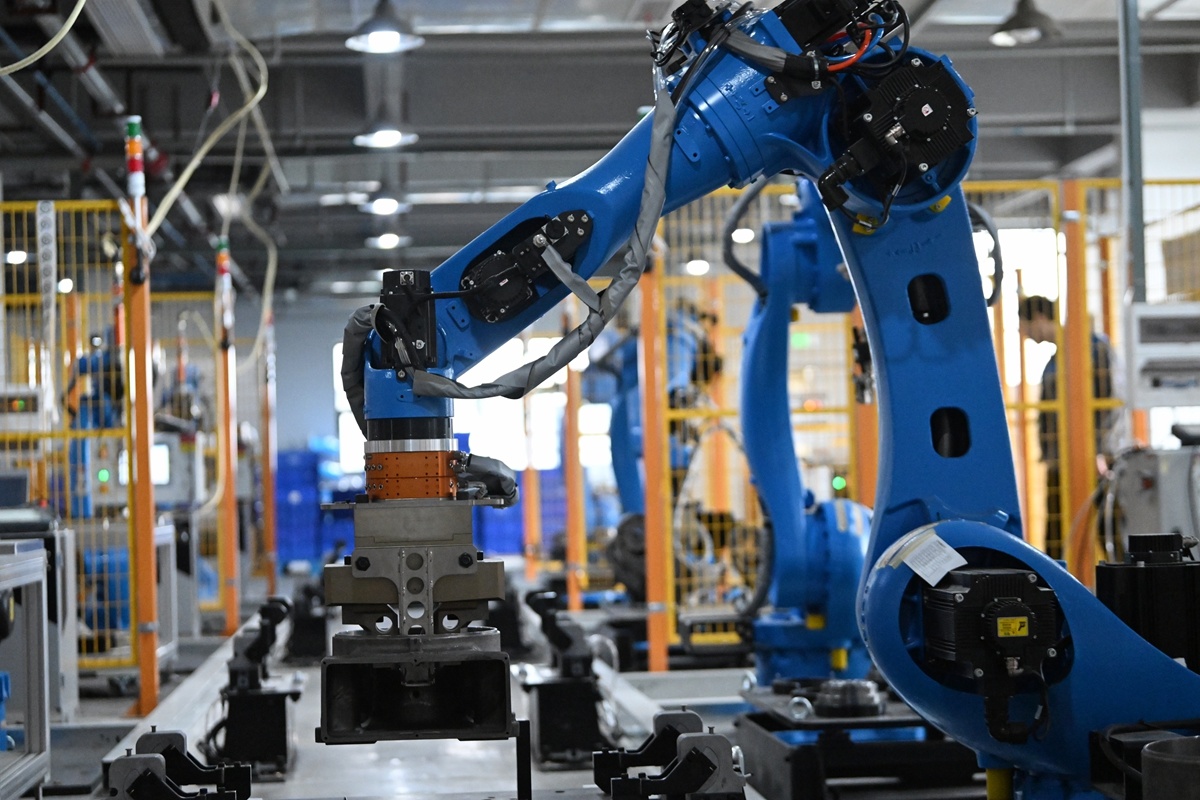
The production workshop of CRP Robot. Photo provided by CRP Robot
This is not an isolated case. With advances in artificial intelligence and related technologies, industries such as metal processing and automotive components are also urgently seeking smarter, more intelligent robotic solutions to boost productivity.
"If we continued to produce only 'blind workers', we risked being eliminated by the market," Deng said. He explained that the company's solution was to equip industrial robots with "eyes" and "brains", transforming them from rule-bound laborers into perceptive and dexterous craftsmen.
However, upgrading from "worker" to "craftsman" is no easy feat. Workshops vary widely in layout, object geometry and lighting conditions, and complex operating environments can cause visual recognition systems to fail; meanwhile, the immense variation in cargo color, material and texture means that even slight miscalculations can trigger system shutdowns.
"Our strategy was to first train 'specialists' and then gradually develop them into 'generalists'", Deng said. The team relocated its laboratory to the production floor, starting with the specialized welding segment and repeatedly running algorithms and conducting tests. Over time, the robots acquired new skills, enabling them to dynamically adjust parameters based on actual workpiece conditions without manual programming, achieving accuracy comparable to that of skilled human workers.
While cultivating proficient "robot craftsmen" addresses efficiency at individual process stages, enhancing overall competitiveness requires building collaborative "robot teams" with division of labor.
In 2025, CRP unveiled the "Lingshuo" industrial wheeled humanoid robot and the "Lingxun" AI composite robot. The former functions like a "workshop supervisor", capable of assigning tasks according to production line needs and assisting in smart factory management; the latter serves as a versatile "operational backbone", able to switch rapidly among different stations such as precision welding, incoming material sorting and fixture handling.
Having enabled robots to perform tasks competently, CRP is now focused on ensuring they execute those tasks excellently.
"We are tackling breakthroughs in physical AI and related technologies to endow robots with the ability to perceive the physical world and 'understand' a wider array of non-standardized scenarios", Deng stated. He emphasized that industrial robots must go beyond simple "mechanical substitution" to overcome the limitations of human labor, citing examples such as automatic identification of complex weld seams in shipbuilding and high-position rust removal and spraying on petrochemical storage tank exteriors. "The more demanding and hazardous the environment, the greater the value robots can deliver"
【本篇文字部分内容由 AI 辅助写作,特此声明。Please note: the text in this article was created with the help of AI.】
