
Sichuan: Drying Hubs Cut Grain Losses, Boost Farmer Income
2026-10-12 11:07:47 by Queenie Tan
On October 9, harvesters moved through the rice paddies of Yuanshan Town in Jiange County, pouring golden rice grains into transport vehicles. Instead of heading directly to farmers' courtyards, the fully loaded trucks proceeded to drying stations.
Wet grain was transported directly from the fields into drying towers, and after drying, it was immediately stored or processed, ensuring an uninterrupted post-harvest chain. During this year's autumn harvest, Jiange County has leveraged 48 drying stations to integrate cleaning, drying, storage, processing, and sales into a complete industrial chain, moving away from the traditional reliance on weather for sun-drying, household storage, and waiting for traders to purchase grain.
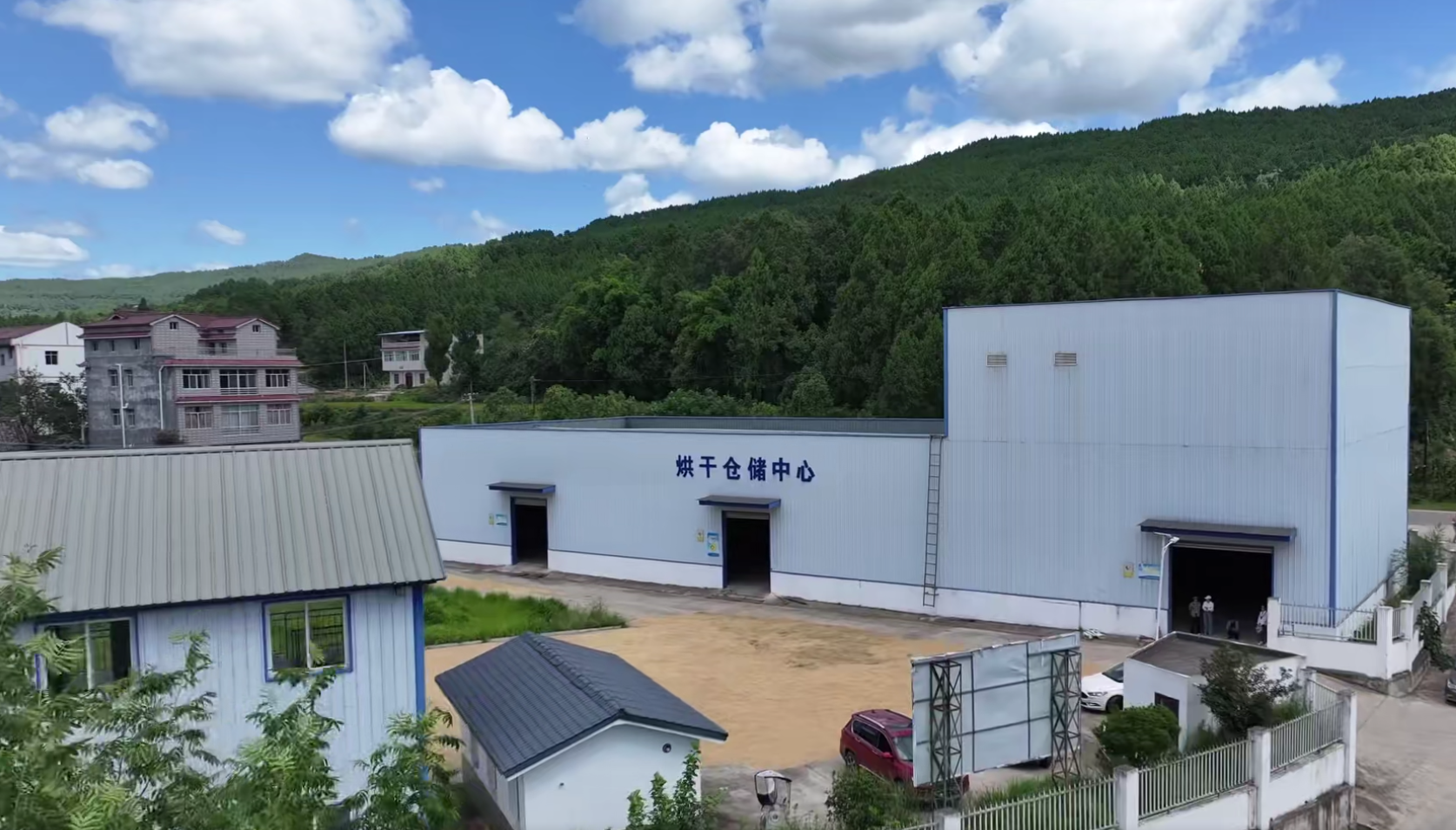
Jiange County has established 48 drying stations. Photo courtesy of the Jiange County Convergent Media Center
Jiange is a major grain-producing county in Sichuan Province, with a projected output of 486,000 tons this year. However, in previous years, frequent autumn rains often caught farmers off guard, causing piled-up grain to overheat and develop mold.
Li Xiaobin, a large-scale grain grower, recalled that last year's 45 consecutive days of rain, combined with a lack of drying equipment, resulted in wet grain queuing up and partially spoiling or sprouting. His yield per mu fell below 400 jin, resulting in direct losses of over 200,000 yuan.
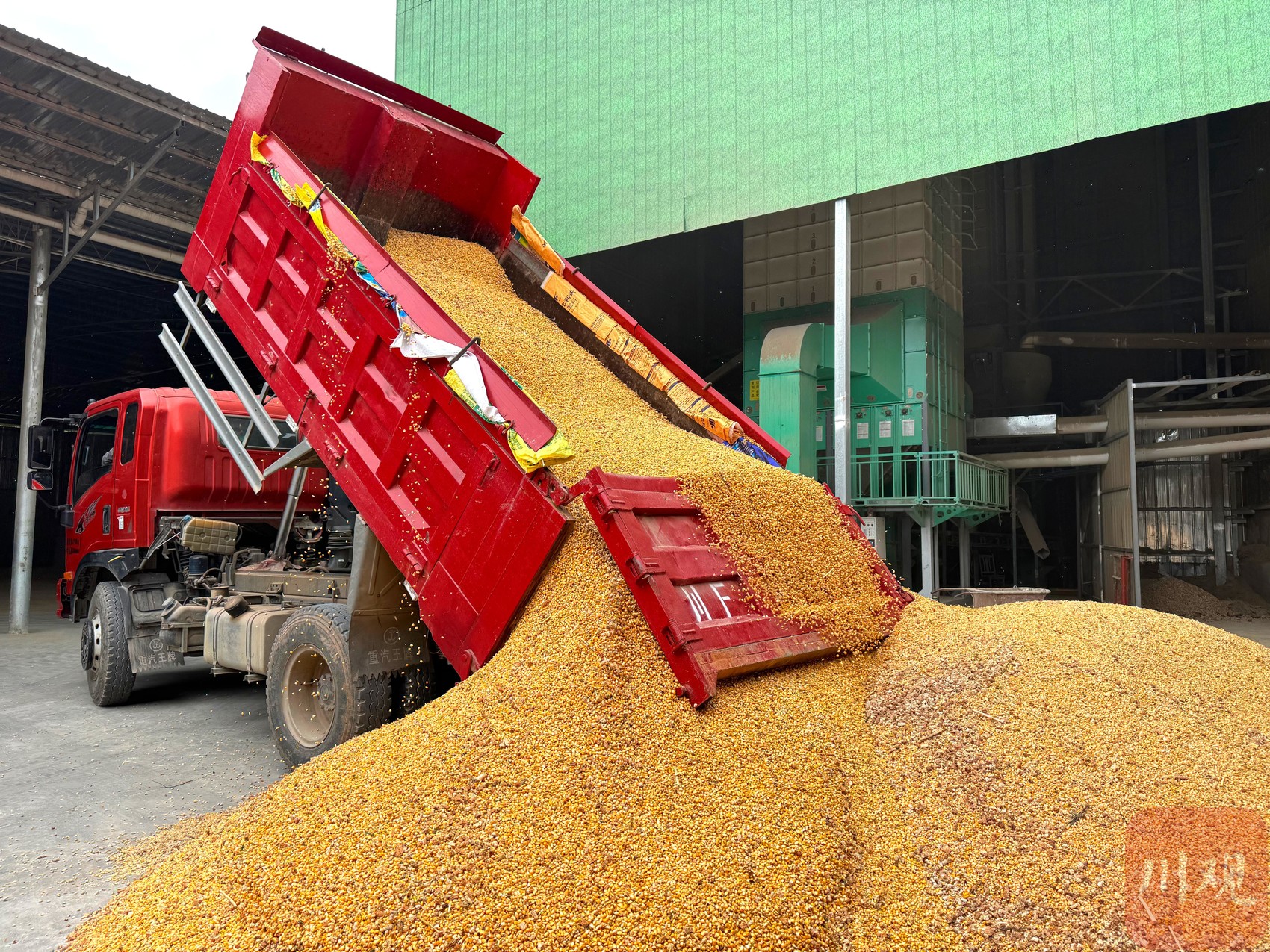
Wet corn is being unloaded at a drying station
This year, Jiange added 14 new drying stations, bringing the total daily drying capacity to 1,500 tons and upgrading post-harvest services from basic availability to high quality. With government subsidies exceeding 300,000 yuan, Li built his own station, solving not only his own problems but also benefiting his neighbors. He calculated that compared to sun-drying, mechanical drying saves 7,000 yuan per season in costs while reducing time and labor; even on sunny days, he no longer reverts to old methods.
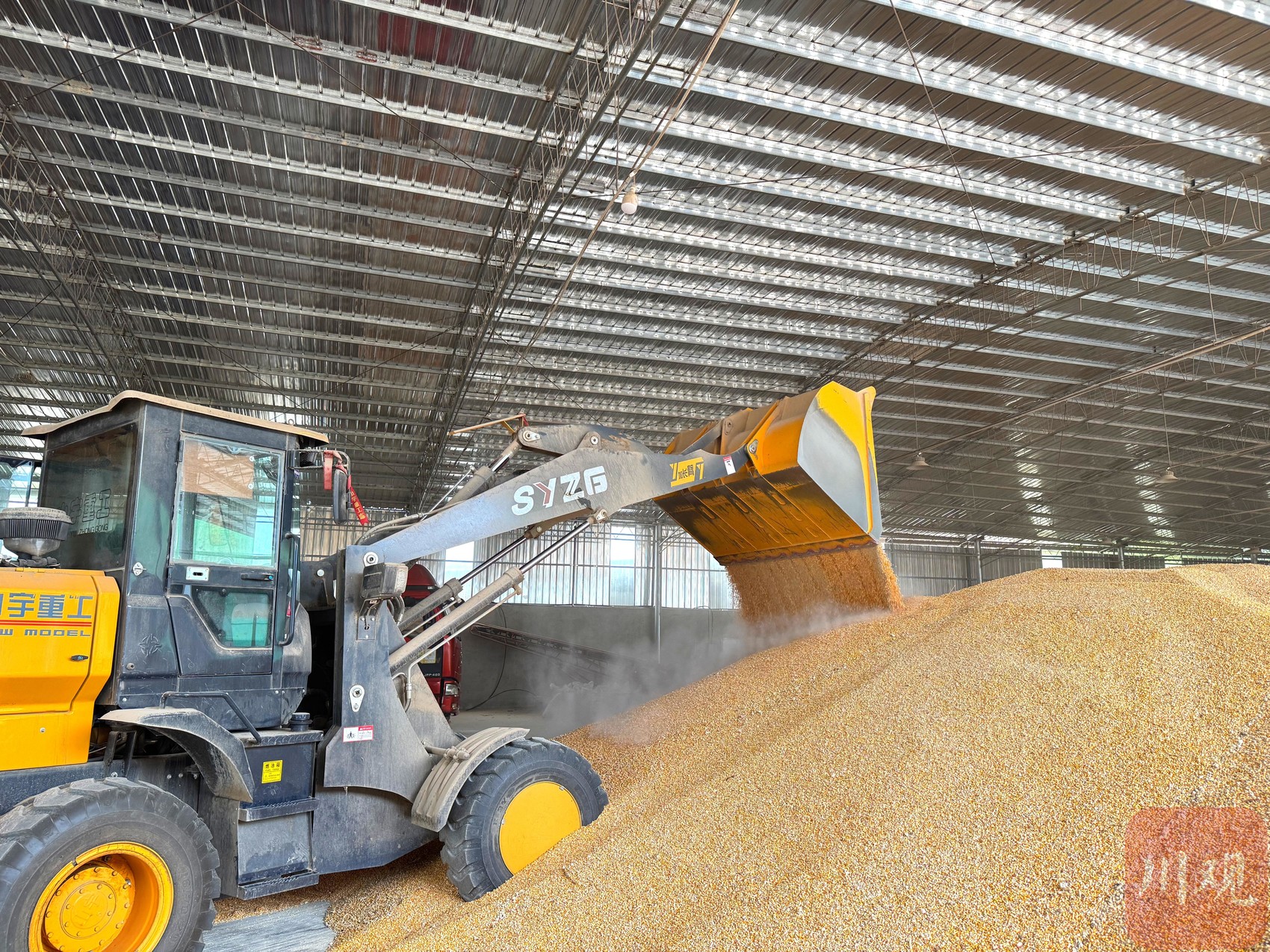
The dried corn will be delivered directly to feed mills
At the Xinxin Agricultural Professional Cooperative, workers were loading dried grain onto trucks bound for Yibin. Manager Yang Yuxin explained that the cooperative provides "one-stop" services, allowing farmers to choose between drying-only options or direct sales to the cooperative after drying, achieving a seamless connection from field to market. The cooperative has signed purchase contracts with distilleries and rice mills, implementing a price floor mechanism: when market conditions are favorable, purchases are made at market prices; when conditions are poor, the cooperative pays 0.1 yuan per jin above the protected base price. This model allows farmers to focus solely on cultivation, ensuring the grain supply chain remains unbroken throughout the process.
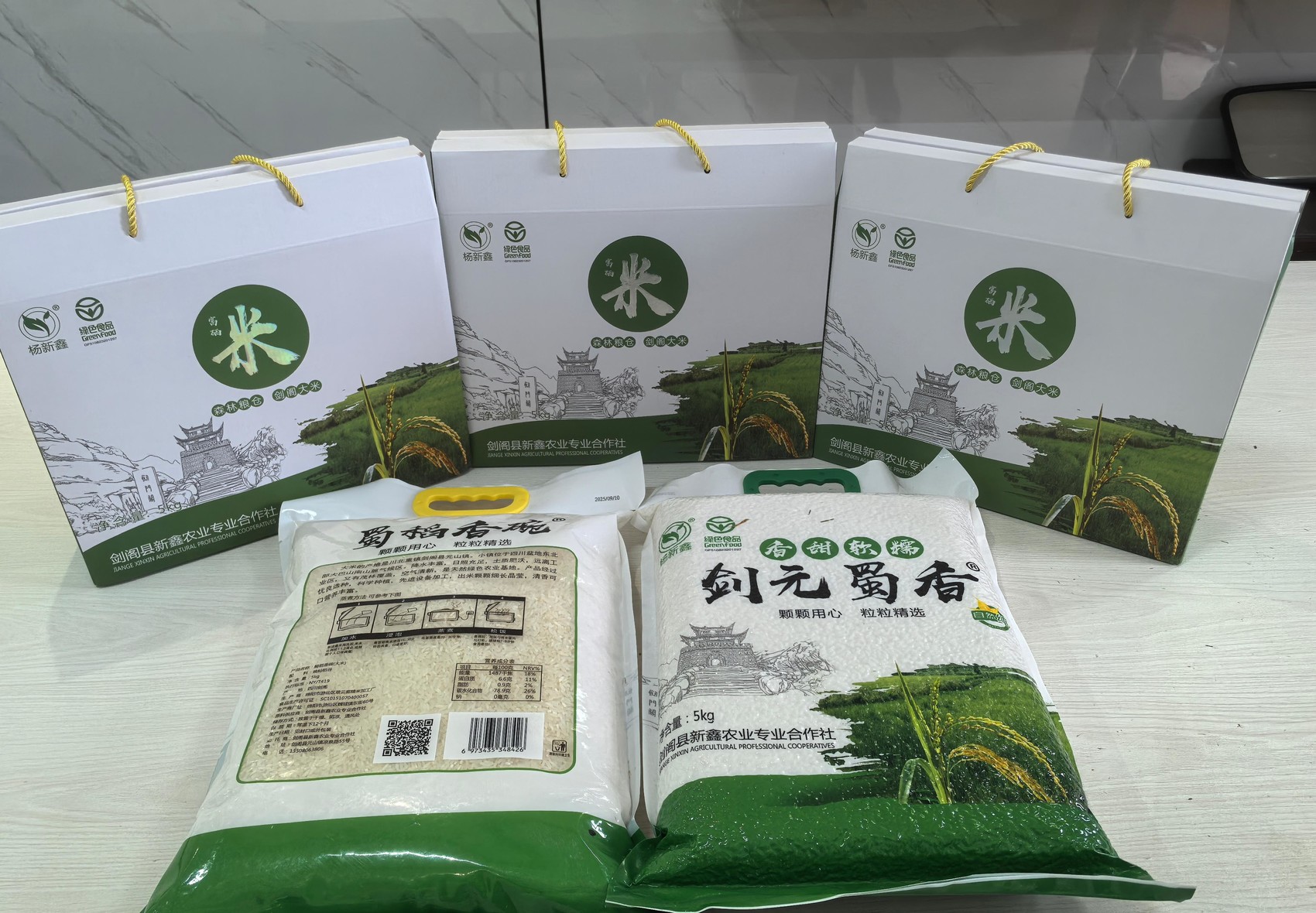
Rice produced by the Jiange County Xinxin Agricultural Professional Cooperative.
The county now hosts 13 grain and oil processing enterprises, forming a complete industrial chain. Jinmaitian Noodle Company has established interest linkages with farmers through contract purchasing, reducing intermediate links and securing a stable source of high-quality grain. Liu Zonggang, Deputy Director of the Jiange County Bureau of Agriculture and Rural Affairs, noted that the autumn rice harvest is nearly complete, and corn harvesting has reached 80%.
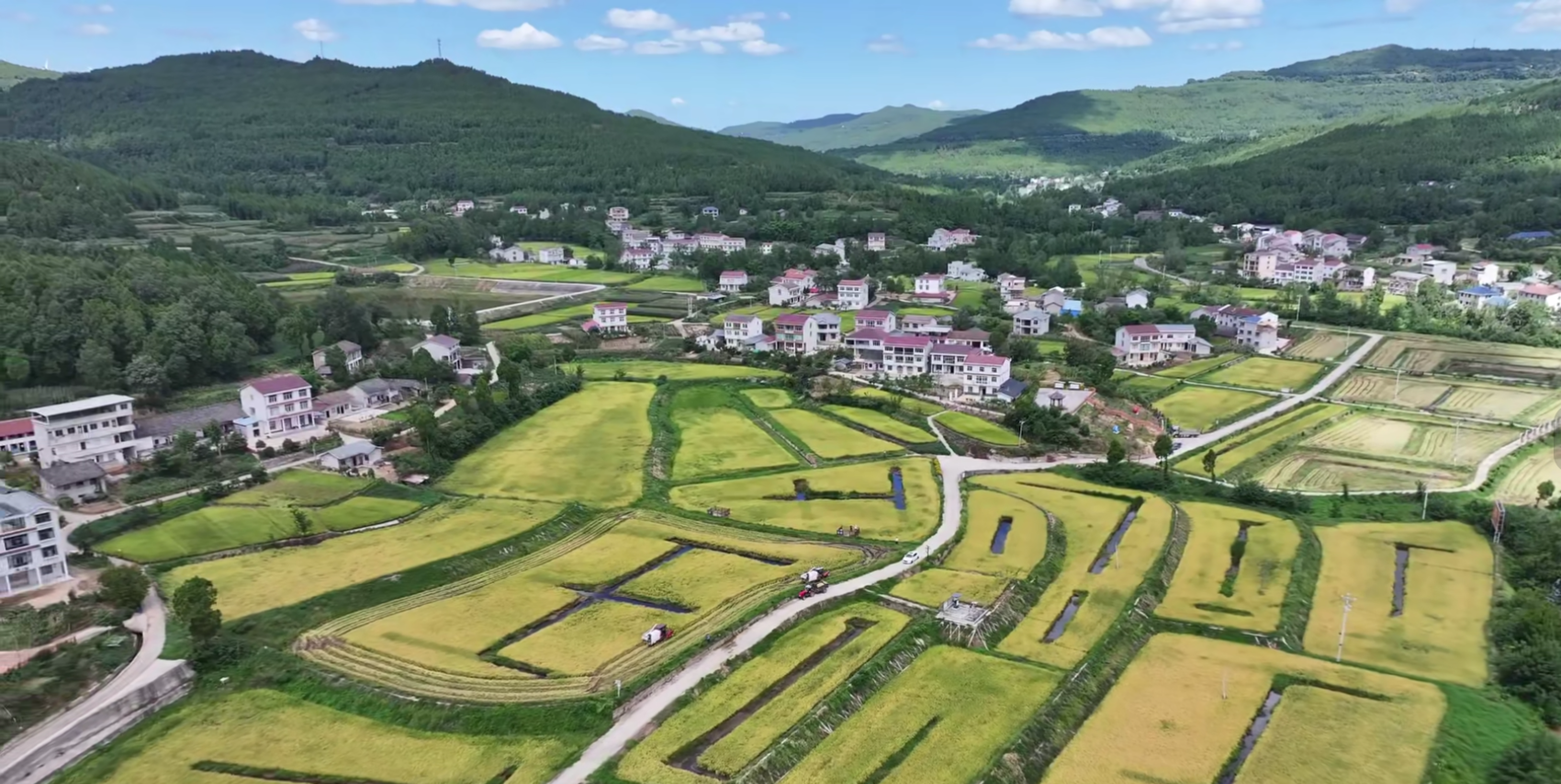
Rice fields in Jiange County during the autumn harvest. Photo courtesy of the Jiange County Convergent Media Center
The operation of drying stations has reduced post-harvest grain loss rates from 8% to under 2%, helping farmers reduce losses and increase income by more than 50 million yuan annually. Moving forward, the county will continue to improve the system and encourage processing enterprises to extend their services to rural areas, helping farmers realize the goal of "selling grain and receiving payment promptly".
At the provincial level, 347 post-harvest grain service centers across 21 cities and prefectures and more than 70 major grain-producing counties are now operational, with a combined daily drying capacity of 32,000 tons. These centers provide "five-generation" services—covering generation-based cleaning, drying, storage, processing, and sales—to help quality products command better prices. As the sun sets, the fields of Yuanshan Town remain busy, with trucks entering stations and refined grain leaving workshops. From field to workshop, these seamlessly integrated post-harvest services safeguard every grain of the autumn harvest and protect the incomes of grain farmers.
【本篇文字部分内容由 AI 辅助写作,特此声明。Please note: the text in this article was created with the help of AI.】
