
Chengdu Launches On-Demand Bus Service in Sichuan
2026-10-12 11:07:10 by Queenie Tan
On the drizzly morning of Oct. 10, He Xiuhua boarded a bus at her doorstep to head to work. Unlike her previous commutes that required multiple transfers, this vehicle took her directly to her company's entrance based on her on-demand booking, cutting her travel time from approximately 38 minutes to 20.
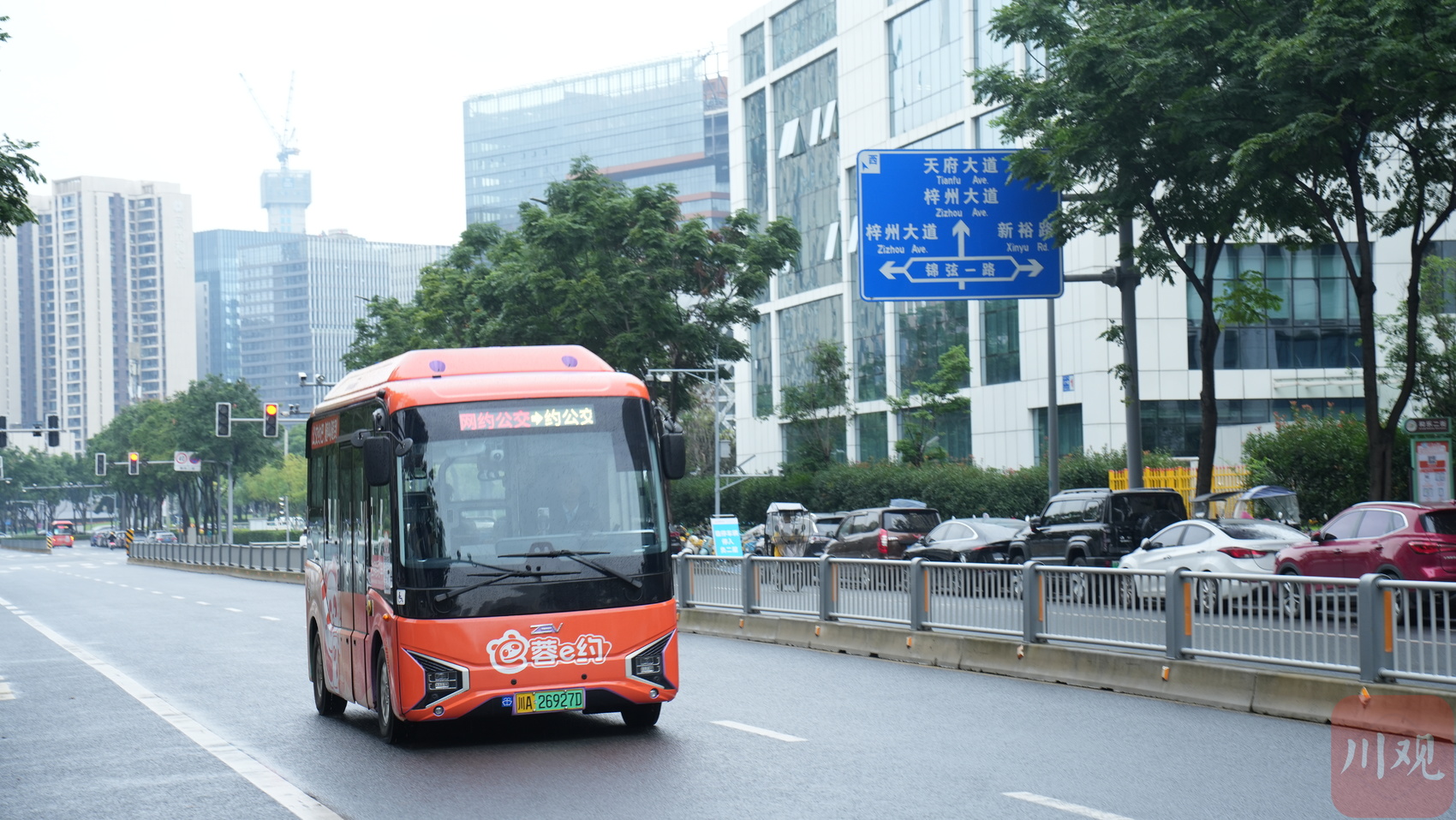
An on-demand bus in operation
Hailing a bus is now as easy as booking a ride-hailing car. On that day, the Chengdu Public Transport Group launched the "Citizen Experience Month" for its "Rong E Yue" on-demand bus service in the Xinchuan area of the Chengdu High-tech Zone, marking the commencement of trial operations. The service attracted 300 riders during its first morning rush hour. How does an on-demand bus differ from a traditional one? How can citizens use it? What is the riding experience like? A reporter visited the site to find out.
At around 11 a.m., the reporter used the Chengdu Public Transport WeChat mini-program at the Hele Second Street bus stop to set Xinchuan Park as the destination. The interface instantly displayed a route map and indicated that the vehicle would arrive in approximately two minutes.
During the wait, the icon representing the bus moved continuously toward the stop on the dynamic map. Two minutes later, an orange on-demand bus pulled up. After the driver verified the last four digits of the reporter's mobile phone number, the vehicle departed, traveling about 1.7 kilometers directly to the destination. The reporter noted that the bus had nine seats and, apart from the reporter, carried no other passengers, making no intermediate stops along the way.
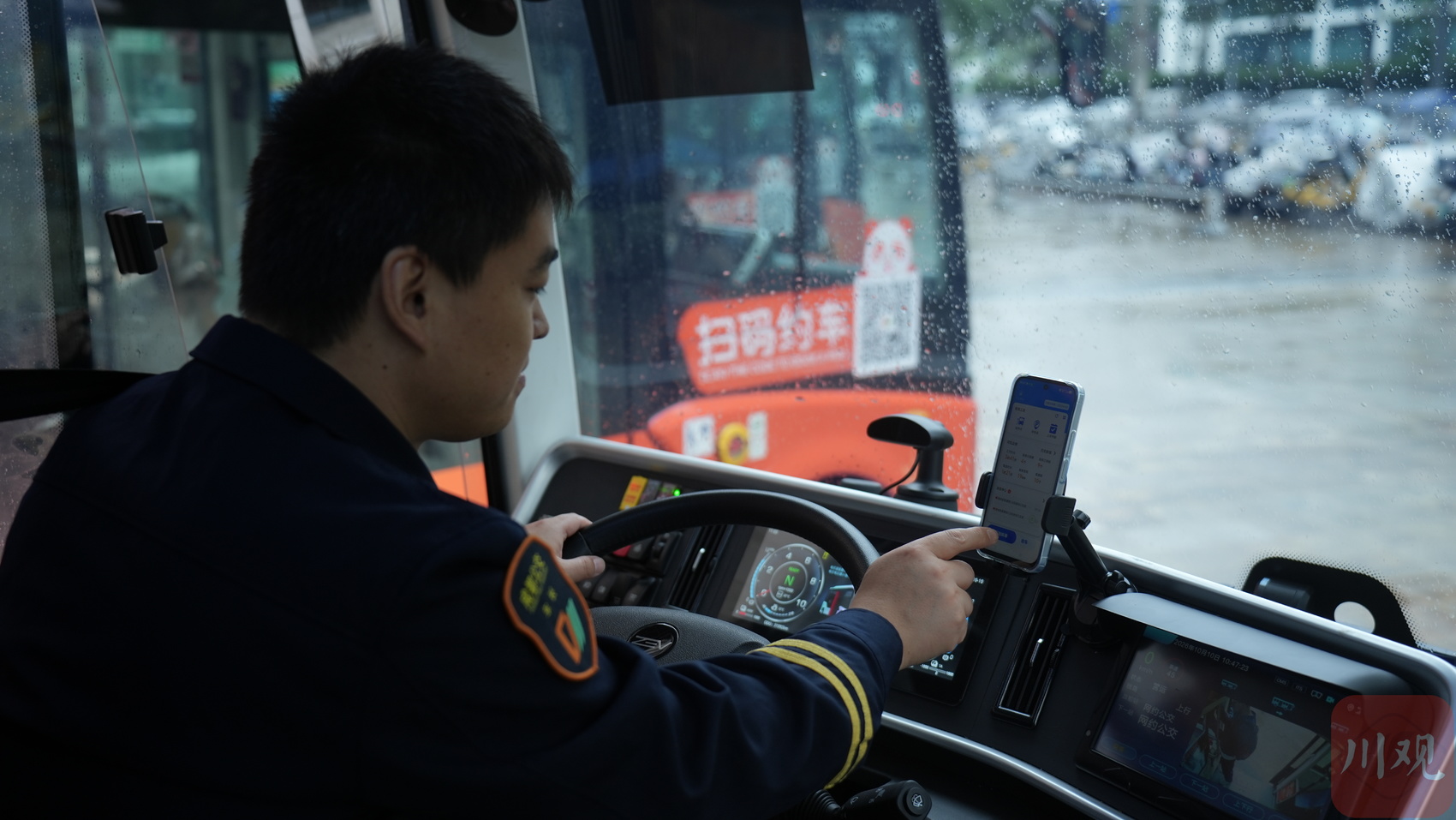
The bus driver is checking the information of the passengers
What happens if multiple passengers are heading in the same direction? Zhao Wen, deputy general manager of the Tianfu Company under the Chengdu Public Transport Group, explained that after passengers submit real-time requests, the "Rong E Yue" system automatically matches orders with similar destinations and dynamically plans optimal routes to facilitate sequential pickups. Leveraging big data analysis and intelligent scheduling algorithms, "Rong E Yue" adopts a model of "fixed zones, flexible routes, and scheduled dispatches".
This differs from traditional buses that operate on fixed routes and stop at designated stations. By employing "demand-driven, dynamic response" mechanisms, the service enhances flexibility and connection efficiency, offering both the convenience of ride-hailing and the cost-effectiveness of public transit for scenarios such as short-distance commuting and metro transfers.
"Simply put, instead of people waiting for buses, buses now come to people," Zhao said. He noted that on-demand bus routes are not confined to traditional paths but are planned according to demand. To accommodate various scenarios, the service uses 5.4-meter micro-buses capable of navigating narrow streets and alleys.
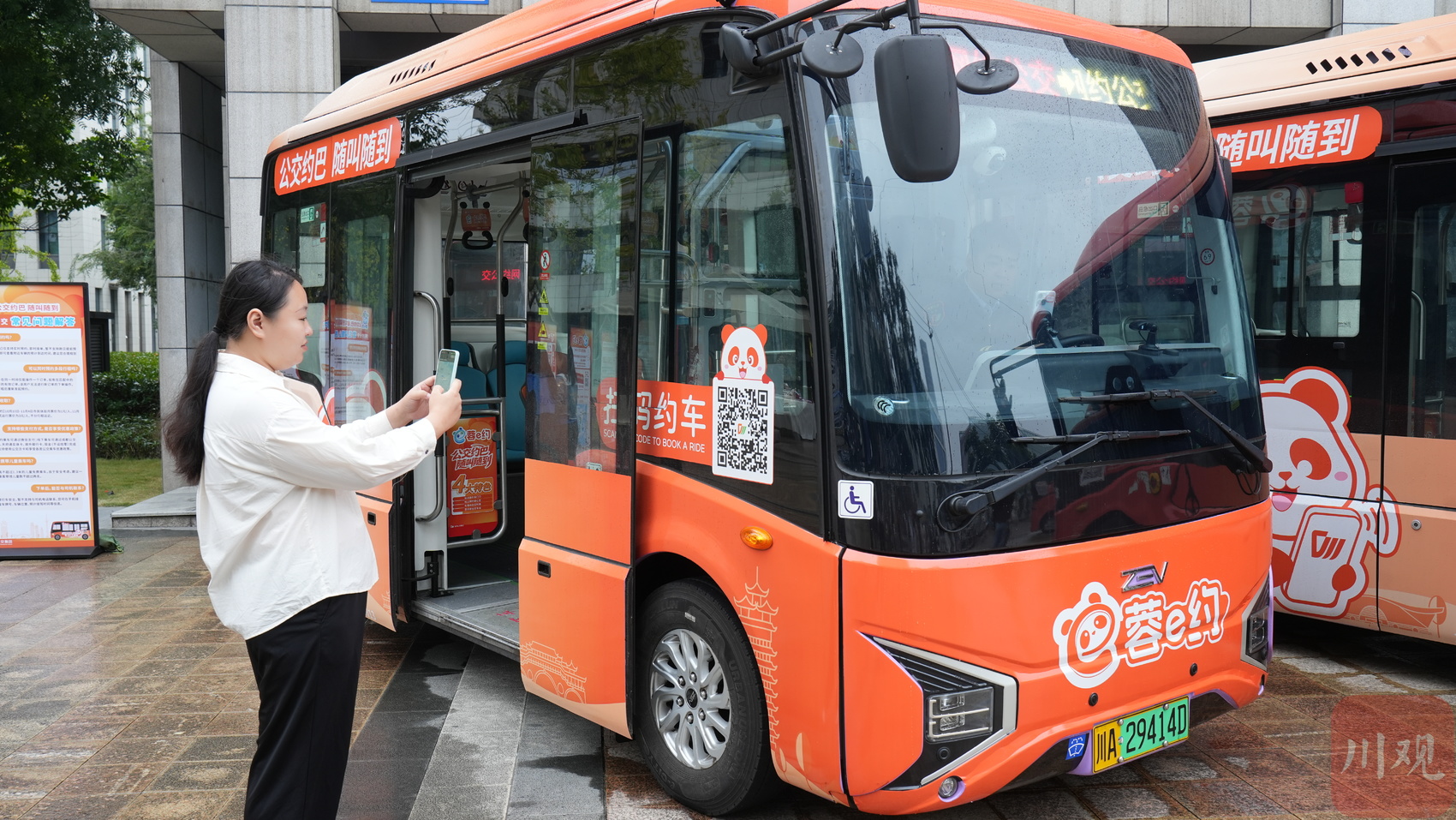
Residents scan QR codes beside an on-demand bus
Prior to the launch, the Xinchuan area had more than 100 physical bus stops. Following the trial operation, over 100 virtual stops were added, bringing the total number of available boarding and alighting points to more than 350. "Compared with traditional buses, on-demand bus stops are more flexible, supporting point-to-point travel. Citizens can board near residential community gates or park entrances", Zhao said.
Why was the Xinchuan area selected? Zhao explained that the service covers a core area of approximately 12.4 square kilometers, bordered by Tianfu Avenue to the west, Huilong Avenue to the north, Jinhan Road to the east, and Lushan Avenue to the south. The area encompasses industrial parks, residential communities, metro stations, schools, hospitals, and commercial centers, covering diverse scenarios including commuting to work and school, transit transfers, errands, and leisure activities. Addressing the characteristics of concentrated industries and heavy commuter traffic, the on-demand bus breaks the constraints of fixed routes and schedules by deeply integrating flexible scheduling with travel demand. It provides efficient connections and inclusive services for employees and residents, empowering industrial development through upgraded public transportation.
Zhao stated that during the trial period from Oct. 10 to Nov. 4, daily service hours are from 7:30 a.m. to 8:30 p.m., with a single-trip fare of 1 yuan. After official operations begin on Nov. 5, the fare will be adjusted to 3 yuan per trip. Passengers can make reservations via the Chengdu Public Transport app or WeChat mini-program and plan their trips based on estimated arrival times. The service supports real-time vehicle tracking and progress inquiries, providing clear visibility throughout the journey to make waiting more reassuring and travel more predictable.
"The on-demand bus represents an innovative practice in advancing digital and intelligent transformation and optimizing mobility supply within Chengdu's public transport sector," Zhao said. He added that the next step will focus on monitoring passenger flow and response performance, using data to refine services and gradually expanding the model to other areas of Chengdu.
【本篇文字部分内容由 AI 辅助写作,特此声明。Please note: the text in this article was created with the help of AI.】
