
In Sichuan's Zigong, Students Hand-Build Planes for National Contest
2026-10-10 16:01:43 by Queenie Tan
On the morning of October 9, amidst light rain, the Zigong Aviation Industrial Park hosted the National Finals of the 2026 China Universities Aircraft Design Competition. Organized by the Chinese Society of Aeronautics and Astronautics, the event was held in Zigong for the first time this year, featuring 12 events across three major categories: fixed-wing, rotary-wing, and rocket. More than 700 teams comprising over 6,000 students and faculty members from more than 200 universities gathered at Fengming General Airport to engage in intense competition.
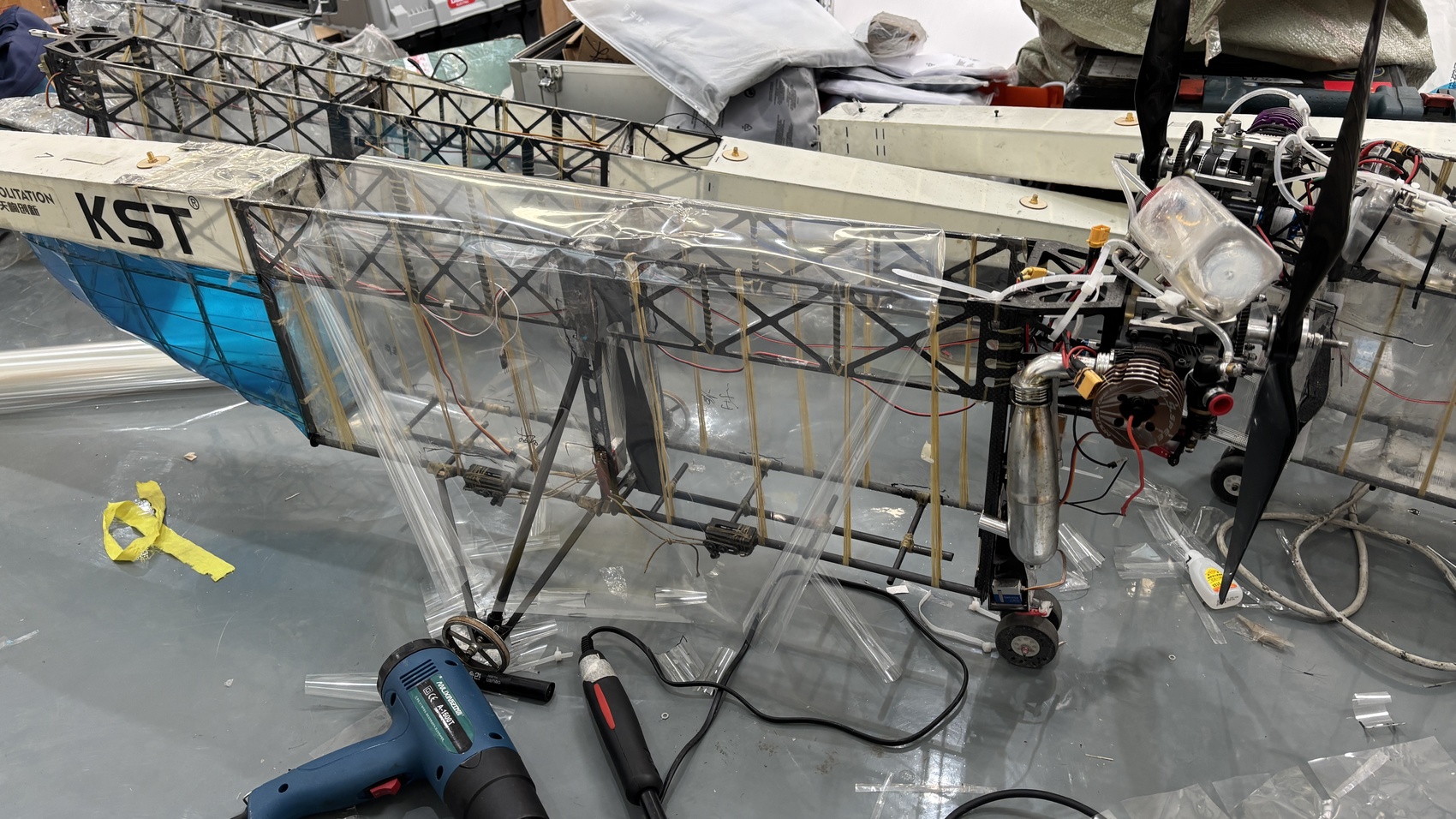
Inside a workshop at Beihang University, screws, tape and spare wings are scattered across the floor as students complete the final assembly of their competition aircraft. (Photo from the Beihang University Aeromodelling Team)
Xu Mingze, a sophomore at Beihang University, was crouching in the workshop performing final assembly. Beihang registered eight projects and transported approximately 20 aircraft, about 10 of which were actual competition entries while the rest served primarily as backups. A few hundred meters away, Li Xiaoliang from Northwestern Polytechnical University was covering an aircraft weighing just over four kilograms with plastic sheeting. This small plane with wooden wings was scheduled to compete the following day in the UAV precision airdrop event, which requires carrying sandbags and executing precise drops. Because the wooden structure is susceptible to water absorption, he carefully wrapped the edges and corners to prevent moisture damage.
This event is colloquially known in the aeromodeling community as the "Three-Kilogram" category. Although the weight limit was relaxed to under 4.4 kilograms this year, the challenge remains immense. The aircraft must carry sandbags weighing approximately 14 to 16 kilograms—more than three times its own weight—and perform repeated takeoffs, landings, and drops within five minutes. The rules are straightforward: higher scores are awarded for greater payload capacity and dropping accuracy. Li Xiaoliang described the ground sandbag replacement process as akin to a Formula One pit stop, completed in mere seconds. Xu Mingze noted that the sudden reduction in weight during the drop causes the nose to pitch up sharply, requiring the pilot to adjust the attitude instantly—a response that relies on both technical skill and instinct. With a target radius of only five meters, points are deducted for missing the mark. The top 16 teams advance to a playoff, where victory or defeat often hinges on a split-second decision.
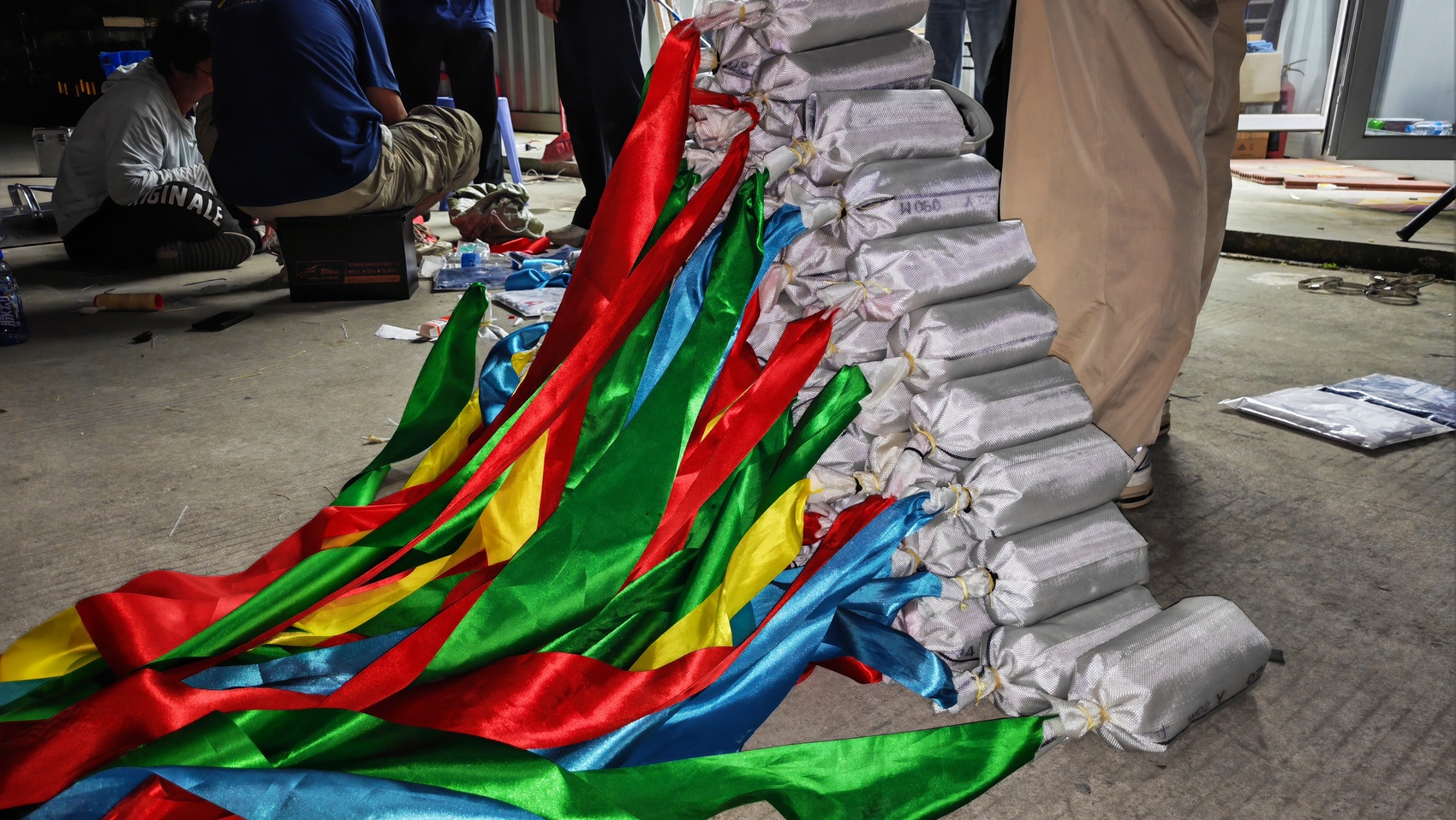
A small aircraft weighing just over 4 kilograms is designed to carry seven or eight sandbags, each weighing 2 kilograms, resulting in a total payload of approximately 14 to 16 kilograms—more than three times its own weight. (Photo from the Beihang University Aeromodelling Team)
Crashes are not uncommon here. Pointing to a fuselage with torn skin in the hangar, Xu Mingze identified it as "Aircraft No. 0", which crashed during a test flight due to engine surge. He explained that attrition occurs every year and that a mistake at any stage can undo all previous efforts; consequently, most competing aircraft bear scars, which serve as a testament to the hard work behind their performance. The core participants are mostly sophomores and juniors. Xu spent his summer vacation in the workshop, having to switch to laser-cut wood at the last minute due to material issues. Meanwhile, Li Xiaoliang immediately began preparing for this event after winning a championship in Egypt. After Northwestern Polytechnical University won the title last year while Beihang suffered a crash, significant rule changes this year prompted both teams to redesign their aircraft from scratch, with both aiming squarely for first place.
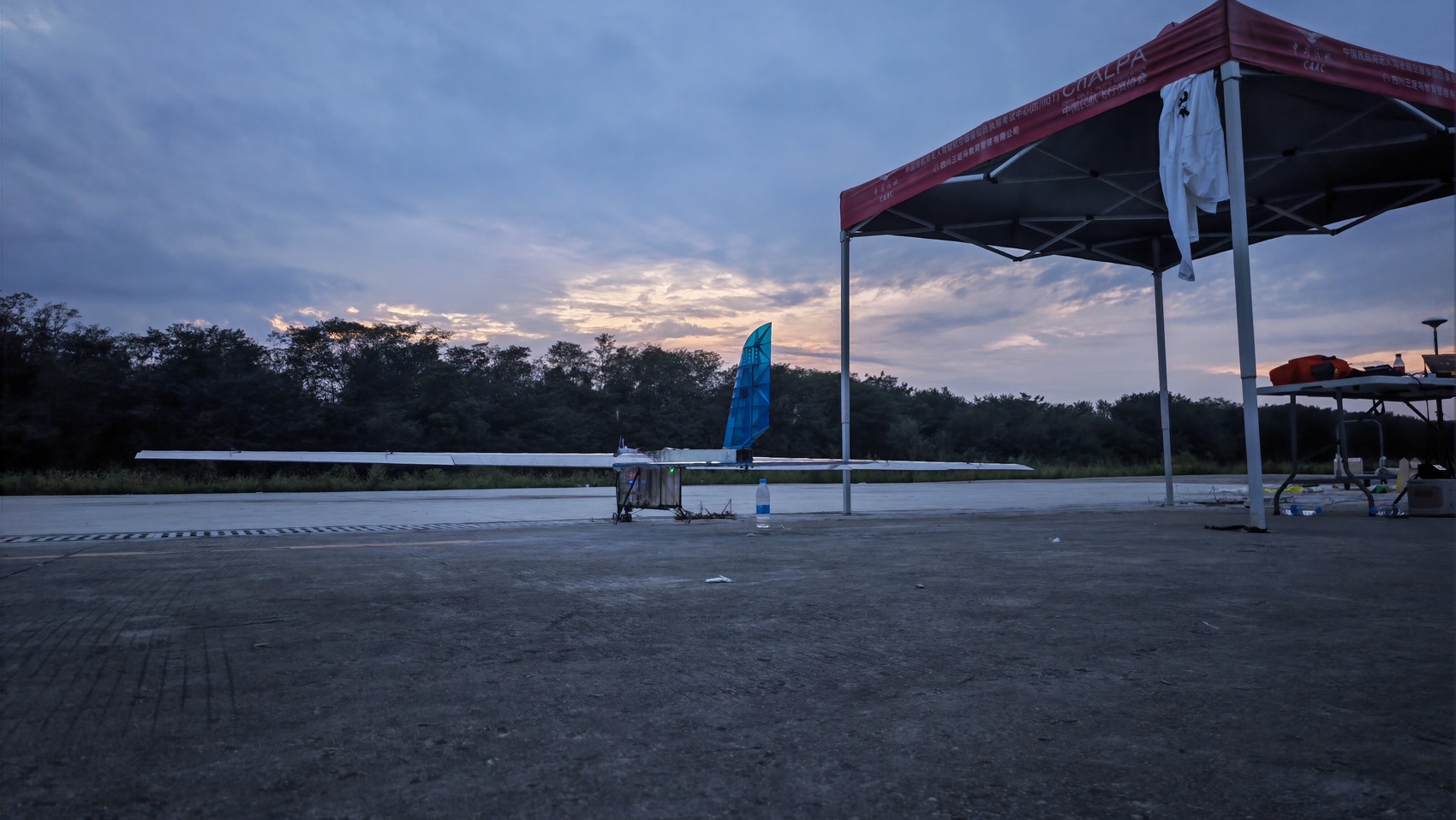
A competition drone from Beihang University. (Photo from the Beihang University Aeromodelling Team)
Beihang's strengths lie in craftsmanship and algorithms, maintaining a lead in flight control technology for years, while Northwestern Polytechnical University specializes in composite materials to address the structural stresses imposed by smaller airframes. Li also mentioned a distinctive color scheme that has become a team tradition, originating from an accidental purchase of specific covering film. Furthermore, the fully autonomous equipment designed by Guilin Aerospace Industry College and the progress made by team members from Naval Aviation University who started from scratch both demonstrate the capabilities of these students. Technical Committee member Liang Yichen noted that changing weather conditions test participants' ability to adapt on the spot, and he was moved by the atmosphere of mutual assistance, as competitors shared spare parts and exchanged souvenirs.
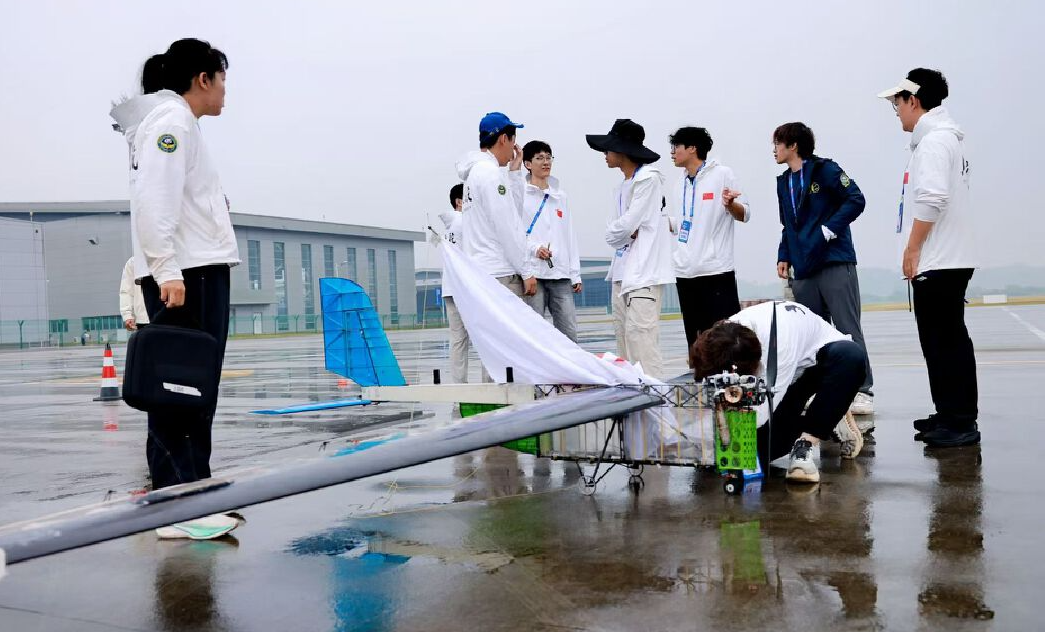
The Beihang University Aeromodelling Team is conducting test flights and adjustments. (Photo courtesy of the Beihang University Aeromodelling Team)
Liang Yichen emphasized that the competition prioritizes reliability over sheer aggression, noting that Shandong Water Vocational College once won the championship through exquisite workmanship, highlighting the practical advantages of vocational students. Restrictions on dimensions and weight are designed to evaluate design philosophy and hands-on skills.
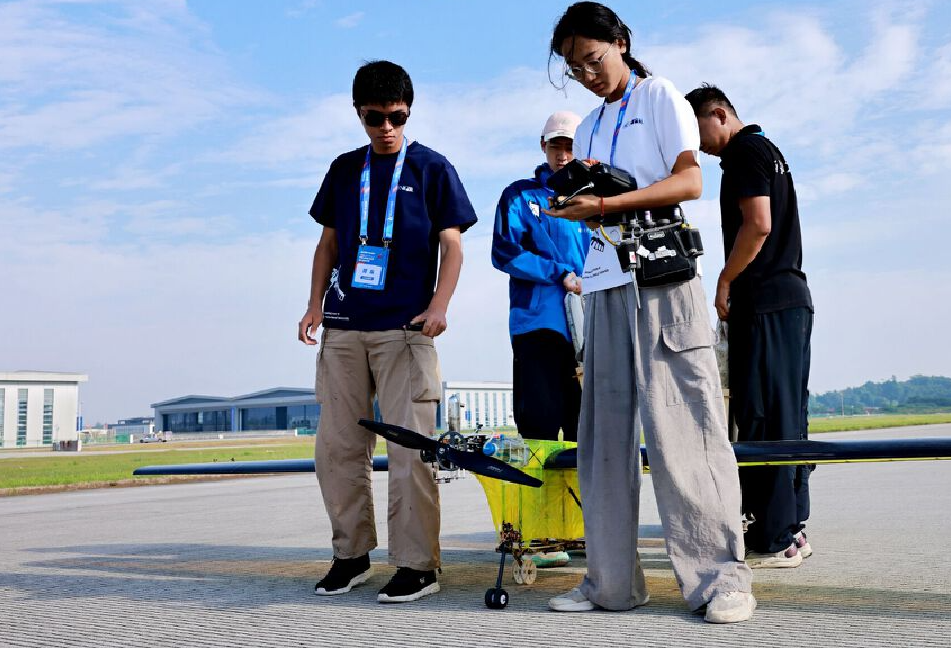
The Northwestern Polytechnical University Aeromodelling Team is conducting test flight adjustments. (Photo courtesy of the Northwestern Polytechnical University Aeromodelling Team)
Inside the workshop, Xu Mingze continued tightening screws while Li Xiaoliang applied a second layer of plastic sheeting. The competition will continue until October 15, but for these young participants, the real contest has only just begun.
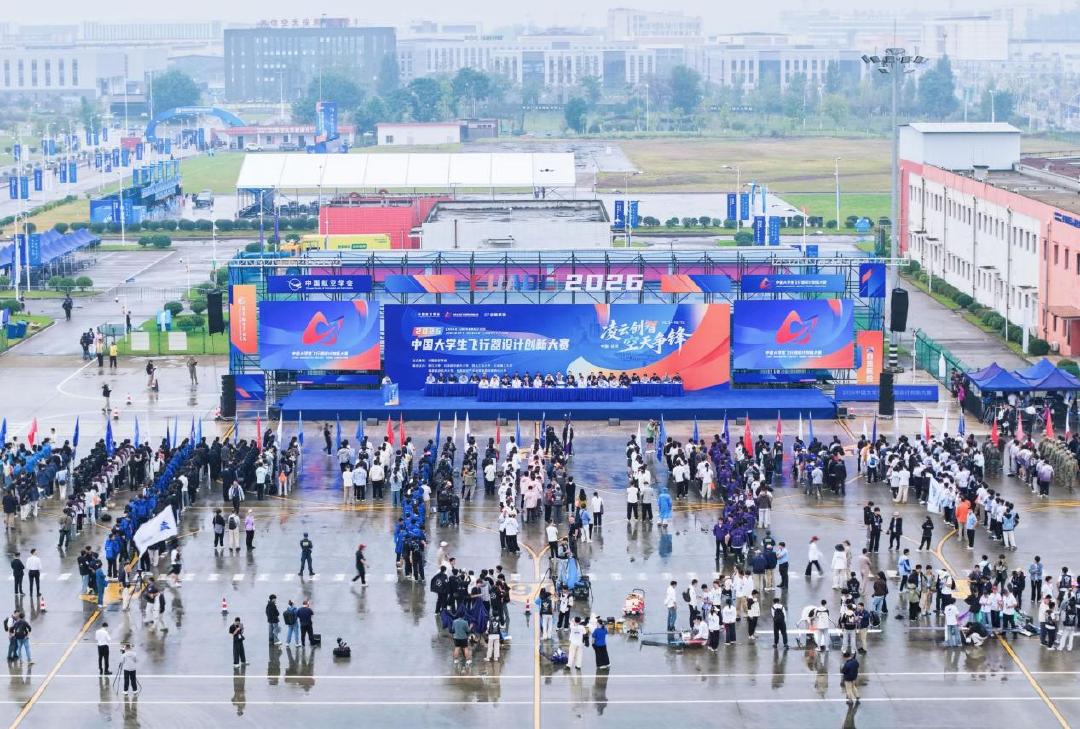
The opening ceremony venue. (Photo provided by the organizer)
【本篇文字部分内容由 AI 辅助写作,特此声明。Please note: the text in this article was created with the help of AI.】
