
BYD takes the long road through Western Sichuan
2026-10-08 14:40:41 by Queenie Tan
CHENGDU, China — There are easier ways to let journalists experience new cars, but BYD Global chose to bring selected motoring media from the Philippines, Malaysia, Singapore, and Brunei on a five-day journey deep into Western Sichuan, driving from the humid plains of Chengdu to grasslands more than 4,000 meters above sea level.
Along the way were bamboo forests, ancient towns, glaciers, snow-covered mountains, giant pandas, grazing yaks, and some of the most spectacular roads we have driven in China.
The Philippine contingent was accompanied throughout the trip by BYD Philippines Country Head Adam Hu, who made sure the group was well taken care of despite the long drives, changing weather, and increasingly difficult altitude. Also traveling with the Philippine delegation was BYD Cars Philippines Managing Director Bob Palanca while welcoming and accompanying the larger Southeast Asian media contingent into some of the more remote parts of Western Sichuan was Liu Xueliang, vice president of BYD Co. Ltd. and general manager of the BYD Asia-Pacific Auto Sales Division.
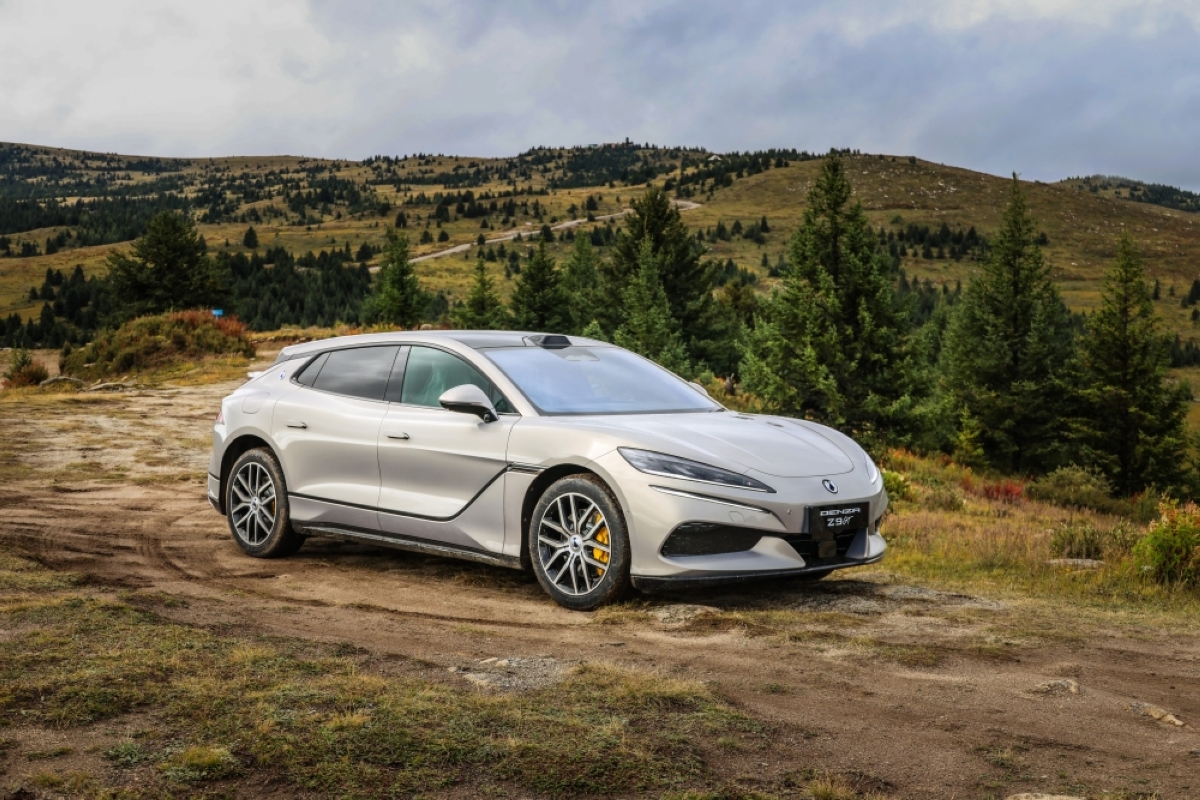
Our group experienced the Denza B5 and B8, BYD Shark, BYD Ti7 and Denza Z9, giving us a look at how the company is applying electrification across everything from pickups and rugged SUVs to luxury performance cars. Two of these, the Ti7 and Denza Z9, are among the vehicles expected to make their way to the Philippine market next year.
The B5 and B8 were already familiar to us, with both now available locally, while the Shark showed another side of the same technology by combining pickup utility with the immediate response of electric motors. The Ti7 is a large five-seat SUV that blends family use with capability, while the low-slung Denza Z9 showed how the same technology can be used for serious performance.
The journey began around Chengdu and Qingcheng Mountain, where bamboo still dominates the landscape. Around Dujiangyan, we also had the chance to see giant pandas before beginning the long journey west, a gentle start to what would soon become a much more demanding drive.
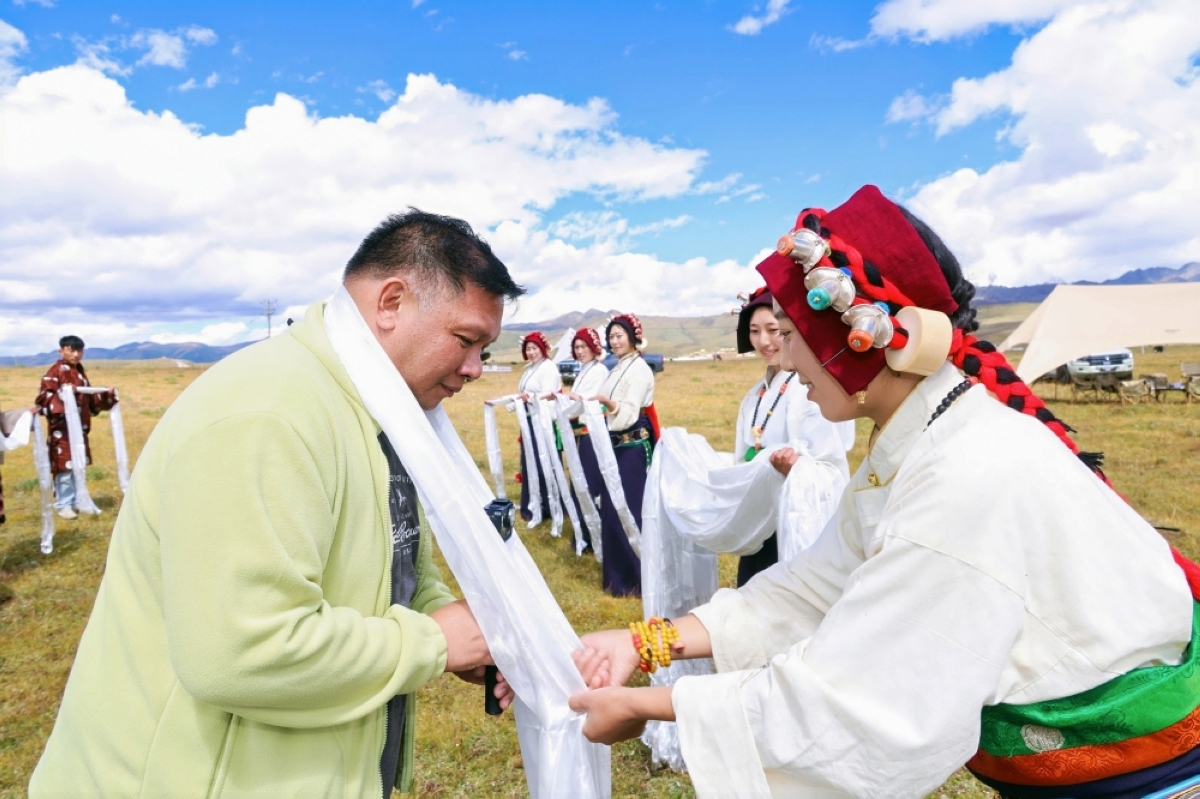
The hospitality started early as well. Almost everywhere we stopped, local hosts welcomed the media group with traditional dishes and regional specialties, giving us a taste of Western Sichuan that went far beyond what we experienced from behind the wheel.
As we moved farther from Chengdu, the scenery changed quickly. Bamboo forests gave way to deep valleys, mountain tunnels, and sheer rock faces. By the second day, the convoy was heading through Moxi Ancient Town toward Hailuogou, where forest and glacier occupy the same landscape.
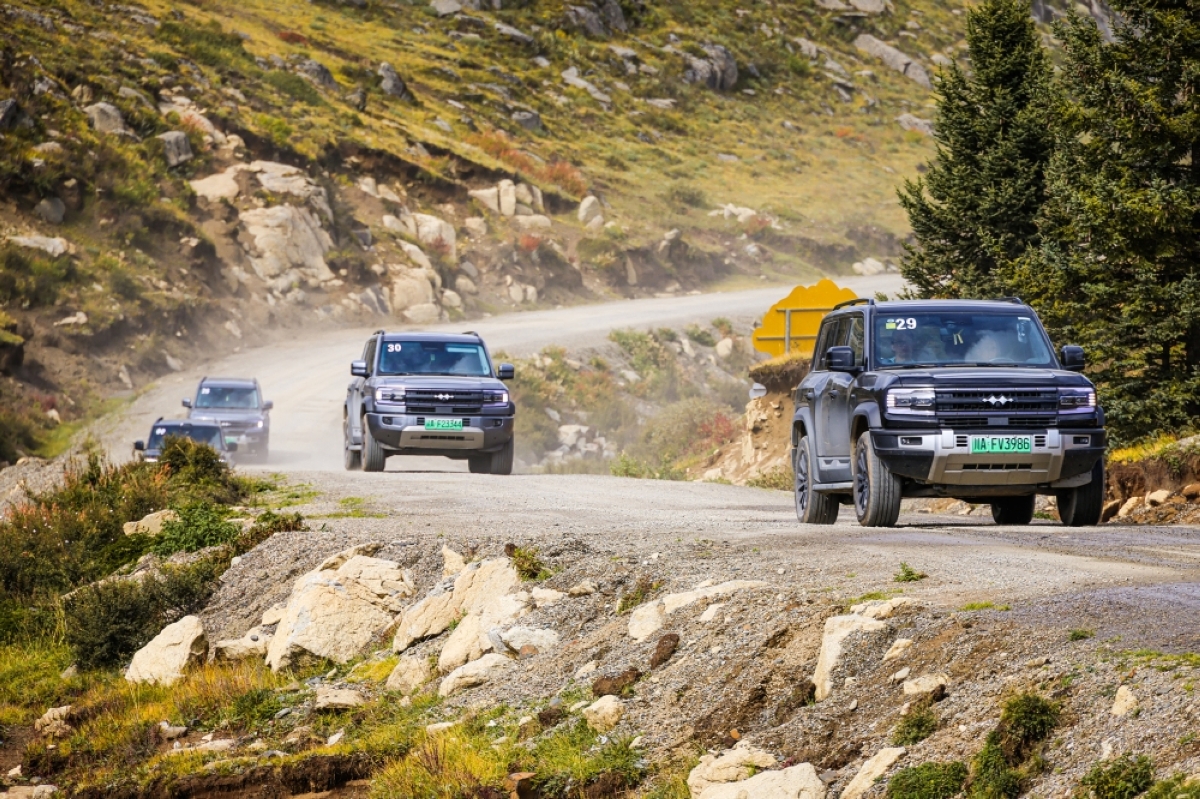
Along the way, the roads provided a much better test than a controlled track ever could. Long climbs, changing surfaces, and high altitude allowed us to feel how the instant torque of electrified drivetrains worked in the real world, especially on steep mountain roads where heavier SUVs normally have to work much harder.
The following day took us through Kangding toward Tagong Grassland, where elevations ranged from around 3,730 to more than 4,000 meters. Here, the trees largely disappeared and the landscape opened into enormous grasslands surrounded by snow peaks. Yaks grazed across the plateau and beside the road, looking perfectly comfortable in an environment where most of us were beginning to struggle simply walking around.
That was also when the altitude began to catch up with the media group. Almost everyone experienced some form of mountain sickness, whether as a headache, lightheadedness, fatigue, or shortness of breath. Oxygen cans quickly became regular companions. A few puffs, walk around, take photographs, then another few puffs.
For people who spend much of their lives talking about engines breathing better, Western Sichuan managed to leave us quite literally breathless. Hu and Palanca were constantly checking on the Philippine group, while the larger BYD team made sure oxygen, food, and assistance were available as the convoy moved farther into the highlands.
One of the most memorable stops came at Honghaizi Viewpoint, where members of the local Chinese-Tibetan community welcomed the visiting media with traditional dances, food, and warm hospitality. It was not simply a stop to take photographs of the mountains. The music, dancing and local dishes brought the human side of Western Sichuan into the trip and reminded us that these far-flung highlands remain home to communities with traditions shaped by the mountains around them.
Liu was there with the regional media contingent, not simply as an executive greeting guests at the start of an event, but as part of the journey all the way into the remote areas.
Cars did not complain
The cars, meanwhile, carried on without complaint. The B5 and B8 showed how electrified drivetrains and sophisticated suspension systems can work in vehicles intended to leave paved roads behind.
The Shark felt more utilitarian but benefited greatly from the instant response of its electrified drivetrain on long climbs, while the Z9 was at the other extreme, showing that electrification can also be used to create serious performance. The Ti7, meanwhile, offered a preview of another large electrified SUV that could eventually become relevant to Filipino buyers.
On the return trip toward Chengdu, the convoy passed through Ya’an, where BYD demonstrated its Megawatt Flash Charging technology before we continued back toward the city. By then, however, something else had begun to overshadow the power figures, charging speeds, and vehicle specifications. It was the landscape outside the windshield.
At Hailuogou, we had seen where forests meet glaciers. It is beautiful, but once you understand how far those glaciers have retreated over the years, it becomes difficult to look at the mountains in quite the same way. High mountain regions are particularly vulnerable to a warming climate, with retreating glaciers, thawing permafrost, and changing weather patterns altering landscapes that took thousands of years to form.
Recent disasters in the wider Tibetan and Himalayan region have again shown how unstable mountain environments can become when ice, rock, and water combine with increasingly unpredictable conditions.
That gave BYD’s often repeated mission to “Cool the Earth by 1°C” a different meaning. We had seen the phrase before in presentations and company literature, but this time we were shown the environment behind it. BYD Global did not bring us to Western Sichuan simply to show how quickly the Z9 could accelerate, how comfortably the B8 could cross rough terrain, or how fast its batteries could be charged. It brought us there to see what was outside the vehicles.
We saw pandas living among the bamboo forests. We watched yaks grazing on high grasslands. We were welcomed by Chinese-Tibetan communities with dance, food, and hospitality. We stood beneath snow-covered mountains and saw glaciers that have steadily receded through time. Electric vehicles alone will not solve climate change, and building any automobile still carries an environmental cost, but reducing the amount of fossil fuel burned by transportation is one part of the solution.
One electrified vehicle will not save a glacier. But change has to begin somewhere.
One EV at a time.
