
Sichuan Claims 8 Wins at China's Top Civil Engineering Awards
2026-09-30 10:57:08 by Queenie Tan
On September 22, the awarding ceremony for the 21st China Civil Engineering Zhan Tianyou Award was held in Chengdu. Eight projects located in Sichuan Province received the award, including the Fenghuangshan Sports Center, the Comprehensive Service Facilities Project for the Jiuzhaigou World Natural Heritage Site, the New Chengdu-Kunming Railway (Sichuan Section), and the Lianghekou Hydropower Station on the Yalong River in Sichuan.
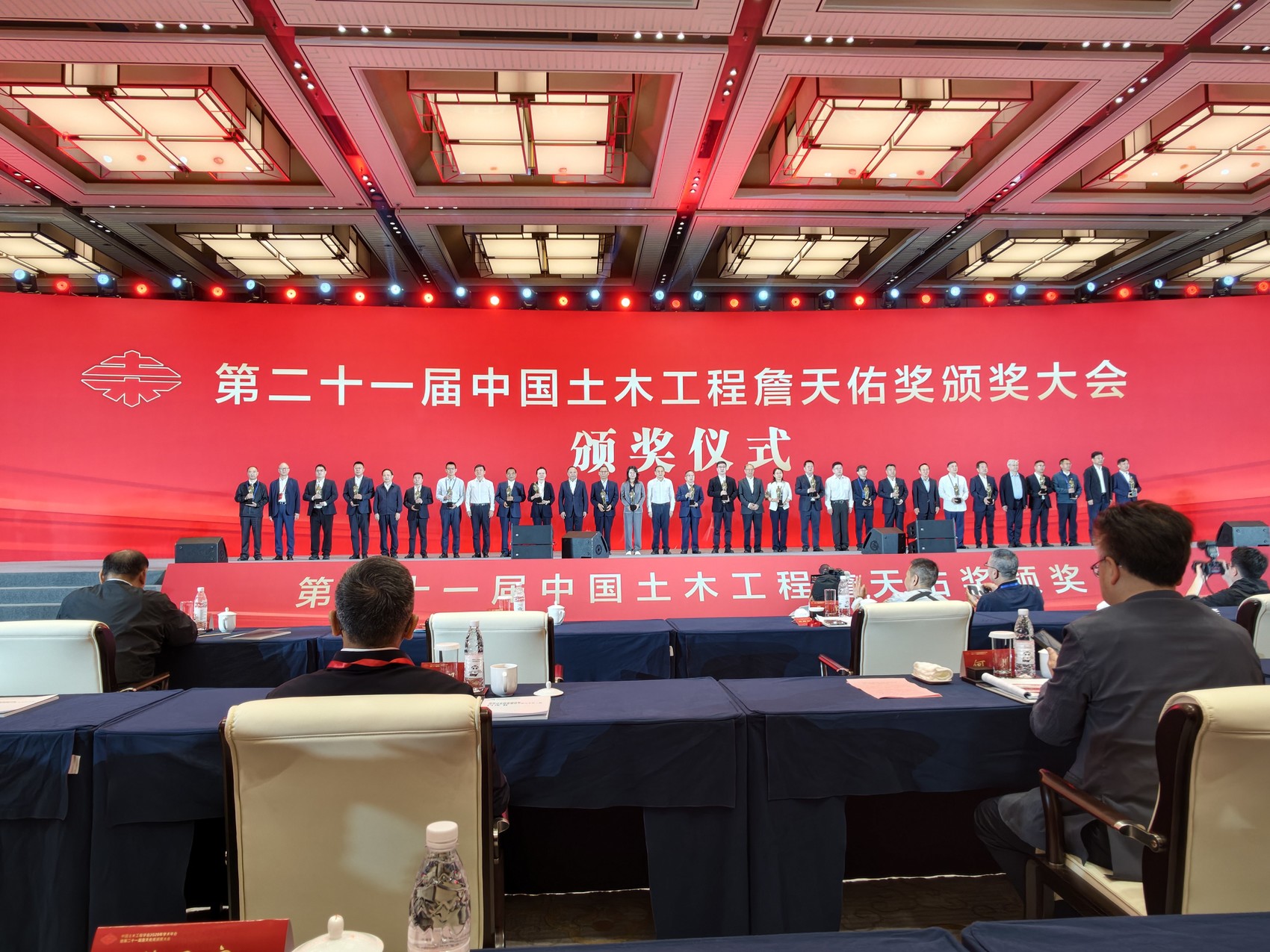
The award ceremony venue
The China Civil Engineering Zhan Tianyou Award is conferred once every three years, with no more than 100 winning projects per session. Closely aligned with major national strategic needs and oriented toward technological innovation in engineering, the award focuses on green and low-carbon development, intelligent construction, and sustainable development. It is the highest honor for technological innovation in China's civil engineering sector and is widely regarded as the 'Oscars' of the civil engineering industry.
Records show that 89 projects won the previous Zhan Tianyou Award, six of which were from Sichuan. This session recognized a total of 100 projects, with Sichuan-based projects increasing to eight, covering multiple fields such as highways, railways, water conservancy and hydropower, bridges, and building construction.
Ding Xiang, Deputy Secretary-General of the Sichuan Society of Architect and Civil Engineer, explained that the Zhan Tianyou Award centers on technological innovation. It evaluates not only physical quality but also the capacity to overcome global challenges and achieve internationally advanced technical standards, while also considering digital intelligent construction, green and low-carbon performance, and public satisfaction. The winning Sichuan-based projects this year feature high technological content, extensively apply digital and intelligent construction technologies, demonstrate green and low-carbon characteristics, and emphasize convenience in post-construction operation and maintenance.
Ding Xiang revealed that the Sichuan Society of Architect and Civil Engineer will make advance preparations for the next award cycle by identifying and cultivating high-quality projects across dimensions such as intelligent construction, cost reduction and efficiency enhancement, ecological benefits, and green and low-carbon development, thereby helping more premium Sichuan projects compete for national honors.
The winning projects are as follows:
Fenghuangshan Sports Center
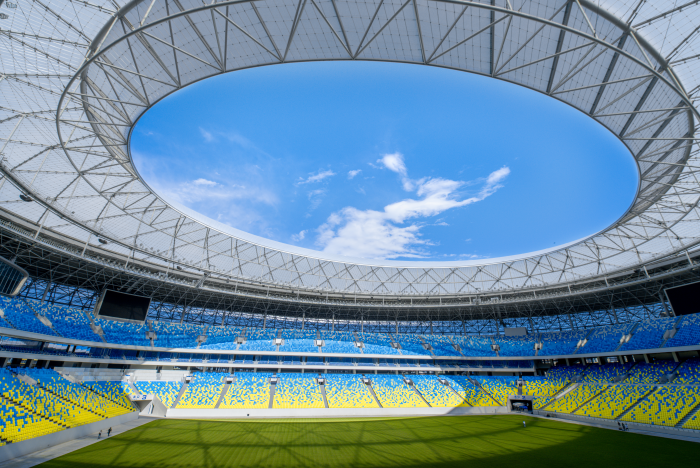
Located in Jinniu District, Chengdu, the project has a total floor area of 455,900 square meters and comprises a 60,000-seat professional football stadium, an 18,000-seat multi-purpose gymnasium, and supporting commercial facilities. It serves as a core venue for the FISU World University Games and a benchmark project for the national 'Healthy China' strategy. During construction, six key technologies—represented by the 'integral lifting and tensioning technology for large-opening cable domes'—reached internationally leading levels. The project integrates technologies such as ETFE membranes, rainwater reuse, and BIM digital twins to establish a full-lifecycle low-carbon construction and operation system.
Comprehensive Service Facilities Construction Project for the Jiuzhaigou World Natural Heritage Site
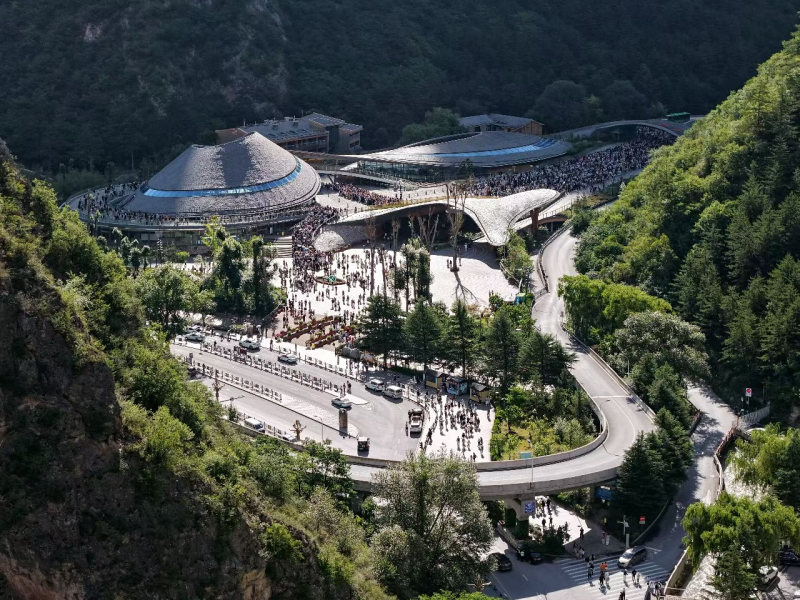
Located in Jiuzhaigou County, Aba Prefecture, the project includes the newly built tourist distribution center, exhibition center, and supporting facilities, making it the most efficient and fully functional visitor center in China. Its double-layer shuttle design resolves pre-earthquake congestion issues, while the distribution center incorporates dual-use functionality for both normal operations and disaster response, pioneering a new model of 'functional restoration plus preventive conservation' for natural heritage sites. By integrating digital-intelligent technologies with local traditional craftsmanship, the project has earned dual certifications: the Three-Star Green Building Label and LEED Gold certification.
Tianfu Art Park Wenbofang Area Construction Project
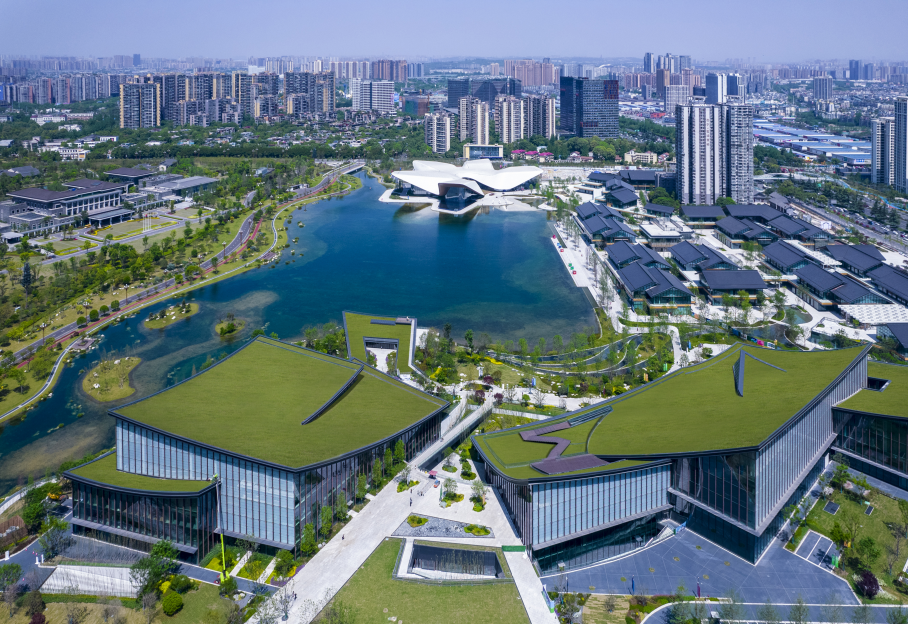
Situated in Jinniu District, Chengdu, with a floor area of 228,800 square meters, this project is a benchmark for urban village renovation in the core urban area and a key component of the Bashu Cultural Tourism Corridor. It creates a borderless cultural and artistic ecological architectural cluster and stands as a national typical case of 'redevelopment of inefficient land use'. During construction, the project pioneered prestressed tension-compression composite enlarged-body anti-floating anchor technology to address common industry challenges, and developed proprietary integrated cable-structure technology to overcome bottlenecks in hoisting large structures within confined indoor spaces.
The New Chengdu-Kunming Railway (Sichuan Section)
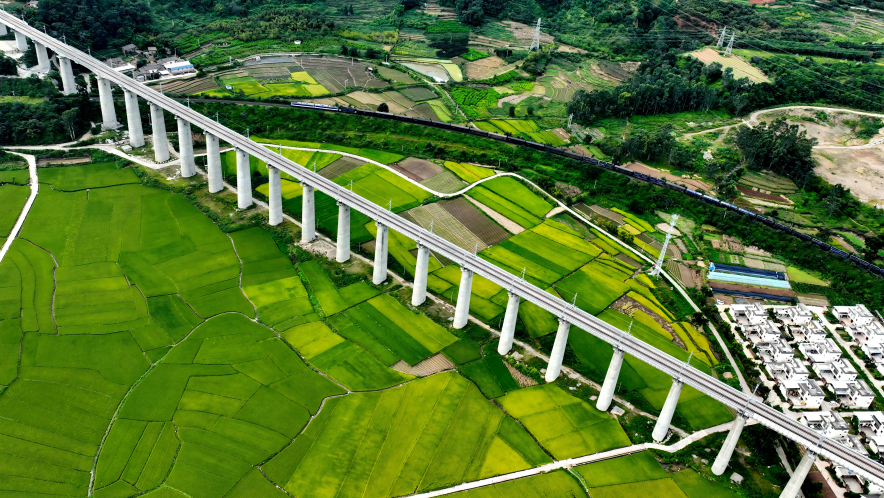
Traversing the eastern foothills of the Hengduan Mountains—an area with extremely complex terrain and geology—the Sichuan section of the New Chengdu-Kunming Railway has a mainline length of 623 kilometers, with bridges and tunnels accounting for 65% of the route. Multiple pioneering technologies have established a complete engineering technology system for complex and challenging mountainous regions in China, breaking down temporal and spatial barriers to development in the southwestern mountain areas and reducing travel time between Chengdu and Kunming from 19 hours to seven hours. Over the three years since its opening, freight transport efficiency has more than doubled, and cumulative passenger trips have exceeded 40 million, facilitating efficient connectivity between the Central Yunnan City Cluster and the Chengdu-Chongqing Economic Circle.
Yuelongmen Tunnel of the Chengdu-Lanzhou Railway
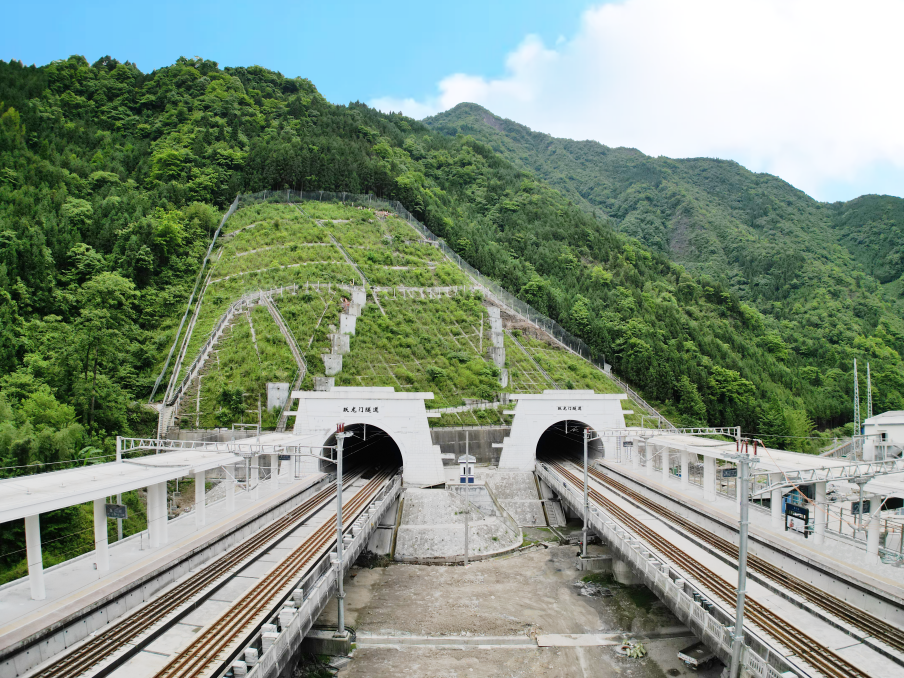
As a critical control project of the Chengdu-Lanzhou Railway, this 20.042-kilometer tunnel is the first to traverse the core zone of a magnitude-8 seismogenic fault. Construction faced high safety risks, including active fault zones, significant soft rock deformation, and high ground temperatures. The design adopted principles of 'disaster-mitigation routing and eco-friendly routing', and the proposed construction techniques for traversing active fault zones and managing significant soft rock deformation are at the industry's leading edge. Technologies for ultra-long-distance single-head ventilation and advance water probing have provided valuable experience for similar future projects.
Ya'an-Kangding Expressway
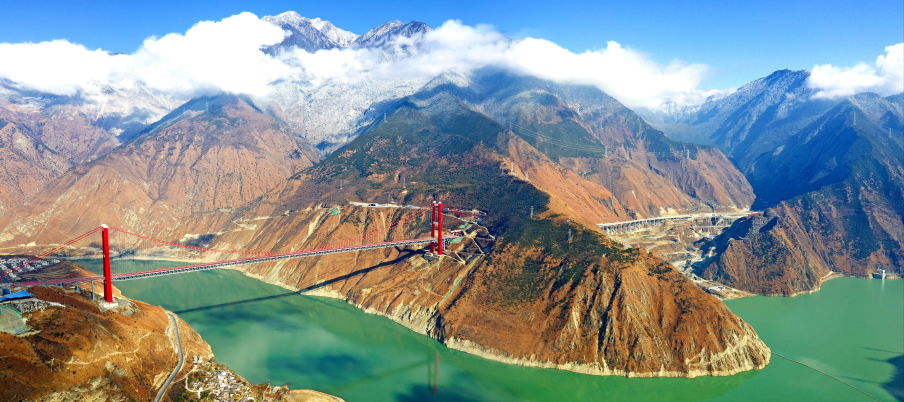
The Ya'an-Kangding Expressway is the first expressway to enter the Tibetan-inhabited areas of Ganzi Prefecture. With a total length of 134.46 kilometers, bridges and tunnels account for 82% of the route. The project traverses seismic fault zones and ecologically sensitive areas, presenting significant construction challenges. During implementation, comprehensive route selection technology for plateau gradient zones was pioneered, overcoming design and construction difficulties associated with super-long-span suspension bridges and super-long tunnel clusters in high-intensity seismic zones. A complete set of key technologies for safety resilience and green construction was established, marking the entry of the Tibetan-inhabited areas of Garze into a new era of rapid development.
Lianghekou Hydropower Station on the Yalong River, Sichuan
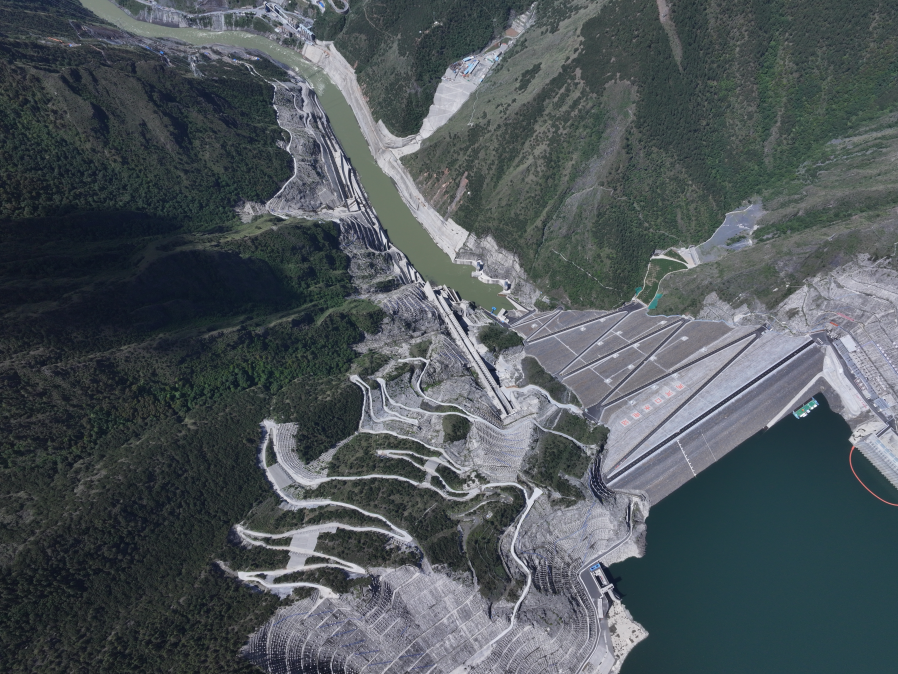
Located in Yajiang County, Garze Prefecture, this station serves as the leading reservoir facility in the cascade development of the Yalong River basin and is a backbone project for the West-to-East Power Transmission Program. Facing challenges such as severe cold and high altitude, the project employed 'full-process digital and intelligent construction technology' for the first time to build the world's highest earth-rock dam (303 meters tall), earning a Guinness World Record. It features eight ultra-large-scale diversion tunnels and 14 ultra-high intake towers, with multiple technical indicators setting world records.
Yangfanggou Hydropower Station on the Yalong River, Sichuan
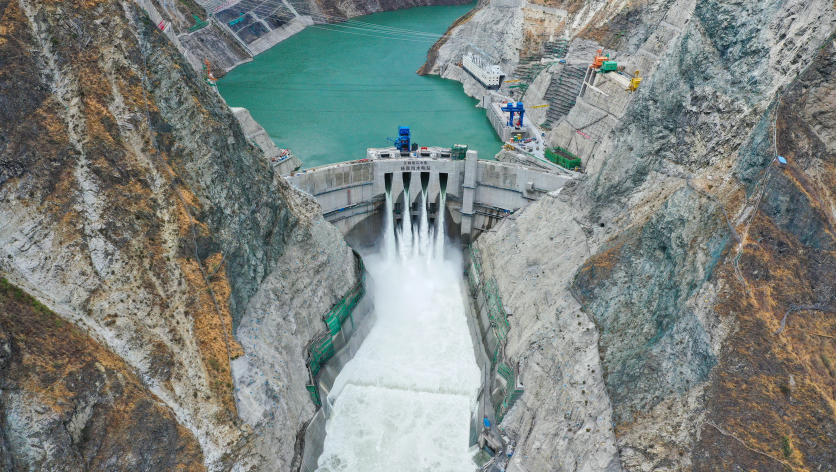
Located in Muli County, Liangshan Prefecture, this station is a key power source project under the national 12th Five-Year Plan and the first million-kilowatt-class large-scale hydropower project in China successfully completed using the Engineering-Procurement-Construction (EPC) general contracting model. Addressing complex geological and ecological challenges, the project innovated survey and design techniques, developed and applied intelligent construction technologies and complete equipment sets for high arch dams, and achieved multiple groundbreaking results, driving industry transformation, upgrading, energy conservation, and carbon reduction.
【本篇文字部分内容由 AI 辅助写作,特此声明。Please note: the text in this article was created with the help of AI.】
