
Chinese Ambassador to Egypt Praises C Vision: Chinese Technology Turns Egyptian Desert into Oasis
2026-09-28 18:53:45 by Queenie Tan
On September 23, Liao Liqiang, the Chinese Ambassador to Egypt, reposted on an overseas social media platform images from an article published by Chuanguan News's "C Vision" on September 18. The article, titled "Egypt: Chinese Technology Turns Barren Desert into Fertile Farmland as Rare White Storks Settle in Desert Oasis", was accompanied by a caption praising Chinese technology, drawing significant attention and comments from numerous netizens.
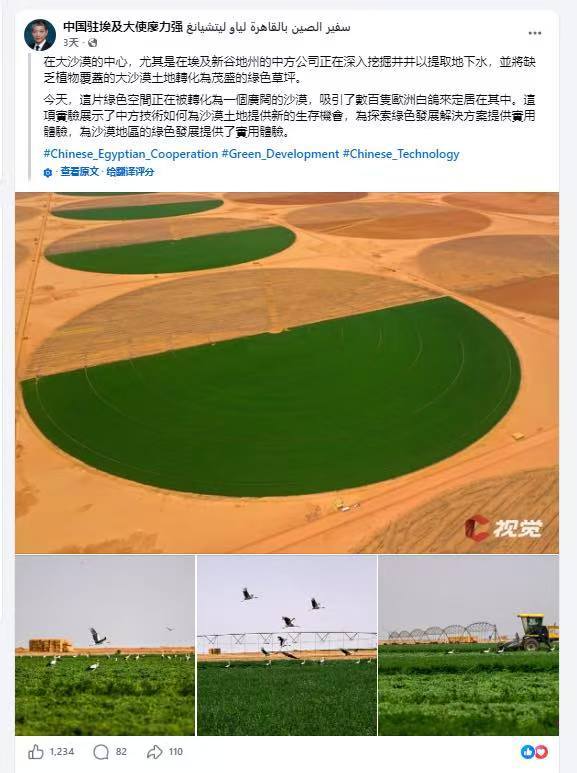
Screenshot of Chinese Ambassador to Egypt Liao Liqiang's post sharing C Vision image on
an overseas social media platform
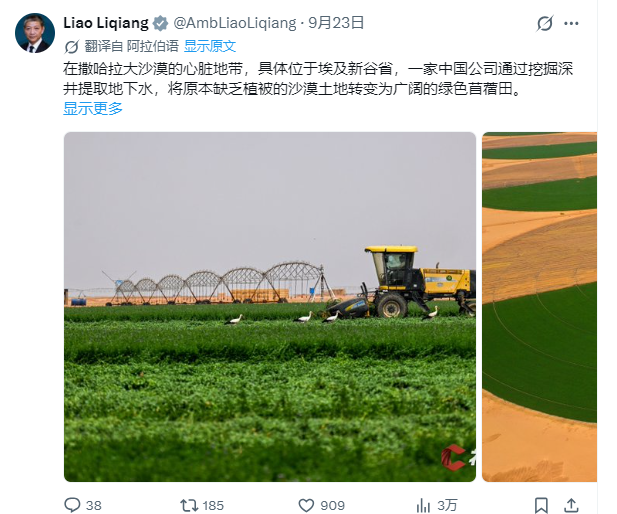
Screenshot of Chinese Ambassador to Egypt Liao Liqiang's post sharing C Vision image
on an overseas social media platform
This series of photographs was taken by Hao Donglei, a contracted photographer for C Vision, deep within the Sahara Desert in Egypt's New Valley Governorate. A local Chinese enterprise, ZPEC (Zhongman Petroleum and Natural Gas Group Corp.), has transformed vegetation-scarce wasteland into vast green alfalfa fields by drilling ultra-deep wells to extract groundwater, demonstrating the effectiveness of Chinese technology in converting desert into arable land.
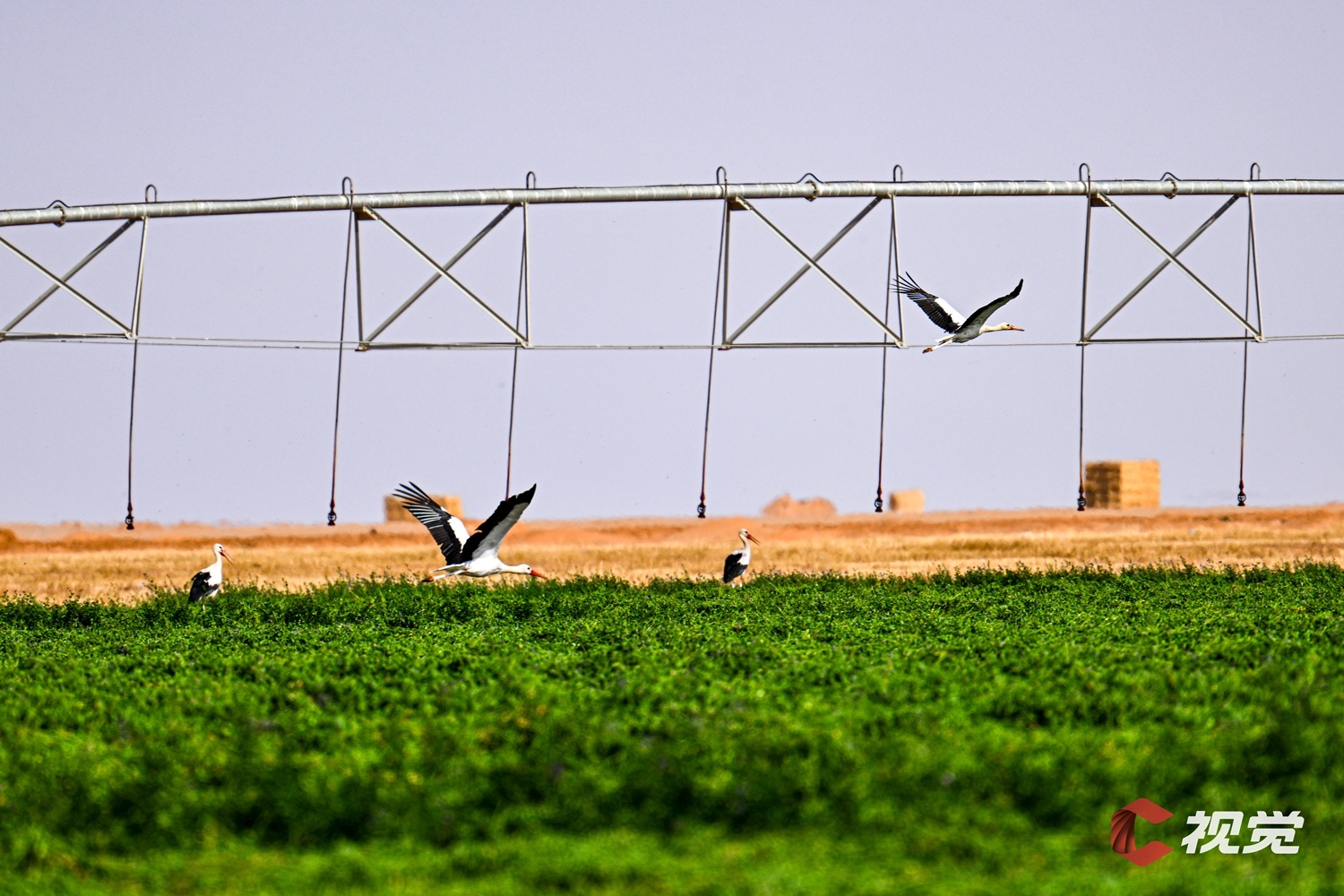
White storks inhabit and forage in alfalfa fields irrigated by wells drilled by a Chinese enterprise. The sprinkler system visible in the image is supplied with water from ultra-deep wells.
Photo by Hao Donglei, contracted photographer for C Vision.
In his post, Liao Liqiang stated that this practice demonstrates how Chinese technology can revitalize desert lands, providing valuable experience for exploring green development solutions. He also left a message urging all sectors of the global community to reflect further: while celebrating the transformation of certain desert areas into green agricultural land, we must also explore how to achieve long-term sustainable agricultural production without depleting groundwater resources. True sustainable development means not only regreening the desert today but also ensuring that this land continues to benefit future generations.
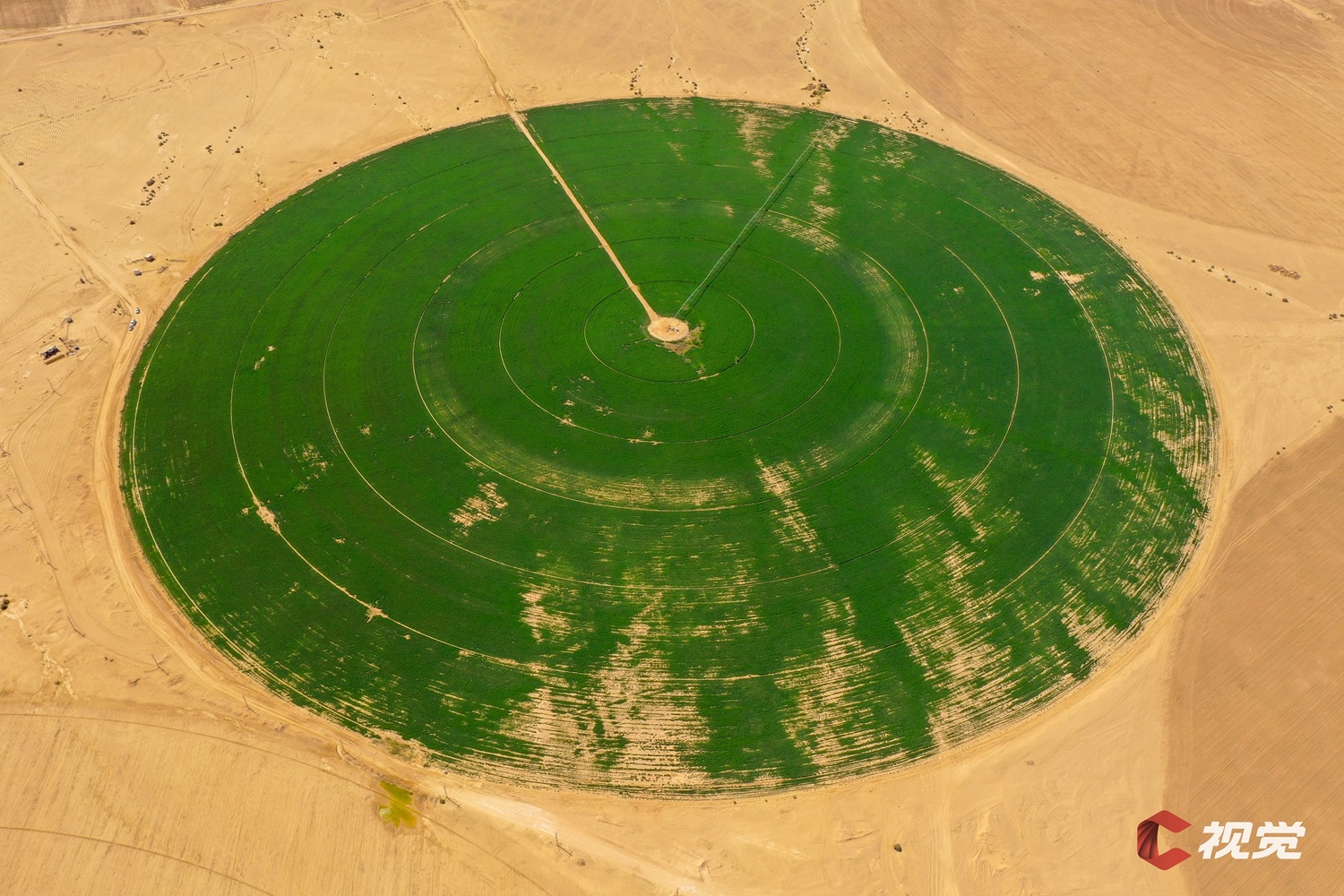
In the Sahara Desert, fertile farmland irrigated by wells drilled by a Chinese enterprise forms unique circular desert oases. The sprinkler system acts like a "pointer", rotating across the fields to irrigate crops. Each giant circle covers 100 feddans, approximately 630 mu.
Photo by Hao Donglei, contracted photographer for C Vision.
Behind these stunning images lies an arduous expedition across the desert. In mid-September, Hao Donglei departed from Cairo, traversing the desert along the Nile River. After a 1,300-kilometer drive lasting 13 hours, he reached the heart of the Owainat region in the Sahara Desert within the New Valley Governorate, near the border between Egypt and Sudan. Daytime surface temperatures there reach up to 45 degrees Celsius, with heat waves carrying sand and dust. Within a radius of over 300 kilometers, there is only one small oasis town where food and vegetables can be replenished, and only a single gas station available for refueling across hundreds of kilometers.
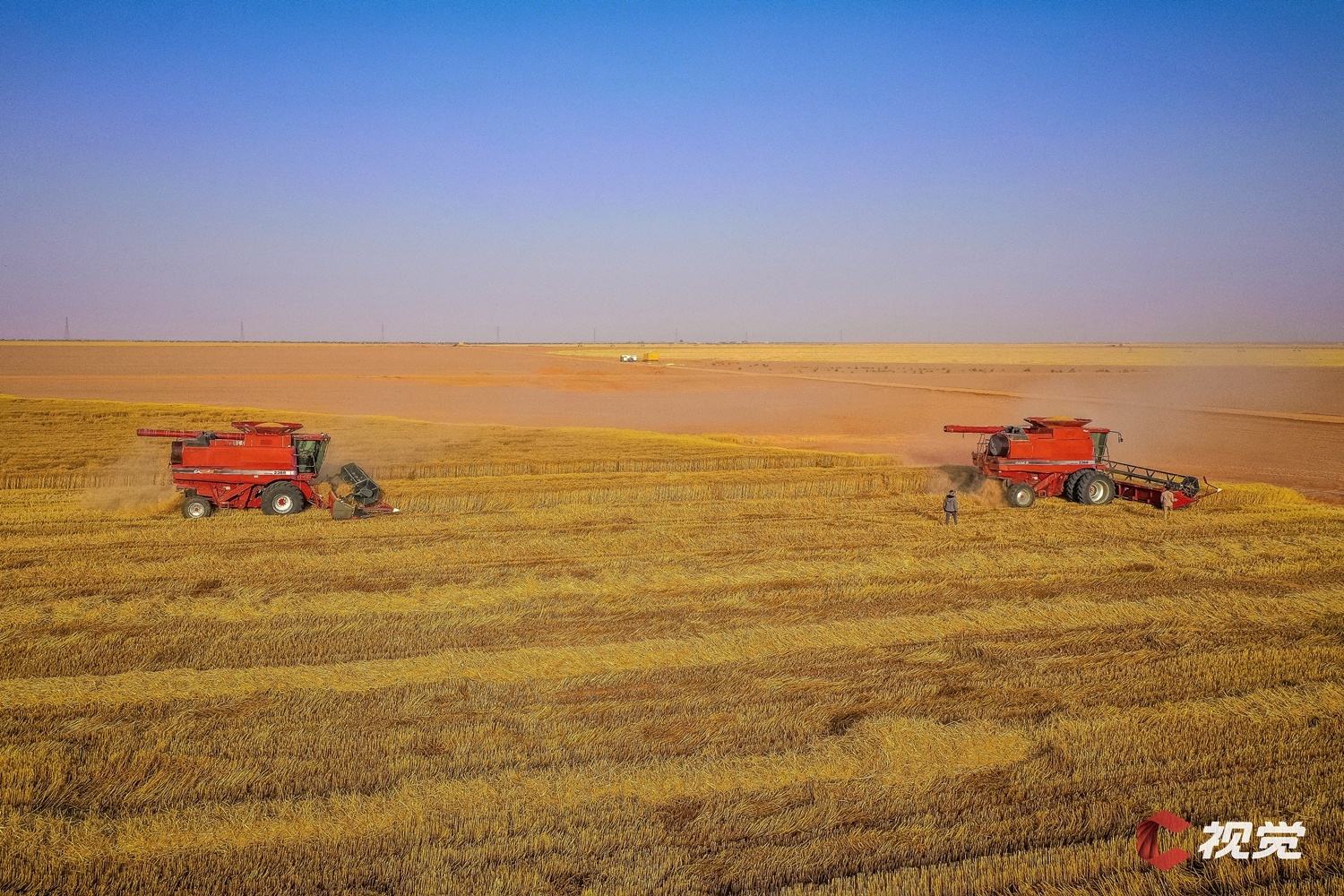
Seasonal wheat irrigated by wells drilled by a Chinese enterprise yields a bountiful harvest in the Sahara Desert. Photo by Hao Donglei, contracted photographer for C Vision.
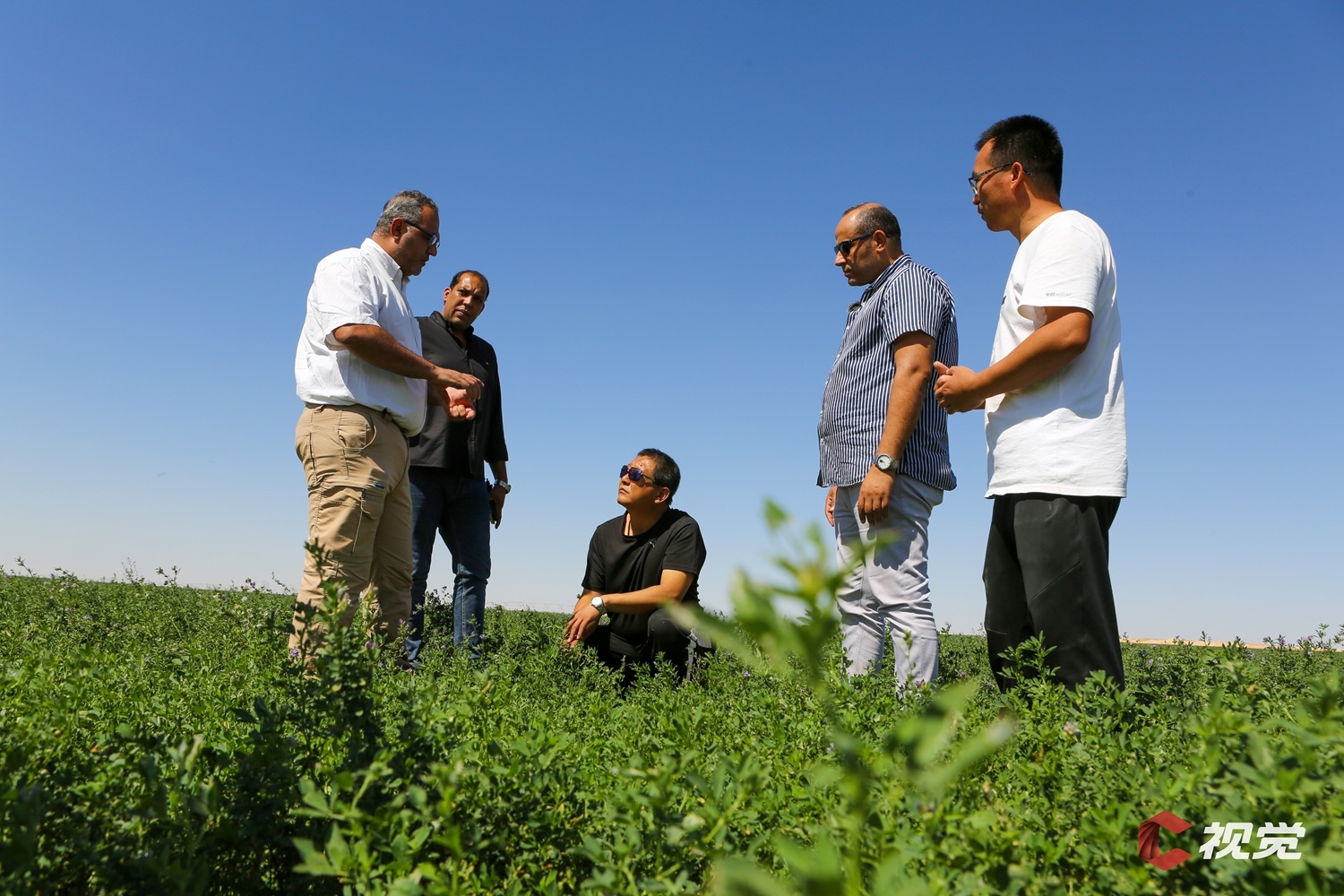
Chinese and Egyptian employees discuss agricultural planting techniques in an alfalfa field in the Sahara Desert. Photo by Hao Donglei, contracted photographer for C Vision.
Encouragingly, on this once barren land, ZPEC has established deep roots, drilling ultra-deep wells to provide a continuous water supply. The wasteland has gradually transformed into an oasis, yielding abundant harvests of wheat and alfalfa. White storks now forage here, and wild animals such as desert foxes and voles have also come to inhabit the area. This scene greatly inspired Hao Donglei; he captured numerous images, and the fatigue from his long journey vanished completely.
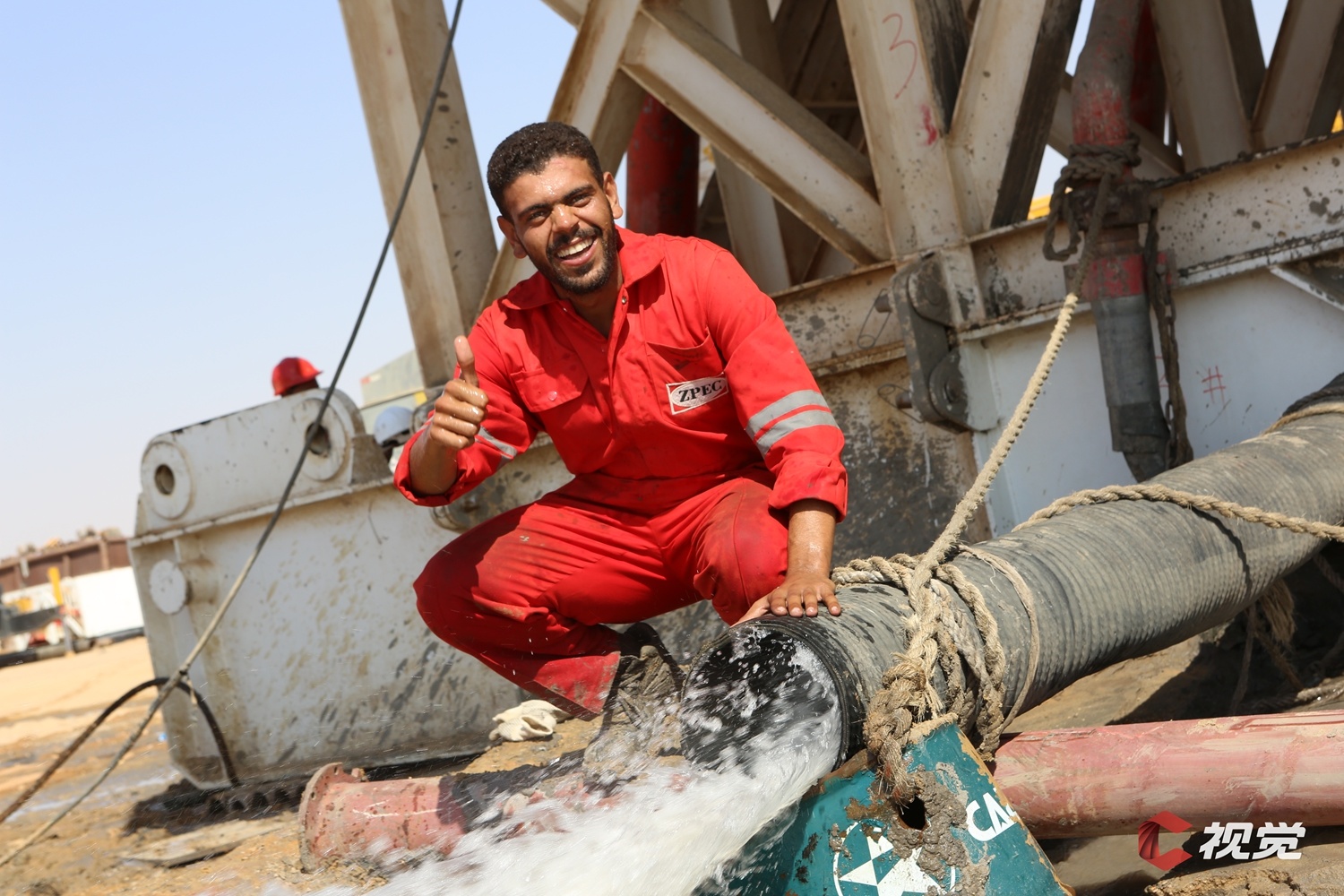
An Egyptian employee tastes freshly drawn well water.
Photo by Hao Donglei, contracted photographer for C Vision.
This miracle of turning "desert into oasis" would not have been possible without robust technological support. It is understood that after extensive research and exploration in the Sahara Desert, the ZPEC team pioneered air foam drilling technology. By using a mixture of air and foaming agents instead of traditional mud to assist drilling, this method effectively solves the persistent problem of lost circulation, significantly increases drilling speed, and properly protects underground aquifers, achieving dual benefits of efficient construction and ecological protection. Since its application, this innovative solution has caused a sensation in the local industry, attracting many Egyptian drilling contractors who came specifically to learn from it. The Chinese enterprise has also shared this technology free of charge with local companies, helping upgrade and improve the quality of Egypt's drilling industry through technological sharing.
