
Sanxingdui and Jinsha: Evidence of China's Unified yet Diverse Civilization
2026-09-24 16:20:16 by Queenie Tan
On September 23, a professional salon titled "Cultural Exchanges between Sanxingdui-Jinsha Sites and Surrounding Areas" was held in Beijing. As a key sub-event of the Beijing Culture Forum, the event officially launched the book series Sanxingdui and Jinsha: Ancient Shu Civilization in the Bronze Age and announced four new multidisciplinary research findings. Bringing together archaeological experts and scholars from across the country under the theme "Mutual Learning Among Civilizations: Dialogue with Ancient Shu", the event provided significant archaeological evidence for interpreting the exchanges between the ancient Shu civilization and neighboring regions, as well as the pluralistic unity of Chinese civilization.
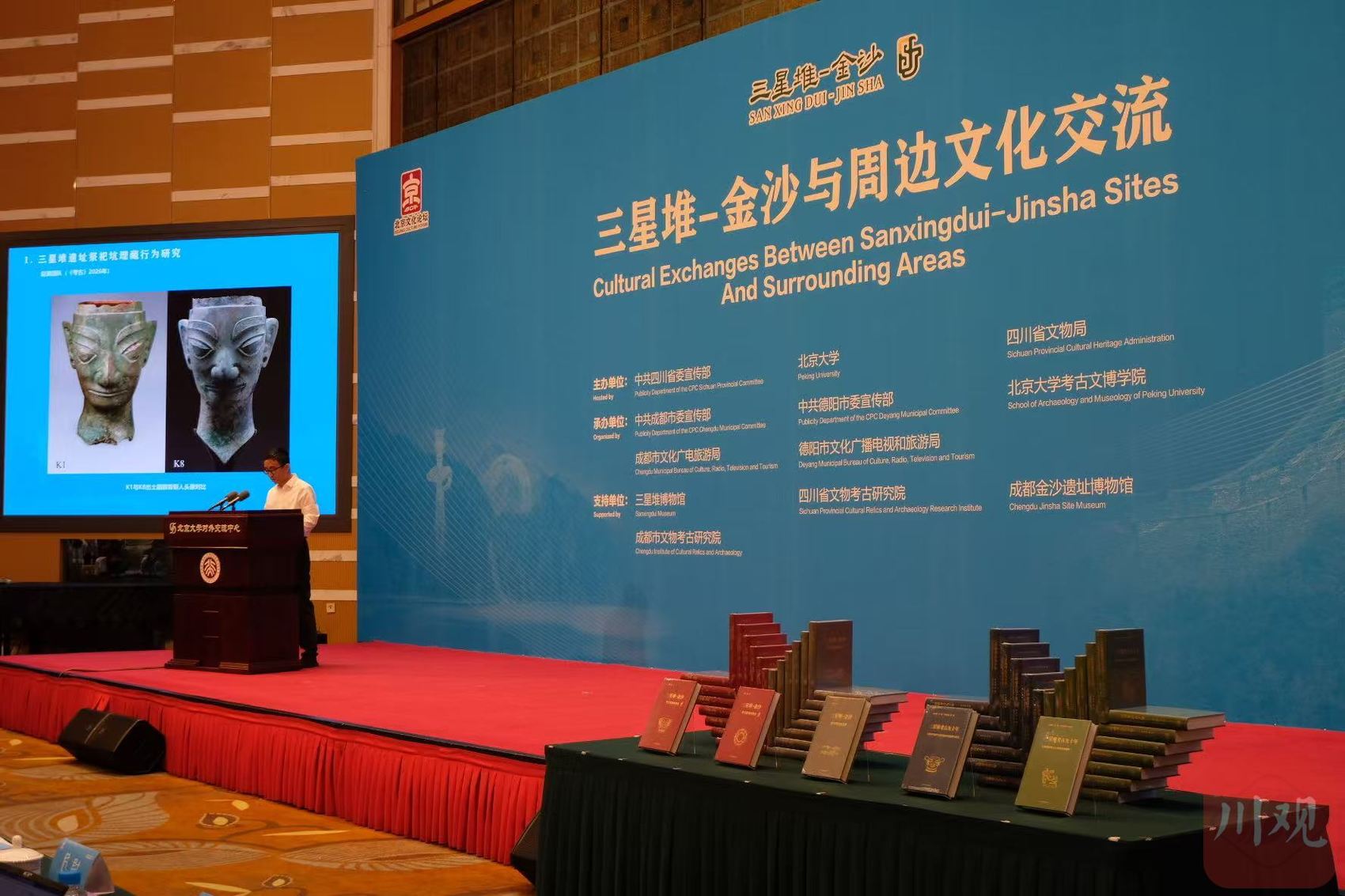
The book series Sanxingdui and Jinsha: Ancient Shu Civilization in the Bronze Age was officially released
Professor Huo Wei of Sichuan University noted that the distinctiveness of the Sanxingdui-Jinsha culture does not deviate from the broader context of Chinese civilization but rather serves as a vivid manifestation of its pluralistic unity. Within the Eastern cultural system, its bronze civilization aligns closely with the ritual traditions of the Xia, Shang, and Zhou dynasties of the Central Plains. The use of ritual vessels such as zun and lei, along with an inherited jade artifact system, reflects the unique cultural foundation of Eastern bronze civilization.
Ran Honglin of the Sichuan Provincial Institute of Cultural Relics and Archaeology argued that the uniqueness of Sanxingdui is inseparable from its geographical location, exhibiting characteristics of "north-south convergence and east-west integration". Influenced by cultures from the Central Plains, the middle and lower reaches of the Yangtze River, and the northwest, its bronze vessel forms, decorative patterns, metallurgical techniques, and ritual systems all demonstrate close ties with other contemporary bronze cultures in China, making it an integral component of Chinese civilization.
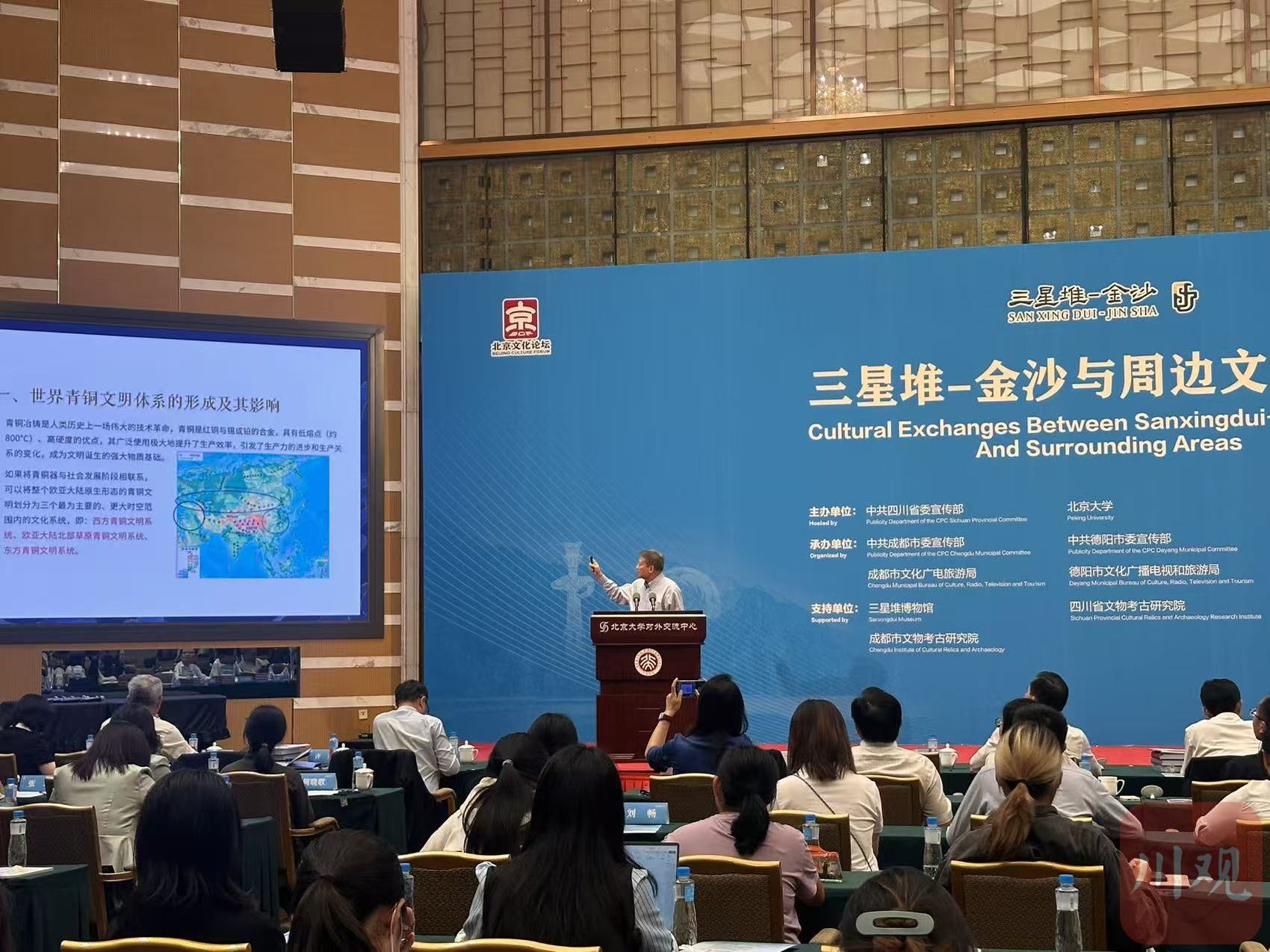
Huo Wei shared his views
Professor Zhao Hui of Peking University added that around 4,000 years ago, the Sichuan Basin had already become an important part of the pluralistic unity of prehistoric agricultural cultures. The Baodun ancient city, serving as a central settlement, was in the process of evolving into a regional state, laying the foundation for the Sanxingdui civilization. Through comparative analysis, Professor Fang Xiangming of Zhejiang University pointed out that while the Liangzhu civilization was a jade-centric culture expressed through jade artifacts, the ancient Shu civilization represented the pinnacle of regional civilizations in the upper reaches of the Yangtze River. Together, they demonstrate the continuity, innovation, and inclusiveness inherent in the development of Chinese civilization.
Song Xinchao, former deputy director of the National Cultural Heritage Administration of China, emphasized that the presentation of Sanxingdui should be grounded in its historical continuity, forming a coherent narrative that begins with Baodun and extends to Jinsha, closely linked to the history of urban development on the Chengdu Plain. Its convergence of diverse cultures, distinctive agriculture, and village landscapes illustrate the integration of culture and nature, heritage and daily life, representing a form of living heritage.
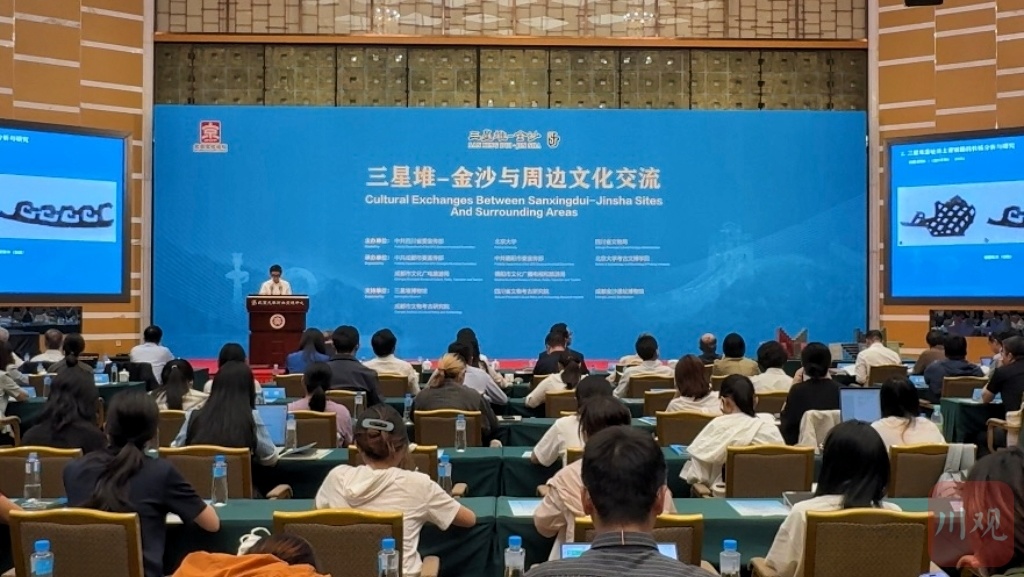
Event Venue
Zhang Qing, director of the Jinsha Site Museum, noted that the bronze civilization at the Jinsha site was inherited from Sanxingdui. The two sites exhibit remarkable consistency in urban planning, architectural construction, and metallurgy and bronze casting, jointly forging the splendor of the Chengdu Plain's bronze civilization and serving as a unique representative of global bronze civilizations.
The Sanxingdui-Jinsha culture did not develop in isolation but was deeply embedded in the exchange networks of early Chinese civilization. Professor Sun Hua of Peking University analyzed that, in addition to inheriting elements from the Baodun culture, the Sanxingdui culture was decisively shaped by the influence of bronze cultures from the Central Plains and the northwest. After its formation, it rapidly expanded to southern Sichuan Basin, northern Yunnan-Guizhou Plateau, and along the Yangtze River. The northward expansion during the Jinsha period, moving upstream along the Jialing River, may have been closely related to the rise of the Zhou people and the establishment of the Zhou Dynasty.
Tang Miao of the Chengdu Institute of Cultural Relics and Archaeology mentioned that the Sanxingdui-Jinsha sites demonstrate diverse exchanges with regions including the Central Plains, the middle and lower reaches of the Yangtze River, Gansu-Qinghai, and even Southeast Asia, serving as a highly representative regional case study in the process of the pluralistic origins of Chinese civilization.
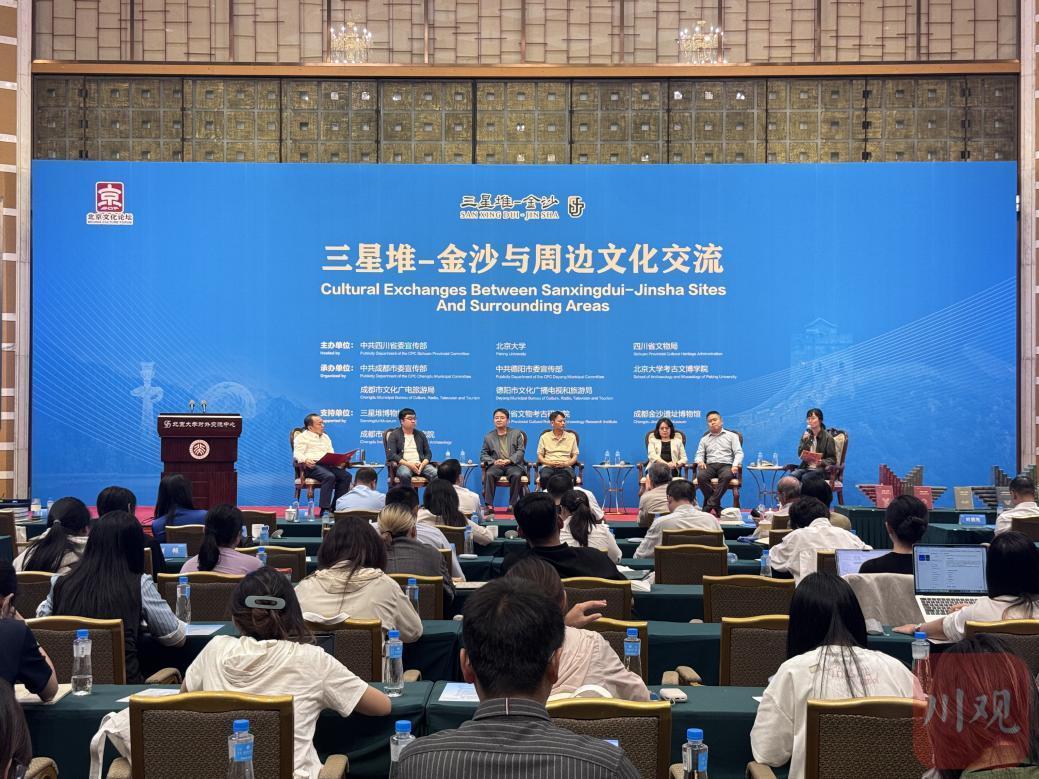
Roundtable Discussion
Xu Jie, director emeritus of the Asian Art Museum in San Francisco, pointed out that the relics unearthed from the sacrificial pits at the Sanxingdui site reveal four key elements of its civilization: the significance of bronze vessels, a unique iconographic system, exceptional sculptural and visual expression capabilities, and the pictorial representation of ritual scenes.
He Xiaoge, a postdoctoral researcher at Peking University, stated that the international academic community pays attention to Sanxingdui because it can be included in comparative discussions of world civilizations. Alongside civilizations such as Egypt, Mesopotamia, and the Maya, Sanxingdui helps explain why human societies developed different religious, artistic, and technological traditions. It tells the unique story of Chinese civilization while also contributing to the shared narrative of global civilization.
【本篇文字部分内容由 AI 辅助写作,特此声明。Please note: the text in this article was created with the help of AI.】
