
Sichuan Launches First Multimodal Train to Vietnam via Pinglu Canal
2026-09-24 10:52:56 by Queenie Tan
At 3:00 p.m. on Sept. 4, accompanied by a long whistle blast, a river-rail-sea multimodal transport train loaded with chemical products from Sichuan departed slowly from the Chengdu South Collection and Distribution Center of the New International Land-Sea Trade Corridor in Xinjin District, Chengdu, marking its inaugural run. The cargo will be transported by rail to the Liujing Port Area of Nanning Port in Guangxi for loading onto vessels, then shipped via the Pinglu Canal from Beibu Gulf ports in Guangxi directly to Can Tho Port in Vietnam.
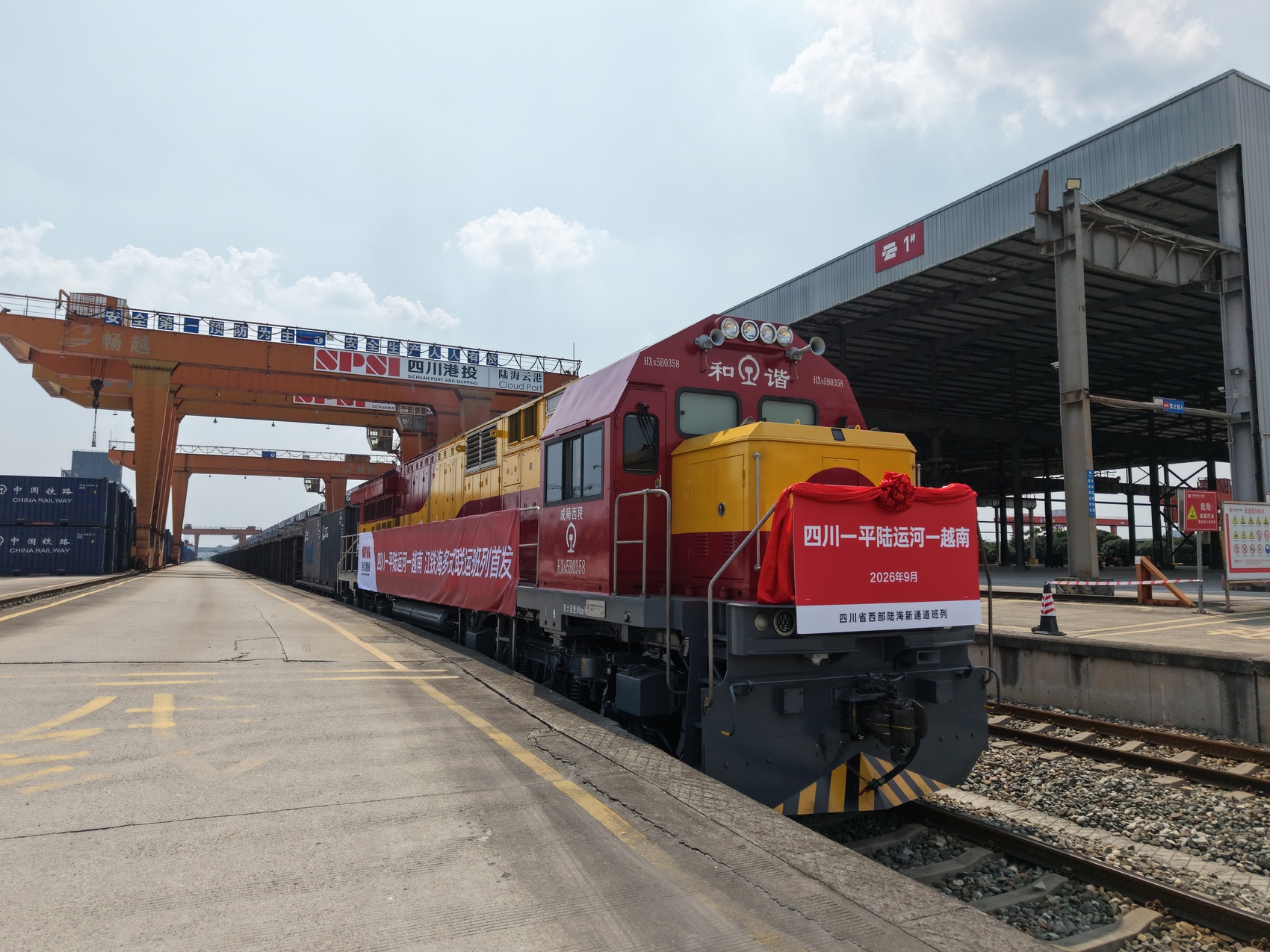
Launch ceremony of the inaugural "Sichuan-Pinglu Canal-Vietnam" river-rail-sea multimodal transport train
Organized and dispatched by Sichuan New International Land-Sea Trade Corridor Development Co., Ltd., the service adopts a "railway + inland waterway + maritime shipping" model. It fully leverages the combined advantages of trunk-line rail transport and high-capacity waterway shipping, opening an efficient new corridor for "Made in Sichuan" products to reach ASEAN markets while facilitating the low-cost inflow of resources from Vietnam and other ASEAN countries into Sichuan.
The Pinglu Canal is a key project of the New International Land-Sea Trade Corridor in western China and the first canal planned at the national level since the founding of the People's Republic of China to connect inland waterways with the sea. It is scheduled to open to navigation this September. Upon completion, the canal will establish a golden corridor for rapid two-way cargo flows between Chinese and ASEAN markets.
Seizing the opportunity presented by the upcoming navigation of the Pinglu Canal, Sichuan Port & Navigation Investment Group Co., Ltd. is further expanding Sichuan's logistics network connecting ASEAN and reaching global markets, providing more efficient, stable, and cost-effective supply chain solutions for "Made in Sichuan" products to access domestic and international markets.
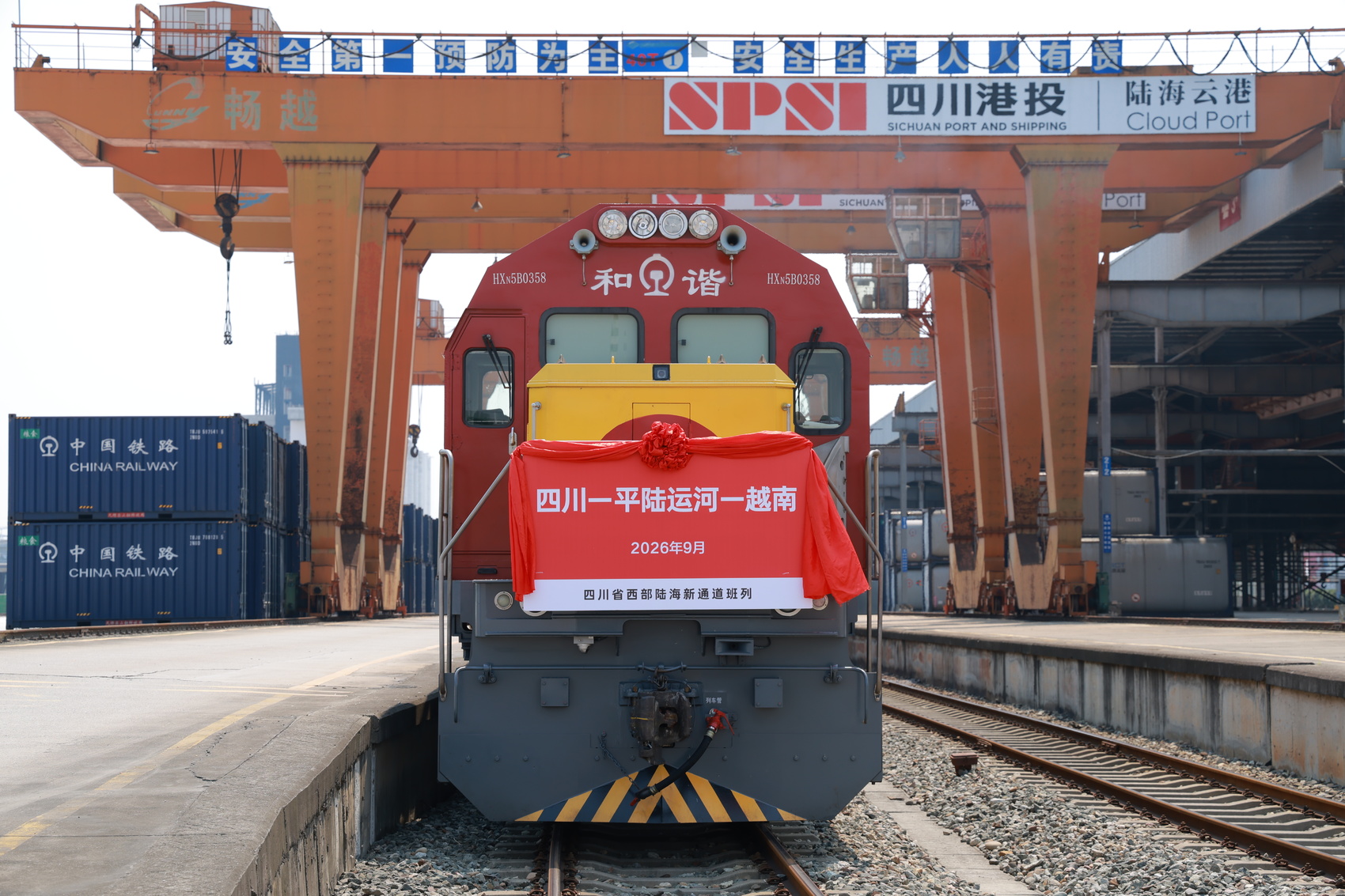
The Inaugural Departure of the "Sichuan-Pinglu Canal-Vietnam" River-Rail-Sea Multimodal Transport Train
According to the head of the Operations Management Department, traditional transportation routes from Sichuan to Vietnam mainly include cross-border highways, cross-border railways, and rail-sea intermodal trains transiting via Beibu Gulf and the Greater Bay Area. The cargo in this shipment will seamlessly transfer to river-sea direct vessels on the Pinglu Canal at Nanning, Guangxi, with customs clearance completed at the Liujing Port Area. Once the Pinglu Canal opens to navigation, goods will reach Can Tho Port in Vietnam through a one-stop service via the canal.
Compared with the traditional Sichuan-Guangxi rail-sea intermodal service under the New International Land-Sea Trade Corridor in western China, the new route shortens the rail transport distance by 150 to 200 kilometers. While transit time remains comparable, the per-container transport cost is reduced by approximately 1,000 yuan. In the future, chemical products, solar photovoltaic panels, and auto parts exported from Sichuan to Vietnam, Thailand, and Malaysia can all reach major Southeast Asian ports via river-rail-sea multimodal transport.
Enterprises are actively following the inaugural run of the new route, and regular service offerings along this corridor will be studied and launched subsequently. As a vital hub and the starting point of the western main corridor of the New International Land-Sea Trade Corridor, Sichuan can link ASEAN markets and extend its reach globally through river-rail-sea multimodal transport, accelerating its transformation from an "inland hinterland" to an "opening-up frontier".
Previously, Sichuan's New International Land-Sea Trade Corridor trains have established a comprehensive southbound transport network covering Sichuan-Guangxi (Guangdong) rail-sea intermodal services, as well as the China-Laos Railway, China-Vietnam Railway, and China-Myanmar Railway. To date, Sichuan has operated over 6,600 New International Land-Sea Trade Corridor trains, supporting southbound foreign trade exceeding 18 billion yuan. Nearly 400 origin-destination routes have been opened, covering 15 cities and prefectures within the province and connecting 84 countries and regions, as well as 170 cities and ports worldwide.
【本篇文字部分内容由 AI 辅助写作,特此声明。Please note: the text in this article was created with the help of AI.】
