
Chengdu Teahouses: Real Life, Not AI
2026-09-18 15:34:50 by Queenie Tan
Authentic kung fu tea performance epitomizes the vibrant everyday life of Chengdu. Previously, a tourism short film titled "Every Step in China is an Adventure", co-produced by Trip.com Group and Jackie Chan, went viral across the internet. In an opening sequence lasting less than 30 seconds, scenes featuring long-spout tea pouring, the rhythmic clinking of covered tea bowls, and Sichuan Opera face-changing are captured, serving as an intuitive window for overseas audiences to understand an authentic, warm, and lively Chinese urban lifestyle.
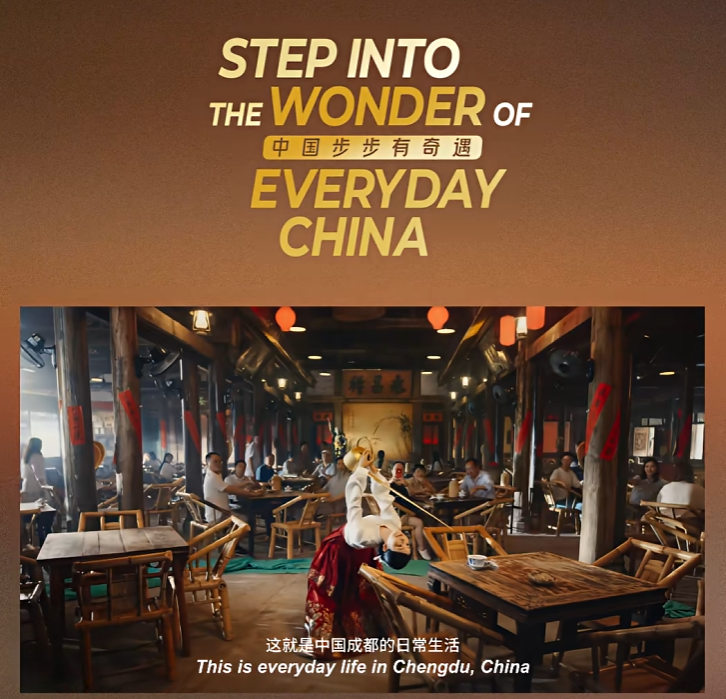
Video Scenes from an old teahouse in Chengdu
A representative from Trip.com Group noted that many young foreigners mistakenly believe Jackie Chan's films rely entirely on special effects, stunt doubles, or even AI, whereas Chinese audiences know they are the result of genuine martial arts skills. Similarly, the street-level kung fu tea ceremonies and Sichuan Opera face-changing that amaze international viewers are not special effects but rather authentic aspects of daily life in China. It was this "authenticity" that earned Jackie Chan respect in Hollywood, and the film aims to invite the world to step beyond the screen and experience the true culture and charm of China.
To capture the authentic essence of Bashu culture, the production crew specifically selected a historic teahouse in Chengdu. During filming, the team discovered from promotional posters that the teahouse regularly hosts intangible cultural heritage performances such as Sichuan storytelling and Yangqin music. Impressed by the rich and living cultural traditions found throughout China, the production lead became determined to share this unique experience with global travelers.
The tea culture of the Bashu region boasts a long history, and Chengdu has long been known for the saying that "half the city's residents are tea drinkers". This tradition represents not merely brewing techniques but a way of life deeply rooted in the city's veins. The relaxed leisure culture it embodies fulfills a universal spiritual need shared by all humanity. Here, there is no need to rush through itineraries or engage in forced socializing; for a modest price, one can order a covered bowl of tea, sit on a bamboo chair by the river, and while away half a day at ease. Whether zoning out, chatting with neighbors, or quietly watching the passing crowds, visitors can dissolve anxiety in this slow-paced rhythm, finding healing and inner peace. This highly accessible form of leisure precisely resonates with the aspirations of overseas audiences.
This vibrant everyday life is not a fleeting internet trend but a verifiable urban heritage passed down through generations. In 2024, the "Archives of Old Teahouses in Chengdu" were officially inscribed in the UNESCO Memory of the World Regional Register for Asia and the Pacific.
Today, Chengdu's old teahouses preserve their century-old architectural forms and original grassroots atmosphere while adapting to contemporary public leisure needs, creating a unique aesthetic of relaxed living specific to the city. These inclusive and lively venues serve both as personal sanctuaries for local residents and as platforms for cross-cultural exchange with the world, allowing the millennia-old Bashu tea culture to remain vital and connect globally over a simple cup of tea.
As Jackie Chan states in the film: "China beyond the screen awaits your visit!"
【本篇文字部分内容由 AI 辅助写作,特此声明。Please note: the text in this article was created with the help of AI.】
