
“Experts’ Insights into Sichuan Baijiu” Season 3: “Song-Yuan Legacy in Every Sip” — A Dialogue Spanning over Seven Centuries
2026-09-17 15:47:37 by SICC
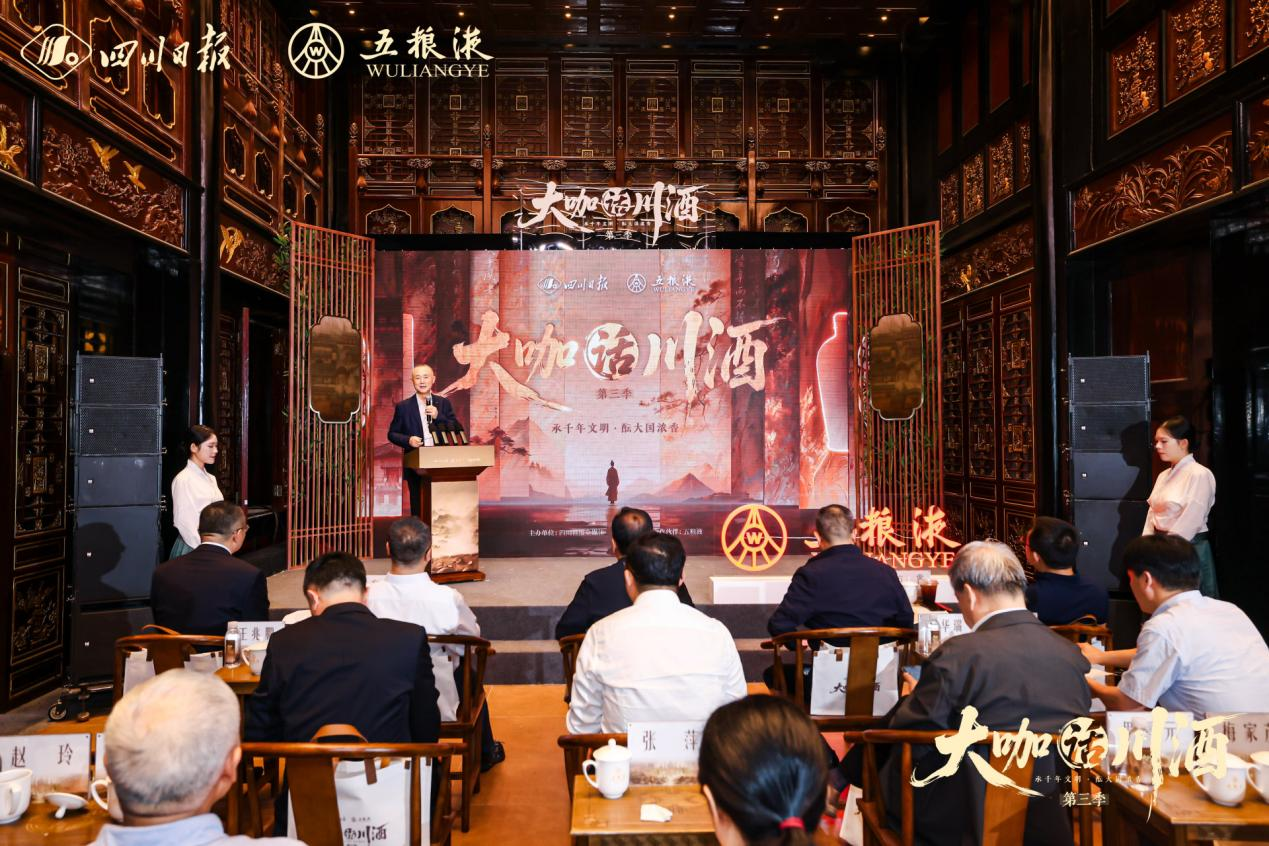
On 16 September, the third season of “Experts’ Insights into Sichuan Baijiu” opened at the Yibin 501 Baijiu Cultural Sacred Site. Leading experts from archaeology, history, literature, brewing, and media communications gathered to begin their dialogue at the historical crossroads of the Song and Yuan dynasties. With extensive references and eloquent delivery, they traced the crucial breakthrough in the history of Chinese distilled liquor, the brewing DNA of Yibin, and the origins of Wuliangye’s signature aroma, pooling their wisdom to help shape a new chapter for the Chinese Baijiu industry.
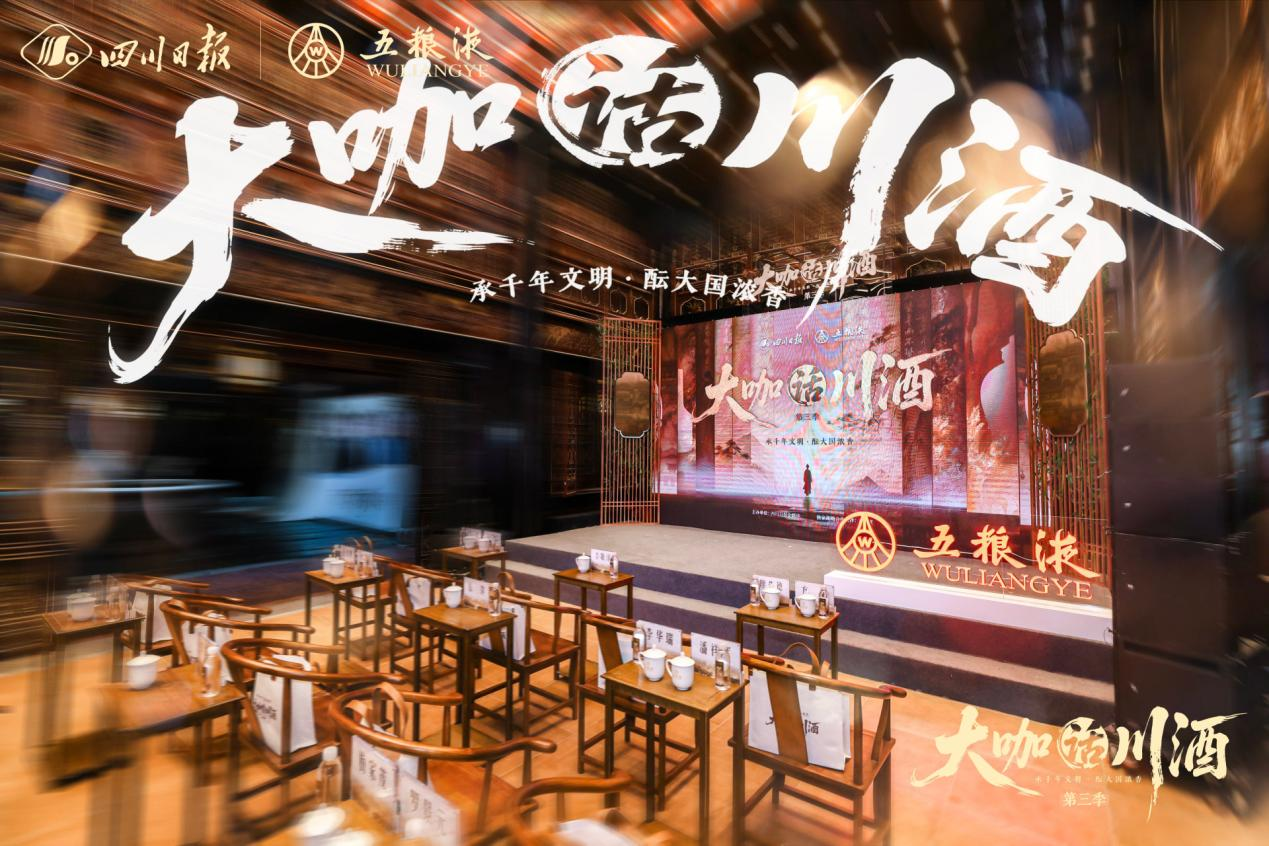
As a cultural program that brings together leading scholars from multiple fields and uses cross-disciplinary dialogue to explore the depth of Chinese Baijiu culture, “Experts’ Insights into Sichuan Baijiu” is jointly hosted by Sichuan Daily All-Media and Wuliangye. Guided by the overarching theme “Upholding Millennia of Civilization, Crafting the Rich Aroma of a Great Nation,” the program has been held continuously since 2024 and has now reached its third season. This episode focuses on “Song-Yuan Legacy in Every Sip,” aiming to meet the contemporary demands for the development of “historically classic industries” and drawing on the latest findings of the “Archaeological Exploration of Wuliangye.” The program invites distinguished guests including Li Jingze, Deputy Chairman of the China Writers Association, and Sun Hua, Professor at the School of Archaeology and Museology of Peking University and Academic Director of the Sanxingdui Research Institute. Together with other scholars, they engaged in a profound dialogue rooted in more than seven centuries of history from archaeology, history, brewing, literature, and media communications.
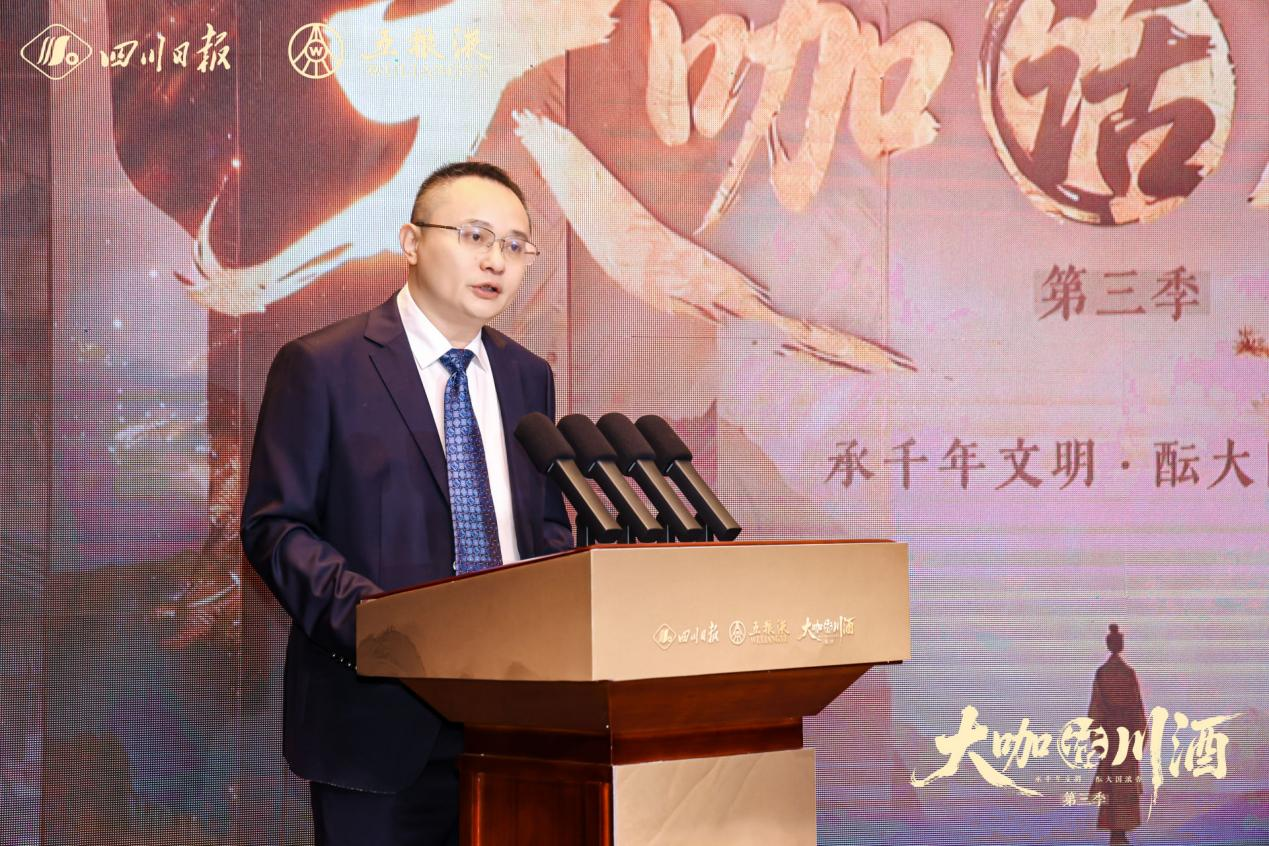
Deng Min, Secretary of the CPC Committee and Chairman of Wuliangye Group Co., Ltd., attended the event and delivered a speech. Mr. Deng noted that the lineage of Wuliangye traces back to the pre-Qin period, originated in the Tang Dynasty, flourished in the Song Dynasty, took shape in the Yuan Dynasty, advanced significantly in the Ming Dynasty, and was formally named in the Qing Dynasty — a legacy passed down through millennia. The “Archaeological Exploration of Wuliangye” project provides empirical evidence that the Yibin multi-grain Daqu liquor brewing tradition, characterized primarily by “pit-style Daqu liquor fermentation cellars,” dates back to between the Song and Yuan dynasties. Wuliangye’s living brewing tradition serves as proof of the developmental history of Chinese distilled liquor and stands as a unique cultural treasure within the global spirits industry. According to Mr. Deng, Wuliangye will uphold a “long-term pragmatism that seizes every moment” and employ “meticulous management through systematic thinking.” The company will deeply cultivate its cultural philosophy of “Harmony in Beauty,” bravely shouldering its mission as a leader in a historical and classic industry. Through extreme dedication to protecting rare ancient cellars and unique brewing microbial ecosystems, and by ensuring the continuity of traditional brewing techniques, Wuliangye aims to inject fresh vitality into Sichuan Baijiu culture and the cultural identity of Wuliangye. The company is committed to burnishing the reputation of Sichuan Baijiu, empowering industrial upgrading through tangible efforts, and propelling Chinese Baijiu culture onto a broader global stage.
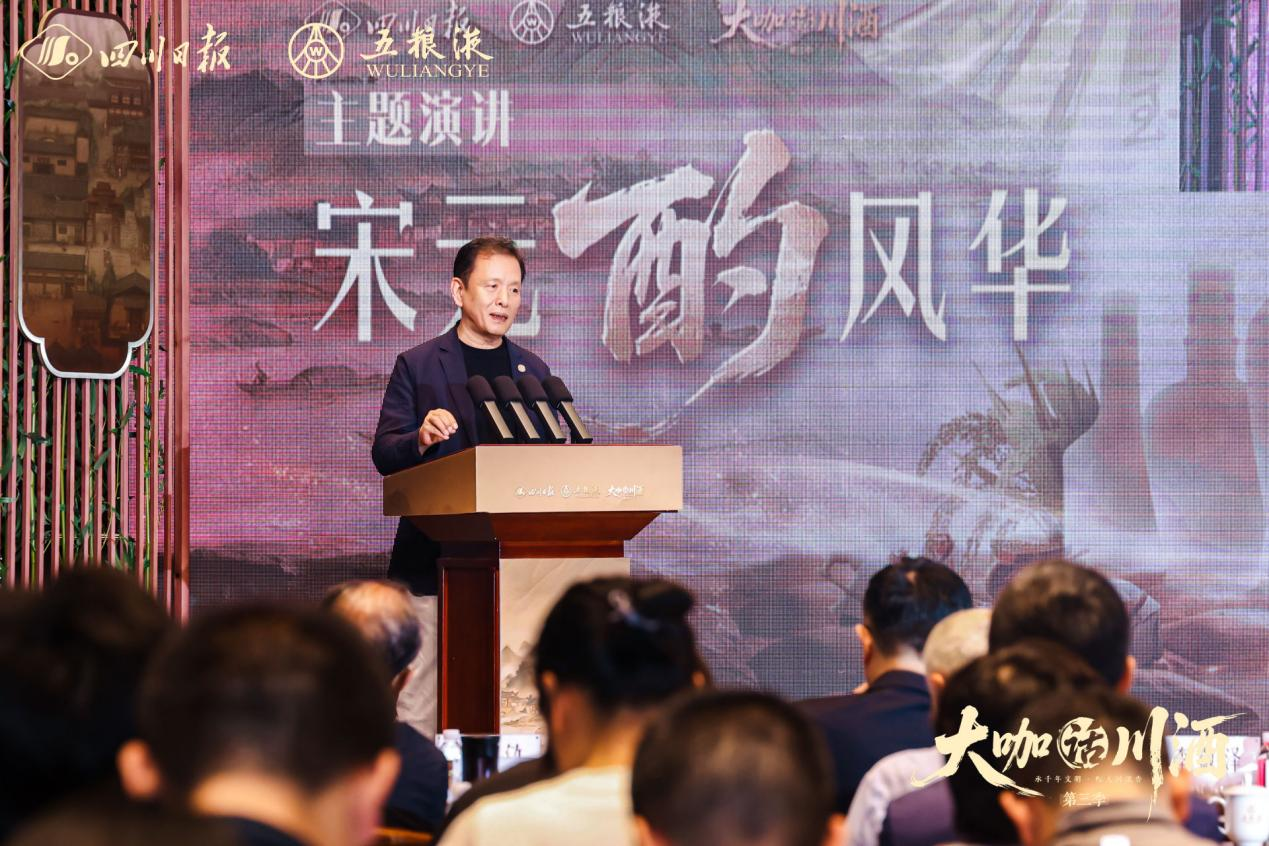
At this episode of “Experts’ Insights into Sichuan Baijiu”, Li Jingze delivered the keynote speech by starting with a historical encounter between Huang Tingjian — the Northern Song Dynasty litterateur and calligrapher — and Yaozi Xuequ, a Song Dynasty liquor and prototype for Wuliangye. Huang Tingjian dwelt in Yibin for three years, during which his calligraphic art reached its zenith. Hence, his years there carry immense significance not only for him, but also for the history of Chinese culture and art. During this period, Huang also penned the famous piece — “Ode to the Anle Fountain” — specially for Yaozi Xuequ, the prototype for Wuliangye; so this fine liquor is believed to have inspired Huang’s later creation of the national treasure calligraphy piece — the “Inscription for Su Shi’s Cold Food Observance”. “It was in his later years that Huang Tingjian visited and lived in Rongzhou (modern-day Yibin); and it was in Yibin that he ran upon Yaozi Xuequ. This was a truly beautiful encounter in his lifetime,” Li Jingze remarked, “and we owe this wonderful story to Yibin and fine liquor here.” From Li’s perspective, both calligraphy and crafts, including brewing, pursue an ideal state where the hand, mind, and spirit are coordinated. It is the case for all industries — patience and tranquility are universal prerequisites for human cultural creation.
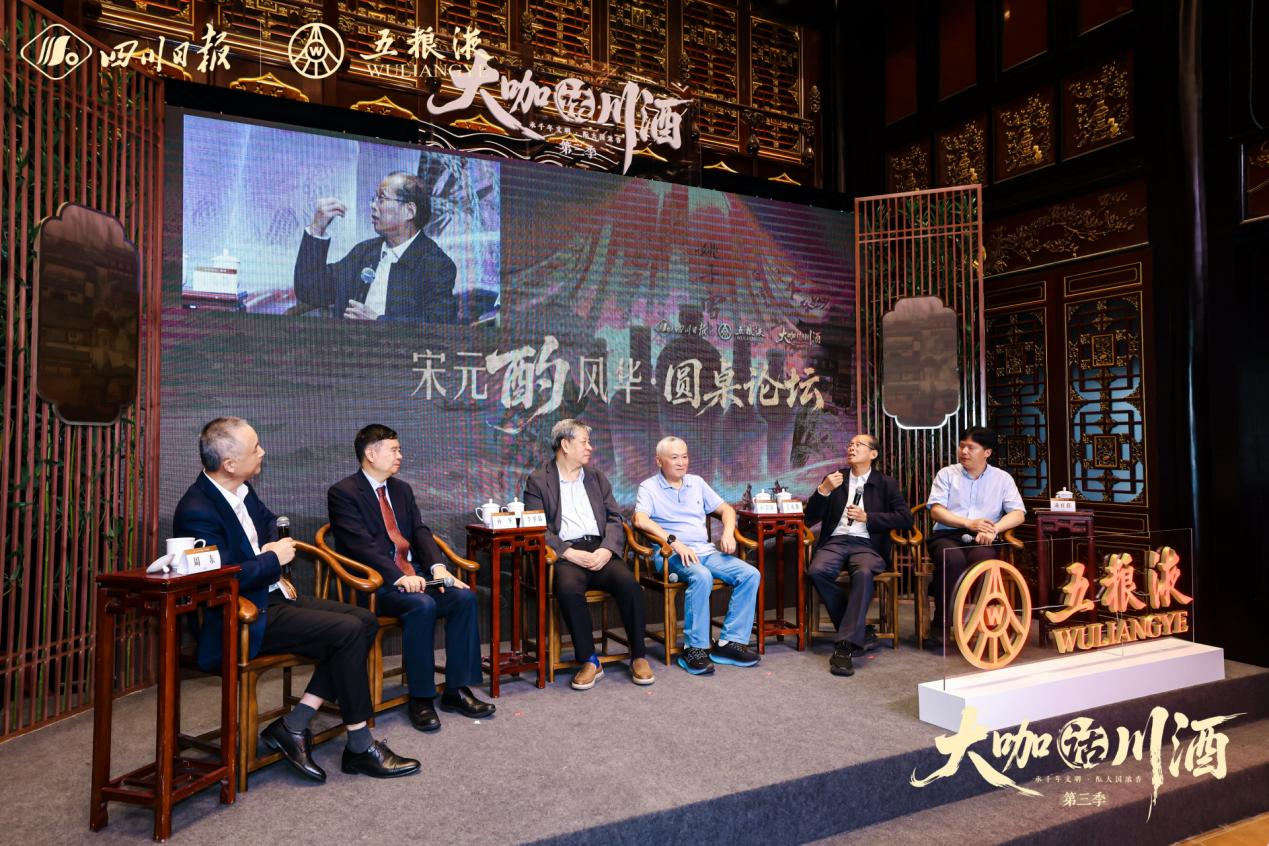
During the roundtable discussion, prominent experts and scholars engaged in an in-depth dialogue across multiple fields, from archaeology and economics to brewing, literature, and media communications. The discussion featured Sun Hua, an eminent archaeologist, Professor at the School of Archaeology and Museology of Peking University, Academic Director of the Sanxingdui Research Institute, and Director of the Academic Committee of the Shudao Research Institute; Li Huarui, a distinguished historian, President of the China Association for Song Dynasty Studies, and Dunhe Chair Professor at Zhejiang University; Wang Zhaopeng, a celebrated cultural scholar, President of the China Association for Song Dynasty Literature and Chair Professor of Liberal Arts at Sichuan University; and Pan Xianghui, Professor at Nanjing University’s School of Journalism and Communication, Director of the Center for Communication Archaeology Studies, and Deputy President of the Huaxia Communication Research Association. They were joined by Peng Zhifu, former Deputy General Manager of Wuliangye Group Co., Ltd., to set off on a fragrant cultural journey and an inspiring exchange of minds.
From archaeological excavation sites to this roundtable discussion, and from the grace of the Song and Yuan dynasties to the liquors of today, the third season of “Experts’ Insights into Sichuan Baijiu” explored the cultural depth of Sichuan Baijiu through a cross-disciplinary dialogue. For the “Experts’ Insights into Sichuan Baijiu” event, which has been held for three consecutive years, this summary serves as the footnote for the brand itself: utilizing dialogue as an approach and time as a metric to explore the cultural depth of Sichuan Baijiu, inch by inch.
