
Dance Drama Meeting at the Tower Premieres in Sichuan
2026-09-02 14:35:04 by AIOS
The Legend of Liang Shanbo and Zhu Yingtai has been passed down for a millennium, yet how can it be retold with fresh perspectives?
From August 28 to 29, a giant Taihu stone and a suspended boat stood motionless on the stage of the Chengdu City Concert Hall. The original dance drama "Meeting at the Tower", produced by the Ningbo Performing Arts Group, made its debut in Chengdu with three consecutive performances. Following its premiere in Hangzhou and a tour stop in Xi'an, this marks another leg of the production's national tour. Rooted in the Jiangnan region, the legend of Liang and Zhu encountered Chengdu, a city renowned for its rich cultural heritage and harmonious blend of vibrant daily life and refined elegance, initiating a cross-regional cultural dialogue on stage.
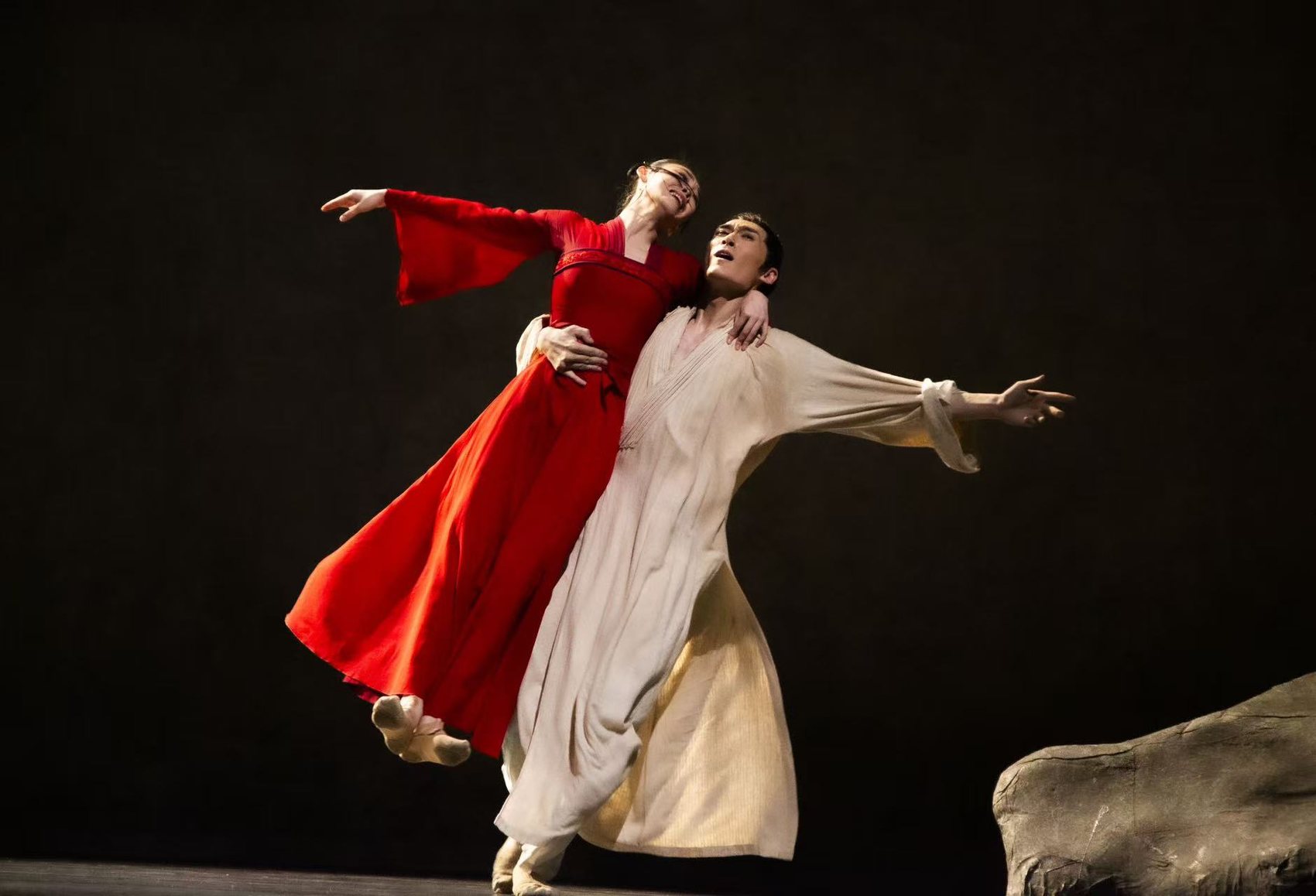
Breaking away from linear storytelling, a single night at the tower encapsulates a lifetime of joy and sorrow.
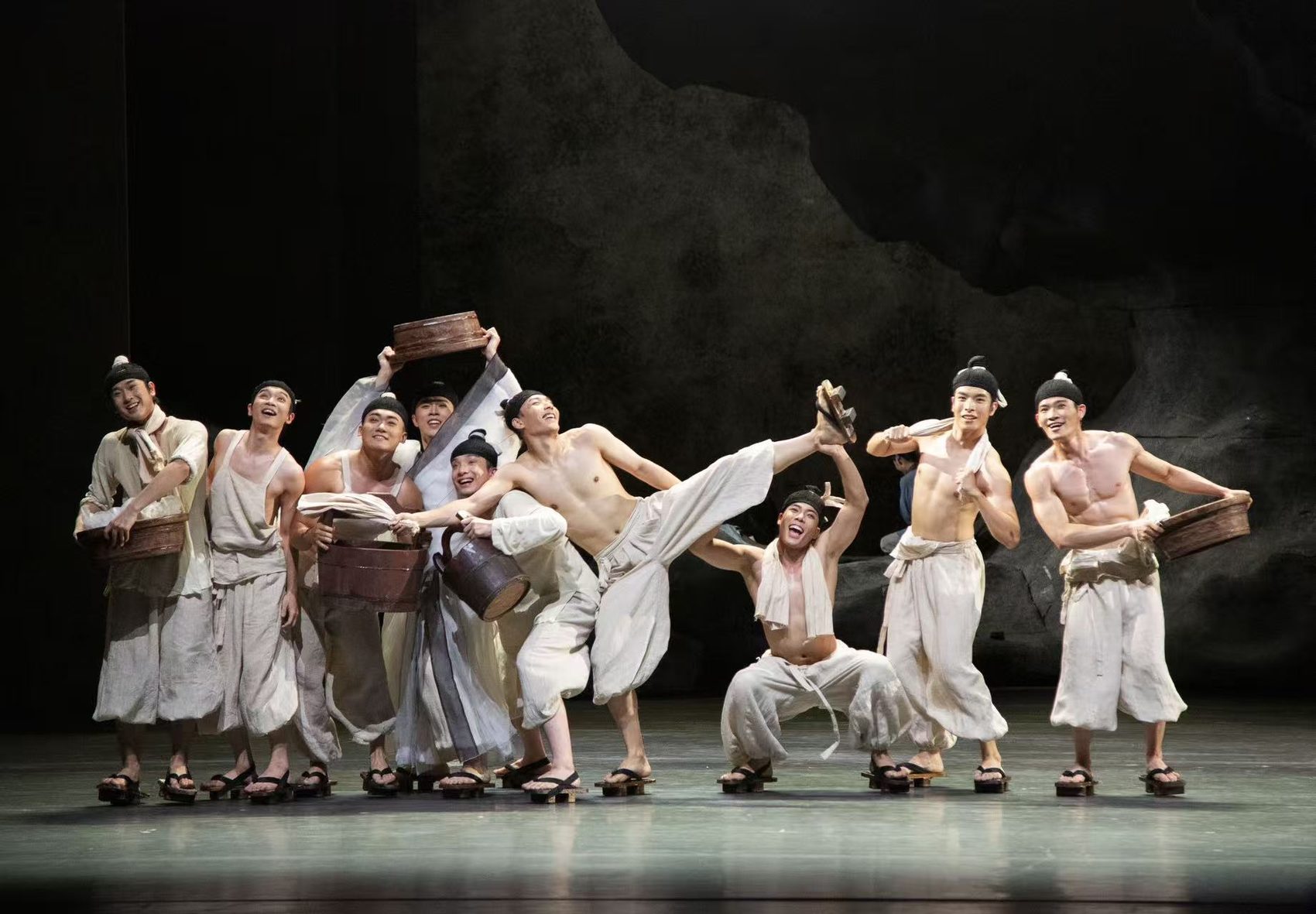
Unlike most dance dramas, "Meeting at the Tower" abandons traditional linear narrative, condensing emotions, memories, and inner struggles onto the tower on the eve of Zhu Yingtai's wedding. Time folds upon itself as reality, past dreams, and bygone events intertwine and collide, carrying the audience's emotions along with the ebb and flow. Amidst flickering candlelight, the dancers' fluid movements gently convey scenes of youthful playfulness at Wansong Academy, the reluctant farewell at the Long Pavilion, and the helplessness imposed by class barriers. The tumultuous joys and sorrows of Liang Shanbo and Zhu Yingtai's entire lives are contained within this single night at the tower.
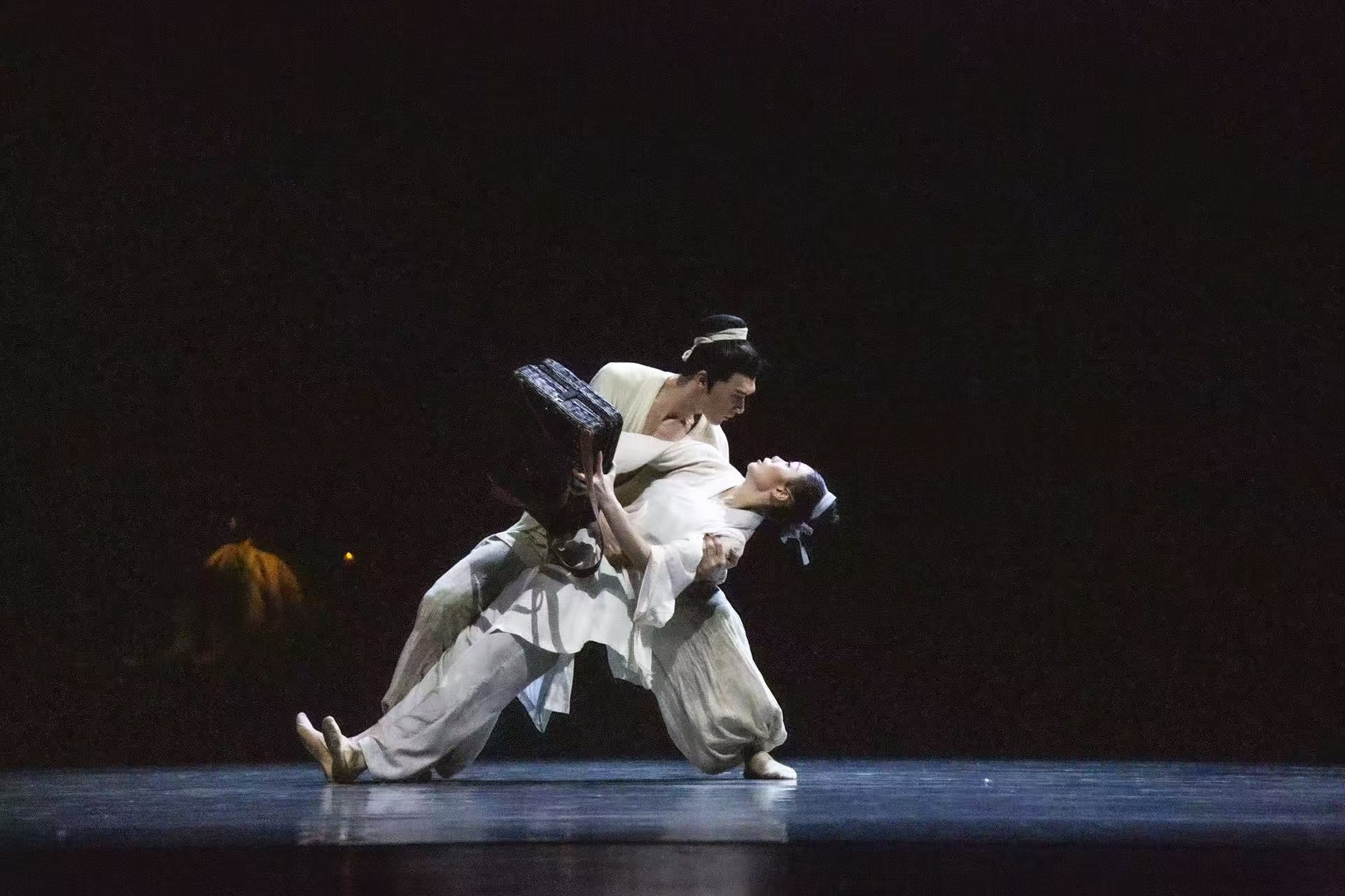
During the performance, the creative team deconstructed and reimagined the classic characters. Bi Ran, who portrays Zhu Yingtai, expressed her desire to break through traditional impressions and interpret the character's difficult choices between love and fate. Huang Chendi, playing Liang Shanbo, noted that he repeatedly refines the character's emotional nuances and physical details with every performance, making each rendition a completely new creation. Wang Zheng, who plays Zhu's father, explained that the character is not merely an obstacle but an ordinary father caught in the currents of his era, struggling to choose between familial affection and societal conventions.
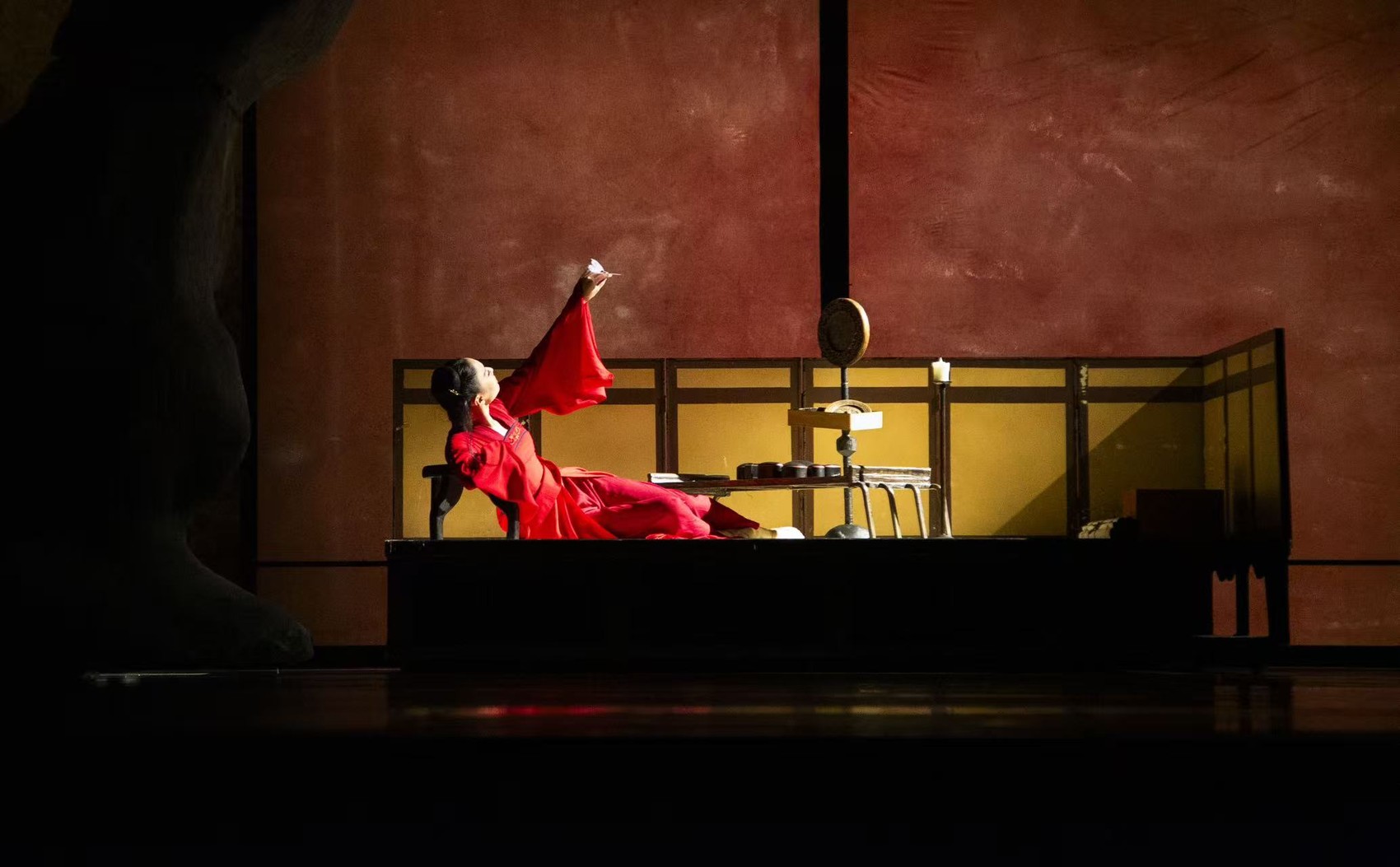
Grounded in traditional aesthetics, the dance transitions from a "two-dimensional" to a "three-dimensional" presentation. Beyond the narrative content, the visual experience is striking. The iconic giant Taihu stone and the suspended boat run through the entire production; eschewing elaborate realistic sets, the show relies on shifting light and shadow and spatial transitions to clearly delineate three realms: reality, memory, and dreams. The aesthetic is characterized by artistic blank space and dramatic tension.
Traditional Eastern aesthetics are thus brought to life, constructing a unique aesthetic space that ranges from the nine-meter-tall Taihu stone to a mirror frame inspired by the "Admonitions Scroll", and finally to the boat suspended in mid-air.
Chief director and choreographer Lu Zimin explained that the core imagery of the nine-meter-tall Taihu stone embodies the classical qualities of being "slender, wrinkled, porous, and translucent." It serves simultaneously as the tower itself and a metaphor for fate, acting as a vital vessel for emotional and spiritual expression. This fusion of classical and contemporary dance allows the audience to interpret the work through their own experiences rather than seeking a single definitive answer. The creation of this "three-dimensional" space renders the plot more tangible; at times, Liang and Zhu dance atop the Taihu stone or the suspended boat, three meters above the ground. The rock formation becomes a cold boundary separating Zhu Yingtai at her vanity from Liang Shanbo's tragic end, physically dividing the star-crossed lovers.
All visual expression ultimately returns to the dancers' bodies: solo dances convey delicate emotional tension, duets depict deep entanglement, and ensemble pieces deliver a majestic, oppressive force. Layer upon layer, each dance sequence carries both emotion and metaphor. A Chengdu audience member remarked after the show that they particularly appreciated the tower reunion scene expressed through the Taihu stone. Rather than simply retelling an old tale, the production goes beyond portraying a tragic romance to reveal the helplessness of individual destiny within the context of its era, leaving a lingering resonance in the hearts of the audience.
【本文部分内容由AI辅助生成,特此声明。The author(s) generated part of the content in this work with the assistance of artificial intelligence (AI), which is hereby declared.】
