
Sichuan's New Industries: PV Hits Bottom, AI Waits for 'iPhone Moment'
2026-09-01 18:17:24 by Queenie Tan
Emerging industries in Sichuan Province are gathering momentum. On Aug. 31, the Provincial Federation of Industry and Commerce held the third session of its annual themed event, "Stepping into the Federation of Industry and Commerce: Discovering New Forces" featuring a special symposium on Sichuan's emerging and future industries. More than 10 private enterprises from sectors including energy equipment, photovoltaics (PV), and artificial intelligence (AI) gathered to share their practical experiences in navigating industry cycles and embracing transformation.
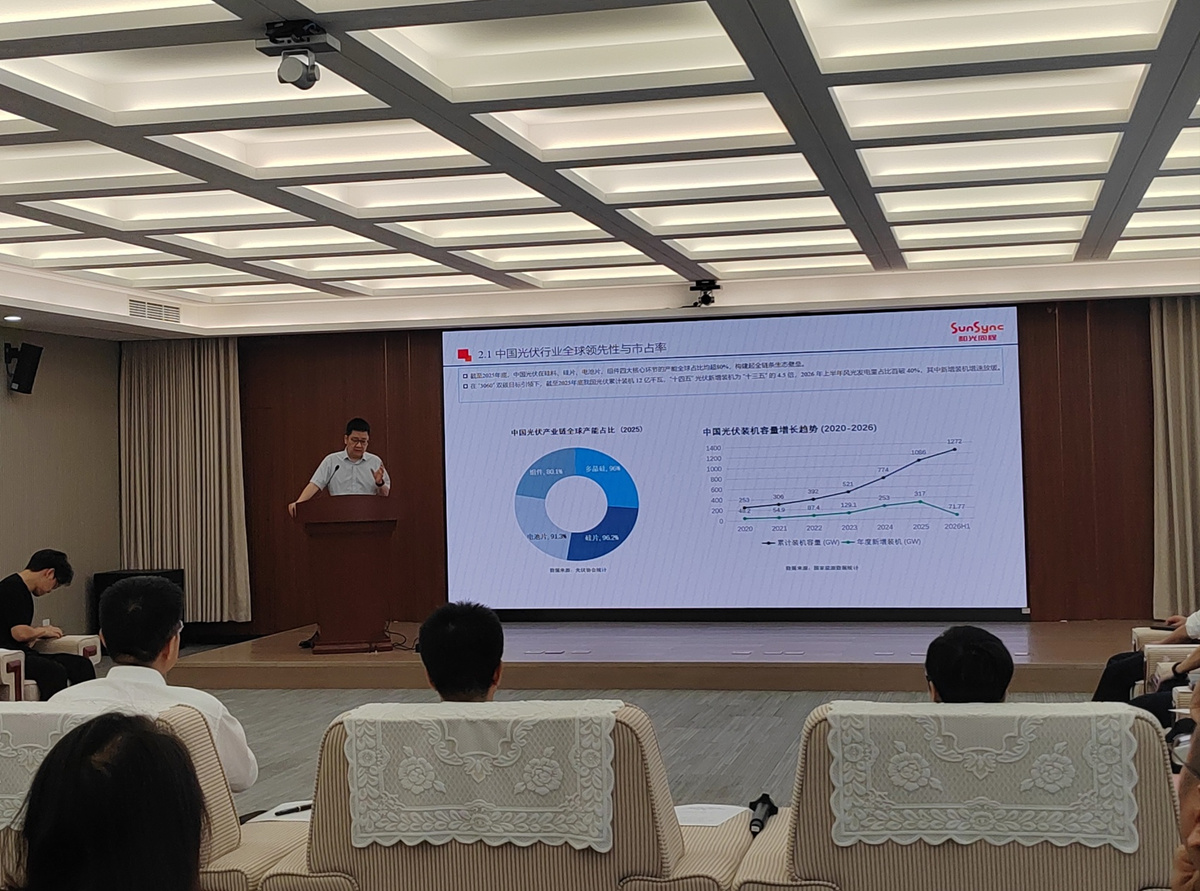
Scene of the Symposium
At the symposium, Xie Yi, founder and chairman of Sichuan Heguang Tongcheng Photovoltaic Technology Group Co., Ltd., shared his assessment of the PV industry's development. Xie, formerly chairman of Tongwei Co., Ltd., resigned from the company in 2023 to establish Heguang Tongcheng in Yibin, focusing on the research, development, and manufacturing of high-efficiency crystalline silicon solar cells. However, the company encountered an industry downturn immediately upon commencing production.
Since September 2023, prices across the industrial chain have plummeted, with some products seeing price drops of up to 90% over the past three years. "Polysilicon was once sold at 300,000 yuan per metric ton but has now fallen to between 30,000 and 40,000 yuan. Solar cell prices have dropped from 1.5 yuan per watt to just over 0.2 to 0.3 yuan per watt," Xie noted.
Despite the industry downturn, Heguang Tongcheng has achieved growth against the trend. In the first half of this year, the company's revenue rose by 44% year-on-year. "Speed is paramount in business. Our short decision-making chain and rapid response, combined with our accumulated technological expertise, enable us to leverage our technological and cost advantages, securing long-term client cooperation through product quality, service, and cost-effectiveness," Xie stated. He added that the company is also expanding its overseas presence, with direct exports currently accounting for approximately 10% of total sales, and expects significant growth in overseas business next year.
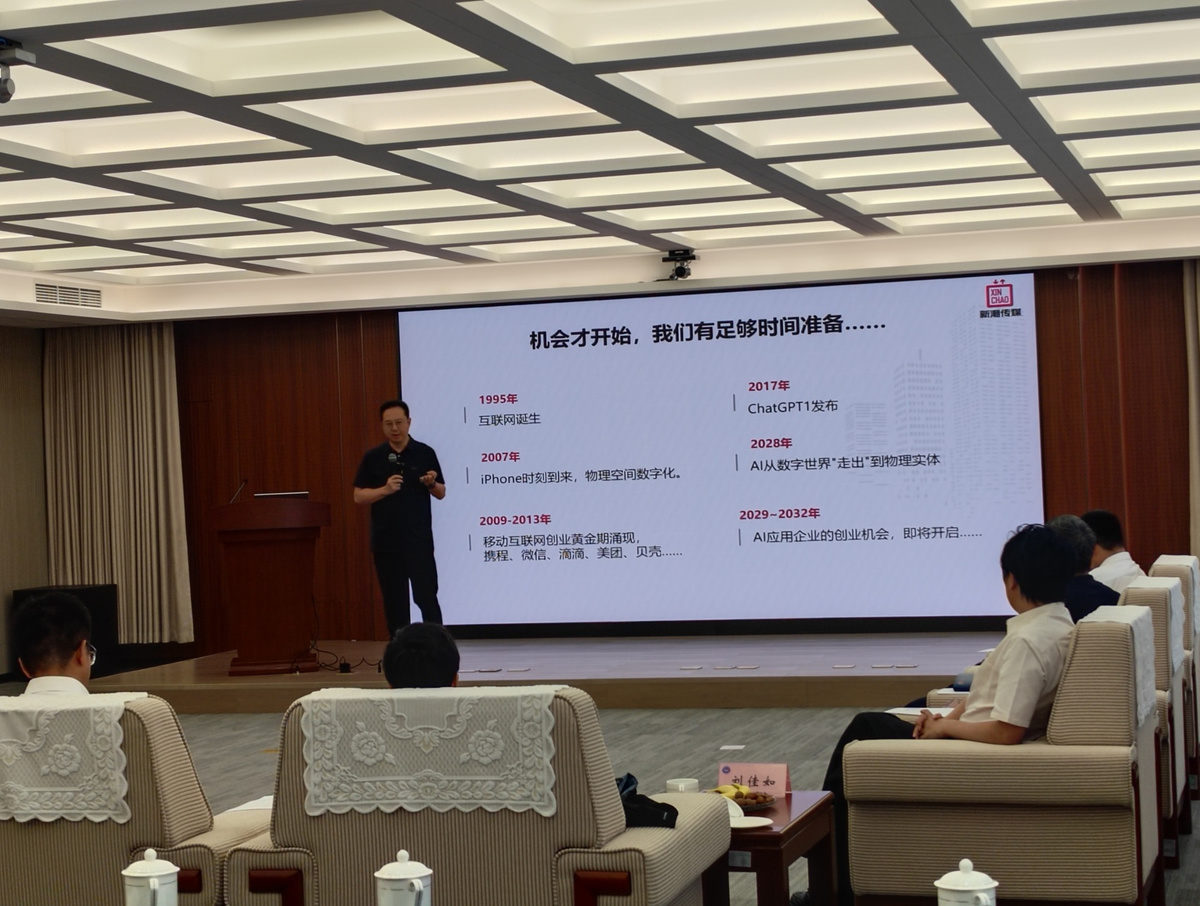
Scene of the Symposium
In response to industry overcapacity, policymakers have intervened. In July this year, three mandatory national standards for the PV sector were released, covering key segments of the entire industrial chain, including polysilicon, wafers, modules, and inverters. This move is regarded as a critical step in raising industry entry barriers and accelerating the elimination of outdated production capacity, effectively drawing a "survival line" for inefficient producers.
The industry generally anticipates that the implementation of mandatory national energy efficiency standards will result in the elimination of 20% to 30% of outdated production capacity across various segments of the PV industry. Xie believes the PV industry has already bottomed out, "but it remains difficult to accurately predict when a rebound will occur or how strong it will be." Optimistically, the industry could see profit recovery in the first half of next year; however, if capacity reduction falls short of expectations, recovery may be delayed until the second half.
Nevertheless, Xie remains optimistic about the prospects of the PV sector. "Amid geopolitical conflicts, energy security has become a top priority, prompting countries in regions such as the Middle East and Southeast Asia to accelerate their PV industry deployment," he said. He noted that vehicle electrification, cleaner power generation, and the surge in AI computing power are driving massive electricity demand, continuously expanding growth potential for the PV industry.
Sichuan possesses unique advantages for PV development. "Sichuan is one of the few provinces in China with a complete PV industrial chain spanning industrial silicon, polysilicon, wafers, solar cells, and modules. Additionally, the province's abundant hydropower resources make green manufacturing a core competitive edge in the global market," Xie observed. Describing PV as a strategic emerging industry with long-term growth potential, he suggested that Sichuan should seize the current cyclical window to promote deep collaboration between state-owned and private enterprises. He also recommended leveraging wind and solar resources in the three prefectures and one city, advancing coordinated development of power sources, grids, loads, and storage, and converting the province's full-chain and green energy advantages into tangible industrial strengths.
AI emerged as a focal point of discussion at the symposium. As a leading domestic elevator media company, Xinchao Media has integrated AI into processes including ad creative generation, intelligent site selection, ad placement, and performance attribution, making campaigns more efficient and results more trackable.
During the session, Zhang Jixue, founder and chairman of Xinchao Media, noted that the AI industry is far from mature and the golden window for entrepreneurs has yet to open. "In 1994, the internet entered the public eye, but it was not until the launch of the iPhone in 2007 that the mobile internet experienced its 'iPhone moment.' The true 'iPhone moment' for AI has not yet arrived," Zhang stated. He emphasized that fundamental industry restructuring will only occur when world models and digital life models mature and AI technology becomes deeply integrated with the physical world. He predicted that 2028 will mark a pivotal turning point for the AI industry, with a dividend window for AI application companies opening between 2029 and 2032, giving rise to the next generation of world-class AI enterprises.
Where do the opportunities lie? Citing the "five-layer cake" theory of AI proposed by NVIDIA CEO Jensen Huang — encompassing energy, chips, infrastructure, models, and applications — Zhang noted that each layer holds immense opportunities. "Engaging in AI does not necessarily mean pursuing foundational large model R&D," Zhang argued.He believes a more pragmatic approach involves delving deeply into industry-specific scenarios, leveraging proprietary industry data, and developing vertical applications.. Sectors requiring physical experiences and offline services to complete transactions are particularly poised for significant growth. "The great era of AI has just begun. We are not too old; we can take our time to build," Zhang said.
As industries across the board accelerate AI adoption, companies from sectors such as energy equipment and nuclear medical devices also shared their transformation practices at the symposium. However, Wang Anjiang, co-CEO and vice president of Duoniu Technology, highlighted a current pain point in AI application: most AI tools on the market merely enhance individual productivity without genuinely improving overall organizational efficiency. "AI transformation is not simply about purchasing a large model. The real bottleneck lies in the last mile," Wang pointed out. He emphasized that enterprises need Forward Deployment Engineers (FDEs) to work on the front lines, identify operational pain points, integrate AI into actual business workflows, and redesign role allocations, rather than merely boosting individual office productivity.
Citing a gift company served by his firm as an example, Wang explained that the company previously had to draft over 100 bid documents annually. After adopting AI tools, the system can automatically capture business opportunities, generate bid documents, and conduct verification and review, leaving only final checks to human staff. The company's bid success rate increased from 11.9% to 15%. While the percentage increase appears modest, it translates to an additional annual output value of over 6 million yuan and a net profit increase of 600,000 yuan.
Wang noted that major tech companies in the industry mostly focus on large state-owned enterprises and leading corporations, leaving a vast number of small and medium-sized enterprises (SMEs) in cities and counties underserved. To address this gap, Duoniu Technology has established OPC incubators in Chengdu, Nanchong, Neijiang, and Bazhong to train local FDE talent and extend services to SMEs at the grassroots level.
【本文部分内容由AI辅助生成,特此声明。The author(s) generated part of the content in this work with the assistance of artificial intelligence (AI), which is hereby declared.】
