
Sichuan: Turning Power Plant Waste Into Green Building Materials
2026-09-01 18:17:23 by AIOS
On August 24, at the Neijiang Green Energy Industrial Park, China's first demonstration project for CO₂ mineralization utilizing solid waste to co-produce construction aggregates completed its integrated equipment commissioning and is set to commence trial operations. Lai Dengming, General Manager of Neijiang Bofeishuo Technology Co., Ltd., has been stationed on-site for several consecutive days, closely monitoring the progress of technical personnel. "Once the adjacent power plant starts up, the entire production line will be operational," he said, pointing to the neighboring facility.
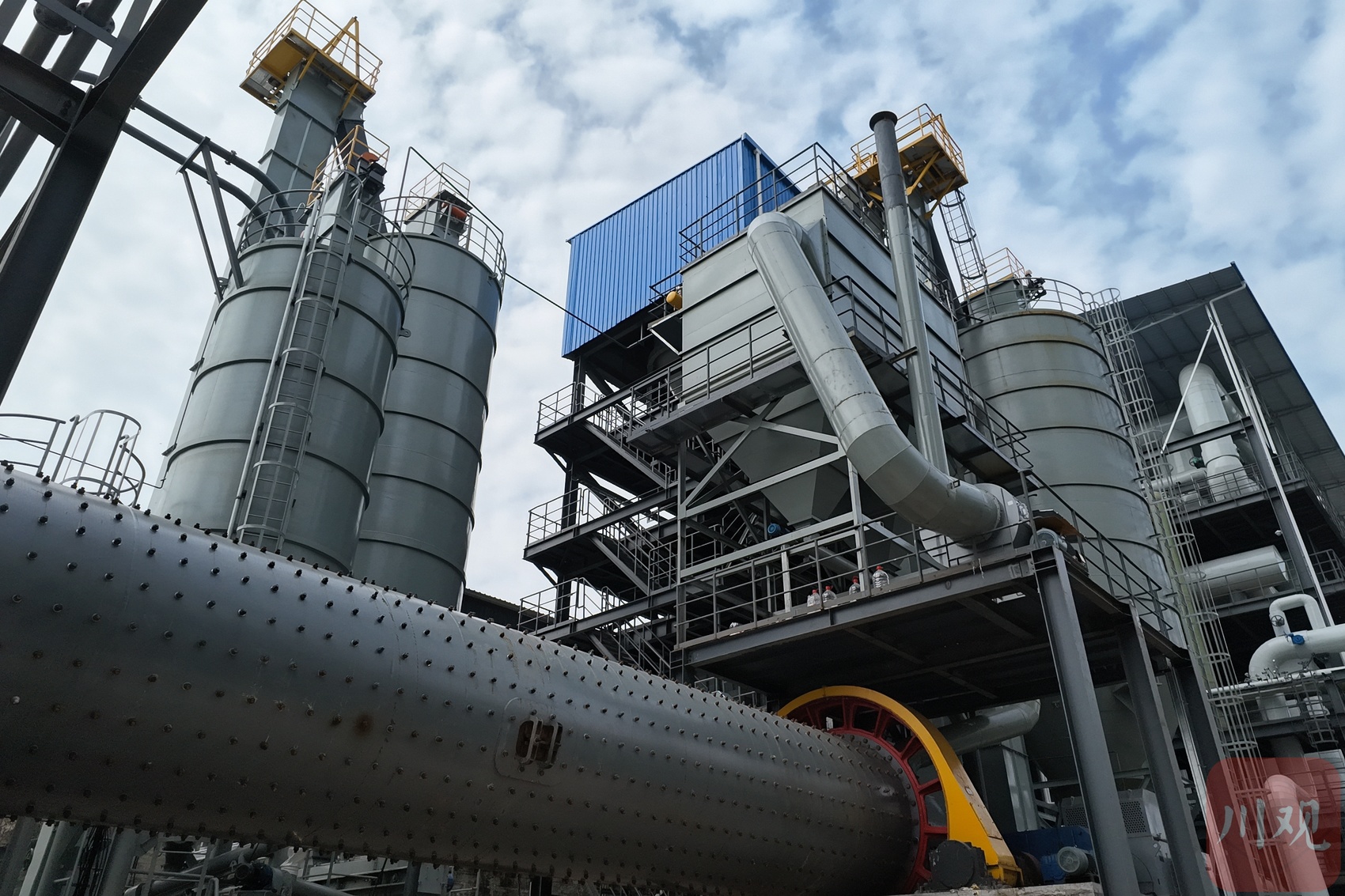
A section of the production line for China's first demonstration project integrating CO2 mineralization and solid waste utilization to co-produce construction aggregates
The project was jointly developed and constructed by Bofeishuo Technology and Sichuan University, with a total investment exceeding 30 million yuan. According to Lai Dengming, the project's core equipment has been included in Sichuan Province's Catalogue of First-Set Major Technical Equipment, and its processing technology represents the first of its kind in China. Once fully operational, the project is expected to utilize 200,000 tons of fly ash annually, sequester approximately 10,000 tons of CO₂, and produce 220,000 tons of green construction aggregates per year.
Traditionally, CO₂ and fly ash have been viewed as "burdens" for thermal power plants; however, this project has achieved a value reversal where two negatives make a positive. How does this project manage to fully consume the exhaust gas and waste residue from power plants? Furthermore, what implications will the implementation of this project hold for Neijiang, an established industrial city?
On the morning of August 24, inside the control room of the CO₂ mineralization project, technicians closely monitored screen data while conducting final equipment inspections. Just beyond the factory wall lies the production area of the Sichuan Baima Circulating Fluidized Bed Demonstration Power Station. Two overhead pipelines extend from the power plant directly into the project's feed inlet areas: one transports flue gas, while the other conveys fly ash.
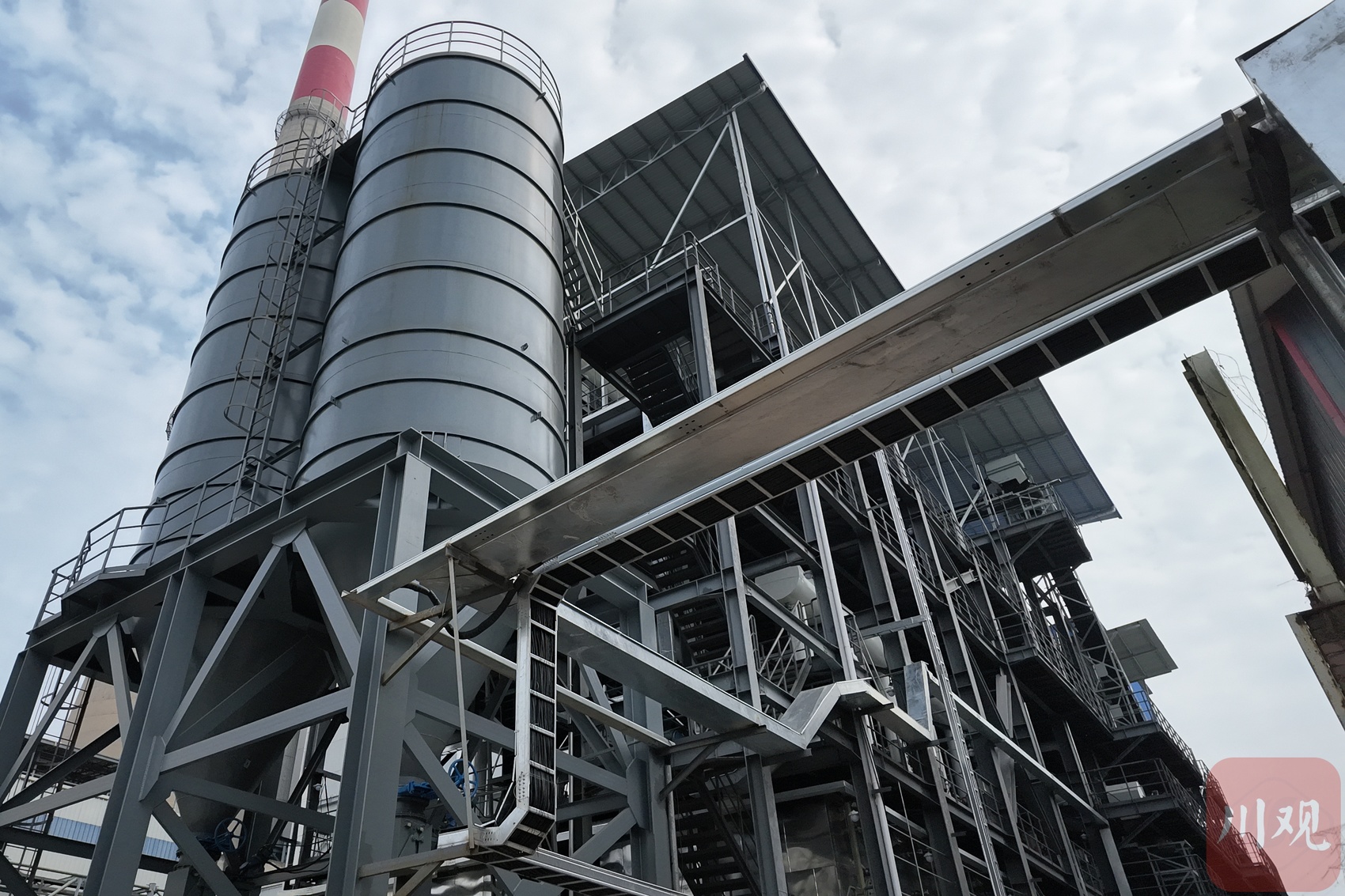
A section of the production line at China's first demonstration project for CO2 mineralization utilization of solid waste to co-produce construction aggregates
"The CO₂-rich flue gas and fly ash emitted by the power plant serve as the core 'raw materials' for our project," Lai Dengming explained. He noted that the principle behind the "direct mineralization" technology employed is not complex: CO₂ is an acidic gas, while industrial solid wastes such as coal ash are typically alkaline. When fed into a reactor, an acid-base reaction occurs to form carbonates, which are ultimately processed into lightweight aggregates for construction use.
The project aims to address the pain points associated with traditional disposal methods. A representative from the Neijiang Municipal Development and Reform Commission noted that industrial solid wastes like coal slag and fly ash were previously mostly landfilled or stockpiled. Although some were used in green building material manufacturing, the resulting products suffered from low reactivity and poor stability, leading to low-value utilization. "By locating our project adjacent to the power plant, we can utilize the emitted flue gas to process solid waste on-site. The resulting aggregates boast high chemical stability and strength, and crucially, possess inherent 'carbon-negative' attributes," Lai stated.
While the principle may sound simple, transitioning the project from the laboratory to the production line was no overnight success. In the second half of 2022, building upon years of theoretical research, Bofeishuo Technology and Sichuan University officially launched efforts to achieve industrial-scale application. Lai recalled that developing the core equipment was the toughest challenge during industrialization, noting, "The design drawings for the core reactor alone underwent 14 revisions."
With the commissioning of the entire production line now complete, the major technical hurdles have been successfully overcome. "First, coal slag and fly ash are fed into this machine to be ground to a specific fineness, after which a special additive is introduced," Lai explained with a smile, standing in the factory yard and pointing to a nearby storage silo. According to preliminary market research, the project's annual output of over 200,000 tons of aggregates is relatively modest, as local demand for sand and gravel aggregates in Neijiang far exceeds the project's capacity.
"There is a commercial concrete mixing station right across from us, along with other local concrete companies nearby; their demand alone could absorb our entire output," Lai calculated. He noted that logistical advantages make the product more price-competitive due to lower transportation costs. Furthermore, in addition to replacing traditional aggregates, the product can be applied in green, low-carbon scenarios such as permeable pavement construction for sponge cities.
For Neijiang, a quintessential old industrial city, the significance of the CO₂ mineralization project extends far beyond a single factory or production line. Traditional industries such as steel, building materials, and glass once underpinned Neijiang's urban economy but also imposed structural pressures characterized by high energy consumption and high emissions. On August 15, the "Ecological Environment Code of the People's Republic of China" came into effect, establishing a carbon emissions trading system at the national legislative level and further clarifying the orientation toward carbon reduction. For old industrial cities like Neijiang, the need for transformation has become increasingly urgent.
Transformation entails reconstructing development logic based on existing industrial foundations. In recent years, while promoting "intelligent upgrading and digital transformation" in traditional industries, Neijiang has continuously supported enterprises in tackling key green and low-carbon technologies. According to a representative from the Neijiang Municipal Bureau of Economy and Information Technology, all 23 glass enterprises in the city have completed the transition to clean energy, abandoning coal-fired production models. Meanwhile, the steel industry has built and successfully commissioned the world's first pilot demonstration project for hydrogen-based shaft furnace smelting of vanadium-titanium magnetite, reducing emissions by more than 60% compared to traditional processes, with industrial promotion now accelerating. The "green content" of Neijiang's traditional industries is steadily increasing.
The Neijiang Green Energy Industrial Park, home to the CO₂ mineralization project, was established precisely based on this logic. With a planned total area of 6,940 mu, the park currently hosts energy enterprises including the Baima Circulating Fluidized Bed Demonstration Power Station and the Sichuan Huadian Gas Turbine Demonstration Project. "With the addition of the CO₂ mineralization project, the park's circular economy chain has become even more complete," stated a representative from the park's management committee.
Beyond the park itself, this project offers a replicable and scalable model. The thermal power sector is a major source of CO₂ emissions in China. If the "direct mineralization" technology can be demonstrated and deployed across more power plants following this pilot, the potential for carbon reduction would be substantial, alongside immense opportunities for related industrial development.
"More than ten thermal power plants are already tracking the project's progress. Once put into successful operation, the technology and equipment will see accelerated adoption." In Lai Dengming's view, the core competitiveness of this process route lies in making environmental protection more sustainable: the power plant avoids massive additional investments for emission reduction, while Bofeishuo Technology utilizes the plant's flue gas and fly ash to produce and profit from green building materials.
"Using the Bofeishuo project as a core vehicle, Shizhong District is accelerating the formation of a complete industrial chain encompassing 'technological breakthroughs, equipment manufacturing, resource utilization, and scenario implementation,'" stated a representative from the Development and Reform Bureau of Shizhong District, Neijiang Municipality. Moving forward, local authorities plan to leverage scenarios such as sponge city renovations and municipal road construction to launch pilot demonstrations for green building materials like mineralized lightweight aggregates. Simultaneously, they will establish platforms connecting supply and demand to facilitate the market-oriented application of green and low-carbon products.
【本文部分内容由AI辅助生成,特此声明。The author(s) generated part of the content in this work with the assistance of artificial intelligence (AI), which is hereby declared.】
