
Taiwan Youth in Sichuan: History Comes Alive
2026-08-07 16:11:55 by AIOS
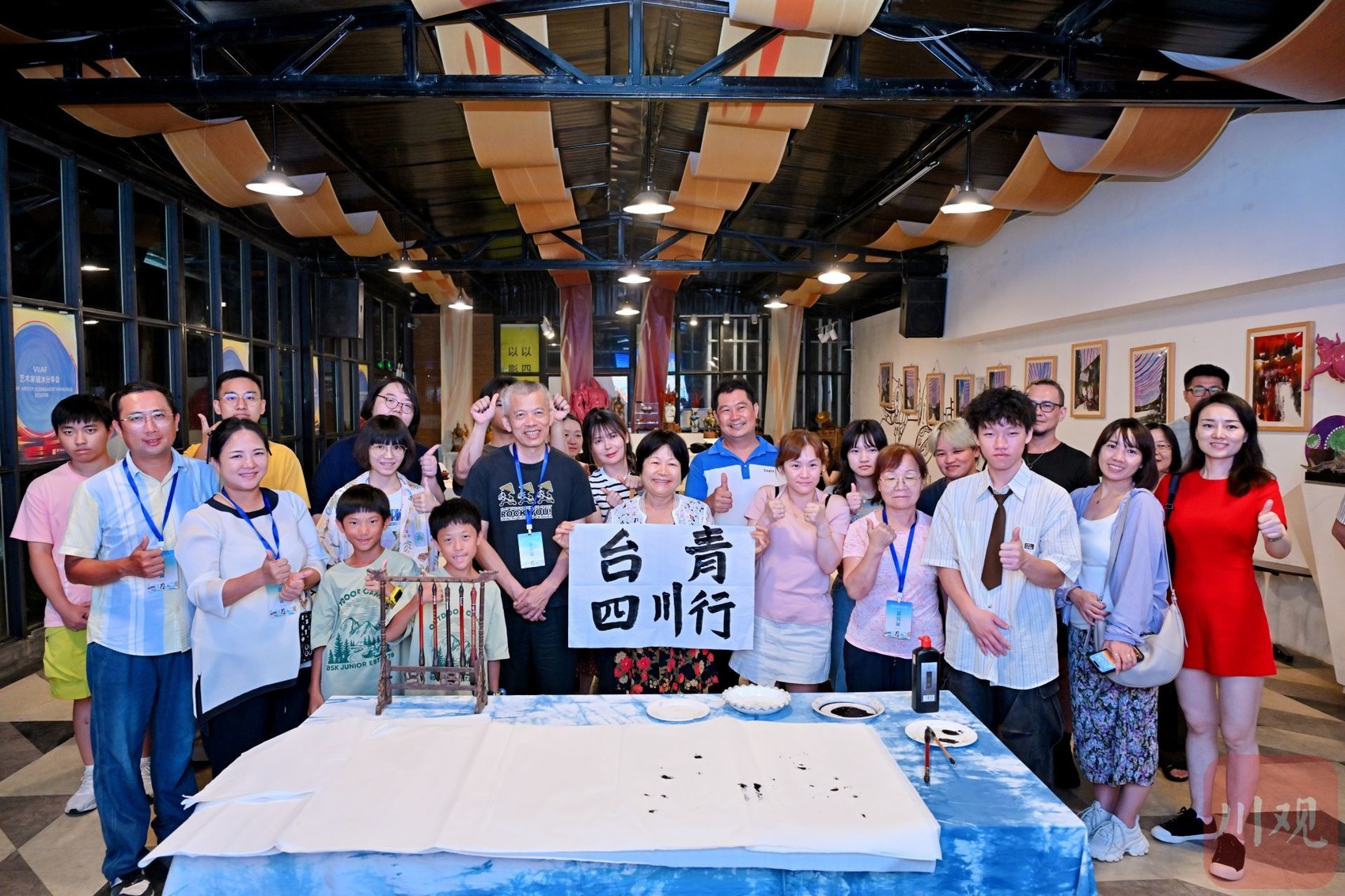
Event Venue
On July 28, night rains washed away the summer heat in Chengdu, leaving the city fresh and pleasant. The second stop of the Journey Around Sichuan tour for Taiwan youth arrived in Chengdu.
Forty young students, cultural figures, media reporters, and business representatives from Taiwan visited landmarks including the Chengdu Research Base of Giant Panda Breeding, the Wuhou Shrine, and the Nongyuan International Art Village. Amidst adorable wildlife and millennia-old historical sites, they experienced a Sichuan that is at once leisurely, historically profound, and vibrantly charming.
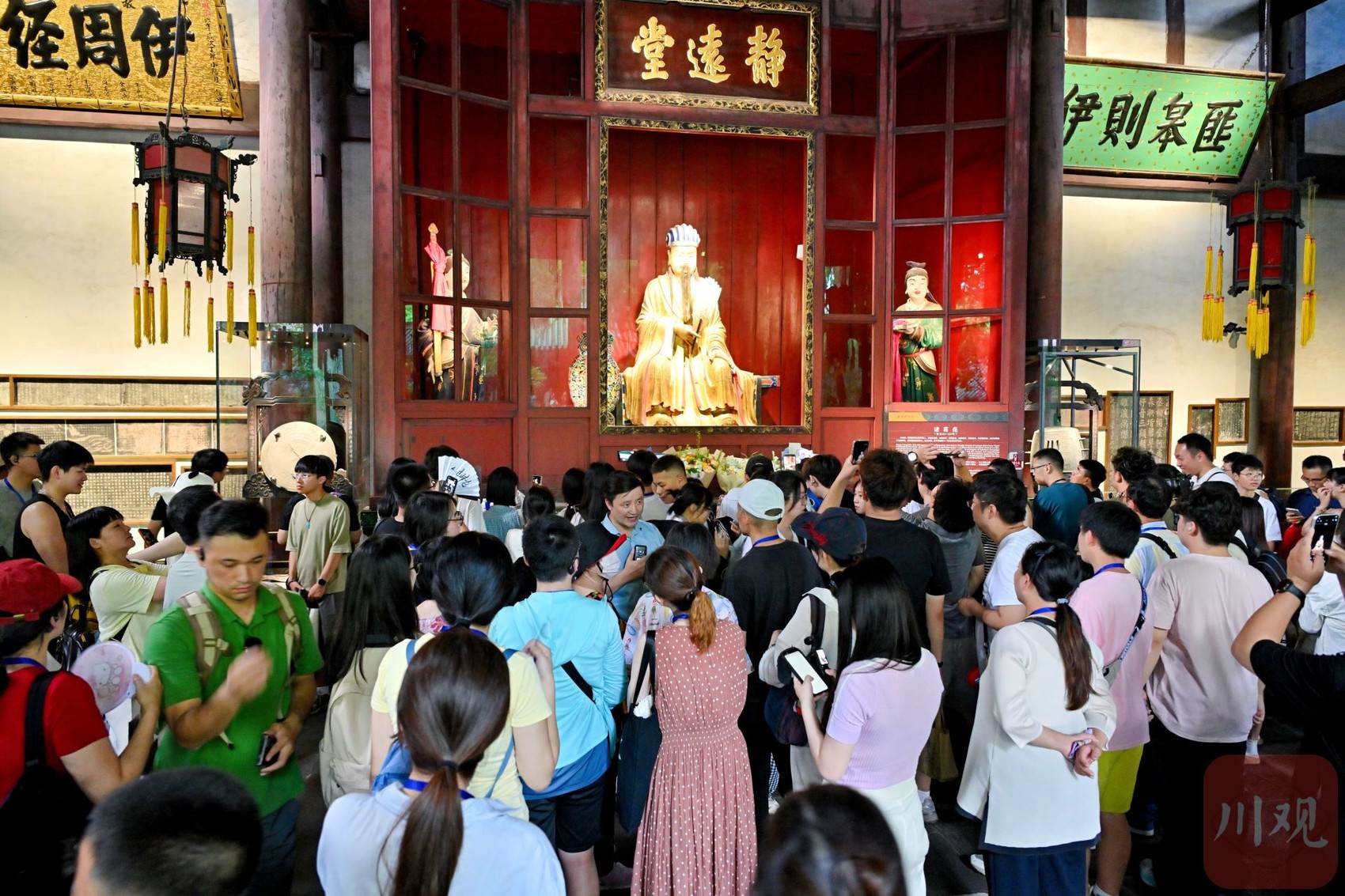
Taiwanese Youth Visit Wuhou Shrine
Anticipating the itinerary, the visitors came to understand what defines "Leisurely Sichuan", "Seeing giant pandas is a must when visiting Sichuan!" Even before the tour began, expectations were already high. On a cool morning following the rain, the heat-sensitive giant pandas were unusually active outdoors in a rare collective display. Four lively cubs — "Nihao", "Jindou", "Xingyun" and another — played joyfully in an open enclosure shaded by green bamboo. Some munched heartily on bamboo stalks, others climbed up and rolled down wooden frames, while a few simply lay on their backs gazing at the sky. The young visitors from Taiwan raised their cameras to capture every healing moment, careful not to miss a single scene of endearing charm.
"I'll post this on social media right away so my classmates in Taiwan can come visit too!" said a student surnamed Zhang from Hualien, excitedly holding up his phone to record the tumbling cubs.
In the crowd, Mr.Lin from Taipei stood out, having deliberately worn a new T-shirt covered in panda prints, "I spotted it while shopping yesterday and thought it was perfect for taking photos with the pandas today", he said with a smile as he posed for a photo alongside "Nihao" from a distance. For Ms. Xu from Taipei, the interaction carried a sense of ritual in "adapting to local customs". Mimicking the keepers' accent, she gently called out, "Guolai, Guolai" (Come here, come here) — an authentic and amusing touch.
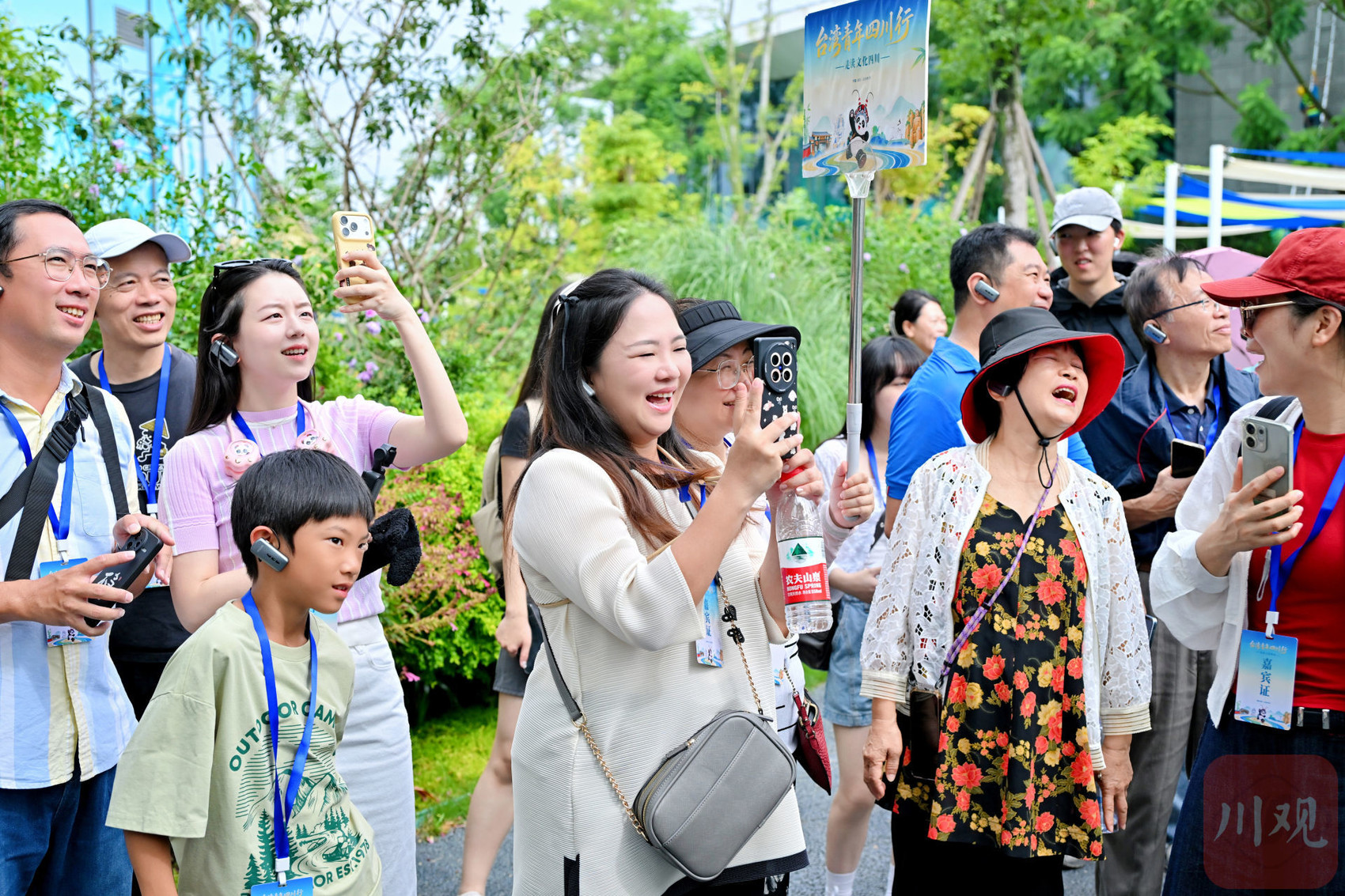
Youth from Both Sides of the Taiwan Strait Charmed by Giant Pandas' Cuteness
Viewing pandas in their homeland offers a distinctly different experience. Mr. Jiang from Taitung, seeing giant pandas on the Chinese mainland for the second time, remarked emotionally as he watched them climbing freely among the bamboo: "This is a natural environment where they are integrated with nature. They appear especially cheerful and happy." Ms. Xu was moved by Sichuan's conservation achievements: "You can genuinely feel the devoted care given to their well-being and the thoughtful creation of a natural habitat suited to their survival and reproduction. The steady population growth from the brink of endangerment reflects immense effort — truly remarkable!"
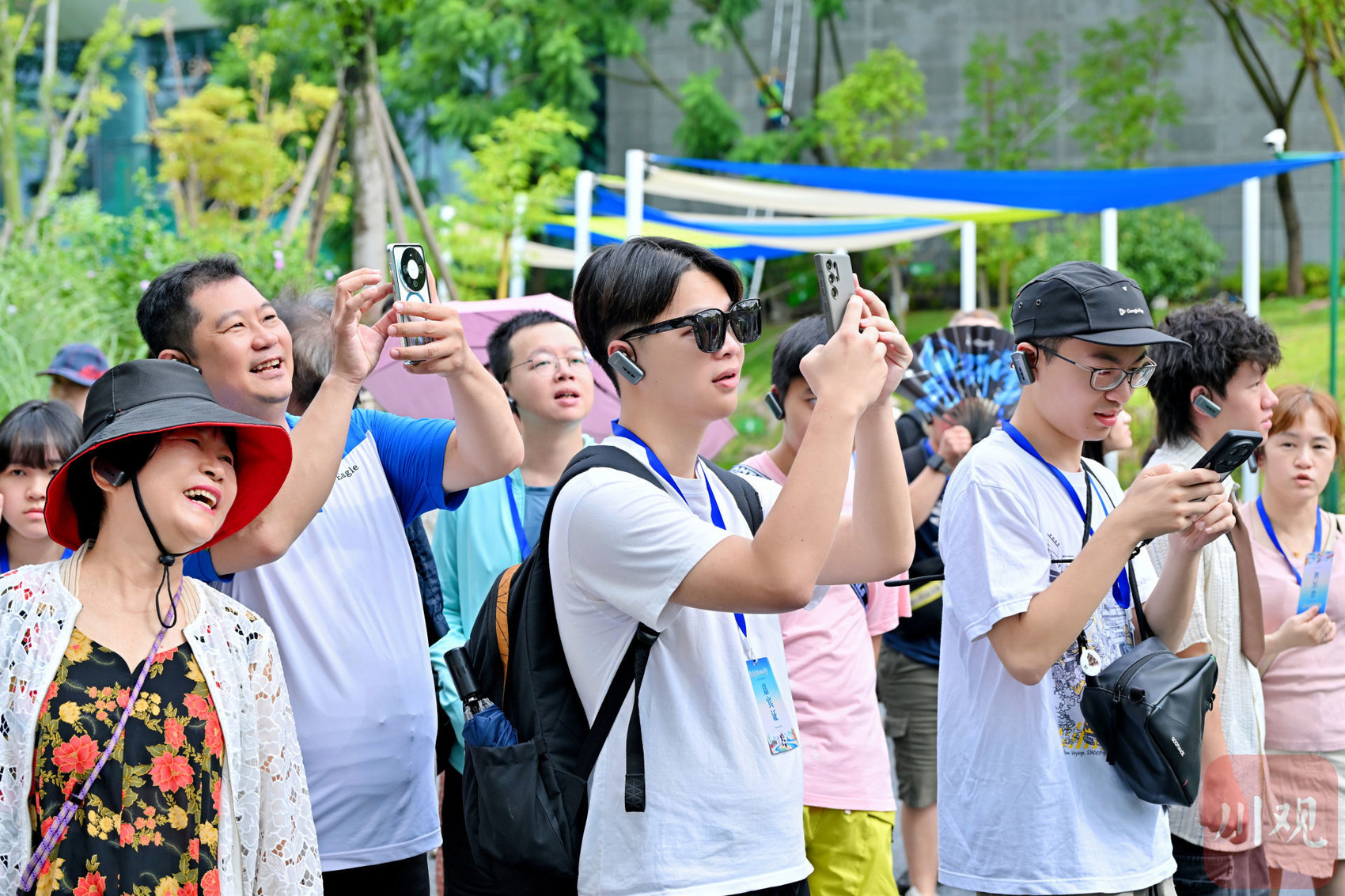
Youth from both sides of the Taiwan Strait captivated by giant pandas' charm
"Here, one learns and sees real history." If the lively giant pandas represent Sichuan's image of leisure, the Wuhou Shrine offered Taiwan's youth an immersive encounter with the rich, enduring, and accessible historical heritage of the Ba-Shu region. Ancient cypresses stood tall, flanked by red walls lining the pathways.
Through the evocative narration of Li Zhi, chief docent at the Chengdu Wuhou Shrine Museum, visitors journeyed from Prime Minister Zhuge Liang's lifelong dedication, to the moral integrity of the Ten Wise Men, and onward to the solemnity of Emperor Hui's Mausoleum. A thousand-year panorama of the Three Kingdoms era unfolded step by step.
A student surnamed Huang from Hualien developed a connection with the Three Kingdoms at the age of six or seven. "I started with comic books, then read the novel after learning to read. I borrowed 'Romance of the Three Kingdoms' from the library again and again. Whenever I forgot the plot, I'd start over from the beginning." During this personal visit to the Wuhou Shrine, he listened attentively throughout, carefully examining statues, stone inscriptions, and exhibits, unwilling to miss any historical detail.
What touched him most was the table before Zhuge Liang's statue, piled high with "heartfelt gifts" from young people — neatly hand-copied versions of the "Memorial on Dispatching the Troops", letters addressed to Zhuge Liang, screenshots of video game characters, and photos from film and television adaptations. Mr. Huang leaned in to observe closely and take pictures: "It's fascinating. It shows that traditional culture has been passed down to the younger generation, who come here voluntarily. History isn't rigid — it's endearing."
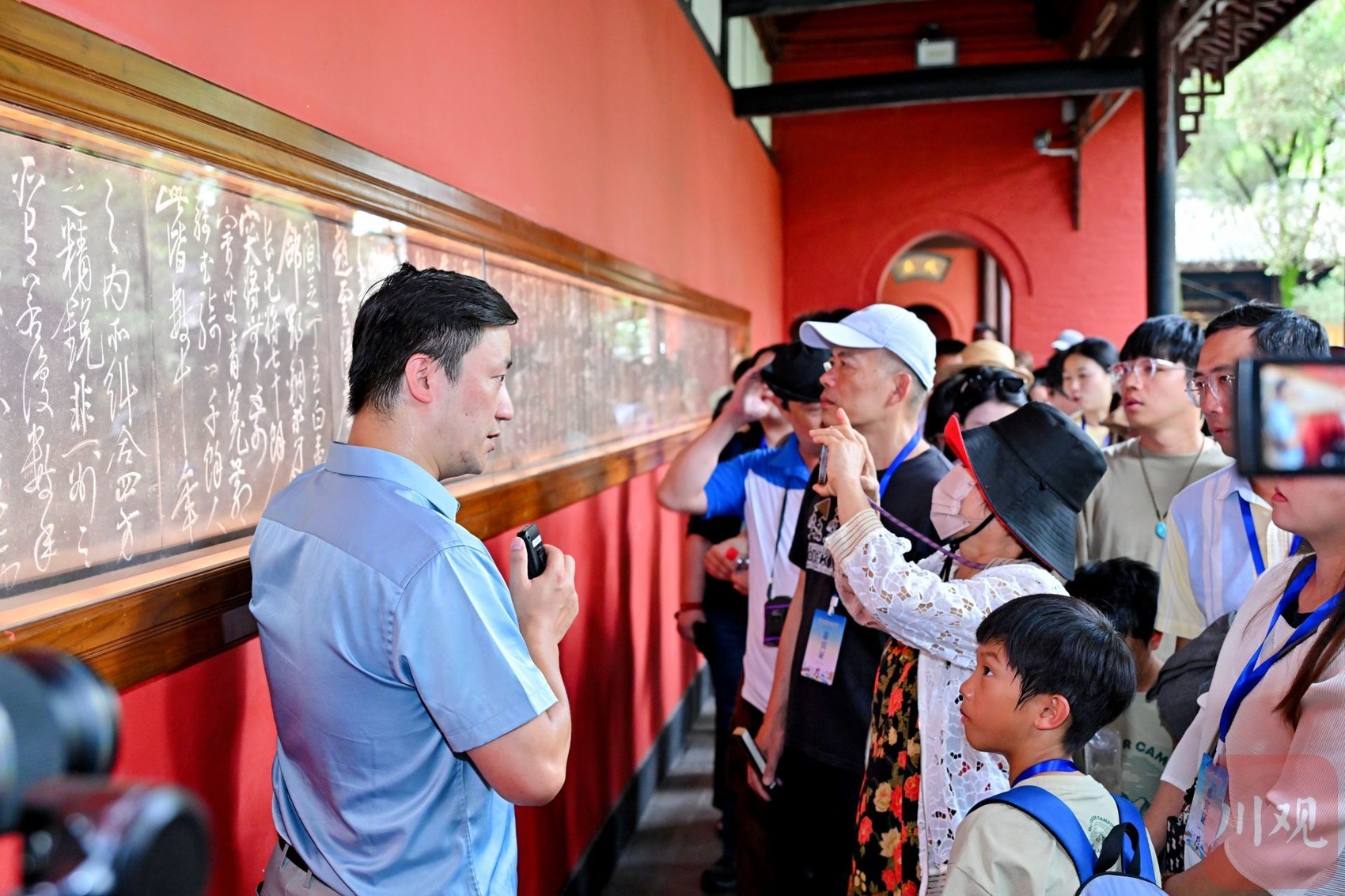
Li Zhi, Chief Docent of the Chengdu Wuhou Shrine Museum, Narrates Historical Stories Behind "Memorial on Dispatching the Troops" to Taiwanese Youth
Taiwanese content creator Xiaowan shared this deep resonance. He noted that Three Kingdoms culture is a common bond across the Taiwan Strait, deeply embedded in the daily lives of Taiwan residents. "We studied the 'Memorial on Dispatching the Troops' in school, and Three Kingdoms elements remain ubiquitous in Taiwan's films and TV dramas." Visiting the Wuhou Shrine for the first time, he felt both familiarity and awe: "All those memories from textbooks came rushing back, now vividly brought to life before my eyes. This is a place worth revisiting again and again!"
Ms. Chen from Taiwan, who fell in love with Three Kingdoms culture through film and television, found her visit to the Wuhou Shrine in Chengdu to be an "eye-opener." "I only learned from the guide that Zhuge Liang was 1.9 meters tall! That completely overturned my impression from TV dramas. Here, you can learn and see what history truly looked like." The two youngest members of the group were captivated by blind-box collectibles featuring Three Kingdoms heroes. Carefully unwrapping their boxes, they received figurines of Zhang Fei and Ma Chao, turning them over repeatedly in their hands — delighted by the fun experience, yet slightly disappointed not to have drawn their most admired hero.
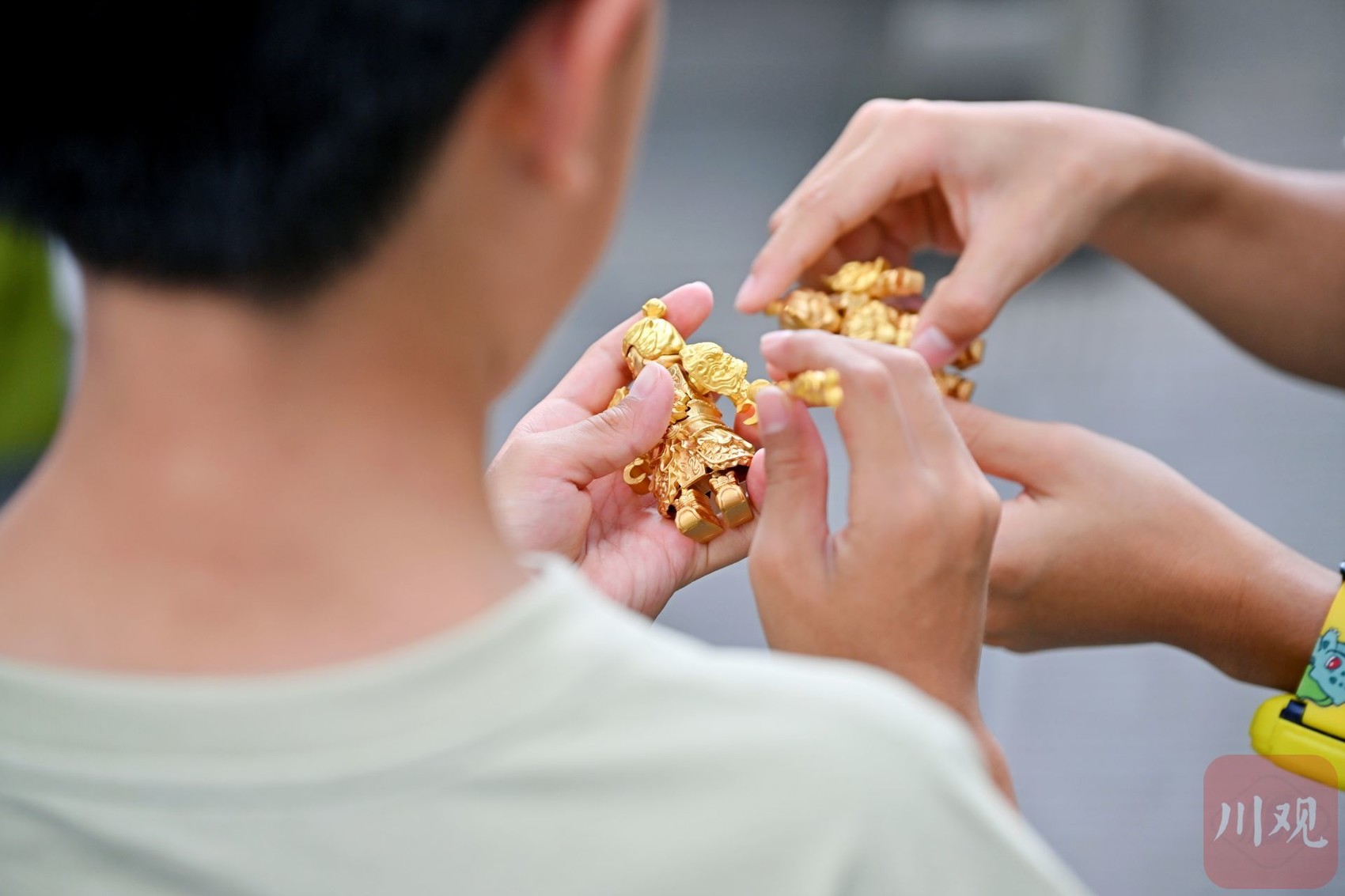
Children from Taiwan Drawn to Three Kingdoms-Themed Cultural Creative Blind Boxes at Wuhou Shrine
Before departure, Li Zhi's remarks left a lasting impression: "The vast majority of heroes revered by the Chinese people are flesh-and-blood figures drawn from history. Honoring heroes is also honoring our ancestors. Only by never forgetting where we come from can we understand where we are headed." This Chengdu leg of the Journey Around Sichuan tour aims to use culture as a bridge and youth as a bond, enabling young people from both sides of the Strait to immerse themselves in the charm of "Sichuan Ease" and to strengthen their identification with the roots of Chinese culture through shared cultural resonance.
【本文部分内容由AI辅助生成,特此声明。The author(s) generated part of the content in this work with the assistance of artificial intelligence (AI), which is hereby declared.】
