
Sichuan's Rural Grottoes Reborn: 1,032 Stone Carvings Fuel Village Revival
2026-07-24 11:51:21 by AIOS
Sichuan currently has 2,134 grotto temples (including cliff carvings), the highest number nationwide, earning it the scholarly designation as the "second half" of China's grotto art. Due to poor preservation conditions, difficult access, and inadequate supporting infrastructure, a large number of rural grottoes have long remained hidden in remote mountainous areas.
Starting in 2023, Sichuan has pioneered an integrated approach that combines grotto conservation with rural revitalization, developing rural grotto cultural parks (including scenic spots and micro-landscapes) under the principle of "one site, one strategy" to explore new pathways for activating cultural relics. Tianfu Weekend will successively visit representative sites to showcase the outcomes of this initiative.
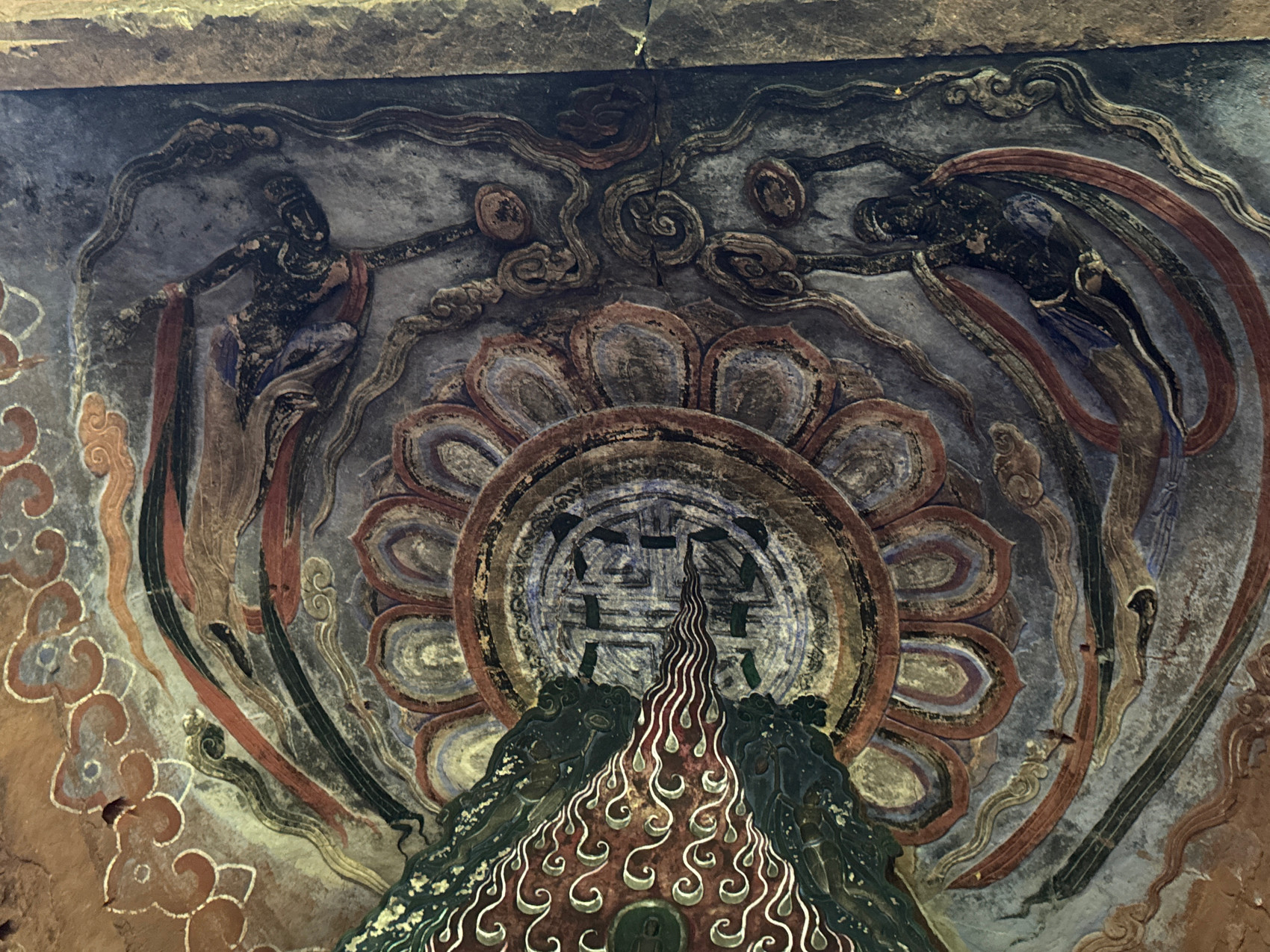
Flying Apsaras on the Ceiling
When people think of Sichuan's grottoes, the Leshan Giant Buddha and Anyue Grottoes are widely recognized, yet the majority of the province's 2,134 grotto sites remain tucked away in rural areas. With the advancement of rural grotto cultural park construction, these scattered, lesser-known carvings are now being systematically revitalized. Recently, reporters visited the Yaoshiyan cliff carvings in Dayi County, Chengdu, to observe how these millennium-old stone carvings are transforming into new attractions that enrich local communities and revitalize villages.
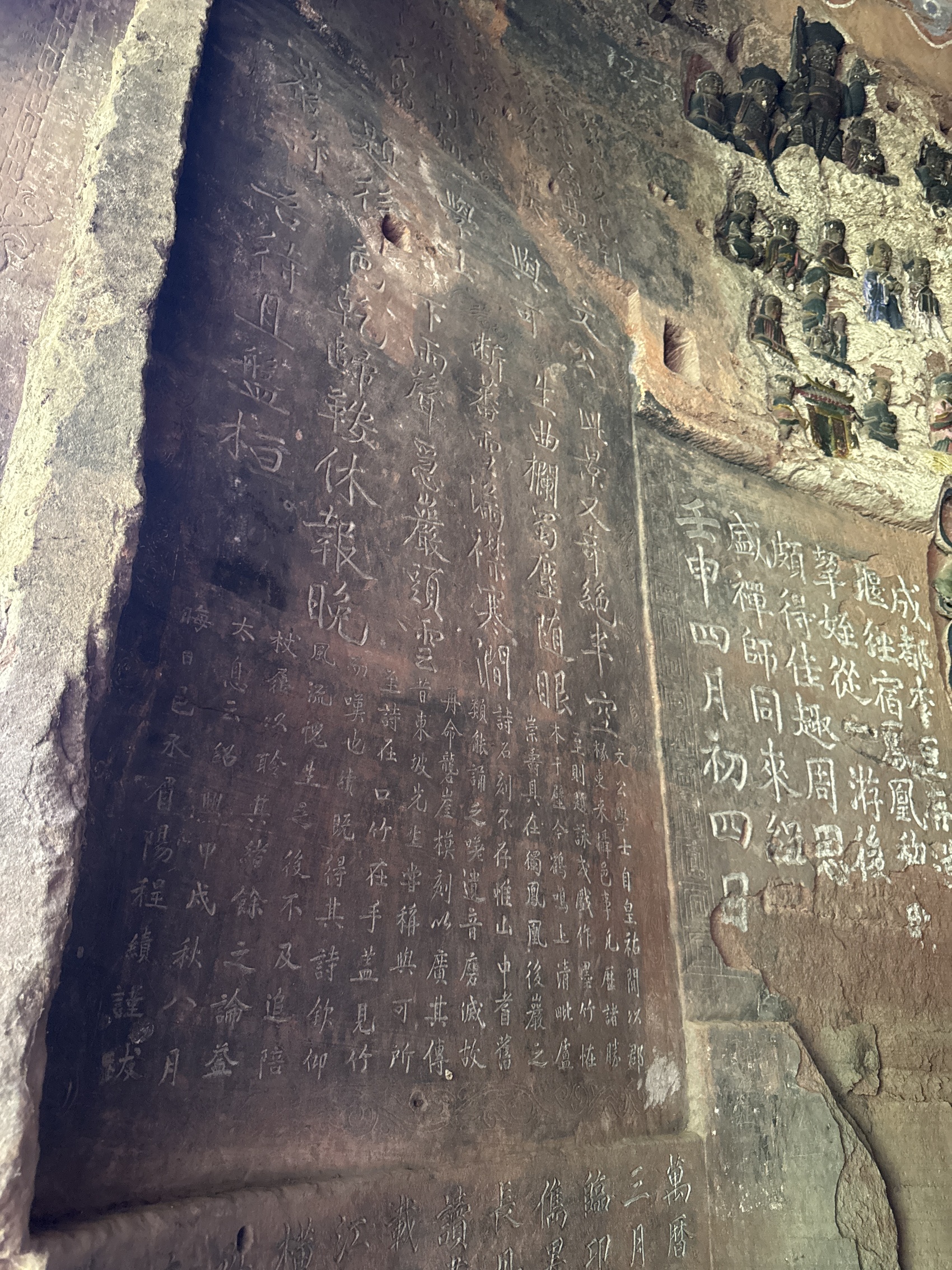
Inscriptions on Stone Carvings of the Yaoshiyan Cliff
Millennia-Old Grottoes Hidden in the Mountains
Nestled in Feifeng Village, Xin Chang Town, Dayi County, the lush Feifeng Mountain hosts the Yaoshiyan cliff carvings, featuring 35 caves and 1,032 statues dating from the Tang and Song dynasties through the Ming and Qing periods.
Wu Decai, deputy director of the village committee, explained that the site is named after the Medicine Buddha statue carved in 837 CE during the Tang dynasty. Subsequent modifications were made during the Jiajing reign of the Ming dynasty and further additions during the Qing dynasty, making it a microcosm of Sichuan's grotto art.
The Medicine Buddha niche remains well-preserved, with clear inscriptions; the Northern Song poet Wen Tong once visited and composed a poem here. Along the 150-meter cliff face, Cave No. 7 contains a Ming-dynasty ensemble of nearly 300 figures, including what appears to be a depiction of the Monk's journey to fetch scriptures—a testament to the profound folk influence of Xuanzang's story. Additionally, vivid carvings depicting folk themes such as Nezha taming a dragon, fighting a tiger, and fishing showcase the exceptional craftsmanship of ancient artisans.
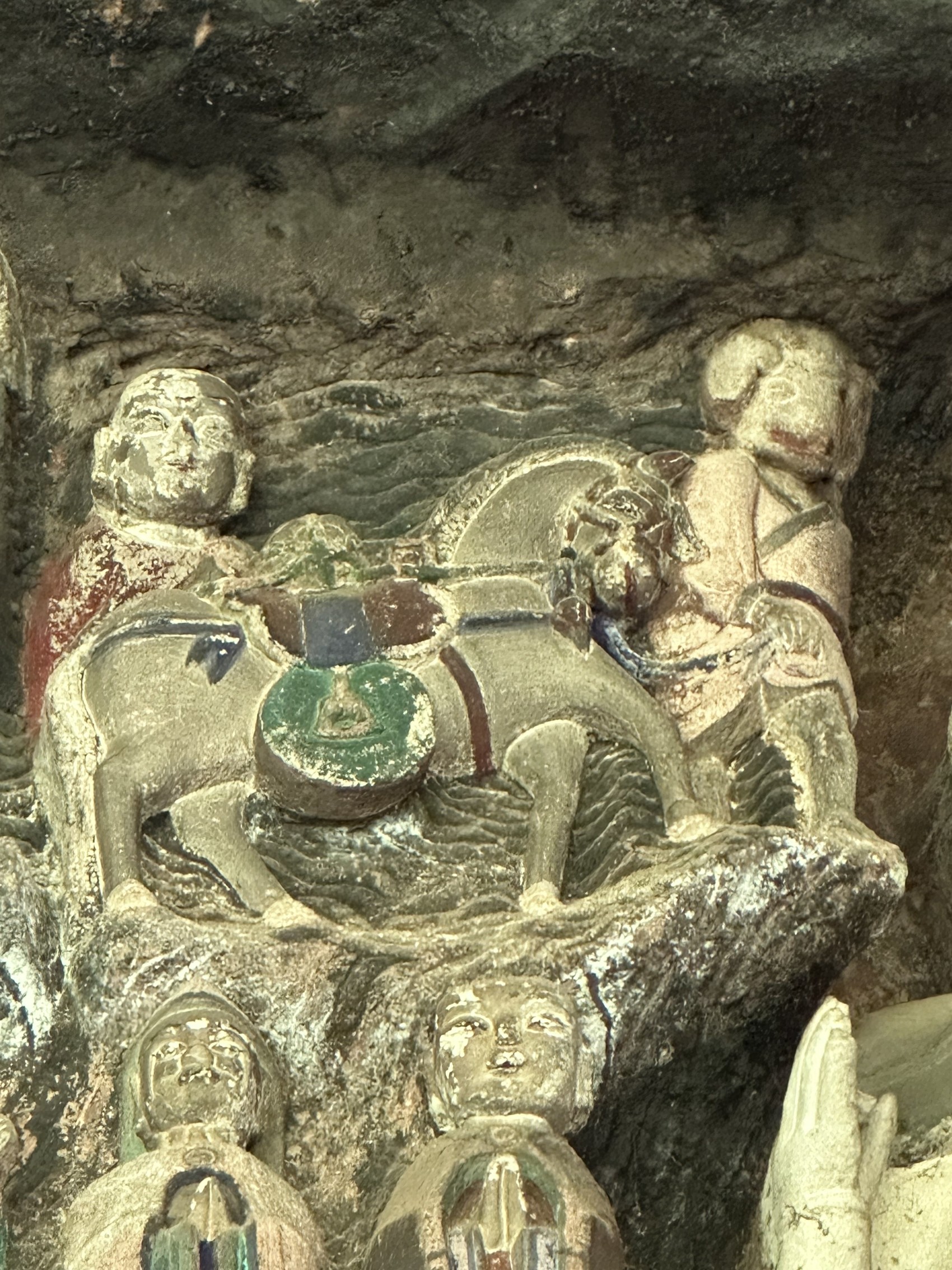
Illustration of Tangseng's Journey to Obtain Buddhist Scriptures
Comprehensive Restoration Brings Renewal
As a provincially designated cultural heritage site, Yaoshiyan previously suffered from severe neglect: accessible only via a narrow dirt path that became hazardous in rain; damaged red sandstone flooring patched with incongruous cement; and temporary structures clashing with the site's historical ambiance. In February 2023, Yaoshiyan was selected as one of the first pilot sites for rural grotto cultural attractions, prompting the immediate deployment of professional teams and dedicated funding.
A systematic renovation followed: a new parking lot was built mid-mountain, and a one-kilometer stone-paved trail was laid; corrugated steel sheds were removed and replaced with wooden corridors and protective eaves over the caves—providing both rain shelter and erosion control; the red sandstone ground was relaid, and interpretive signage installed; 35 surveillance cameras were set up for round-the-clock monitoring, and facilities such as restrooms were upgraded to meet standardized requirements.
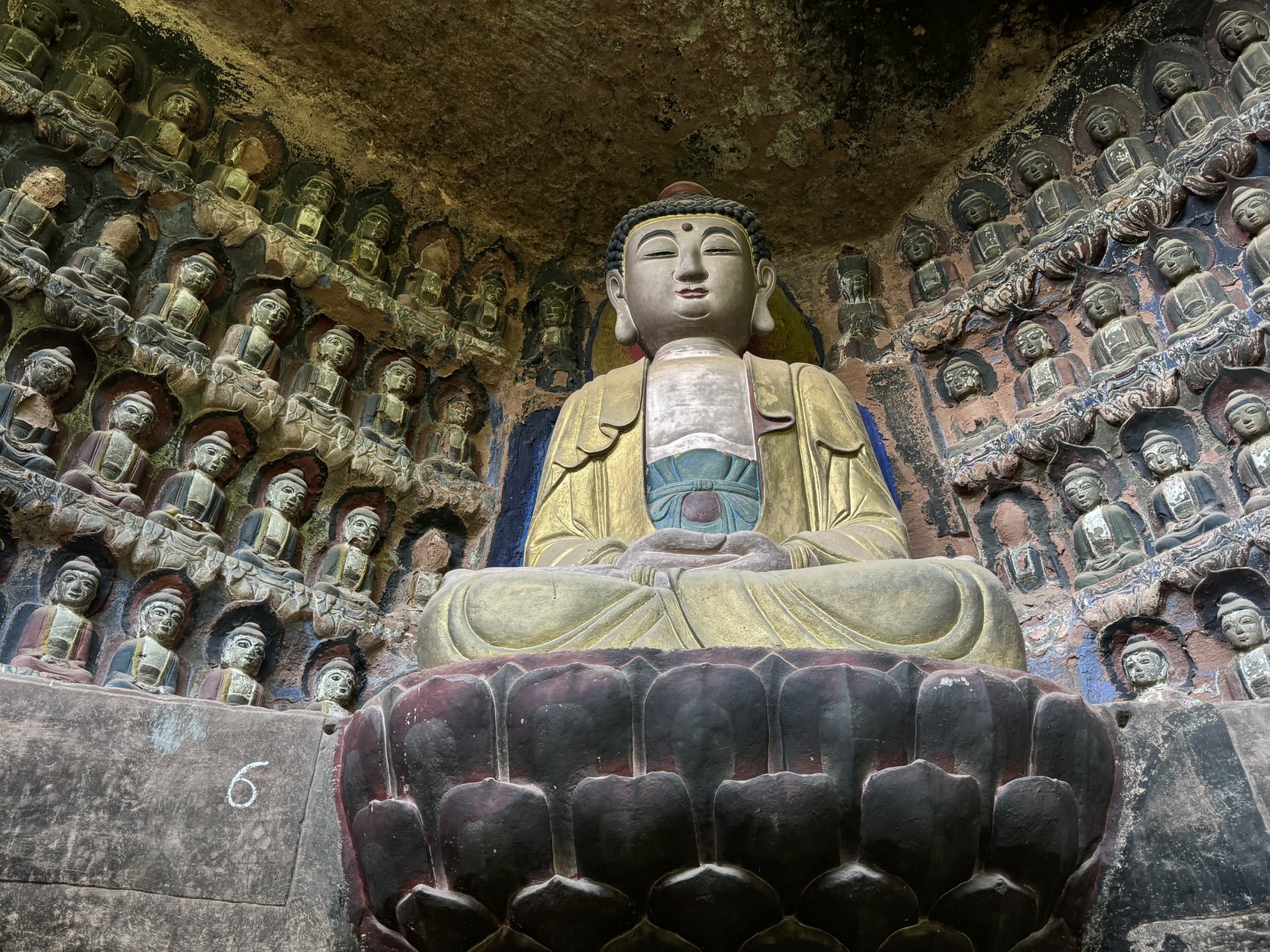
Cultural Tourism Empowers Villagers and Boosts Incomes
By 2025, the Yaoshiyan attraction had passed official inspection, successfully converting cultural heritage conservation into tourism momentum. During the three-day holidays of May Day and the Dragon Boat Festival, it welcomed nearly 20,000 visitors.
Although admission remains free, the influx of tourists has activated local resources: villagers converted their courtyards into temporary parking lots, earning several hundred yuan per day; during holidays, they set up stalls selling local agricultural products, generating daily incomes of up to 2,000–3,000 yuan. Villager Gao Caibin voluntarily distributes trash bags and encourages civilized behavior among visitors, reflecting a marked rise in community awareness of heritage protection.
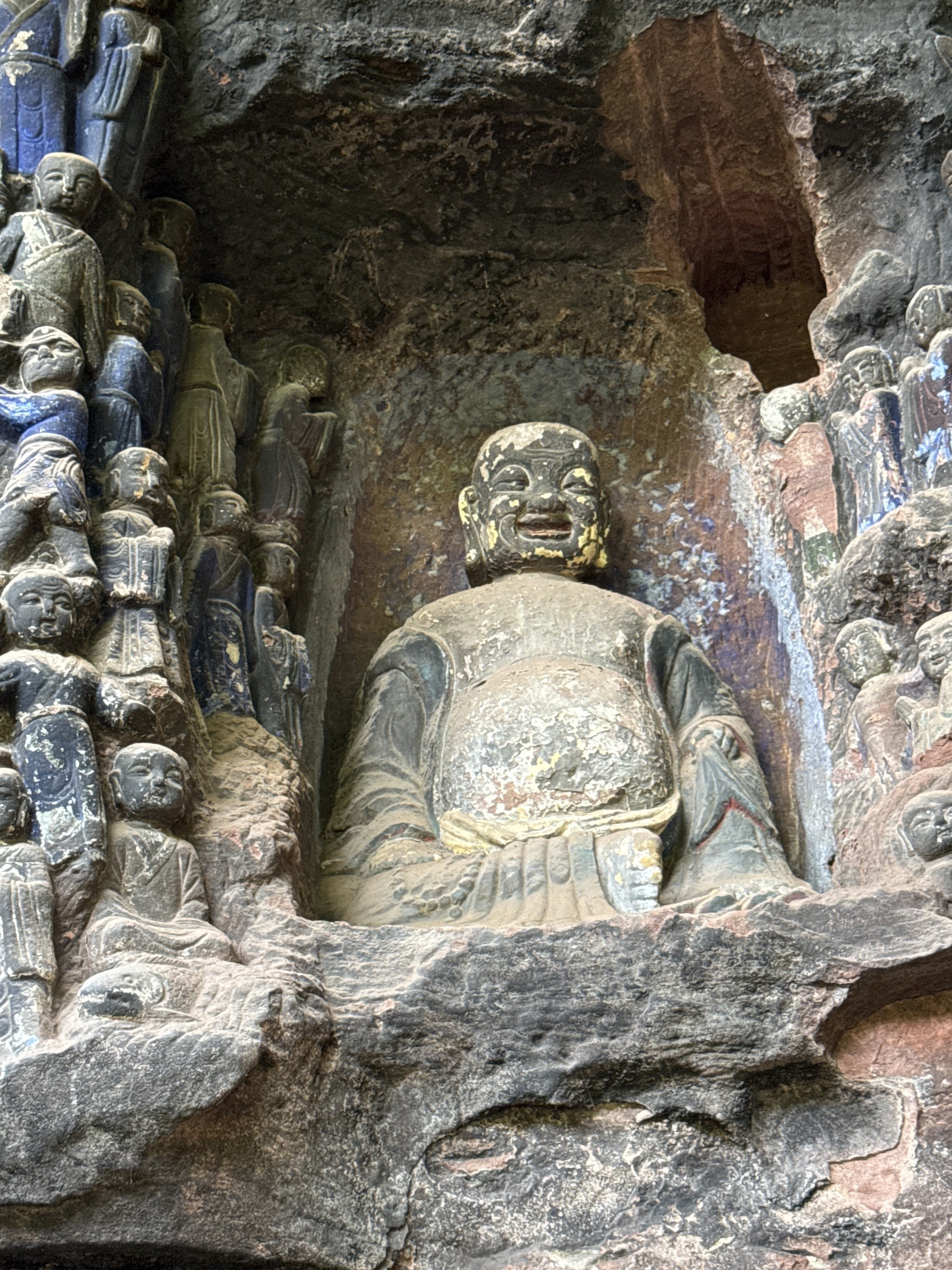
A corner of the Yaoshiyan cliff carvings
The village's code of conduct explicitly states: "The Yaoshi Tiger Spring and ancestral farming proverbs are treasures passed down by our forebears. We must excavate, inherit, and protect them, so future generations may carry them forward." Looking ahead, once the Sanba Reservoir is filled, the Yaoshiyan area will integrate hiking trails to develop into a high-aesthetic "back garden of Chengdu".
【本文部分内容由AI辅助生成,特此声明。The author(s) generated part of the content in this work with the assistance of artificial intelligence (AI), which is hereby declared.】
