
Tongwei and Pakistan: Charting a path toward green transition
2026-05-21 15:49:59 by SICC
In summer, heat waves often rise from Pakistan’s farmlands. In the past, the arrival of the irrigation season brought the roar of diesel generators along field ridges: As the exhaust fumes drifted low over the ground, the vibrating pumps drew groundwater into the ditches. “Pakistan is a major agricultural nation. For many farmers, the continuity of irrigation sometimes hinges on whether diesel prices rise or if the generators are still functioning,” said Wan Zesen, Head of Tongwei’s business in Pakistan, in an interview.
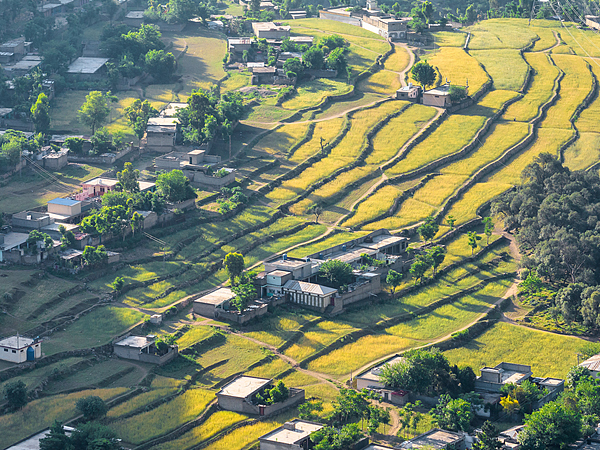
A drone view of the sunrise over rice paddies in Pakistan
Today, however, the situation in several agricultural parks is changing. Tongwei’s PV modules have “taken root” in Pakistan’s fields. Row upon row of panels convert the sunlight into electricity, powering water pumps and easing farmers anxieties over energy and water supply. This is more than a successful product export; it is a low-cost, sustainable, and replicable green solution provided by a Chinese PV enterprise for Pakistan’s agricultural sector.
A higher-priced PV panel placed in local fields
Pakistan’s need for PV panels is driven by very practical reasons.
Chen Fangzhou, Overseas Sales Director of Tongwei’s PV Business Module Division, explained that Pakistan has long relied on traditional energy sources like petroleum and natural gas. With scarce domestic resources and a high reliance on imports, electricity costs have remained high, placing a heavy burden on residents and farmers alike. The fragmented nature of local agriculture and limited grid coverage make stable access to the centralized power supply system difficult in many regions. However, Pakistan is endowed with abundant solar resources. In this context, distributed and off-grid PV systems are more ideally suited for the farmlands, rooftops, and small-to-medium industrial and commercial sites.
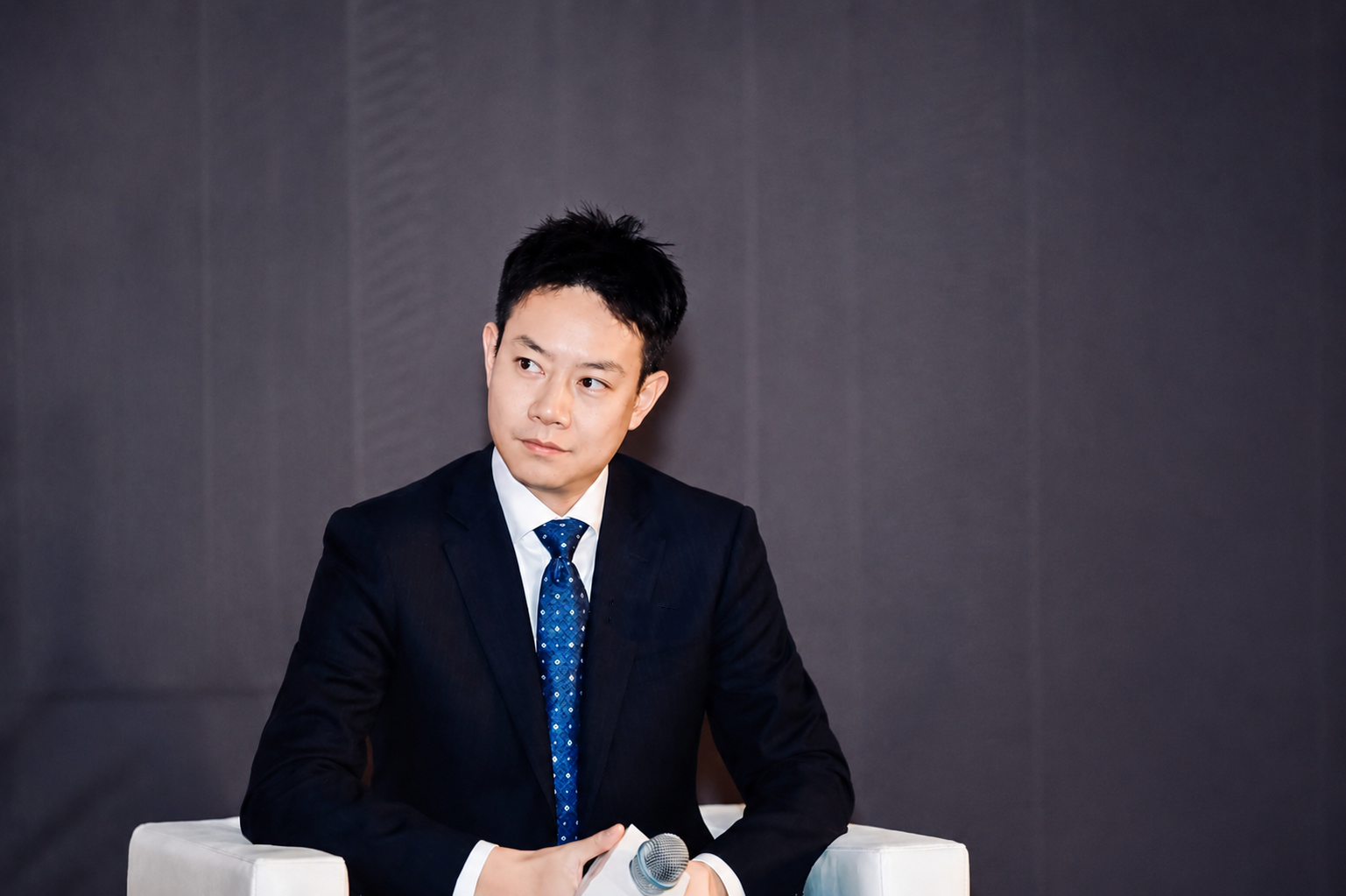
Chen Fangzhou, Overseas Sales Director of Tongwei’s PV Business Module Division
According to Chen Fangzhou, Pakistan offers both a pressing need for energy transition and significant market growth potential. “For Chinese PV companies, this is both a market opportunity and part of the global industrial layout. The Pakistani government began promoting a comprehensive PV initiative about three years ago. Upon entering the local market, the first opportunity Tongwei identified was in agricultural PV applications,” Chen added.
Tongwei’s first order in Pakistan came from a local agricultural park: a distributed PV power generation project of approximately 1 MW, comprising about two containers, designed for self-consumption to reduce irrigation and production electricity costs.
However, moving from trial orders to large-scale collaboration is the true test of a company’s comprehensive strength.
By the time Tongwei entered Pakistan, numerous PV module brands were already established there. Compared to early movers in the overseas module business, Tongwei was a late entrant. Previously, Tongwei was better known as a leading manufacturer of high-purity polysilicon and solar cells. Entering the terminal module market meant not only facing fierce price competition but also rebuilding brand awareness and customer trust.
The Pakistani market is extremely price-sensitive. While customers recognize the quality of Chinese PV products, they are also driven to minimize procurement costs. Wan Zesen recalled that the team often had to explain why, in the long run, a higher-priced module could actually lead to a lower overall cost. “We cannot simply compare the price of a single module; we must also consider its power generation per day, per square meter, and per watt, as well as its added value,” he said.
“Tongwei’s modules deliver 10–15 watts more per square meter than competing products—a difference that, across hundreds or thousands of panels, translates into a stark long-term revenue gap.” As customers have shifted their focus from unit price to power generation capacity per unit area, long-term stability, and after-sales service, the focus of negotiation has also changed.
In overseas markets, however, the longevity of a partnership often depends on more than just technical specifications. For Tongwei, every order, from contract signing to final delivery, is backed by a robust risk control system encompassing payment security, fulfillment capabilities, and after-sales service. For new overseas customers, Tongwei conducts comprehensive assessments of their qualifications, operations, and financial standing. To mitigate balance payment risks, it leverages tools like China’s export credit insurance. “Overseas orders don’t end with the signing of a contract,” said Wan Zesen, “The timely collection of balance payments and the continuity of service are equally vital to a company’s long-term presence in a local market.”
The journey of Sichuan’s PV panels to South Asia
For each PV module of Tongwei, the journey typically starts at a factory in or around Chengdu. Once encapsulated on the production line, the modules are loaded into containers and await pickup by trucks at the factory. Leaving Sichuan Province, the modules enter western China’s rail logistics network, traverse the hinterland, and eventually clear customs in Pakistan before being dispatched to agricultural parks, distribution warehouses, or rural installation sites.
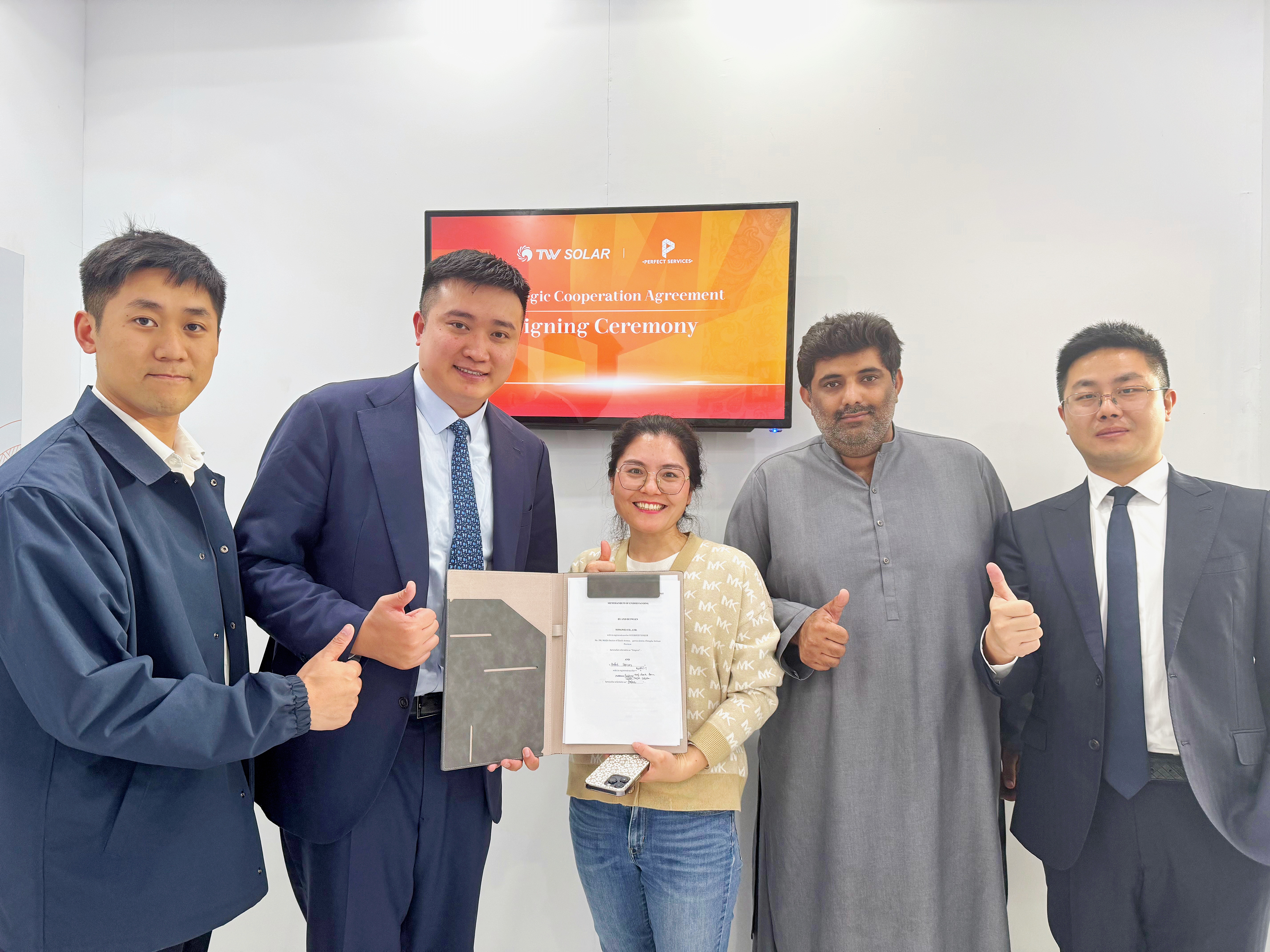
Wan Zesen (first from left), Head of Tongwei’s business in Pakistan, signs a contract with a local customer
There, they may be installed alongside fields to power water pumps, atop factory roofs to support daily production, or on residential rooftops to provide household electricity.
Unlike coastal manufacturing bases that rely heavily on sea freight, Tongwei’s location in Sichuan allows it to leverage rail networks, enhancing efficiency and reducing costs when serving Central and South Asian markets. Amid fluctuating global shipping cycles and rising international logistics costs, the land corridor connecting Sichuan to South Asia offers a crucial geographical edge for manufacturers in western China to compete globally.
To provide Pakistani customers with firsthand insight into its products and industry chain, Tongwei invites them to visit its Chengdu headquarters and nearby production bases. Chen Fangzhou noted that Tongwei has hosted Pakistani customers at its Chengdu headquarters as well as at the Meishan solar cell base, the Jintang module base, and the Leshan polysilicon base. He added, “The best way to resolve concerns is through effective on-site marketing—showing customers firsthand the strength of our entire industry chain.”
According to its official website, Tongwei Group has built a vertically integrated PV industry chain covering high-purity crystalline silicon, solar cells, high-efficiency modules, and the construction and operation of downstream PV power plants. In Chen Fangzhou’s view, a complete industry chain means more than just large-scale production; it signifies the ability to strike an optimal balance among costs, efficiency, and quality.
As cooperation deepens, Tongwei has gained an increasingly nuanced understanding of the local market. Regarding local operations, the company partners local distributors and small-to-mid-sized installers to expand its reach while hiring Pakistani sales personnel to manage client relationships. Wan Zesen noted that local staff help the company improve communication efficiency and better grasp customer needs. “Cross-cultural differences like religious customs have had virtually no impact on our project collaboration or daily operations,” said Wan.
From the initial trial order of just two containers (approximately 1 MW), Tongwei’s local cooperation has expanded significantly, culminating in a 2025 agreement to supply 650 MW of PV modules to three Pakistani firms: Perfect Services, Nimir Energy, and Mateen Sons. For Chinese PV companies, the key to unlocking overseas markets often lies not in the lowest price, but in the trust built through long-term product reliability, consistent delivery performance, and a robust after-sales service system.
From factories in Sichuan to fields in Pakistan, a single PV module connects more than just power systems; it enables a more stable and cost-effective agricultural model, and fosters growing green energy cooperation between Chinese enterprises and Belt and Road countries.
A beam of light: Fostering a sense of security globally
“In the past, farmers had to check the fuel and start diesel generators before they could pump water, and the generators would roar and emit thick smoke. Today, thanks to PV power, they focus instead on whether there is sufficient daily sunshine and a steady water flow in the canals,” Chen Fangzhou said, illustrating the shift.
This change is also gradually permeating the daily lives of ordinary households. Wan Zesen noted that a local Pakistani salesperson plans to install a PV system in his new home after getting married, so as to ensure a reliable power supply for the family’s daily needs. As appliance ownership grows, more residents are turning to daytime PV power and, where possible, adding energy storage systems to reduce reliance on grids and small diesel generators.
On the 75th anniversary of China-Pakistan diplomatic relations, such green energy cooperation carries even greater practical significance.
While Pakistan seeks affordable, stable, and clean energy upgrading solutions, Chinese PV firms offer competitive advantages in large-scale manufacturing and industry chain synergy. “It’s a win-win situation,” said Chen Fangzhou, noting that China’s PV capacity is precisely sufficient to satisfy Pakistan’s needs for energy transition and upgrading. He contends that with rising global energy cost volatility, more countries are shifting their attention back to the stability and sustainability of energy supplies. For many ordinary families and farmers, energy is not merely about figures on a utility bill; it is about whether irrigation stays on, factories keep running, and homes have reliable lighting at night.
What PV power brings, in essence, is a life with greater certainty.
From water pumps on farmlands to rooftop distributed power generation systems, Chinese PV panels are reaching an increasing number of homes and businesses in power-starved regions across South Asia and the Middle East. The value of green energy cooperation lies not just in the installed capacity or trade data, but in these tangible, real-world impacts.
Sunlight is a fairly equitable resource; the role of technologies, manufacturing capabilities and multinational supply chains is to empower more people to turn it into stable, clean, and affordable power. For developing nations facing energy pressure, PV power offers more than just a new energy option; it is a development solution that strengthens livelihood resilience.
(by Wang Qiqi, Shi Xiaolu )
