
Walking the Great Road Together: Chinese Wisdom Resonating Across the World – A Record of the China–U.S. People-to-People Exchanges: Trekking the Millennium-Old Shudao – Dialogues on Paths of Civilization
2026-04-02 17:36:13 by SICC
From March 23 to 27, the China-U.S. People-to-People Exchange event, themed “Trekking the Millennium-Old Shudao – Dialogues on Paths of Civilization,” was held in Guangyuan, Sichuan. Experts and scholars from the United States – spanning fields such as education, physics, energy, finance, and business – visited sites including the Cuiyun Corridor and Jianmen Pass, exploring the depth of Chinese civilization on foot. This is my third time walking the Shu Road (Shudao) with international visitors. Unlike the previous journeys, however, most participants this time came from professional backgrounds with no direct connection to the Shu Road culture. I found myself wondering: what had drawn them here?
Wandering Through a Living Painting: Poetic Resonance in Nature
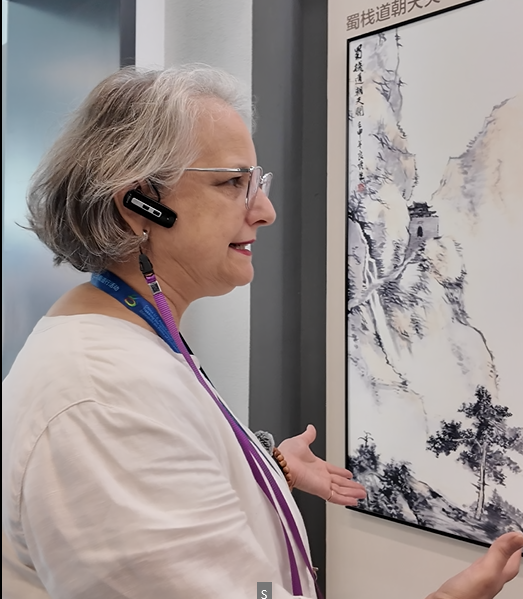
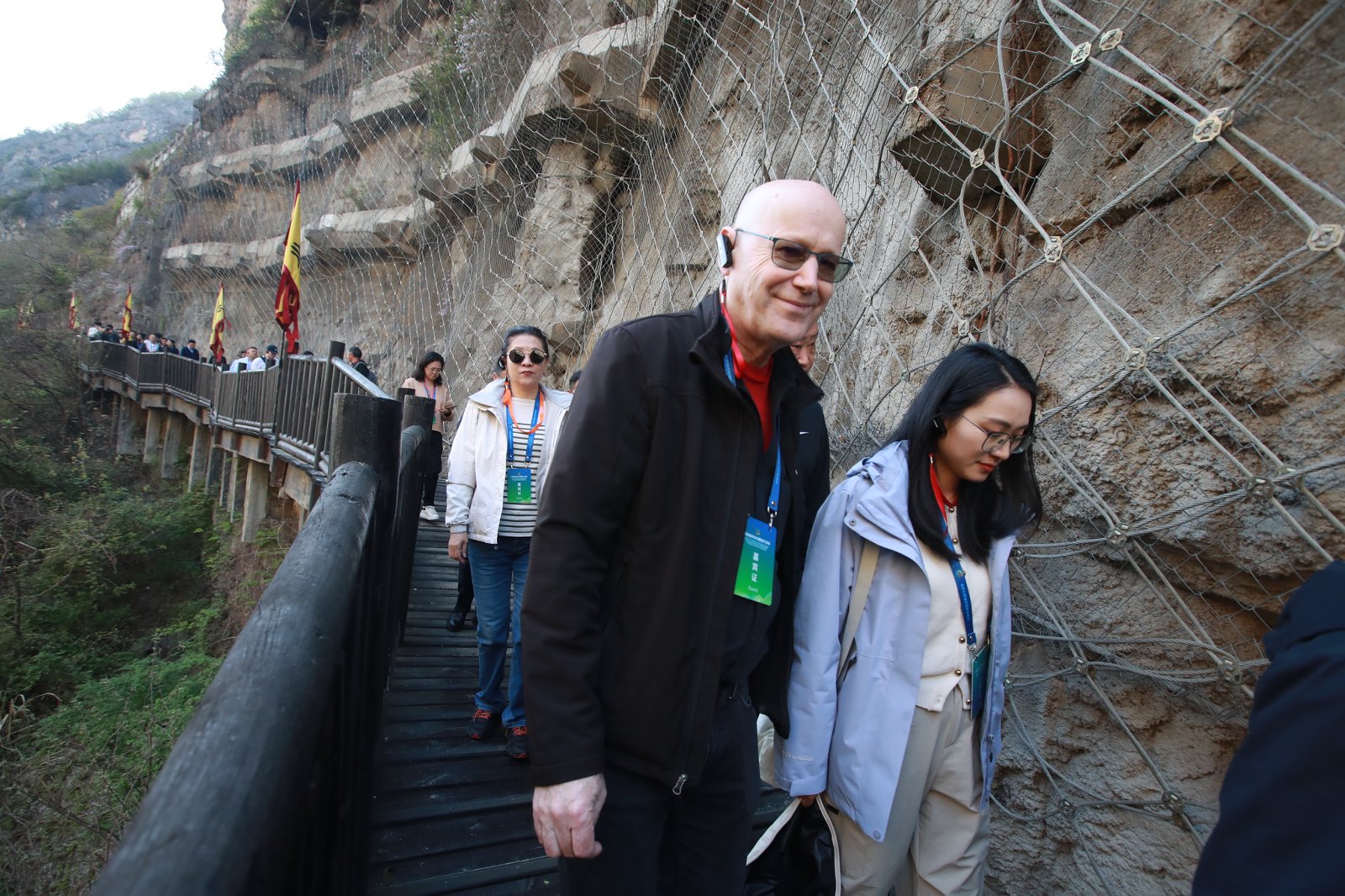
Morning light filters through the cypress canopy at Cuiyun Corridor, where thousands of ancient trees stretched endlessly like an unbroken emerald screen. Sandra Dorothy Carpenter, former Vice Principal of Wuhan Yangtze International School, gently placed her hand on the gnarled trunk of a cypress and remarked, “It feels like touching ancient history and the heartbeat of the Earth.” At Mingyue Gorge, as she stepped onto the ancient plank road, her sense of wonder deepened. “I used to admire ink paintings in galleries, thinking they were imaginary, almost like fairy tales,” she said. “But now, walking along this path as if inside a painting, I feel truly connected with the minds of the ancient artists who created those scenes.”
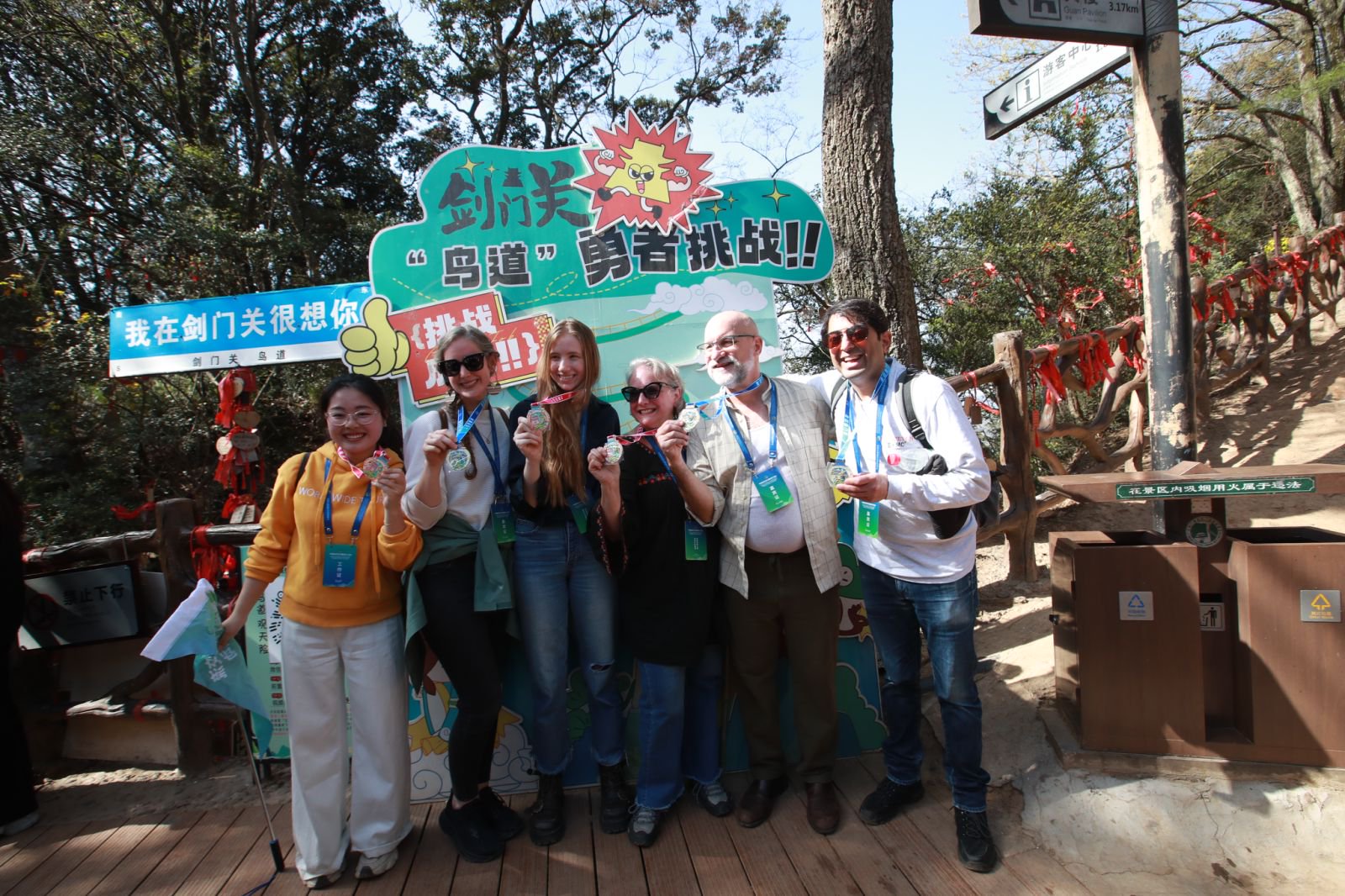
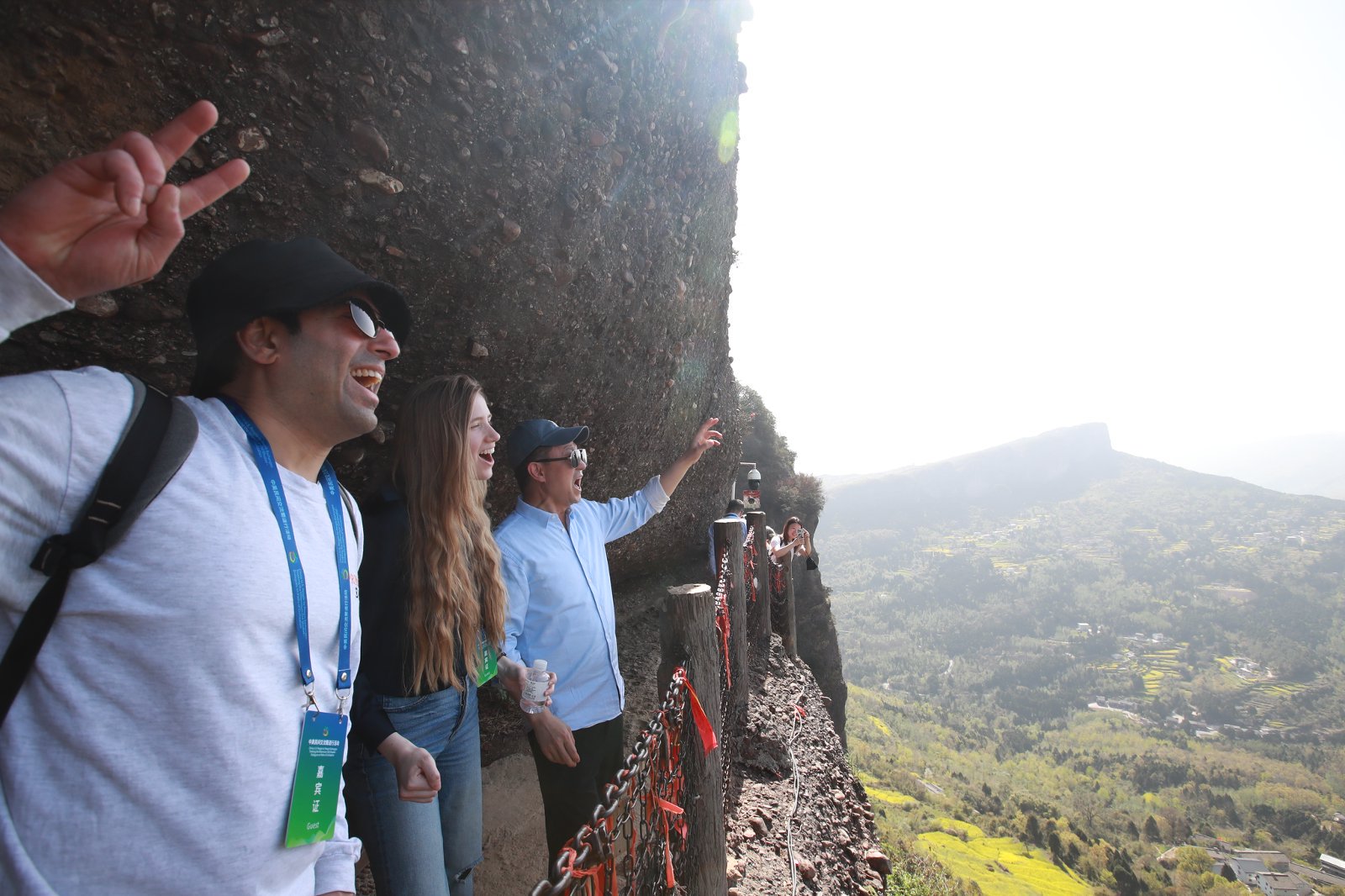
On the Bird Path of Jianmen Pass, visitors climbed carefully, gripping iron chains – leaning forward at times, pausing in awe at others – encouraging and supporting one another along the way. Beneath them loomed sheer cliffs; before them, mist drifted across the mountains. Expressions of amazement accompanied every step, as all were struck by the ingenuity of those who carved paths through such formidable terrain. Upon reaching the summit, participants received commemorative medals, their faces lit with exhilaration and joy. Amid a flurry of camera clicks, several young visitors recited Li Bai’s Hard is the Road to Shu, their voices echoing with poetic passion across the valley.
In Zhaohua Ancient Town, bluestone paths wound through quiet alleys. Chinese and American participants strolled side by side – some pausing to admire intricate wood carvings, others chatting and laughing with local residents. Bathed in warm sunlight over dark-tiled roofs and upturned eaves, language barriers quietly dissolved, replaced by ease and shared delight. Erika Danielle Mc Intyre, a teacher at Southwest University, experienced traditional sachet-making and lifted a handful of dried jasmine with curiosity. “I have never had an experience like this in the United States,” she said with a smile. “Wearing this sachet makes me feel as if I’ve stepped back into ancient times.”
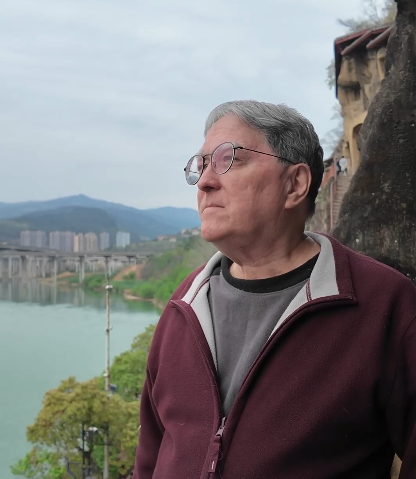
At Thousand Buddha Cliff, the setting sun cast golden light across the grottoes and niches. David James Moser, Professor from the College of International Education at Capital Normal University, listened intently as the guide explained the evolution of the carvings – from the slender elegance of the Northern Wei, to the full-bodied grandeur of the Tang, to the refined craftsmanship of the Qing. Each era revealed distinct artistic styles in color, pattern, and composition, while also reflecting cultural exchanges along the ancient routes. Standing on the cliffside steps, he watched a high-speed train rush past in the distance, modern cityscapes rising across the river from the millennia-old carvings. “Ancient civilization and modern life meet seamlessly here,” he reflected. “It is a truly unique and powerful experience.”
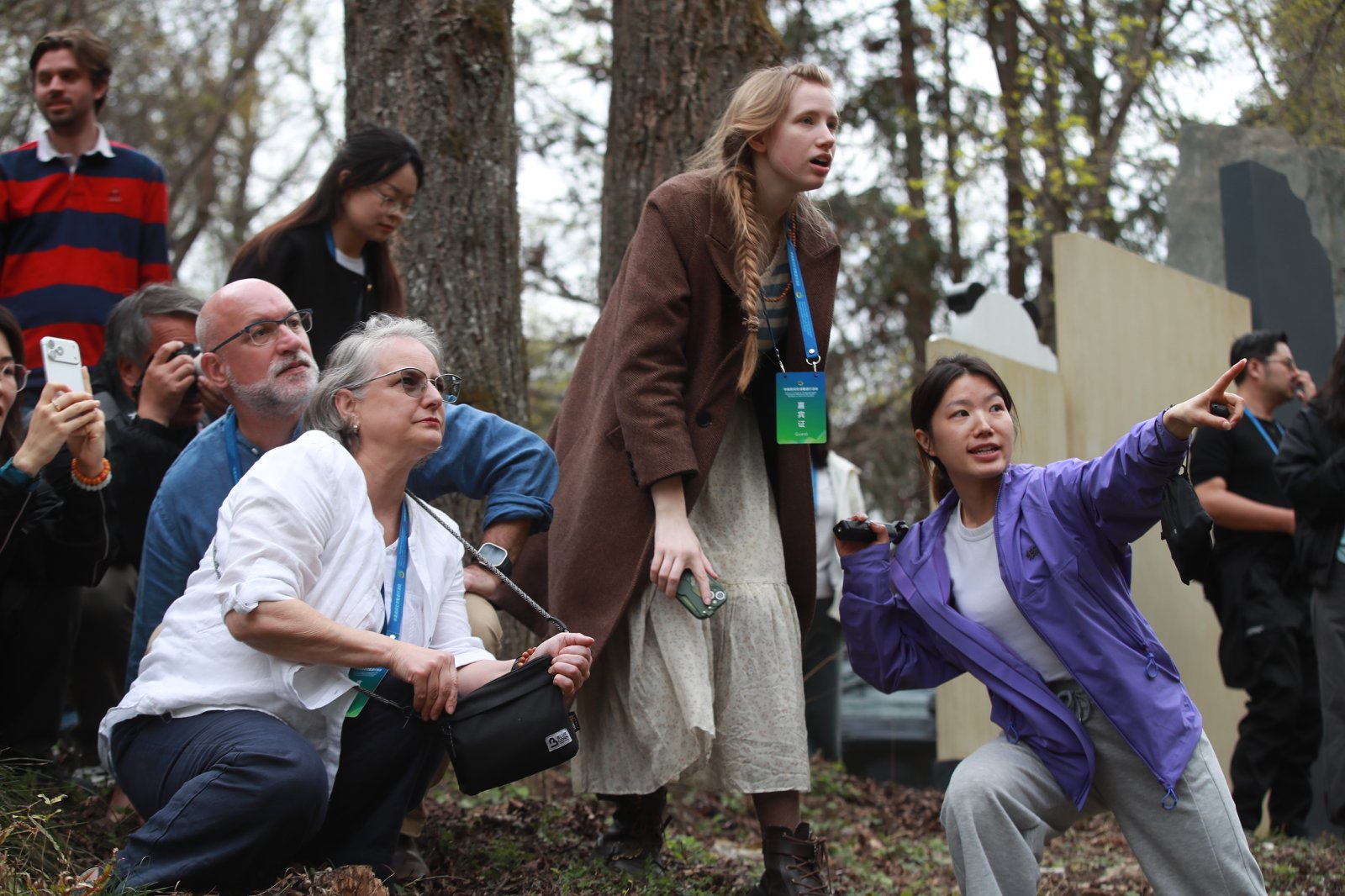
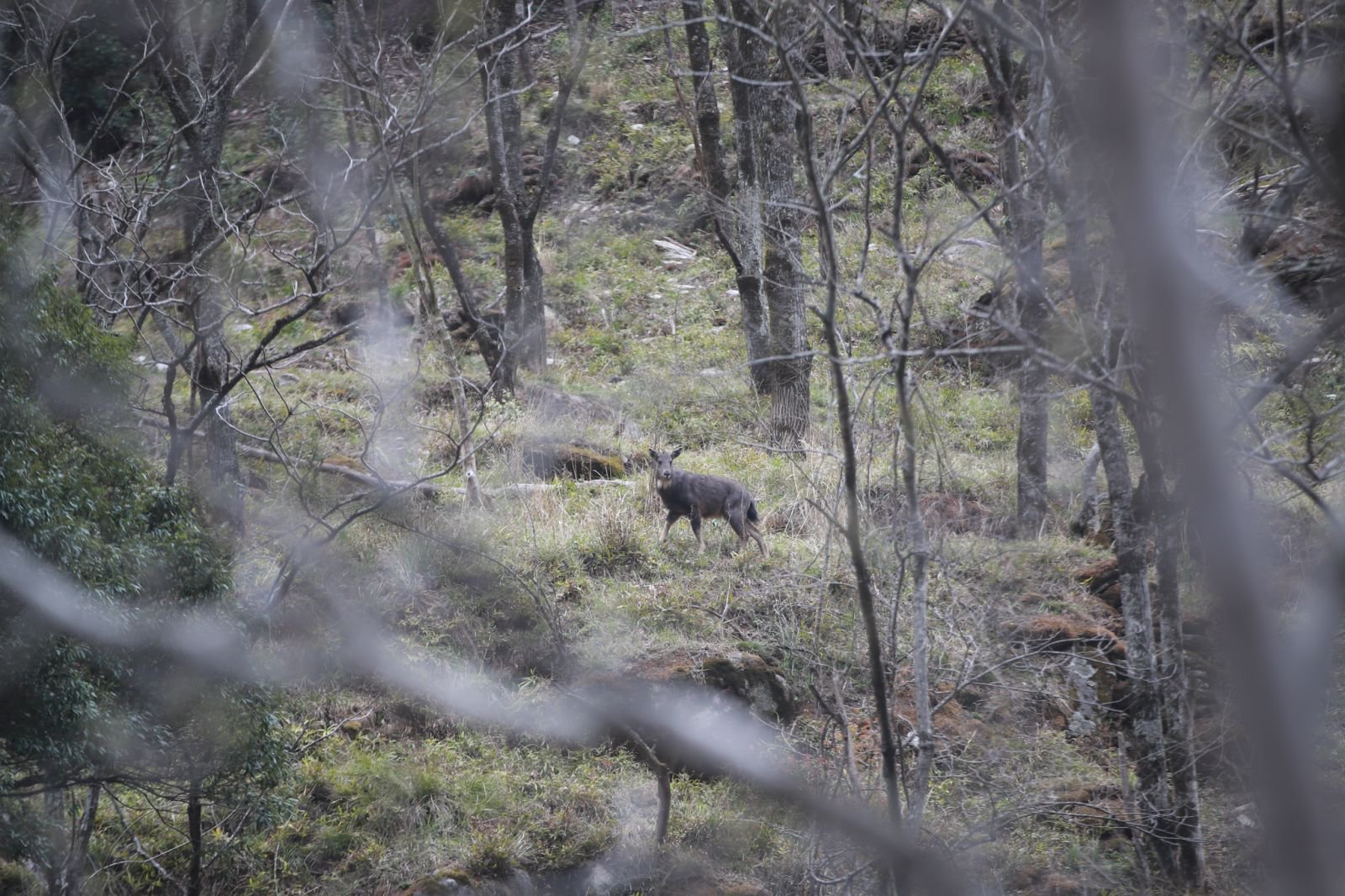
In the Snake Island area of Tangjiahe Nature Reserve, the group crouched quietly, scanning for signs of takin. When one participant spotted them, whispers of excitement spread: “Over there – look along that line!” Moments later, they burst into laughter upon seeing a dozen monkeys perched among the branches. “Monkeys grow on trees in China!” someone exclaimed, as joy broke the forest’s stillness.
As they walked deeper into the woods, birdsong rang through the crisp air. The mountainsides covered in budding redbuds stretched into the distance like a soft lavender canvas. In that moment, the harmony between humanity and nature was not an abstract idea, but a shared, tangible experience.
Friendship as a Bridge: Discovering the Meaning of Civilization
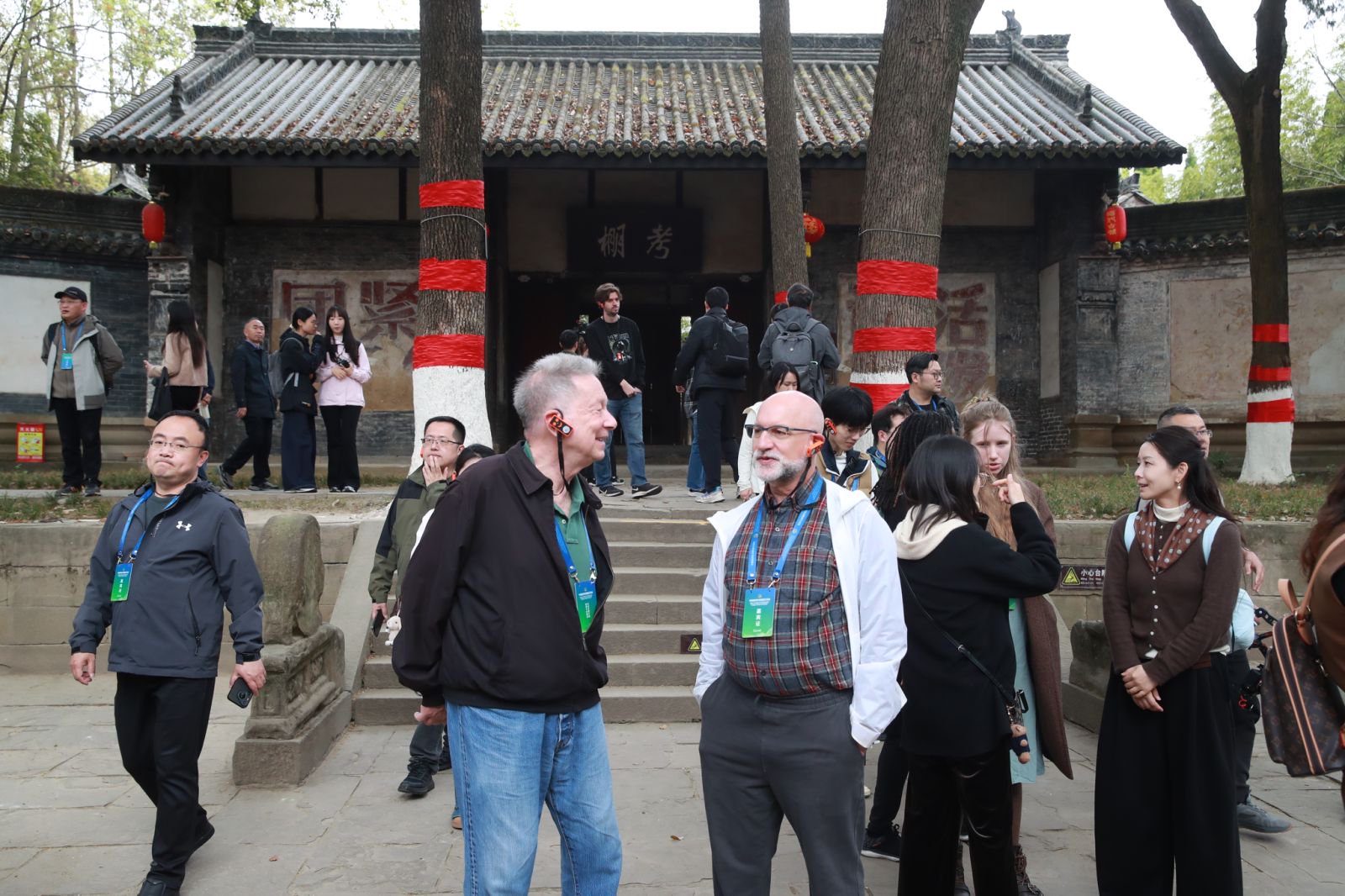
In the courtyard of Huangze Temple, I asked Emma Rose Hansen of Southwest University a simple question: “Among women around the world, whom do you admire most?” Her answer was unexpected.
“My hero is an ordinary woman who came to China over a hundred years ago,” she said calmly. “Around 1900, she defied her family’s opposition and entered war-torn China alone to advocate for women’s rights. When she learned of an impending bombing, she risked her life to evacuate women and children, saving countless lives.” “She was incredibly brave,” Emma added. “Her selflessness and courage remain just as meaningful today.”
When asked about cross-cultural communication, Emma offers a simple yet profound insight: “There are no techniques, no exchanges of interest. It begins with friendship. Only when I see you as a friend do I feel motivated to learn – about Wu Zetian, about the Shu Road, about everything beyond language and culture.” Her words echoed those of another participant, Daniel Mark Baird: “We see things differently because we come from different perspectives. But this journey helped us first recognize what we share – our love for beauty – rather than focusing on what separates us.”
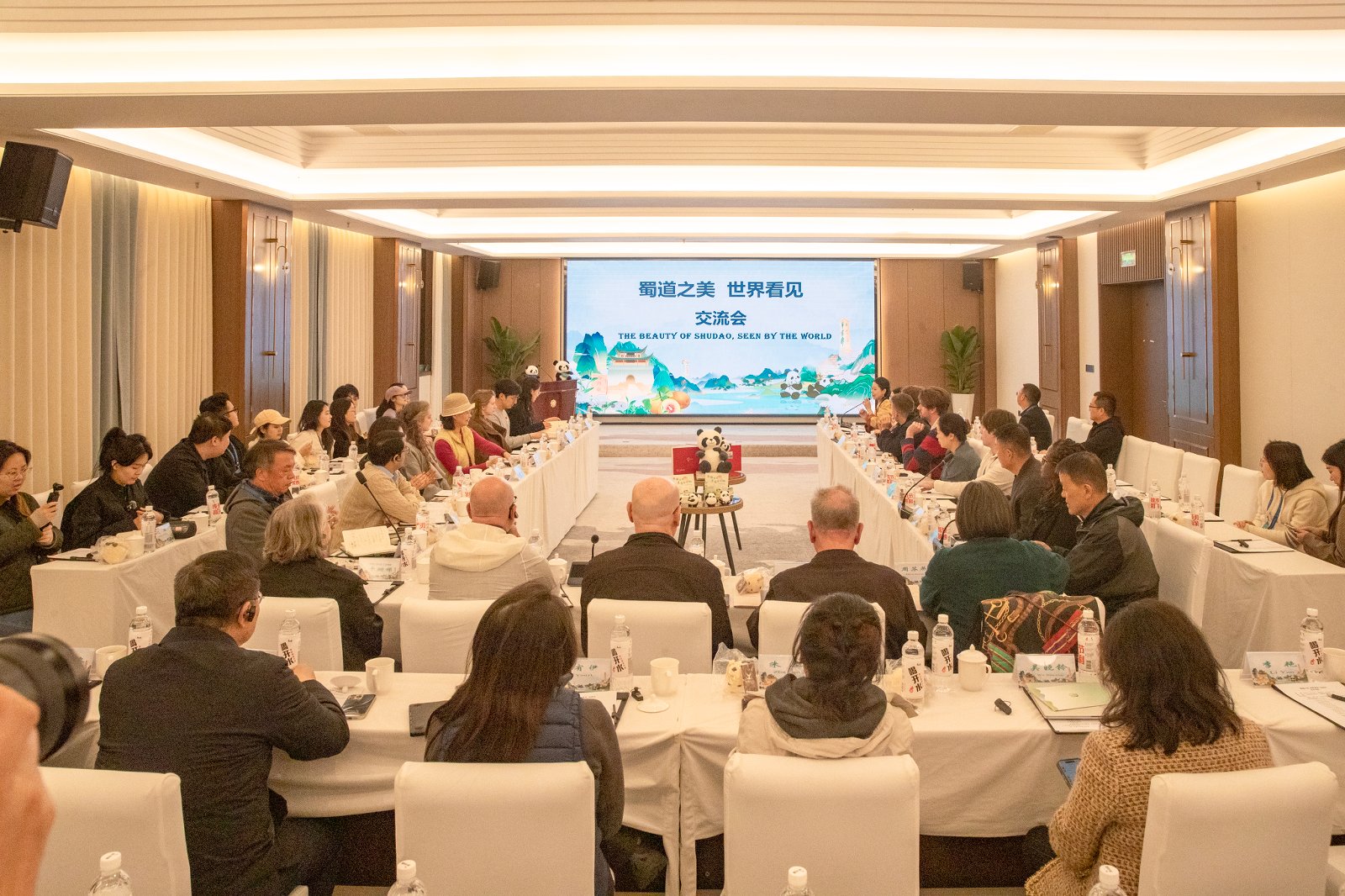
It is this quietly growing friendship that brings cultures closer and allows understanding to emerge naturally. At a symposium, James Weaver, former Vice President of JPMorgan Chase, expressed admiration for the stories of the Cuiyun Corridor: “China’s ecological wisdom, developed over millennia, is truly timeless. While environmental policies in some countries shift with political cycles, the ancient cypresses along the Shu Road have endured because of a deeply rooted sense of responsibility. That, to me, is the most valuable aspect of China’s ecological philosophy.”
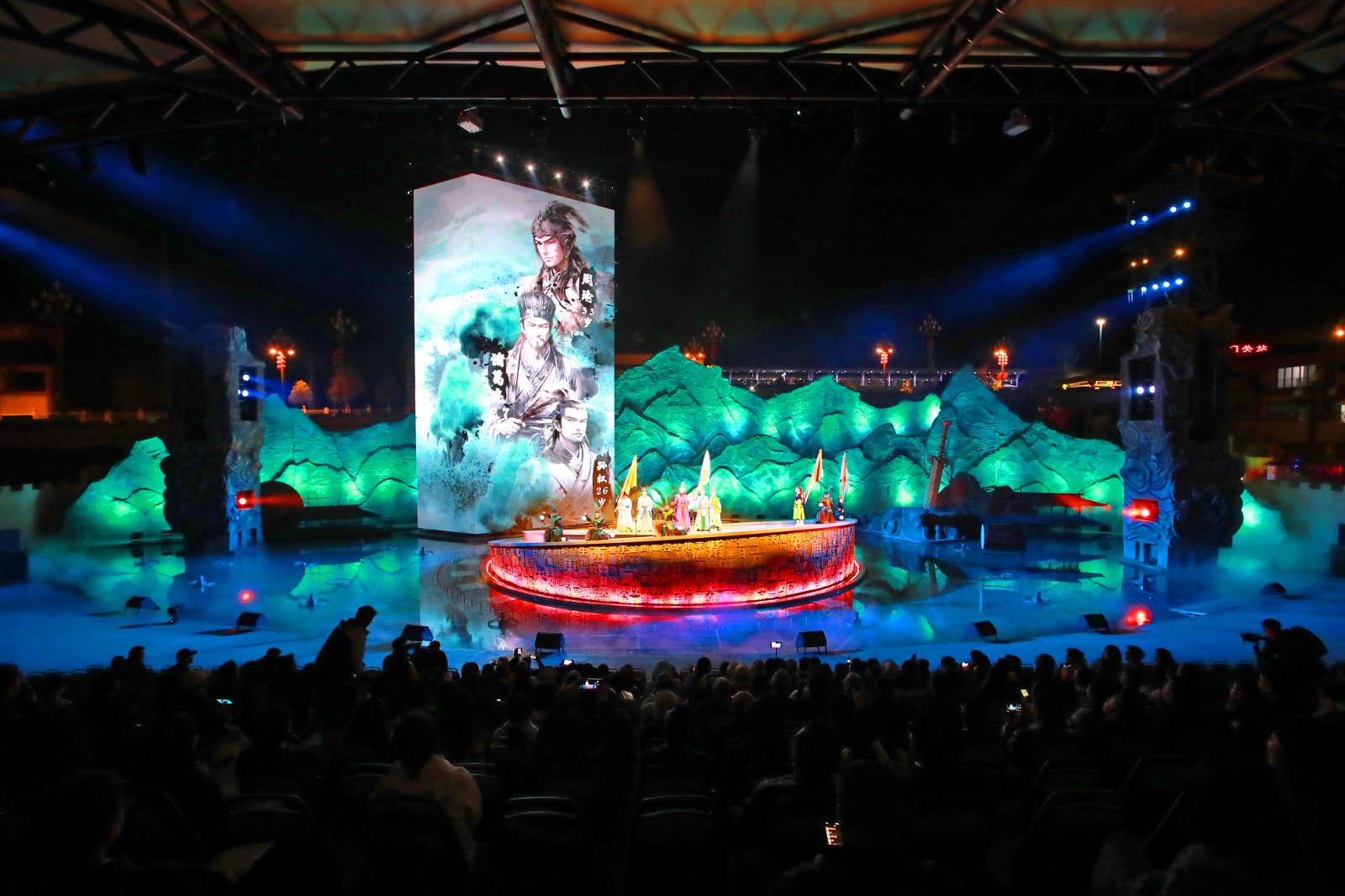
Steven Paul Carpenter, the Chairman of Central China Chapter Executive Committee, American Chamber of Commerce in China, reflected on Chinese values through Romance of the Three Kingdoms: “I’ve been reading the novel for 18 years. In some ways, it resembles Game of Thrones, as both involve struggles for power. Yet what moved me most is the bond between Liu Bei, Guan Yu, Zhang Fei, and Zhuge Liang. In China, friendship carries a profound sense of loyalty – people are willing to go to great lengths for one another. That emotional resonance is universal, and it is one of the most compelling aspects of Chinese culture.”
Along the journey, we traveled side by side. When friendship comes before cultural understanding, strangers become close, and distance gives way to understanding.
The Shu Road Journey: A Window into Chinese Civilization
At Tuisi Pavilion in Zhaohua Ancient Town, James Weaver stood before a plaque reading “Reflecting After Duty” and fell into deep thought. After decades in finance, he was familiar with the relentless pursuit of efficiency and results, often at the expense of human values. The ancient pavilion before him struck a chord instantly. “This small pavilion embodies a tradition of self-reflection among ancient Chinese officials,” he said. “It reflects a philosophy of restraint and introspection. In today’s world, where speed and outcomes dominate, such reflection is perhaps the rarest and most necessary form of nourishment.”
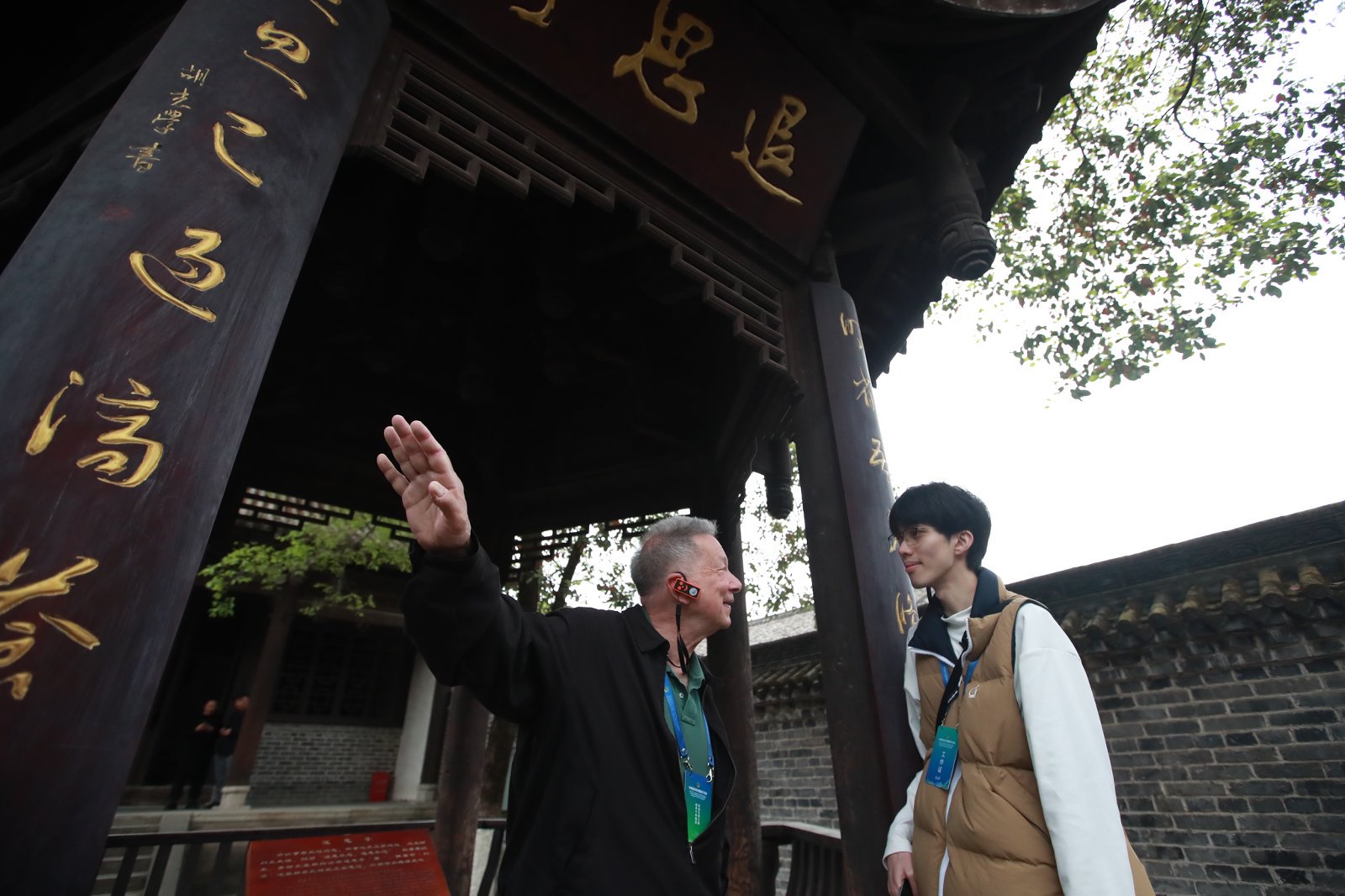
At the symposium, he further noted that global recognition of the Shu Road – such as World Heritage status – would be essential. Thes enduring value of the Appian Way of ancient Rome lies not only in its history, but in the universal ideas it represents. Likewise, the ecological wisdom, engineering expertise, and governance philosophy embodied in the Shu Road represent precious treasures that transcend national boundaries. He also expressed admiration for Wu Zetian, praising her political acumen, openness, and ability to recognize and employ talent. “At a time when division and conflict persist in many parts of the world,” he said, “this kind of governance wisdom is especially valuable.”
Standing on the ancient plank roads of Mingyue Gorge, Peter Ditmanson, the Professor from the Department of History at Yuelu Academy, Hunan University, and the recipient of the Chinese Government Friendship Award, offered an insightful comparative analysis from a civilizational perspective. “The Appian Way was built for imperial expansion and reflects the ambition of conquest. The Shu Road, by contrast, has long served as a route for trade, exchange, and integration. It represents connection rather than division, inclusiveness rather than confrontation – values at the heart of Chinese civilization.” As Sandra Dorothy Carpenter observed during her visit to Tangjiahe, “Living in harmony with the people, things and world around you is simply a way of life in China.”
As the journey draws to a close, high-speed trains raced alongside the ancient road, past and present converging in a single landscape. I finally found the answer to my earlier question. What had drawn them here was something deeply familiar to us, yet newly discovered through their eyes: the quiet wisdom embedded in mountains and rivers, the poetry etched into the land, and the enduring philosophy carried by the Shu Road. The Cuiyun Corridor speaks of responsibility passed down through generations; Tuisi Pavilion reflects introspection and restraint; the plank roads of Mingyue Gorge embody harmony with nature; the carvings of Thousand Buddha Cliff reveal openness and inclusiveness; and Tangjiahe expresses the ideal of unity between humanity and nature.
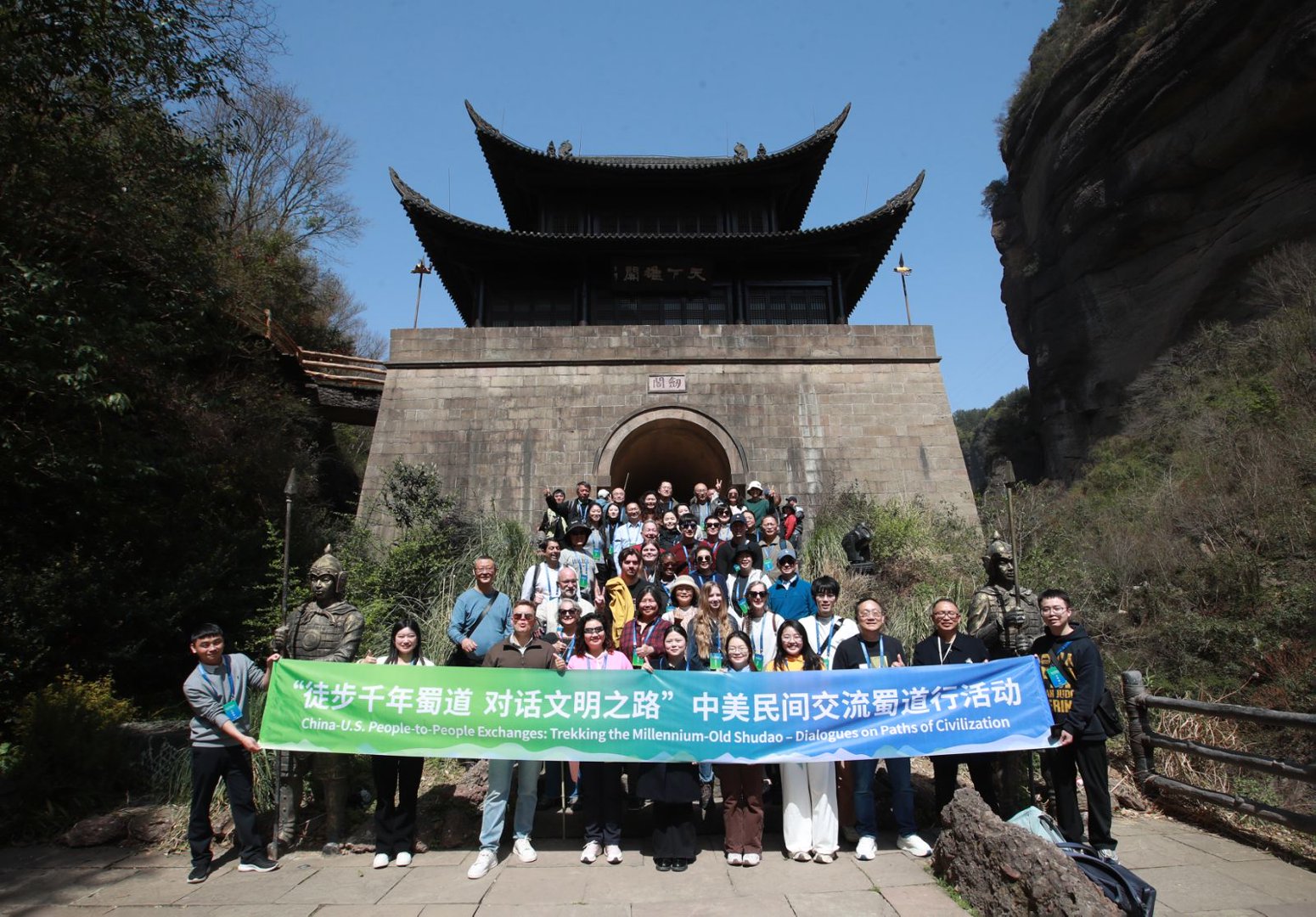
On this journey, Chinese and American participants used the ancient road as a bridge and sincerity as a key – transforming unfamiliarity into understanding, and distance into closeness. We came to realize that true cultural confidence is not about speaking in isolation, but about rediscovering the brilliance of one’s own civilization through the eyes of others. The Shu Road speaks without words. Yet, with the quiet authority of millennia, it offers a message to the world: the future of human civilization lies not in confrontation or dominance, but in inclusiveness, resilience, reflection, and coexistence.
This is the answer that Chinese civilization offers to the world.
