
Sichuan Drone Team Boosts Farm Income by Over $140,000 a Year
2026-03-13 14:37:36 by AIOS
In early March, rapeseed flowers blanketed the fields of Yanjia Town in Luojiang District, Deyang City, like golden carpets. On the field ridges of Xingguang Village, 12 agricultural drones stood in formation, ready for takeoff. "Three, two, one, launch!" commanded team leader Wang Guibin. The drones ascended into the air, spraying a fine mist of pesticide evenly over the blooming fields. This has become a routine training scene for the drone team, though it originally consisted of only two members.
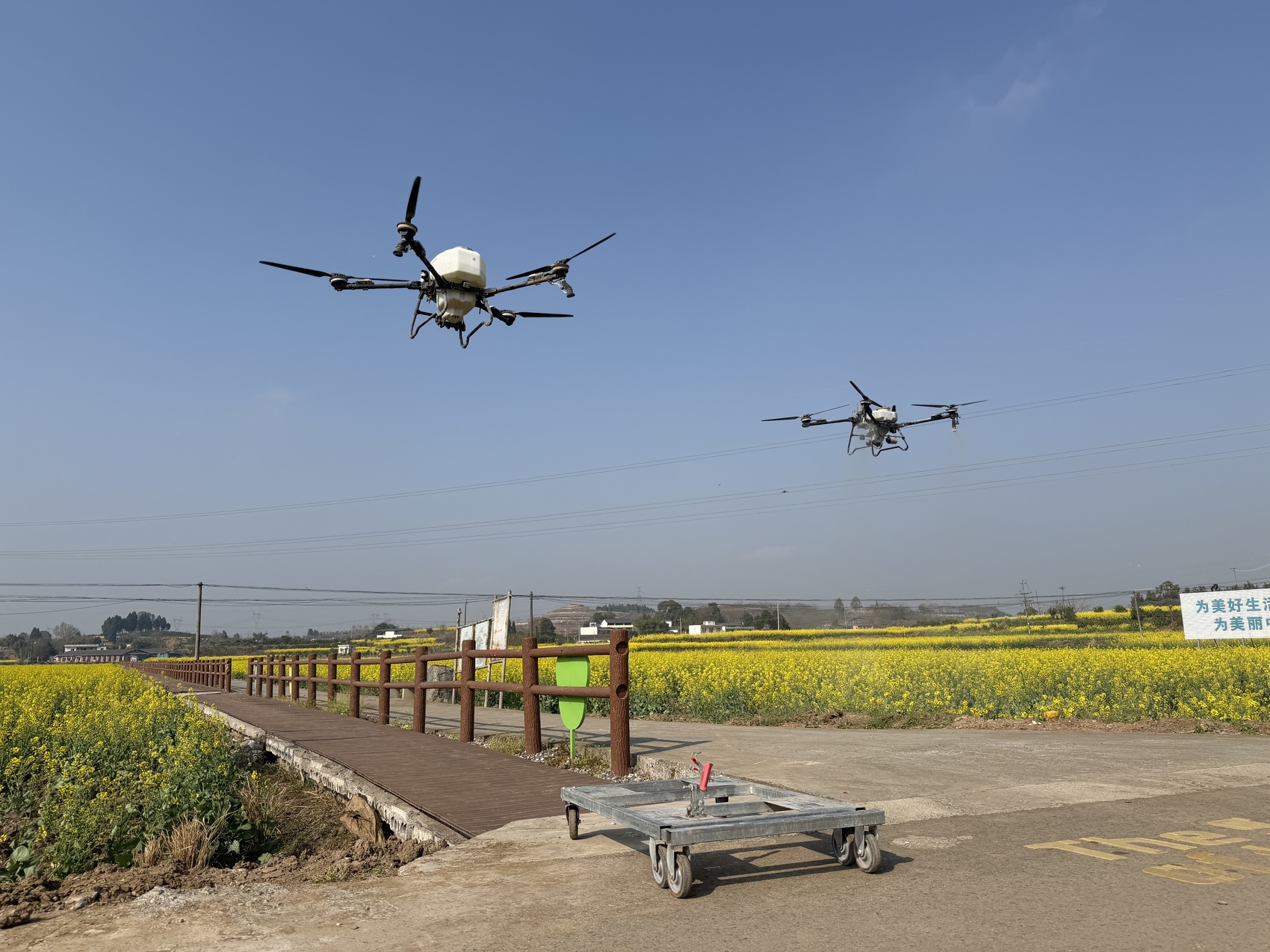
Agricultural protection drone
In 2018, Wang Guibin and Li Longjian, both large-scale grain growers, became intrigued by plant protection drones and pooled 100,000 yuan to purchase one. Their initial challenge was not flying skills but farmers' reluctance to adopt the technology. They promised, "Free spraying—if anything gets damaged, we'll compensate," and carried the equipment door-to-door to offer services. Within a year, results became evident: pest and disease control outperformed manual methods, and crops remained unharmed.
As their reputation spread, orders poured in. The duo began charging 10 to 15 yuan per mu, attracting local machinery operators to join. Today, the team comprises 13 members and 14 drones, with the largest model capable of carrying up to 100 kilograms. A single operator can treat over 100 mu per day, providing robust support for an aging agricultural workforce. Operating under a cooperative model that pools resources and shares profits, most members are large-scale grain growers who balance collective assignments with their own farming duties.
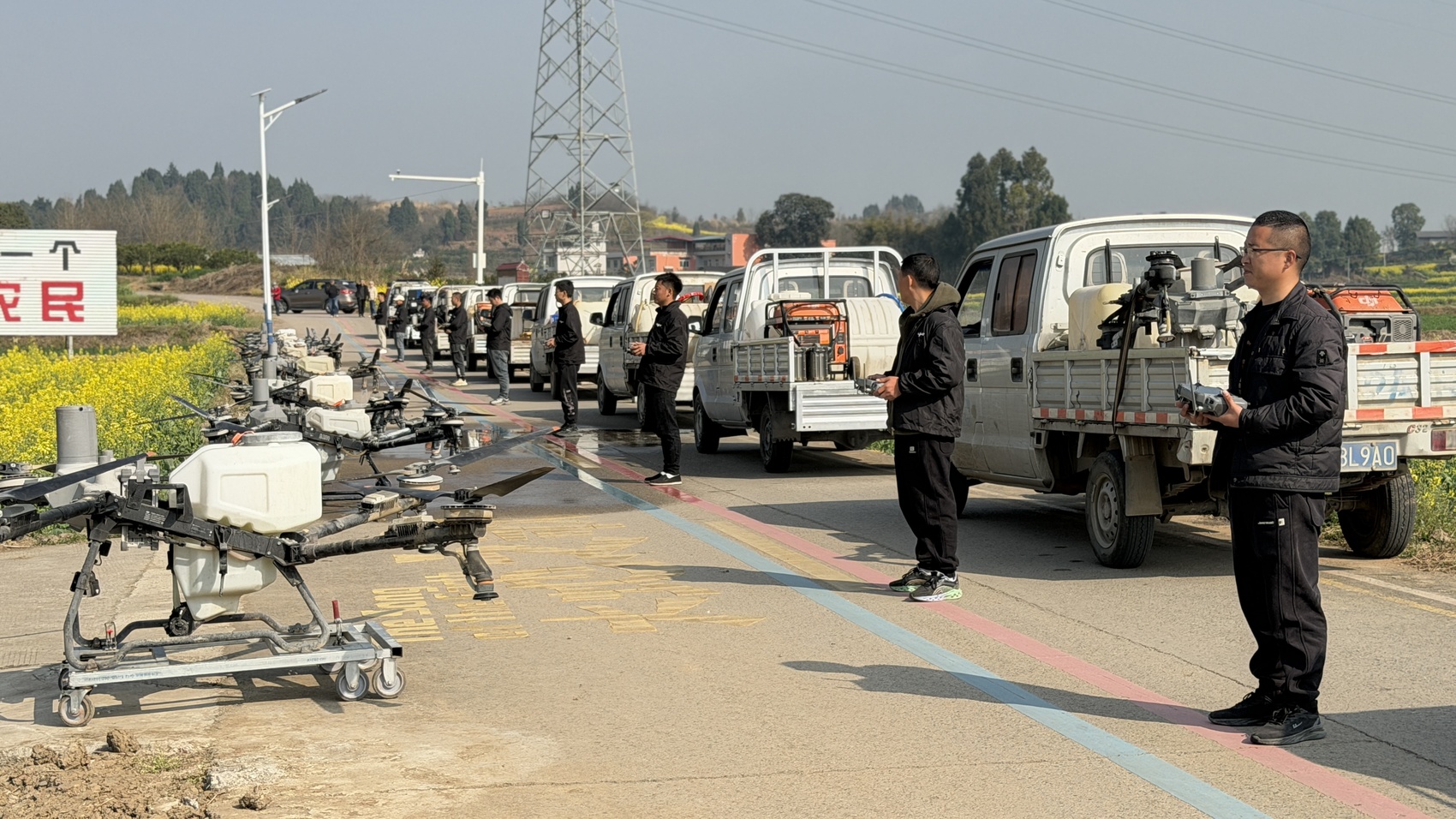
Aerial pest control training
Their operations have expanded beyond Yanjia Town and even outside Luojiang District. This year alone, Wang Guibin's and Li Longjian's two drone teams have completed 40,000 mu of aerial application services across Santai County and Yanting County in Mianyang, as well as Zhongjiang County in Deyang. "We start work at 3:30 a.m. and don't finish until after dark." Wang Guibin said.
The drone team now generates annual revenue exceeding one million yuan, yet Wang Guibin aims higher: "Right now, we earn through services, but in the future, I want to build something truly notable." Yanjia Town is renowned for its citrus production, and the hillsides covered in fruit trees have inspired new ideas—beyond pesticide spraying, drones could also transport harvested fruit. Most team members have backgrounds as machinery operators, and extending their service chain holds promise for increasing added value.
The team's growth trajectory aligns with Yanjia Town's strategy of strengthening policy support and cultivating diverse service providers. In recent years, local authorities have actively secured project funding and intensified support for large-scale machinery operators, specialized cooperatives, and family farms. This has fostered a diversified investment mechanism guided by policy, driven by farmers, and supplemented by social participation. Furthermore, a socialized service system has taken shape, with large-scale machinery operators as its backbone and specialized cooperatives and family farms serving as platforms, enabling shared resource utilization and mutual benefit.
"Everyone is highly motivated—we all want to make the drone team's name even more prominent," Wang Guibin said, his eyes gleaming when speaking of the future.
【本文部分内容由AI辅助生成,特此声明。The author(s) generated part of the content in this work with the assistance of artificial intelligence (AI), which is hereby declared.】
