
Morning Dog Walkers Fuel Chengdu's 'Dawn Economy'
2026-03-03 11:55:13 by AIOS
The day's plan begins in the morning. For some, dawn is not only the start of planning but also the foundation of their livelihood—they work, innovate, and create demand in the early hours. This year, the Chengdu municipal government work report proposed vigorously developing 'morning economy' and other new forms of consumption. As residents drop off children, take walks, or commute, this megacity is quietly nurturing new economic vitality.
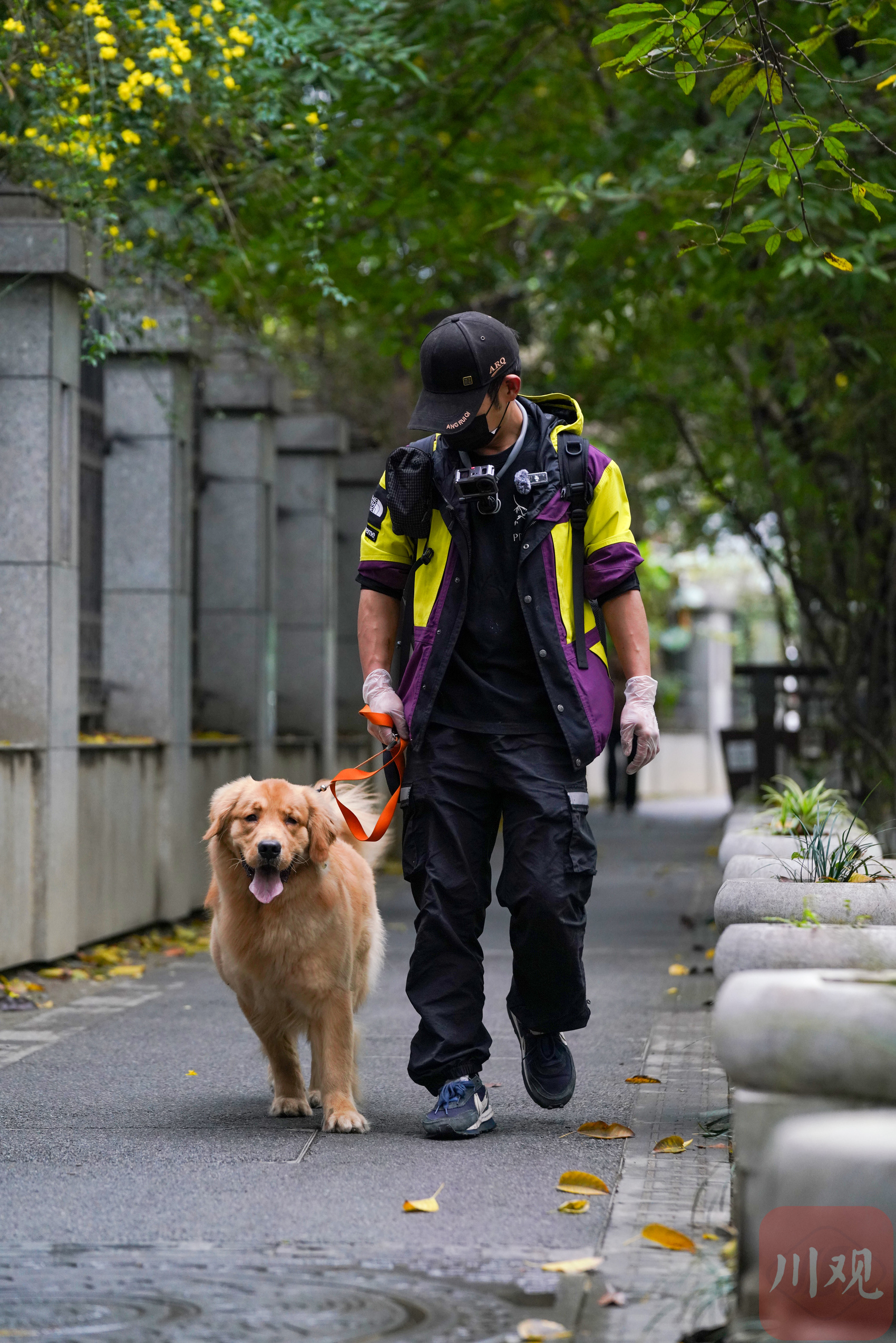
Chen Jin and 'Milky' are taking a walk
At 8 a.m. on March 1, Chen Jin arrived at a fifth-floor apartment in Qingyang District, Chengdu, unlocked the door with a password provided by the client, and greeted his service recipient—Milky, an 11-month-old golden retriever. After the Spring Festival, Milky's owners became busy with work, so since February 26, Chen has accompanied Milky for a 30-minute walk every morning. Now, his five-person team averages about 10 orders per person per day.
How does one walk a dog properly? Keeping a 'fur baby' happy requires skill. Before entering the home, Chen puts on shoe covers and disinfects his entire body to prevent cross-contamination. He and his team wake up at 7 a.m. daily and arrive punctually by bus or bicycle. Each 30-minute session costs 40 yuan, with additional services billed separately. Milky has grown familiar with Chen and cooperates during checks of its paws and skin before heading out. The entire walk is livestreamed so the owner can 'supervise remotely'. After descending the building, Chen chooses less crowded routes because Milky is large and prone to sudden lunges, making safety the top priority. Before accepting an order, he also learns the dog's breed, temperament, vaccination status, diet, and defecation patterns. 'Without understanding these, the dog simply won't follow you.' he said. Less than ten minutes into the walk, Milky defecated; Chen cleaned it up and then switched to a professional leash to ensure the dog remained both comfortable and under control.
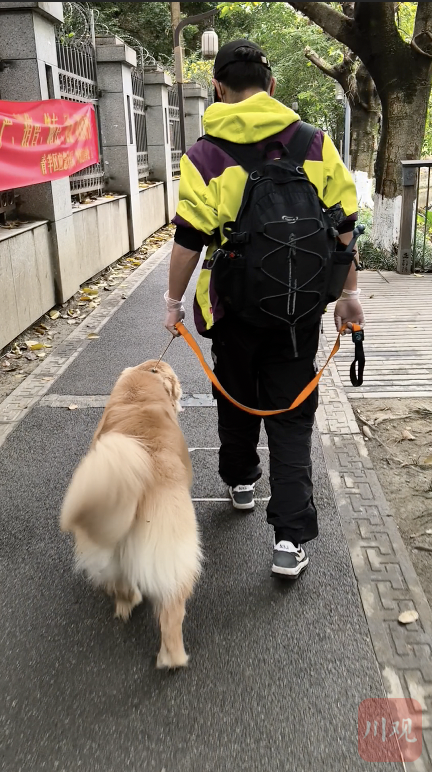
Chen Jin and 'Milky' are taking a walk
Who places these orders? Among Chengdu's 2 million pet-owning households, a significant portion are potential clients. At 8:25 a.m., Chen returned Milky home, inspected its paws and fur, and sent a video update to the owner. After returning indoors, he refreshed the water, refilled the food bowl, and soothed Milky before leaving. These techniques stem from systematic training Chen undertook after entering the field last year, and his team also employs a professional dog trainer. At 8:30 a.m., he headed to his next appointment three kilometers away—a small dog. His client, Zhou Jin, represents a typical profile: she commutes long distances, needs to shuttle her child to school, and her husband works in another city. 'I don't have time to care for my pet.' she said, adding that she prefers a consistent walker because her dog is shy around strangers. Chengdu has over 5 million registered pets and more than 2 million pet-owning households. According to the provincial Pet Association, professional dog walkers will become increasingly common as the pet economy grows more sophisticated and specialized.
'Is it hungry?' 'Did it lunge today?' During the interview, Milky's owner kept 'monitoring remotely', and Chen responded patiently. He believes companionship is the core value of this profession. In his forties, Chen has held many jobs but finds dog walking the most relaxing—clients only care whether their 'fur baby' is happy and whether it has improved through companionship. Professional dog walkers are essentially a product of the emotional economy: pet owners outsource companionship to compensate for their own absence, thereby generating new consumer vitality.
【本文部分内容由AI辅助生成,特此声明。The author(s) generated part of the content in this work with the assistance of artificial intelligence (AI), which is hereby declared.】
