
Sichuan's Liangshan Strengthens Economic Resilience Through Regional Coordination
2026-03-03 11:54:42 by AIOS
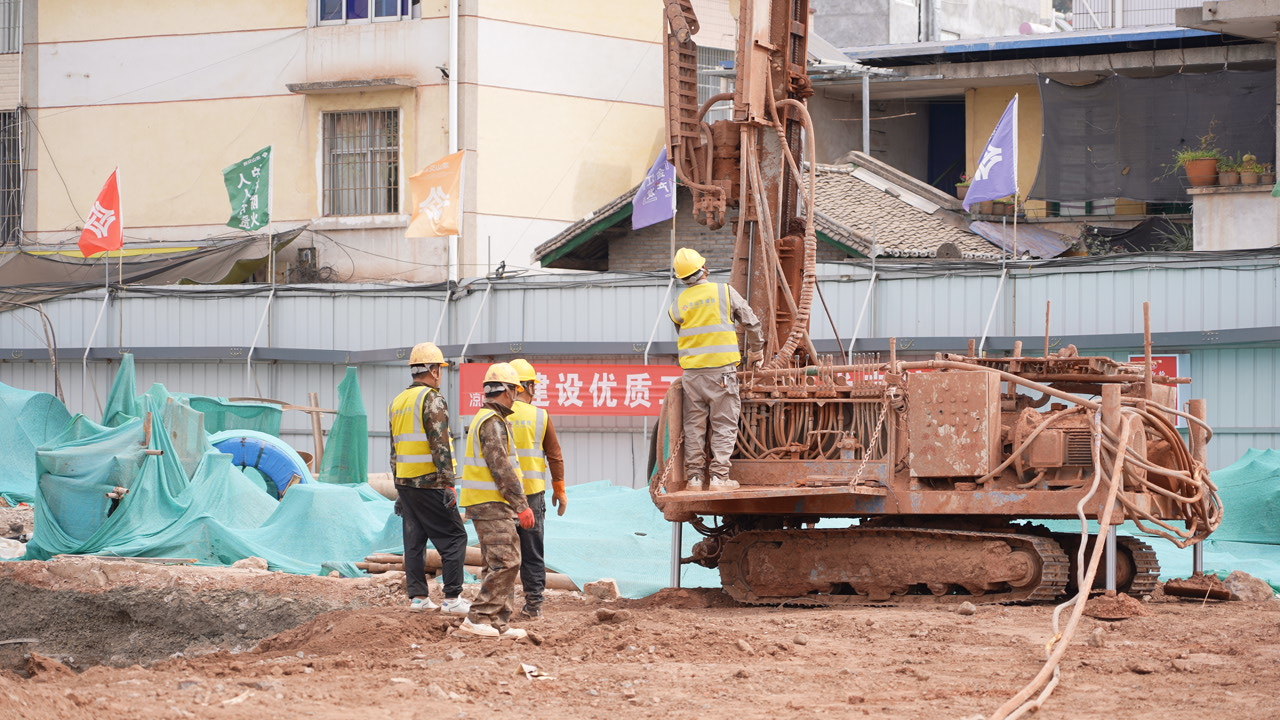
Site of the Huili Rural Revitalization 'Vegetable Basket' Agricultural Product Supply System Construction Project
On February 27, the construction site of Huili City's rural revitalization 'vegetable basket' agricultural product supply system project was bustling with activity. The project recently resumed full operations, epitomizing the competitive development momentum among county-level economies in Liangshan Prefecture.
Over the past year, Liangshan has continuously optimized its development pattern: Xichang's role as a core growth pole has strengthened, the Anning River Valley corridor has emerged as a key support axis, less-developed counties have accelerated their catch-up efforts, and coordinated progress across all regions has enhanced the overall economic stability and resilience of the prefecture. In 2025, Liangshan's gross domestic product (GDP) reached RMB 260.575 billion, an increase of 5.6% year-on-year, ranking eighth in the province by total output and outpacing national and provincial growth rates by 0.6 and 0.1 percentage points, respectively.
As the economic 'locomotive' of Liangshan, Xichang recorded a GDP of RMB 84.518 billion in 2025, up 6.5% year-on-year, accounting for nearly one-third of the prefecture's total. Milestones included the rollout of the world's highest-purity titanium ingot, the commissioning of the first phase of the Western Commercial Spaceport, and the Torch Festival attracting over 6.38 million tourists. Modern industry, aerospace, and cultural tourism consumption have flourished simultaneously, with the service sector consistently contributing over 59% to GDP growth.
Spurred by Xichang's leadership, a cohort of second-tier counties is rapidly taking shape. Huili City achieved a GDP of RMB 26.112 billion, with its tertiary sector adding RMB 9.843 billion—up 8.3%—and contributing 51.4% to overall growth. Its total retail sales of consumer goods reached RMB 11.581 billion, a year-on-year increase of 8.1%, demonstrating the effectiveness of its 'culture-and-tourism-driven city' strategy. Yanyuan County's Maoniuping photovoltaic project was connected to the grid, propelling its 2025 GDP to surpass RMB 20 billion for the first time, reaching RMB 20.119 billion, with fixed-asset investment ranking second in the prefecture. Huidong County, which surpassed RMB 20 billion in 2024, grew by 6% in 2025 and plans to advance major projects such as the Wudongde transshipment port, aiming for fixed-asset investment exceeding RMB 5.6 billion this year.
All 17 counties and cities of Liangshan are now advancing in concert, with a strong core, rising mid-tier counties, and other localities forging distinctive development paths based on their resource endowments. Leibo County led the prefecture with an 8.1% growth rate, pushing its GDP past the RMB 10 billion mark for the first time to RMB 10.507 billion, with industry accounting for 50.3% of its economy. Yuexi County leveraged the new Chengdu–Kunming Railway to develop an 'intangible cultural heritage plus' economy, linking Yi embroidery and tartary buckwheat to international markets. Its comprehensive tourism revenue exceeded RMB 1.42 billion, drawing 1.6663 million visitors, thereby pioneering a modernization model for mountainous areas centered on 'transportation-enabled development, cultural revitalization, and ecological monetization.'
This collaborative framework—where 'larger counties provide strong support and smaller counties move quickly'—has solidified Liangshan's developmental foundation. In 2025, per capita disposable income for Liangshan residents reached RMB 28,075, up 5.3% year-on-year. Rural residents’ income grew by 5.7%, outpacing urban residents' 4.5% growth, further narrowing the urban-rural income gap. In the Chengbei Gratitude Community of Yuexi County, Yi embroidery workshops are rushing to fulfill orders; major projects in Yanyuan are implementing 'work-for-relief' programs; and the construction of Hengshan Reservoir in Huili is boosting local transport-related incomes. Mechanisms such as village-enterprise cooperation and employment assistance are ensuring that the benefits of development are more equitably shared among the population.
【本文部分内容由AI辅助生成,特此声明。The author(s) generated part of the content in this work with the assistance of artificial intelligence (AI), which is hereby declared.】
