
Strawberries at $360 a Pound: Milk-Watered 'King' Variety Sells Out in China
2026-02-27 17:06:56 by AIOS
Recently, topics such as 'Exorbitant Fruit Prices on a Liaoning Expressway' and 'Strawberries Priced at 360 Yuan per Jin Stun Netizens' have trended on social media. A netizen posted photos of an advertisement board along a highway in Liaoning Province, listing grapes at 330 yuan per jin (approximately 500 grams) and strawberries at 360 yuan per jin—far exceeding the typical market price of 15 to 30 yuan per jin for ordinary strawberries—sparking widespread discussion.
The strawberries are sold by Shucheng Guofeng Agricultural Co., Ltd. of Yingkou, Liaoning, under the brand name 'King Strawberry'. The company states that the national retail price is uniformly set at 360 yuan per jin, with the cultivation base located in Liming Village, Xiongyue Town, Yingkou City. Sales staff indicated that the current batch had already sold out before the Chinese New Year, and the next batch will be available in December. They also offer a fruit-picking experience priced at 900 yuan for three jin. The high price is attributed to eco-friendly cultivation practices: soil is enriched using non-GMO soybean cake from Heilongjiang, and the core selling point is irrigation with water mixed with fermented milk, which the company claims enhances the strawberries' sweetness and aroma. The cost per seedling is reportedly 4 yuan.
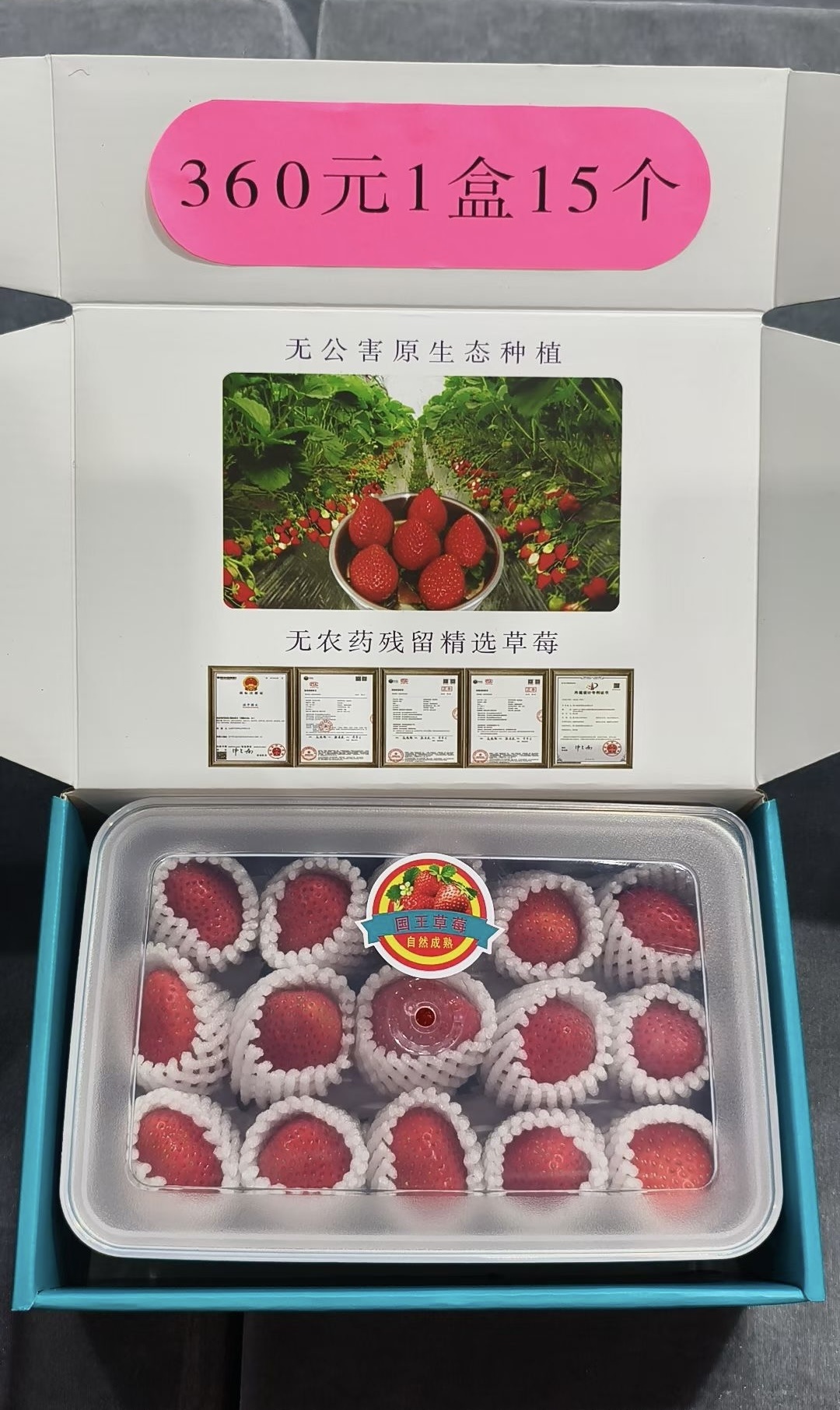
King strawberries priced at 360 yuan per jin
Experts note that fermented milk produces amino acids and organic nitrogen, functioning as a small amount of high-quality nitrogen fertilizer that can slightly improve flavor. However, the nutrients from fermenting one kilogram of milk are equivalent to only 11 grams of urea, making its effect inferior to conventional chemical fertilizers. A strawberry farm manager in Chengdu stated that while they had previously experimented with milk irrigation—which offered minor taste improvements—similar quality enhancements could be achieved through superior cultivar selection, controlled light and temperature management, and increased application of phosphorus and potassium fertilizers. Regarding the use of soybean cake for soil enrichment, experts explained that fully composted soybean cake serves as a high-quality organic fertilizer that improves soil structure, but if not properly composted, it can cause root burn and trigger plant diseases.
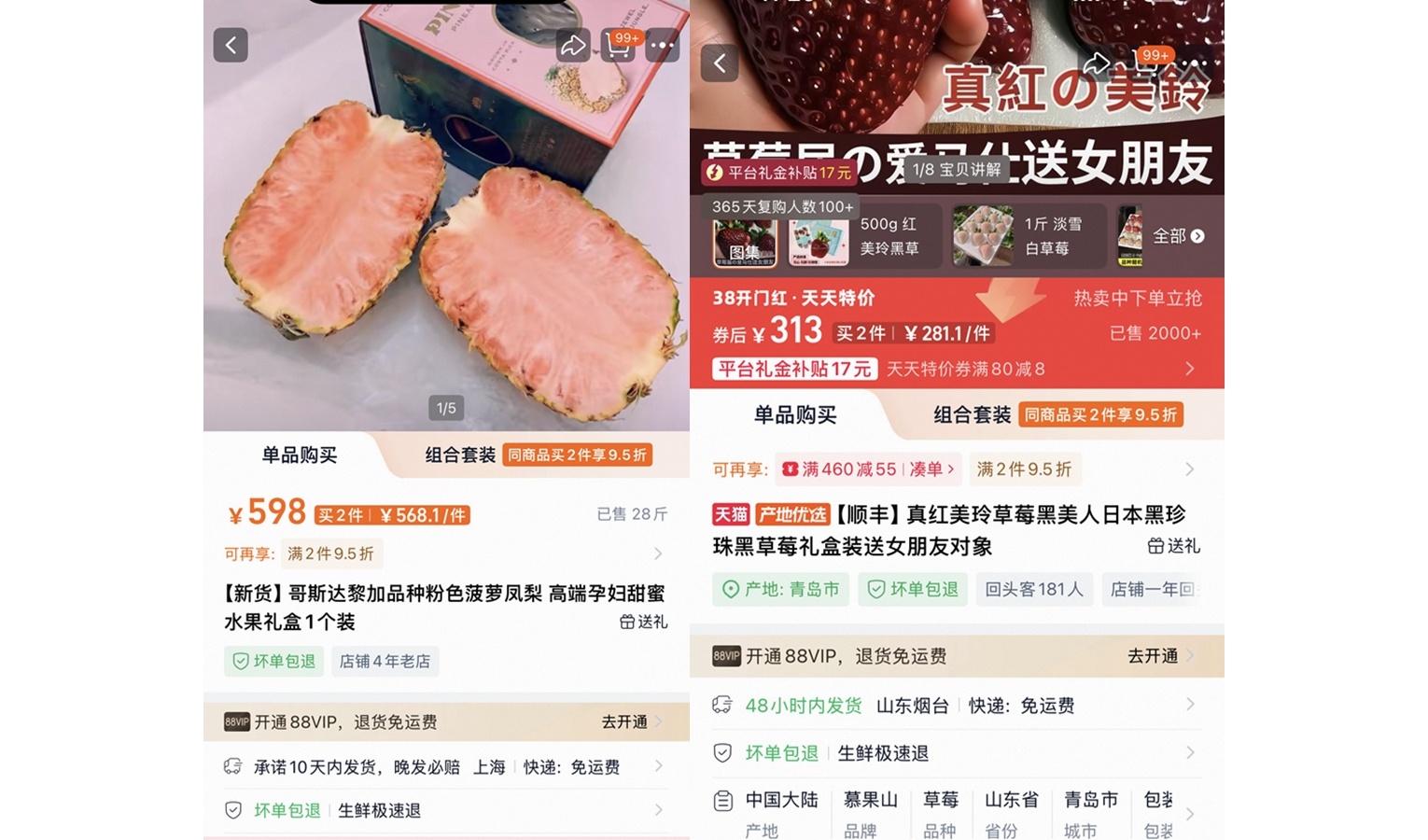
Recently, 'premium-priced' fruits have increasingly appeared in the market, such as pink pineapples priced at 598 yuan each and black strawberries costing over 300 yuan per jin. Despite their high prices, these products continue to find buyers. Their popularity stems from scarcity and experiential appeal, catering to the novelty-seeking psychology of certain consumer groups. For instance, the 'black strawberry' is a niche variety known as 'Zhenhong Meiling', subject to strict grading standards; its high price results from limited cultivation volume and elevated procurement costs. The pink pineapple, meanwhile, was developed over 17 years by a foreign company using technology that inhibits the conversion of lycopene, with substantial R&D investment contributing significantly to its premium pricing.
Moreover, strategic marketing and packaging emphasize their gifting potential, promote health-related claims, and feature elegant designs, positioning these fruits for novelty consumption, social sharing, and gift-giving scenarios. Amplified by social media exposure, this has created a self-reinforcing cycle where 'higher price drives greater popularity, and greater popularity justifies higher price.' Experts caution, however, that high price does not equate to superior nutrition: black strawberries contain only marginally higher levels of anthocyanins, while lycopene—the compound highlighted in pink pineapples—is also commonly found in tomatoes and watermelons. Consumers are advised to approach such 'premium-priced' fruits rationally and avoid blind pursuit of novelty.
【本文部分内容由AI辅助生成,特此声明。The author(s) generated part of the content in this work with the assistance of artificial intelligence (AI), which is hereby declared.】
