
Sichuan Team Develops Shrew-Inspired Micro-Robots for Hazardous Environments
2026-02-25 10:51:25 by AIOS
The shrew, the real-life inspiration for Mr. Big in "Zootopia" and the scene in the Chinese animated series "Black Cat Detective" depicting a mother shrew and her offspring migrating in a head-to-tail chain, inspired a research team at the University of Electronic Science and Technology of China (UESTC). They have developed a miniature bio-inspired robot dubbed the "electronic shrew", which combines high maneuverability and high integration and can perform shrew-like collaborative behaviors. Their findings were published in February in Device, a journal under Cell Press.
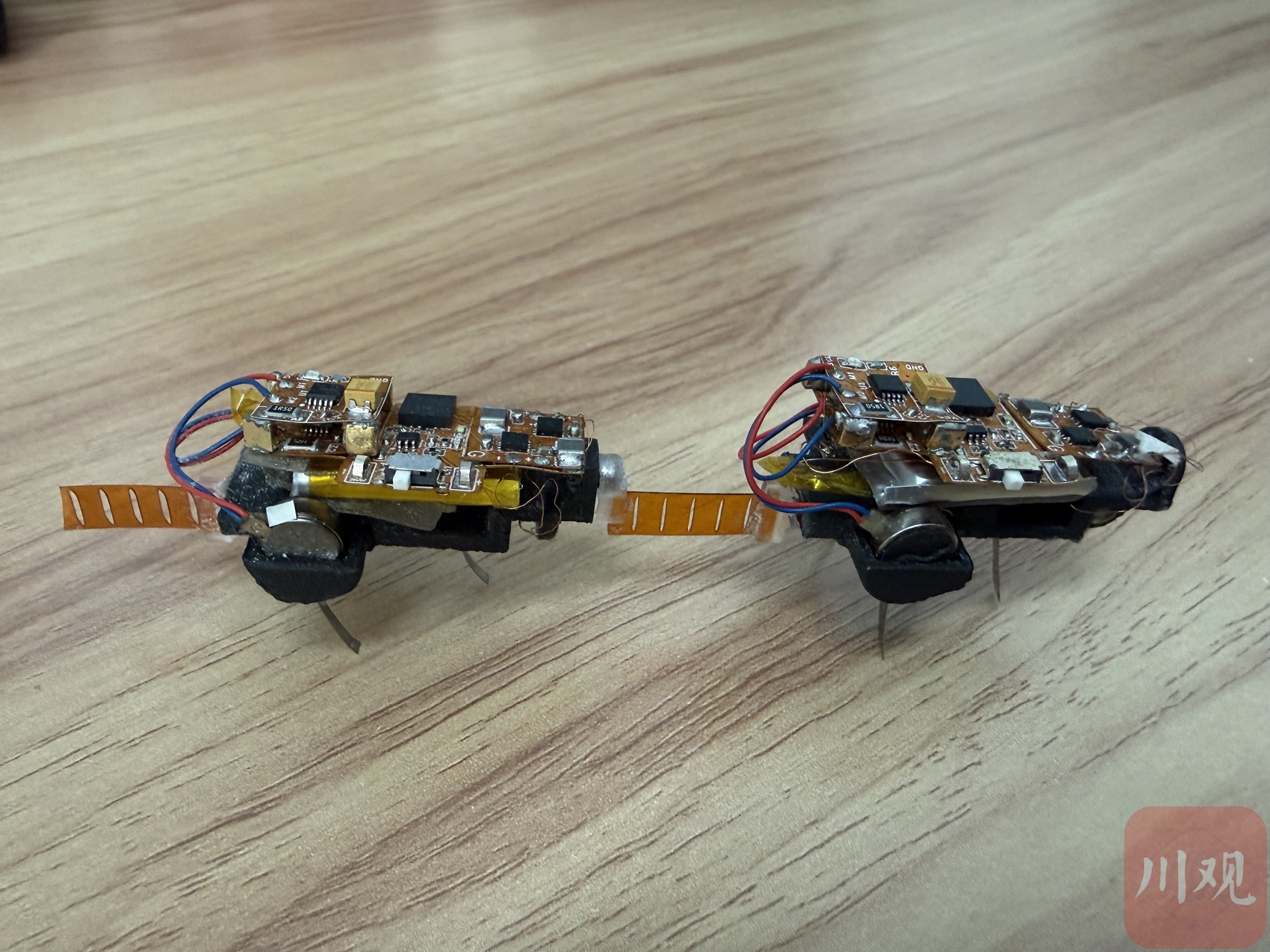
Robots 'queue up' like shrews
Weighing only 6 grams and measuring approximately 4 centimeters in length and 2 centimeters in width, the robot resembles a cookie but is fully equipped with essential components: two micro motors, a battery, a circuit board, and three metallic legs, enabling it to move forward, turn, and even circle. Its most distinctive feature is a long yellow tail—both the tail tip and the head are fitted with magnets, allowing multiple units to quickly link together head-to-tail. However, magnetic connections alone proved insufficiently robust and prone to detachment.
To address this, the team proposed a "dry-wet hybrid" solution: applying a temperature-responsive polyurethane adhesive onto the magnets. At room temperature, the adhesive solidifies to reinforce the connection; when heated via electric current, it melts, and combined with magnetic repulsion, enables rapid separation. This design achieves a real-time controllable mechanism for both connection and disconnection.
Currently, the electronic shrew has demonstrated basic locomotion and collaborative capabilities. Future iterations will integrate cameras and sensors to enhance environmental perception and autonomous decision-making.
A single unit offers approximately 45 minutes of operational time and can tow objects twice its own weight. In swarm configurations, the robots can collectively traverse gaps, climb over obstacles, and cooperatively transport heavy loads through narrow crevices. Potential applications include search-and-rescue operations and monitoring in earthquake rubble, fire zones, or radiation-contaminated areas, as well as inspection and maintenance tasks within confined spaces such as pipelines, aircraft engines, and underground utility networks.
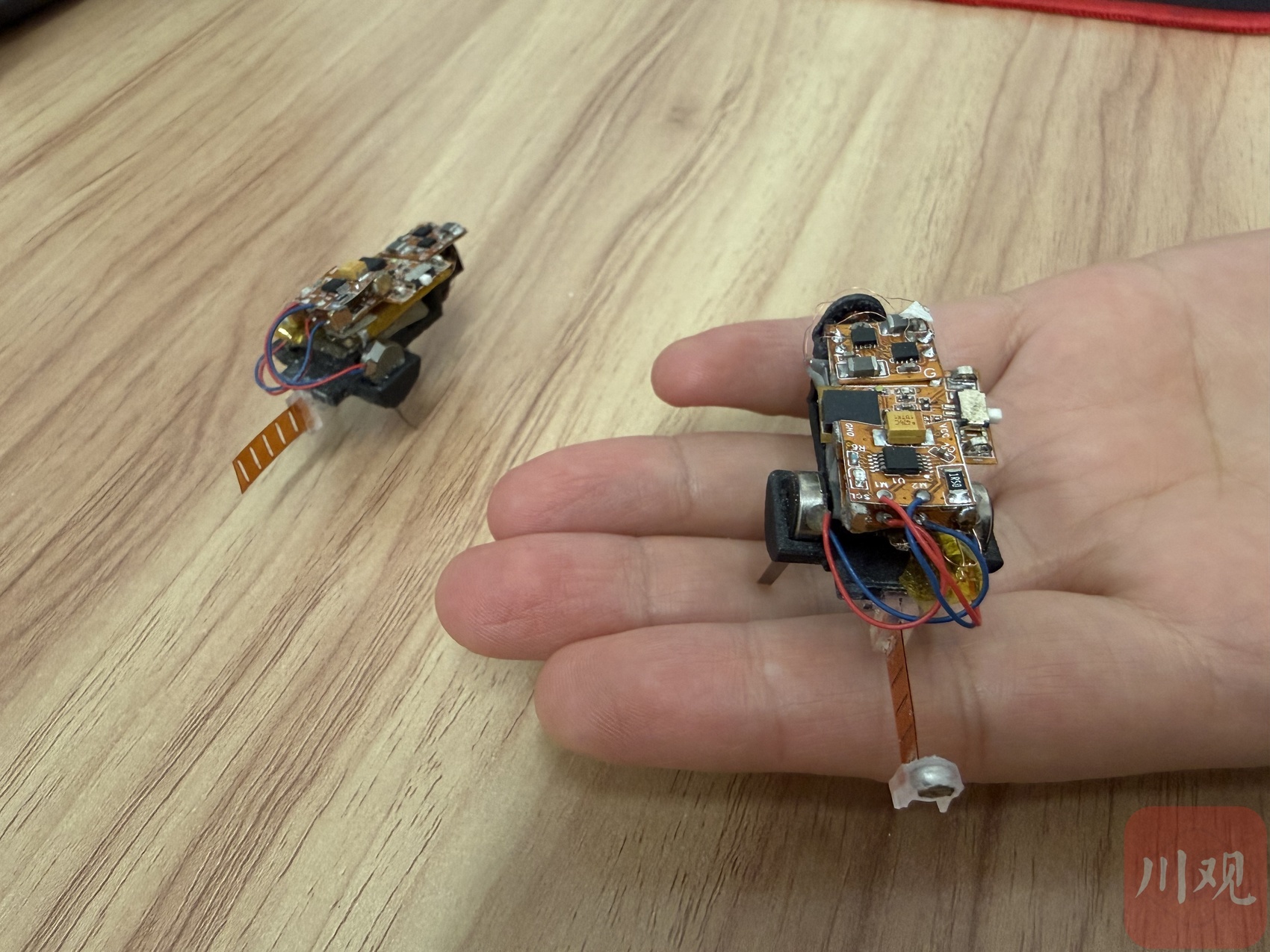
The shrew robot is very compact, especially when compared to the size of a human hand
According to the team lead, this system—capable of freely assembling, collaborating, and disassembling—offers a flexible new approach to unmanned operations. The team has already deployed three mature models of miniature robots, with three more under development. Future versions will include jumping, flying, and swimming bio-inspired robots. However, achieving high maneuverability, multimodal locomotion, and intelligent collaboration simultaneously at the centimeter scale still requires deep interdisciplinary breakthroughs.
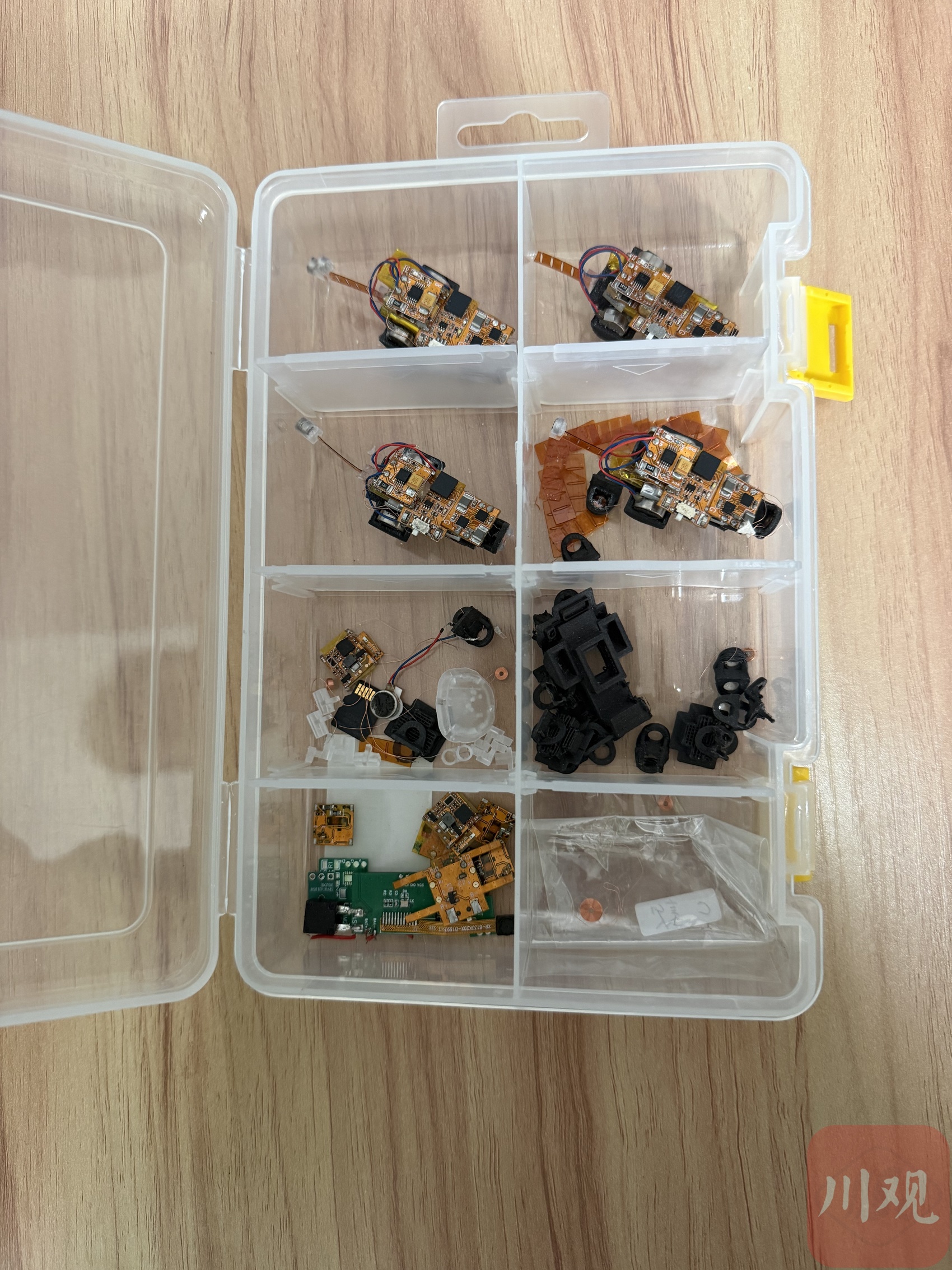
Components of the shrew robot
Perhaps in the near future, miniature yet intelligent robots akin to those depicted in "Ant-Man" will silently carry out critical missions in places inaccessible to humans.
【本文部分内容由AI辅助生成,特此声明。The author(s) generated part of the content in this work with the assistance of artificial intelligence (AI), which is hereby declared.】
