
How Sichuan's Remote Du Zhong Processor Went High-Tech With Eastern-Western Collaboration
2026-02-11 16:01:33 by AIOS
Along the G543 Qingchuan section, in Qiaozhuang Town, Qingchuan County, the factory of Sichuan Zhigao Agricultural Development Co., Ltd. stands quietly.
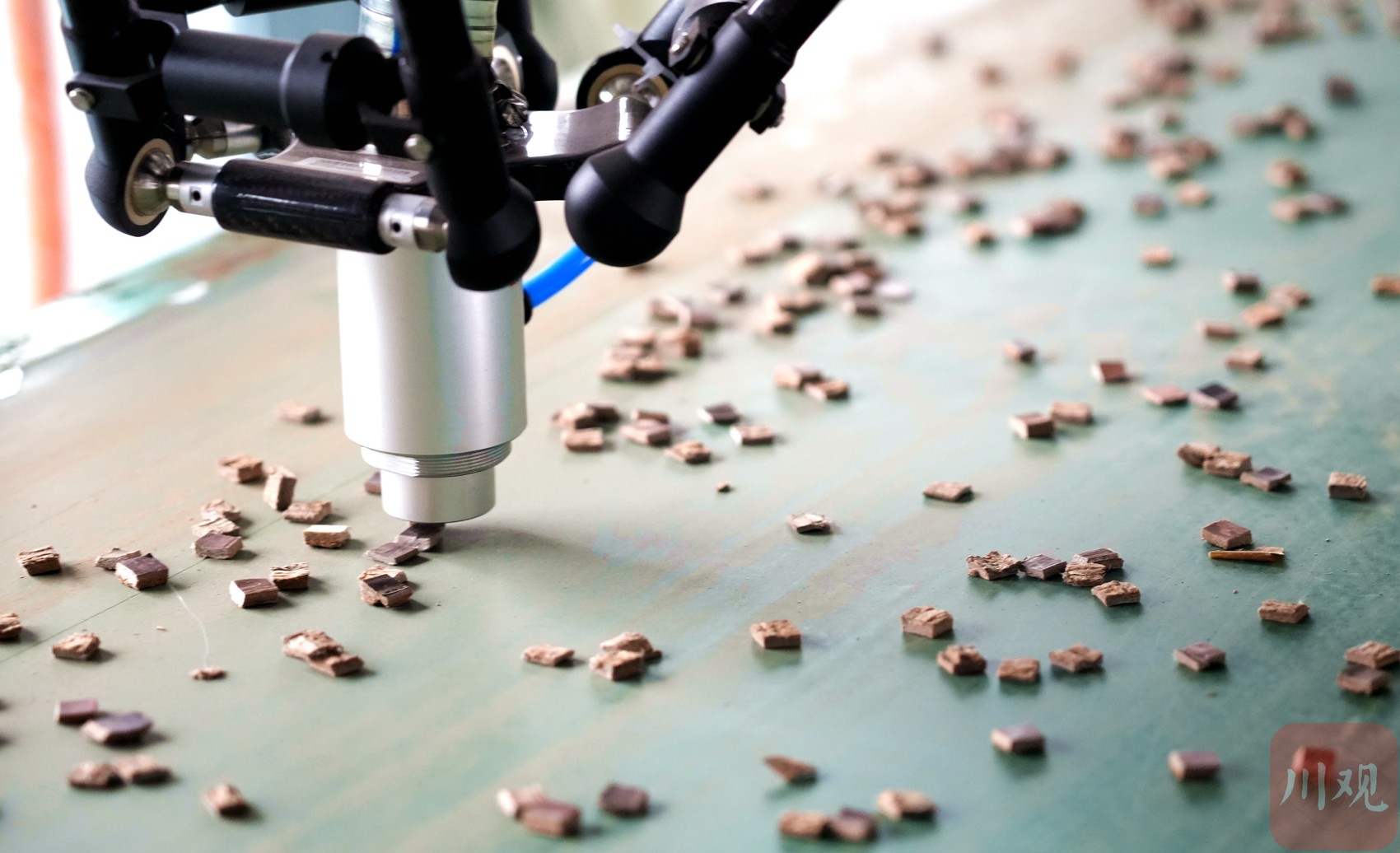
The spider-like robotic arm is suctioning Du Zhong Ding with a thickness of less than 3 mm
At 8:30 a.m., operator Wang Pan lightly pressed the start button. Eucommia bark sheets passed sequentially through flattening and shaping, followed by automatic cleaning, then were picked up by intelligent robotic arms and precisely delivered under CNC cutting blades.
With rhythmic up-and-down motions, uniformly sized Eucommia cubes were formed. Eight bark-scraping machines operated simultaneously, with dust and debris instantly extracted via a central dust-removal pipeline. A central computer coordinated all operations, allowing each production line to complete all pre-drying steps with just one worker.
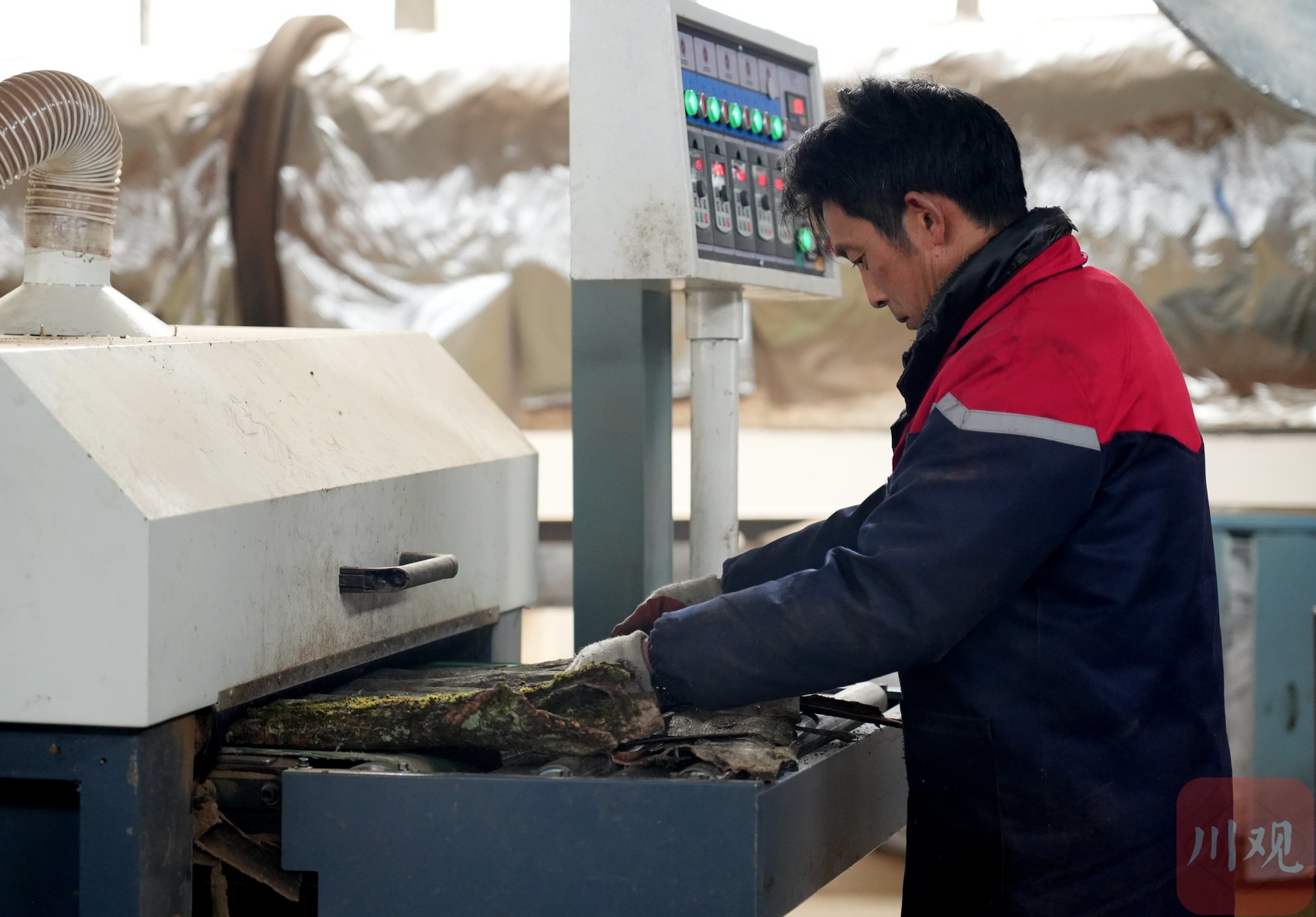
Operator Zhao Jian is loading material into the peeling machine
In the finished product workshop, dried 1×1 cm Eucommia cubes underwent screening by an intelligent color sorter and a thickness detection system. High-quality products meeting national centralized procurement standards were accurately separated, with only one operator needed for loading and unloading.
How did this traditional Chinese herbal medicine processing enterprise, located deep in the mountains, acquire such an intelligent production line? "In the past, even just trimming the bark was extremely difficult," said 52-year-old Zhao Jian, who was among the first employees when the company settled in Qingchuan in 2016. At that time, the workshop was filled with dust and splashing water, resulting in low efficiency—workers could process only a few kilograms of raw materials per day.
In 2022, a high-standard overseas order exposed the production bottleneck: the client required five metric tons of Eucommia cubes with uniform dimensions and intact edges. "Relying on manual labor and conventional equipment, we barely managed to fulfill the order after months of effort," recalled Liu Yan, the company's general manager. The market price was around RMB 20,000 per ton, but the client offered RMB 37,000 per ton, prompting Liu to commit to a quality-focused strategy.
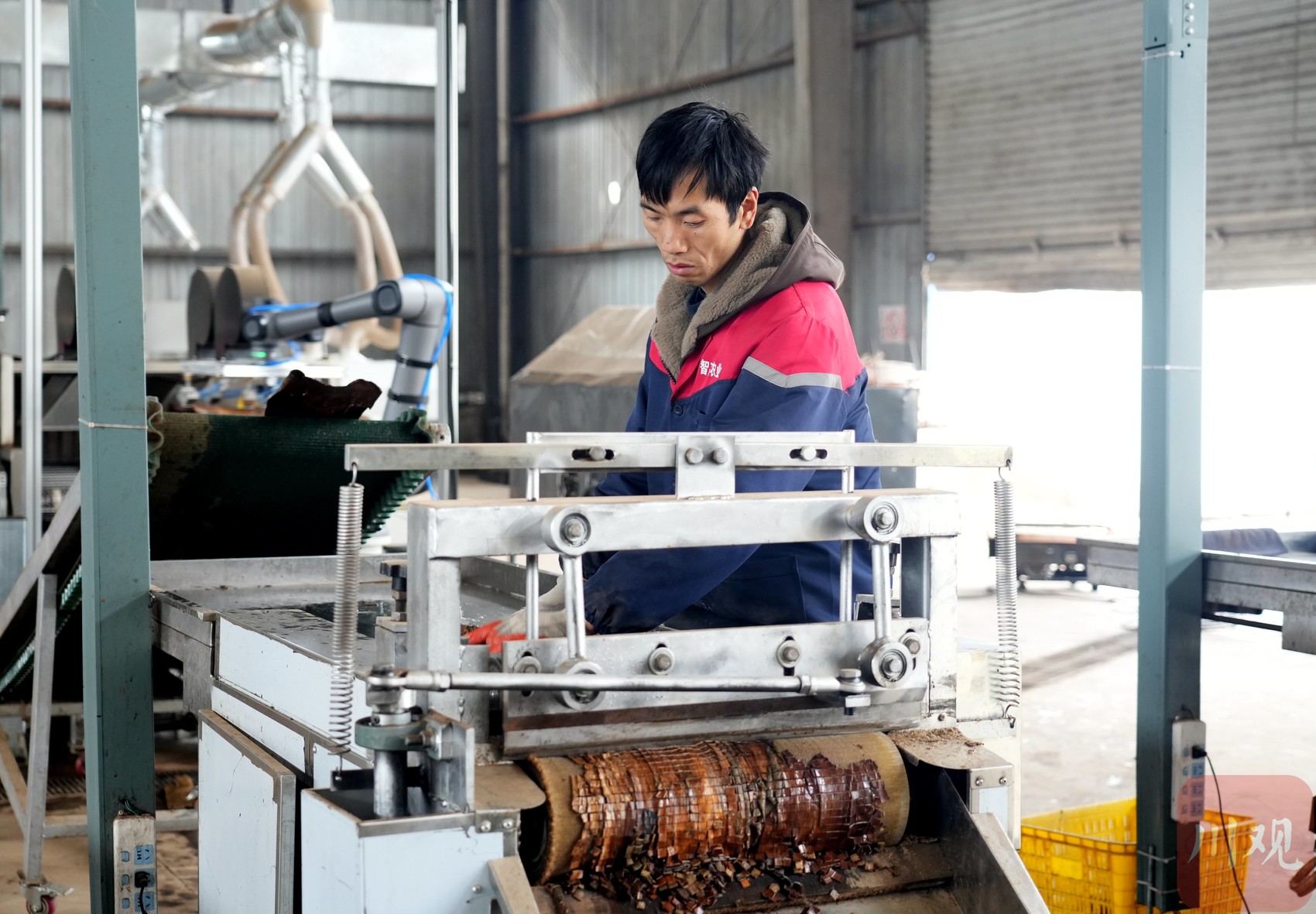
Operator Wang Pan inspected the cutting status beside the CNC cutting blade
Recognized for its "potential and capacity for innovation", Zhigao Agriculture entered the scope of East-West Collaboration initiatives and received critical support. With financial assistance, the company introduced intelligent color sorters, increasing sorting efficiency from several hundred kilograms per worker per day to two metric tons, achieving a qualitative leap in quality control stability. "Processing itself isn't hard—the challenge lies in creating added value and securing premium prices," said Shen Yuwei, a cadre assigned under the East-West Collaboration program. Consequently, support was intensified along both financial and intellectual dimensions.
By 2025, East-West Collaboration had invested over RMB 1.5 million, matched by equivalent corporate funds, fully launching an intelligent transformation: robotic arms replaced manual handling; a central control system seamlessly integrated washing, gripping, and cutting processes, reducing labor needs by five workers per line; AI-powered vision-based thickness detection was added to the sorting stage, enabling dual-criteria precision screening based on both shape and thickness; additionally, RMB 500,000 was invested to build a laboratory equipped with high-performance liquid chromatography instruments and other equipment, covering end-to-end quality control.
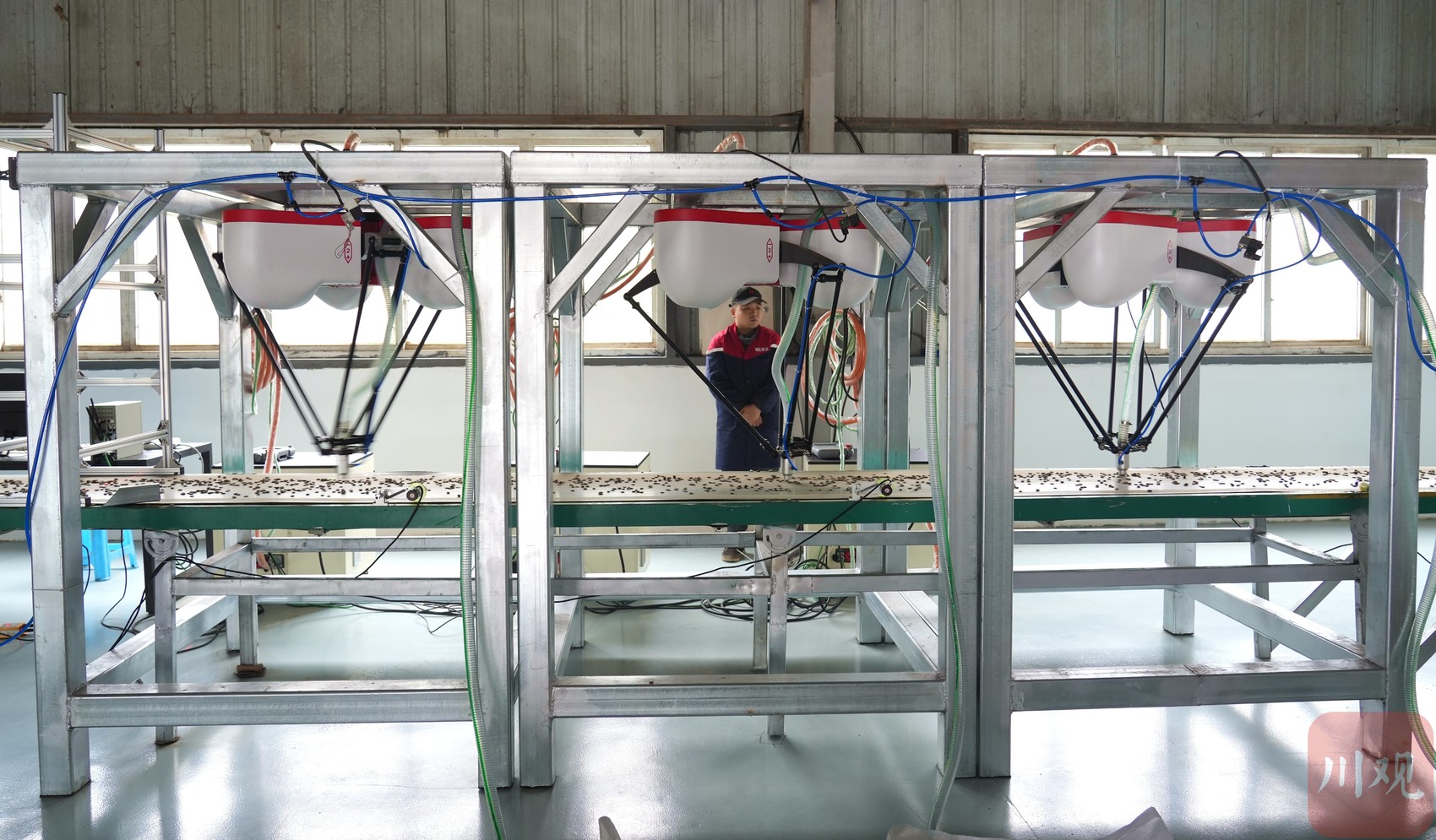
A spider-like robotic arm in the thickness inspection system is currently picking up Eucommia rubber strips with a thickness of less than 3 mm
To date, the company has filed ten patent applications, four of which have been granted. Liu Yan acknowledged that the company's development would not have been possible without the financial security, technical assistance, and talent exchange facilitated by East-West Collaboration.
Following the completion of the transformation in December 2025, results became evident: unsorted Eucommia cubes sold for approximately RMB 23,000 per ton; those with thickness exceeding 3 millimeters fetched over RMB 27,000 per ton, adding more than RMB 4,000 in value; and those exceeding 5 millimeters surpassed RMB 50,000 per ton. Currently, the company processes nearly 1,000 metric tons of Eucommia annually, along with over 300 metric tons of other traditional Chinese medicinal herbs such as kudzu root and epimedium, with products distributed across 17 provinces and municipalities nationwide, generating annual sales revenue of nearly RMB 10 million.
【本文部分内容由AI辅助生成,特此声明。The author(s) generated part of the content in this work with the assistance of artificial intelligence (AI), which is hereby declared.】
