
China's New 'Passport' for Farm Produce: Can Sichuan Lead the Way in Food Safety Compliance?
2026-02-05 16:10:59 by AIOS
Starting February 1, the 'Administrative Measures for the Commitment-based Certificate of Compliance with Agricultural Product Quality and Safety', issued by the Ministry of Agriculture and Rural Affairs, officially took effect. The regulation requires market-bound agricultural products such as vegetables, poultry eggs, and aquatic products to be accompanied by a certificate—essentially a new-style 'identity card'—to safeguard consumer rights. Reporters visited relevant sites to investigate the implementation status.

The Anju Tianya Market in Chengdu offers a wide variety of agricultural products
Stakeholders hope the policy will be effectively implemented as soon as possible. The Measures explicitly require agricultural enterprises, cooperatives, and other entities to issue compliance certificates. Zhang Xuezhi, head of Azhi Farm in Qingbaijiang District, Chengdu, stated that the policy translates daily traceability practices and green pest control into clear standards, thereby strengthening confidence when engaging with supermarkets and e-commerce platforms.
Yang Qun, general manager of Chengdu Xinlianxin Agriculture Co., Ltd., believes that a nationally unified 'travel pass' will help expand market access. Retailers are also responding positively: multiple vendors at Chengdu's wet markets reported they have been following the policy, noting that some consumers have already begun checking certificates and that they themselves are paying attention to recording relevant information during procurement.
Consumer Li Dan said the new certificate helps her choose safer food ingredients. Experts pointed out that the shift from 'encouragement' to 'mandatory' requirements establishes a firm benchmark for producers to 'self-certify safety', providing both a 'credit credential' for producers and a 'reassurance guarantee' for consumers, thereby bridging the gap between farm-gate clearance and market entry.

Our province has organized training sessions on guidance for issuing certificates of compliance.
Experts recommend enhancing publicity and training to improve the policy's practicality. Despite its promising outlook, implementation faces challenges, including low coverage among smallholder farmers, uneven levels of digitalization, insufficient testing capacity, and difficulties in verifying the authenticity of commitments. Producers suggest formulating specific guidelines tailored to different agricultural products and call for government support to enhance testing capabilities and reduce compliance costs.

Our province has organized training sessions on guidance for issuing certificates of conformity.
Professor Li Yuncheng of Chengdu University emphasized the need for intensified public awareness campaigns and differentiated training programs for producers, with village-level service centers guiding smallholders. He also recommended leveraging short videos and other media to raise consumer awareness. Expert Zheng Xingguo urged efforts to break down 'data silos' between production and sales channels and advocated mandatory certificate display by supermarkets and e-commerce platforms to establish a market orientation where 'certified products command premium prices, while uncertified ones struggle to sell'.
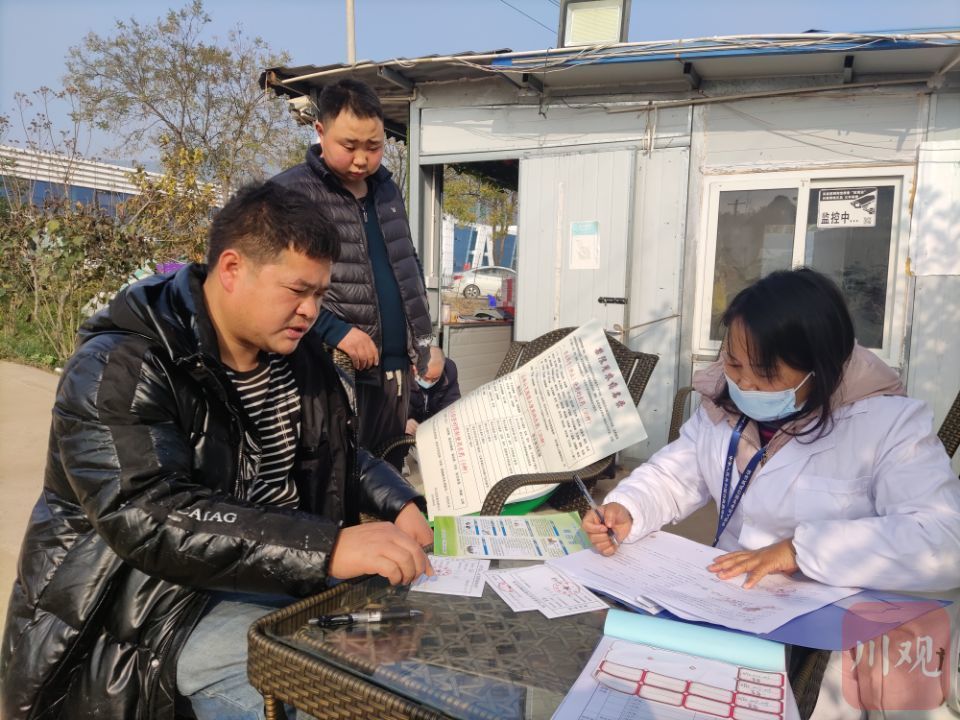
Our province has organized training sessions on guidance for issuing certificates of compliance.
The Sichuan Provincial Department of Agriculture and Rural Affairs stated it will work jointly with market regulation authorities to promote the application of compliance certificates, integrate traceability and credit-based supervision, enhance smart regulatory capabilities, and ensure the policy's 'rigid requirements' achieve a smooth implementation.
【本文部分内容由AI辅助生成,特此声明。The author(s) generated part of the content in this work with the assistance of artificial intelligence (AI), which is hereby declared.】
