
Sichuan's 'Million-Yuan Villages' Flourish Through Diversified Rural Economies
2026-02-05 16:10:06 by AIOS
In 2025, Mianzhu City's village collective economies delivered impressive results: 17 villages reported collective incomes exceeding one million yuan, an increase of three compared to the previous year. The emergence of these 'million-yuan villages' stems from the local government's development strategy emphasizing distinctive rural features and differentiated competition.
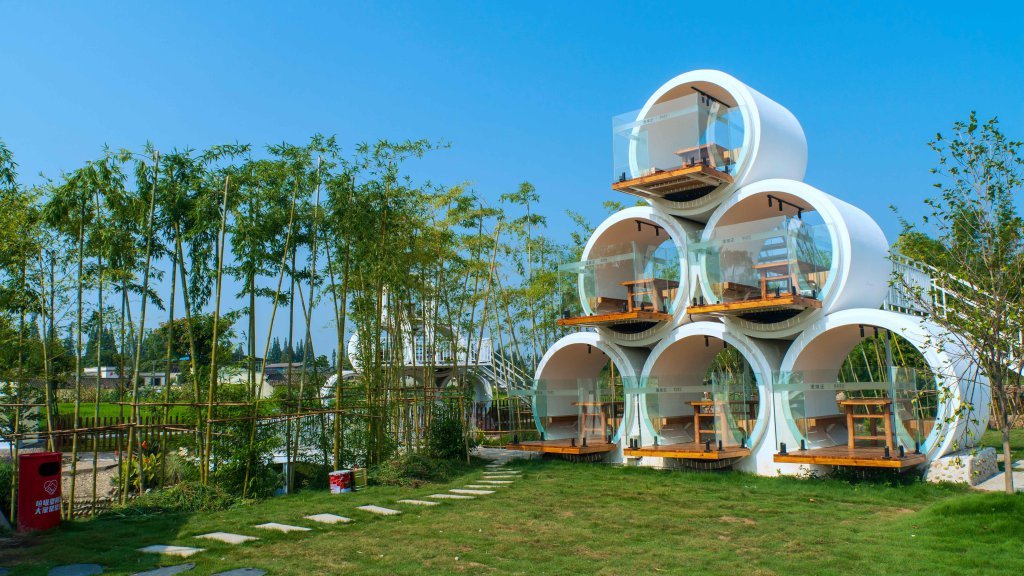
Yunli Xiaozuo · Yuquanli, Guihua Village
In Qixiang Village, Guangji Town, rows of kiwifruit trellises sketch a pastoral winter scene. "The village collective receives a fixed annual dividend of 100,000 yuan, with additional bonuses in good harvest years," said Li Gangming, the village Party branch secretary. The village collective consolidated land resources and upgraded cultivars by introducing the high-yield, disease-resistant 'Huajin No.3' kiwifruit variety, enabling its products to enter premium markets and reach overseas consumers.
Additionally, the village reclaimed abandoned riverbanks to establish a turfgrass base, leasing it out at 1,200 yuan per mu annually, while villagers earn 100 yuan per day working on-site. Leveraging the 'Party branch + cooperative + farmers' model, diversified revenue streams—including kiwifruit cultivation, turfgrass leasing, factory rentals, and joint ventures with enterprises—have ensured the village's annual collective income consistently surpasses one million yuan. Next, the village plans to develop kiwifruit deep-processing to extend its industrial chain.
Ten kilometers eastward, Guihua Village in Yuquan Town has joined the ranks of 'million-yuan villages' thanks to its more than 50 natural springs. Previously underutilized, these resources are now leveraged through collective equity participation that attracts social capital to develop the 'Yuquanli' hot spring resort project. Since its opening in July 2025, the project has transformed irrigation water sources into cultural and tourism assets, quickly gaining popularity. Attractions such as spring-fed stream play areas, bamboo grove tea houses, and farm-to-table restaurants draw throngs of visitors—averaging nearly 10,000 daily, with peak days exceeding 20,000. Villagers now find employment close to home. In the future, the area will upgrade its homestays and dining facilities and convert farmland around Yingyue Spring into high-standard agricultural fields to create a themed park centered on 'spring-water-nurtured crops,' fostering an integrated model combining ecology, industry, and cultural tourism.
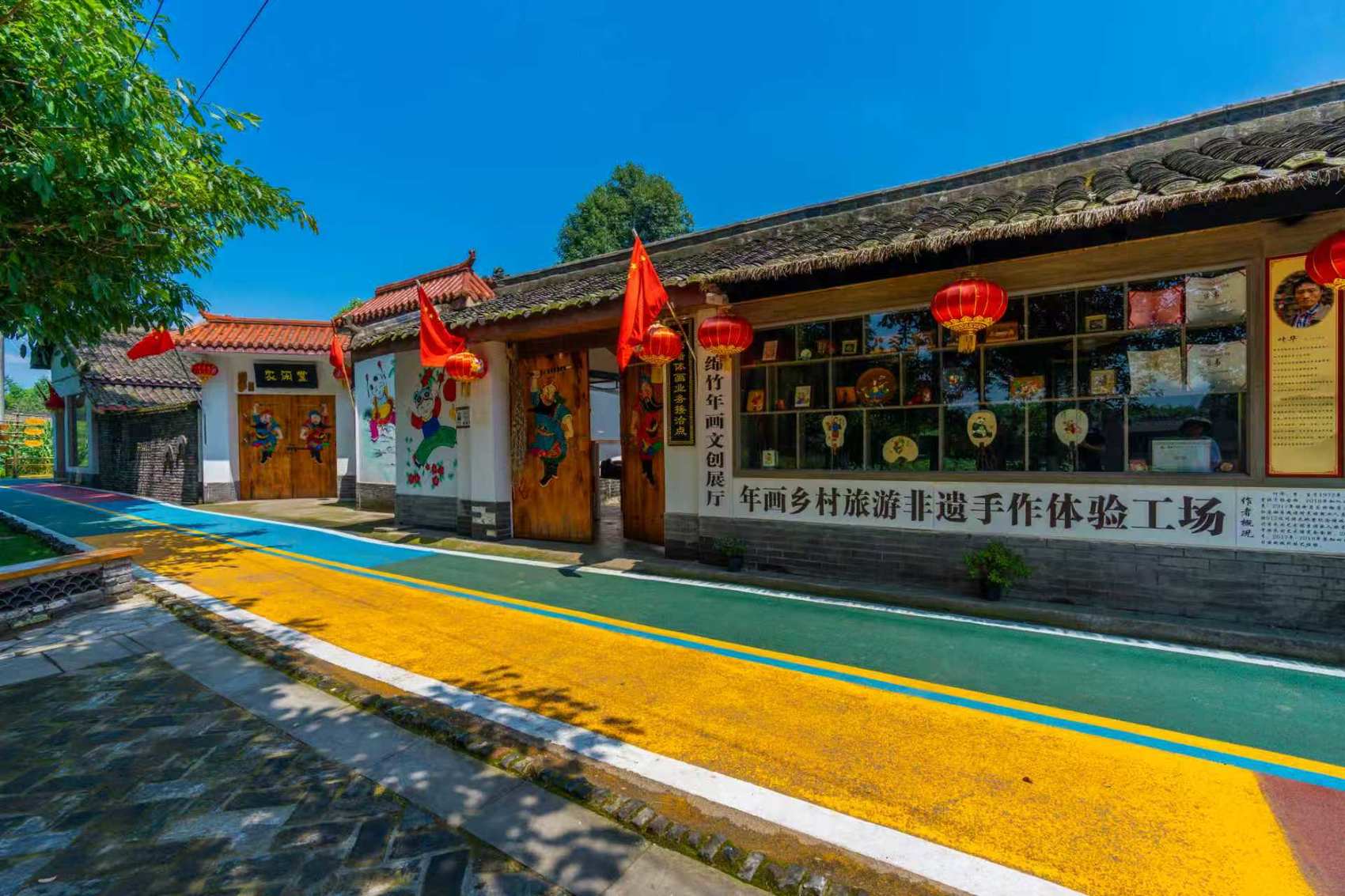
Nianhua Village. Photo provided by the Publicity Department of Mianzhu Municipal Committee
Further east, Nianhua Village in Xiaode Town has adopted a 'culture-driven revitalization' approach. The village collective independently operates the entire village as an immersive New Year painting-themed scenic area, converting residences into workshops, homestays, and snack shops. It has established the 'Xiangyu Huali' cultural and creative community, implementing a revenue-sharing mechanism through the 'creative community + master studios' model to build a complete industrial chain covering production, supply, and sales of New Year paintings. The village has also developed over 30 product series and more than 1,000 derivative items—including embroidered New Year paintings, bamboo-woven New Year paintings, and New Year painting-inspired apparel—blending tradition with modernity to wide acclaim among tourists. Through diversified operations such as parking management, derivative product sales, festival gift box development, and space rentals, the village collective's income continues to grow, with over 2,400 villagers participating in the production of New Year painting-related goods.
【本文部分内容由AI辅助生成,特此声明。The author(s) generated part of the content in this work with the assistance of artificial intelligence (AI), which is hereby declared.】
