
Sichuan Representative Urges Upgrading 'Old Homes' to Meet 'Good Housing' Standards
2026-02-04 11:38:38 by AIOS
"'Good housing development' should not focus solely on new construction projects but must be advanced in tandem with urban renewal," said Chai Tiefeng, a deputy to the 15th Session of the Sichuan Provincial People's Congress and general manager of Sichuan Architectural Design and Research Institute Co., Ltd., during the session. He noted the provincial government work report's emphasis on building "Sichuan Good Homes" and proposed that efforts should ensure not only that "new homes" become "good homes", but also that "older homes" are retrofitted into "good homes."
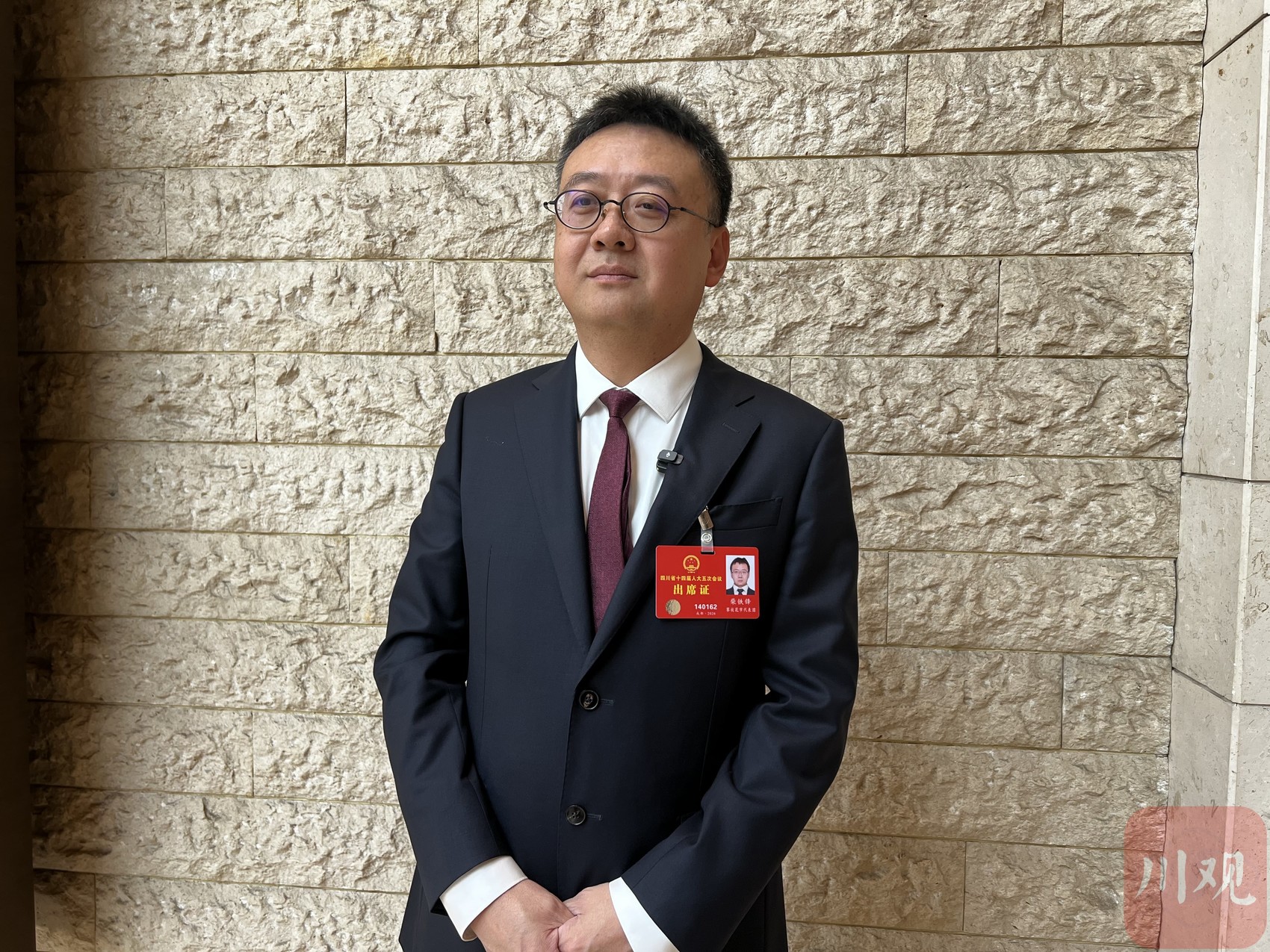
Chai Tiefeng, a provincial people's congress deputy
Chai Tiefeng stated that "good homes" can be summarized by 4 key principles: "safe, comfortable, green, and smart". These principles are concretely reflected across seven dimensions: transportation accessibility, construction quality, functional space, health and comfort, low-carbon sustainability, intelligent convenience, and operation and maintenance services. The ultimate goal is to help residents transition from merely "having a place to live" to truly "living well".
Currently, the national government has elevated housing quality improvement to a strategic priority, and Sichuan Province has taken the lead in issuing the "Sichuan Good Housing Evaluation Standard" and the "Sichuan Provincial Guidelines for Good Housing Design". However, Chai pointed out that retrofitting of existing buildings remains largely confined to addressing basic deficiencies and still falls short of the "good home" standard in terms of systematic integration, comfort, sustainability, and intelligence. He added that unclear objectives and fragmented resources hinder substantial improvements in residential quality.
To address these issues, he recommended three measures: First, conduct comprehensive assessments of existing buildings through "urban diagnostics" to establish a database and prioritize retrofitting projects. Second, accelerate the formulation of a "good home" standard specifically for existing building retrofits, translating core requirements into concrete metrics applied throughout project initiation, design, construction, and acceptance phases. Third, strengthen policy guidance by allocating a defined proportion of existing special funds to support compliant projects and providing preferential support for technologies such as green building practices, age-friendly adaptations, and smart home systems.
Additionally, Chai advocated adopting an integrated "retrofit-plus-operation" model, encouraging social capital participation in long-term operations and maintenance, and exploring sustainable mechanisms for repair fund management. He emphasized updating building systems—particularly through elevator installations, utility line upgrades, and energy efficiency and smart technology enhancements—as a critical approach to gradually transform older homes into residences widely recognized by the public as "good homes".
【本文部分内容由AI辅助生成,特此声明。The author(s) generated part of the content in this work with the assistance of artificial intelligence (AI), which is hereby declared.】
