
How Student Innovators Are Revitalizing Rural Sichuan Through Heritage and Design
2026-01-16 10:45:47 by AIOS
Recently, Chengdu tourist Wang Lin was sipping a signature beverage and selecting cultural and creative souvenirs at the 'Zuo People's Eight-Flavor Tea' workshop on Qingchuang Flower Street in Xigeda Village, Hongge Town, Sichuan. 'I heard this is an intangible cultural heritage product. I originally assumed it was stir-fried tea, but surprisingly, it's milk tea—and the packaging is uniquely distinctive. It truly captures a one-of-a-kind Yanbian flavor,' she said.
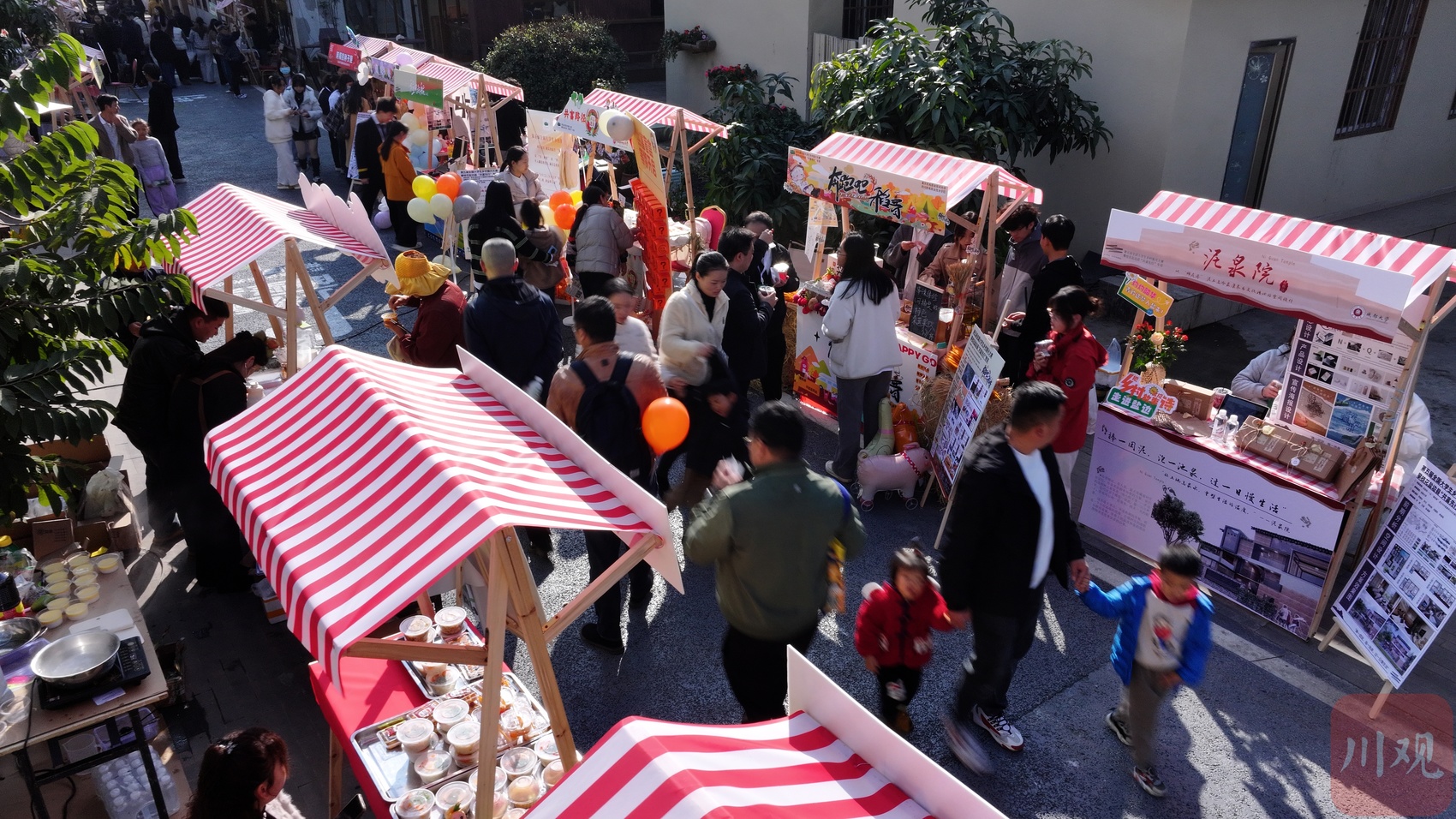
Street view of Qingchuang Flower Street
This tea beverage concept, infused with local cultural elements, originated from a team of university students from Chengdu. Today, this newly developed street has gathered more than 20 types of businesses, including handmade craft shops and specialty food outlets, showcasing the innovative ideas of numerous young entrepreneurs.
Team leader Leng Jinting, a student at Sichuan Normal University, explained that the project began with the Fifth National College Students' Rural Revitalization Competition. To gain a deep understanding of 'Zuo People's Eight-Flavor Tea', the team spent nearly eight months visiting tea plantations and villages across Yanbian County before ultimately proposing an integrated model combining 'intangible cultural heritage tea beverages with cultural creativity.' Luo Shunbing, an inheritor of the intangible cultural heritage, initially harbored doubts about 'turning traditional tea into milk tea', but after witnessing the product's commercial success, he remarked, 'Nowadays, agricultural products sell not just quality, but also stories and experiences.'
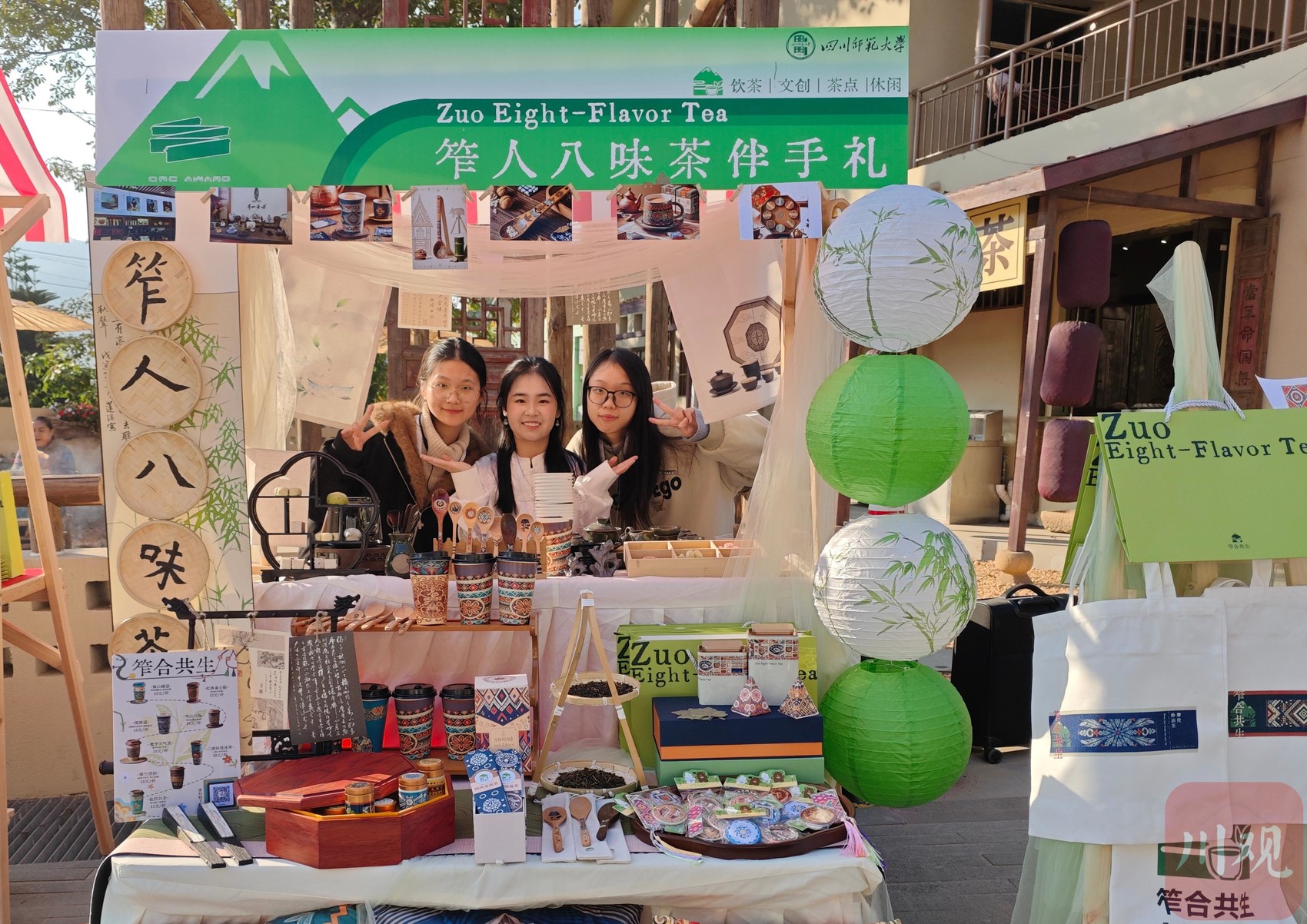
The 'Zuo People's Eight-Flavor Tea' workshop was conceived by a student team from Sichuan Normal University
The team's project is one of the outcomes of the 'Common Prosperity Pilot' special initiative under the competition in Yanbian County, Sichuan. From March to October last year, the event attracted over 500 teams and more than 5,000 faculty members and students from 104 universities nationwide. Ultimately, 80 projects were approved for funding, with 50 already in the implementation phase. Among them, 18 high-quality projects—including the Digital Nomad Club—have been formally signed, with an estimated total output value of 50 million RMB and the creation of employment opportunities for over 300 local villagers.

The Youth Innovation Flower Street in Xigeda Village, Hongge Town, Yanbian County, officially opened
The competition's impact has extended beyond the county level. During last year's National Day holiday, traditional Lisu ethnic attire from Yanbian was showcased at the China-France Fashion Week in Paris, receiving coverage from 154 overseas media outlets in nearly 420 reports and achieving a global exposure exceeding 500 million impressions. Inspired by this international recognition, a team led by Yang Shiting from Chongqing University of Arts and Sciences reinterpreted the Lisu sun motif into a new design called the 'Chasing Light Pattern', launching two apparel collections and establishing a studio in Chongqing to promote the cross-regional popularization of this intangible cultural heritage craft.
According to an official from the Yanbian County Human Resources and Social Security Bureau, beyond tangible economic benefits, the intangible value generated by this cultural outreach is even more profound. Following the competition, the county initiated collaborative programs with multiple universities, including Zhejiang University and Yunnan Business Institute. Additionally, the 'Tsinghua University Rural Revitalization Workstation' has been established in Yanbian, enabling regular on-site participation by faculty and students. The county has also innovatively implemented a dual-empowerment mechanism pairing 'industry mentors' with 'local partners': local prosperity leaders guide youth teams, while outstanding teams become 'local partners,' forming deep ties with village collective economies. This model is helping Yanbian build a virtuous rural innovation cycle characterized by 'talent attraction, industrial restructuring, intellectual enhancement, and talent reinvestment.'.
【本文部分内容由AI辅助生成,特此声明。The author(s) generated part of the content in this work with the assistance of artificial intelligence (AI), which is hereby declared.】
