
Sichuan's "Solo Dining" Boom Reflects Rise of China's 125 Million One-Person Households
2026-01-16 10:45:35 by AIOS
According to data from Meituan, approximately 67% of "single-diner" restaurants are concentrated in first-tier, new first-tier, and second-tier cities. How are these establishments faring? Why are consumers willing to pay for such services? Reporters conducted on-site visits to find out.
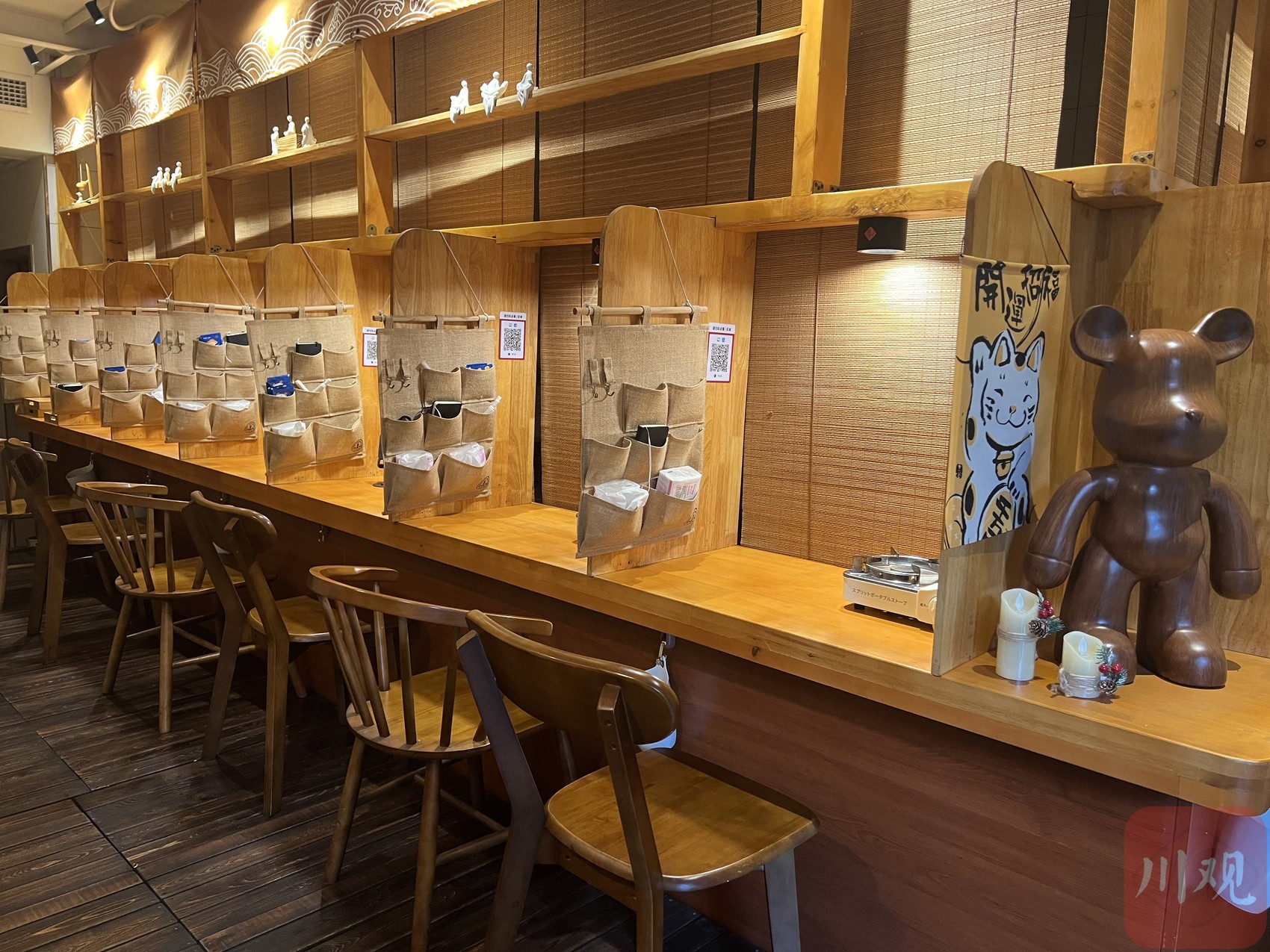
Inside Chengnan Dushi Hotpot Restaurant, a total of nine single-person seats have been installed, separated by partitions
On the afternoon of January 13, in Wuhou District, Chengdu, Li Gaoyu, owner of Chengnan Dushi Hotpot, had just seen off the last group of lunchtime customers. In its sixth year of operation, the restaurant features nine single-person tables with partitions and four large tables, emphasizing "personal space". "Most of our customers are introverted, so we try not to disturb them," Li said. Each partition is equipped with a storage pouch containing hair ties, tissues, and other essentials. All dishes are served in small portions, with an average per-person cost of around 70 to 80 yuan.
Similar establishments are common in Chengdu. In 2020, Xu Yang opened Roushitang, a solo-dining barbecue restaurant, because he "couldn't find anyone to share a big meal with". Within less than a year of opening, seating capacity expanded from 18 to 38, and the repurchase rate exceeded 40%. The brand now operates four company-owned stores in Chengdu and has expanded into Zhejiang and Guangdong provinces through franchising.
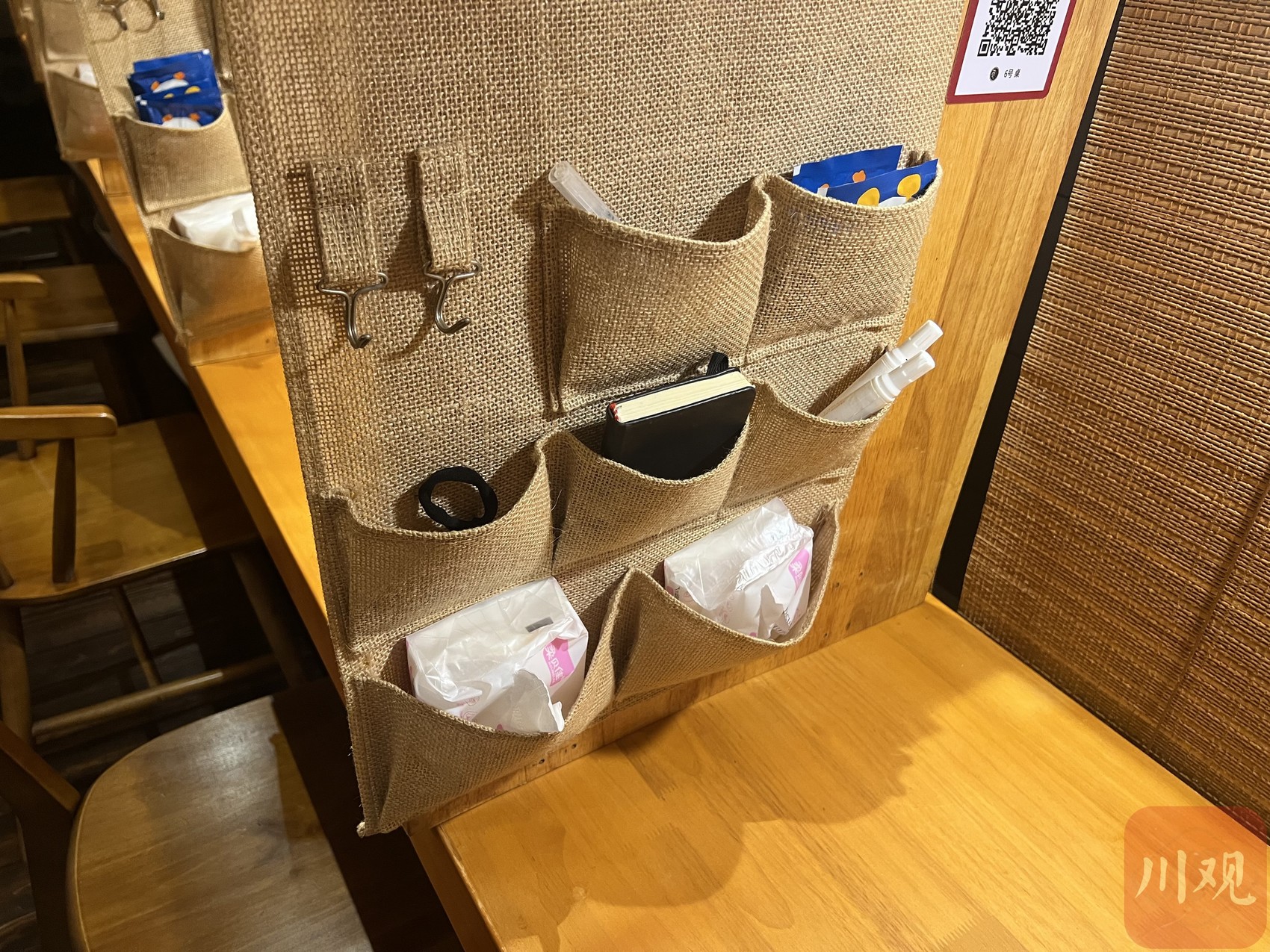
The storage pouch on the partition was pre-stocked by the merchant with items such as hair ties and tissues
Beyond dedicated "single-diner" venues, large-scale restaurant chains are also entering the space. Japanese restaurants such as "Fantuan Jiang" and "Sushiro" have introduced single seats without facing another diner. Haidilao, years ago, launched smaller portion sizes and solo-dining companionship services, continuously refining the experience.
The rise of "single-diner" dining from a niche trend to an emerging business model stems from substantial market demand. Data from China's Seventh National Population Census shows that households with only one resident exceed 125 million, accounting for 25% of all households. Associate Professor Xiong Yuning of Xihua University noted that factors such as aging, shifting attitudes toward marriage and relationships, and population mobility have expanded the population living alone, thereby driving demand for refined, personalized consumption scenarios.
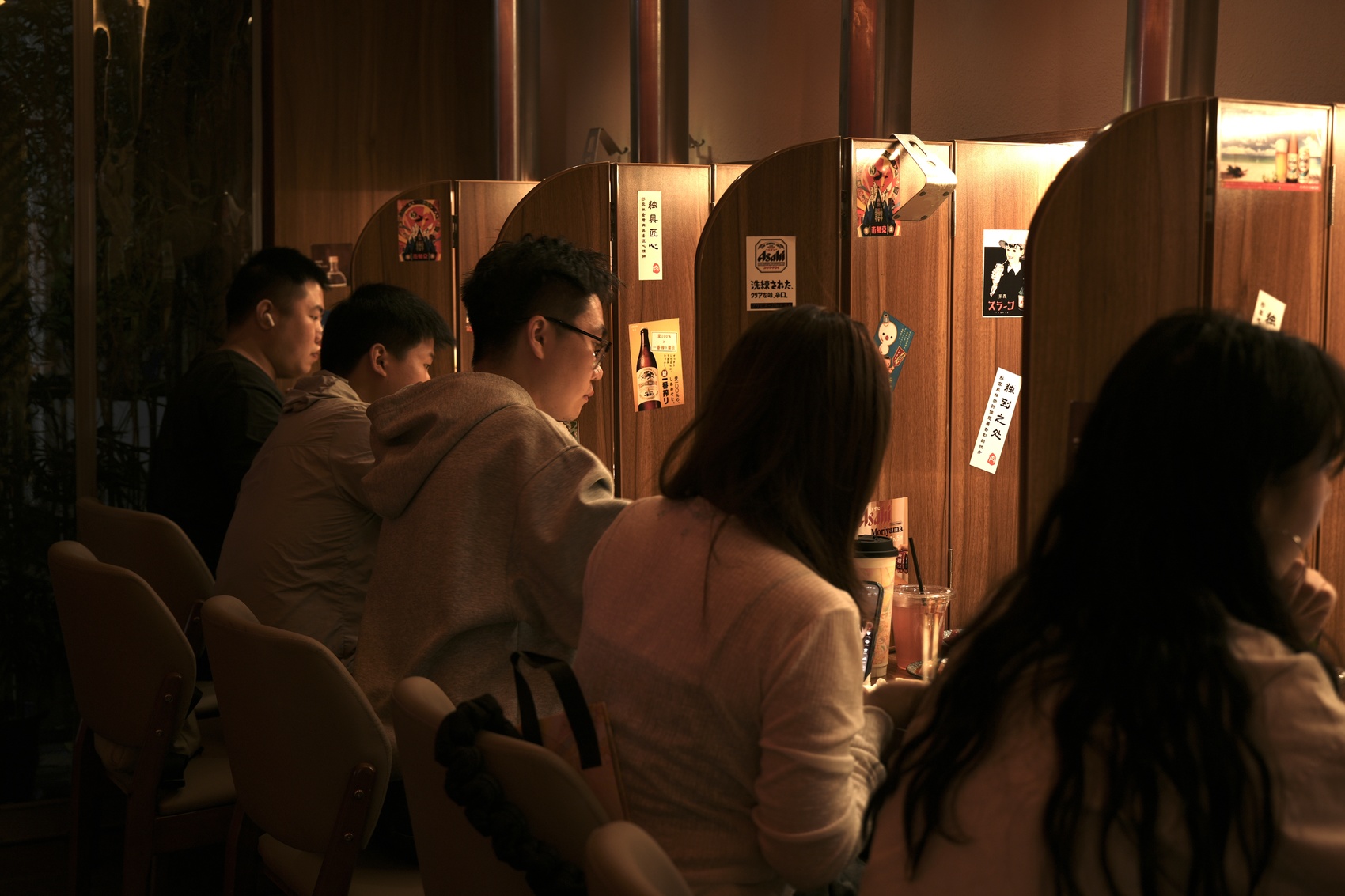
At Roushitang Dushi Barbecue, solo diners are separated by partitions and eat alone. (Photo provided by the interviewee
Changing social psychology among young people is also key. "I'm introverted and enjoy living alone," said Chengdu resident Jiang Aohan. Cao Peilin added, "Solo dining requires no social interaction, allowing me to focus on enjoying my food." Compared to food delivery, "single-diner" restaurants offer more transparent hygiene standards, greater menu variety, and opportunities to check in and share aesthetically pleasing meals on social media, satisfying diverse consumer needs.

Single-serving hotpot with small-portion dishes
According to data, the "single-diner" market reached 800 billion yuan in 2024 and is projected to surpass 1.8 trillion yuan in 2025, with a compound annual growth rate of approximately 22%. Beyond dining, sectors such as AI emotional companionship, pet-related industries, and mini home appliances are also expanding rapidly. By 2025, the AI emotional companionship market is expected to reach 3.866 billion yuan, the pet economy 953.7 billion yuan, and mini home appliances over 50 billion yuan.
Xiong Yuning believes the "loneliness economy" may experience long-term structural growth, giving rise to multi-tiered market segments. However, he cautioned against marketing strategies that amplify anxiety, emphasized the importance of data privacy and security, and called for fostering a new lifestyle that respects individuality while preserving social warmth.
【本文部分内容由AI辅助生成,特此声明。The author(s) generated part of the content in this work with the assistance of artificial intelligence (AI), which is hereby declared.】
