
Sichuan Bolsters Forest Fire Defenses Amid Heightened Risk in 2026
2026-01-04 10:43:07 by AIOS
On January 1, the '2026 Forest Fire Prevention Order' and the '2026 Grassland Fire Prevention Order' officially took effect, marking the start of a new forest and grassland fire prevention period in Sichuan Province.
This marks the 6th consecutive year that Sichuan has issued these 'two fire prevention orders'. According to an official from the Provincial Forest and Grassland Fire Prevention and Control Command Office, the province is expected to experience 'above-average temperatures and below-average precipitation' this winter and next spring, with persistently high fire danger levels in the west Panzhihua and the western Sichuan plateau. The number of counties classified as high fire risk has increased from 35 to 39, and those classified as moderate fire risk have risen from 80 to 95. Compounding the situation, the 2026 Spring Festival holiday has been extended to nine days, and adjustments to policies on fireworks and firecracker use have further intensified fire prevention challenges.

The Aba Fire and Rescue Mobile Brigade conducted moisture-increasing operations in Heihe Town, Jiuzhaigou County
The 'two fire prevention orders' stipulate that the province-wide fire prevention period runs from January 1 to May 31, with February 1 to May 10 designated as the high-risk forest fire period. During this high-risk period, county-level and higher governments may impose access restrictions in high-risk zones. When orange or red fire warnings are issued, all production, business operations, and construction sites within fire prevention areas must halt outdoor ignition activities. The scope of regulation has been expanded from 'forest areas' to 'fire prevention areas' to eliminate regulatory gaps in peripheral zones.
The orders also introduce a new requirement for clearing combustible materials in 'five surrounding areas and five edges'—namely, the perimeters of towns, villages, institutions, factories, mines, temples, and critical facilities, as well as forest edges, road edges, building edges, power line edges, and field edges—to target key locations for fuel reduction and mitigate fire risks. Additionally, the orders further standardize procedures across all phases of 'prevention, response, investigation, and public education,' including information reporting, case handling, and damage assessment, to advance an integrated 'prevention-response-recovery' governance system.
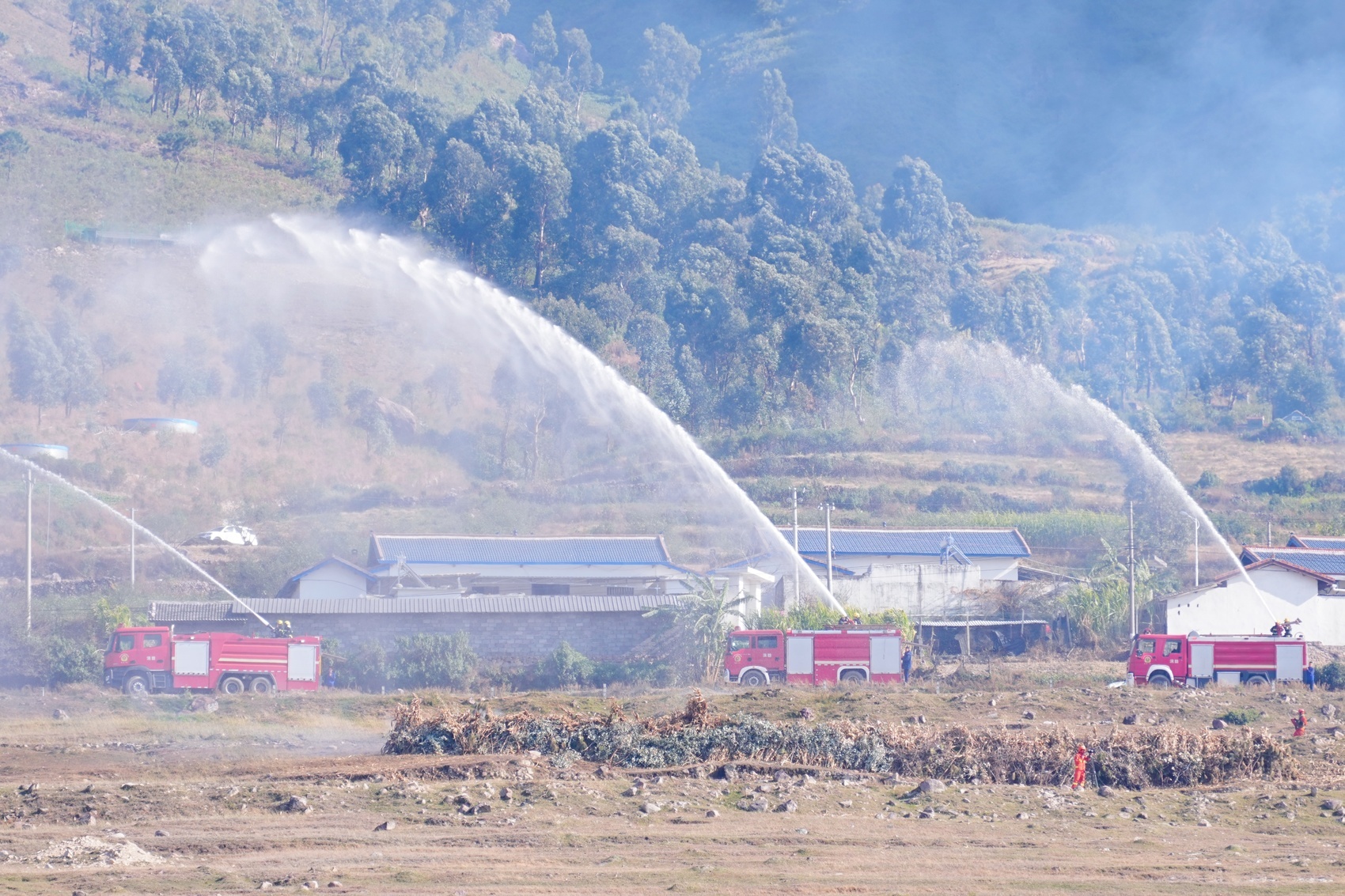
Liangshan Conducts Comprehensive Emergency Drill for Forest and Grassland Fire Prevention and Suppression for 2026
Sichuan had already initiated preparatory measures prior to the orders’ implementation. Through campaigns focused on fire safety management of power transmission and distribution infrastructure in forest and pastoral areas, as well as standardized fire prevention and suppression training, educational outreach has reached 1,176 townships. A total of RMB 50.72 million in subsidies was awarded to 1,189 villages (communities) recognized for outstanding fire prevention performance in 2025 to incentivize frontline grassroots efforts. Pilot programs in Barkam City and Mao County have implemented a full-chain management system for clearing, collecting, transporting, storing, and utilizing understory combustibles, having already cleared 319 metric tons across 7.2 hectares, reducing fuel loads by 30% year-on-year. Across the province, more than 24,000 fire hazards have been identified and rectified, over 31,000 kilometers of power transmission and distribution lines inspected, and more than 9,000 related hazards addressed. Technologies such as 'intelligent drone patrols' and 'wind-triggered automatic circuit breakers' are already being piloted in multiple locations.
Sichuan has also organized emergency drills under the 'Hundreds of Counties, Thousands of Towns, Tens of Thousands of Villages (Enterprises)' initiative to enhance practical response capabilities. The newly issued 'Reference Standards for Equipment Development (Trial)' details equipment configurations for high- and moderate-risk areas, specifying 40 types of equipment across five categories. For example, high-risk counties are required to equip themselves with two to three reconnaissance drones, two to three satellite phones, and 100 sets each of fire-resistant suits and helmets. Over one hundred instructors from the Mobile Fire and Rescue Corps have been dispatched to deliver on-site training in practical skills such as pump maintenance and hose deployment. Currently, professional firefighting teams have been pre-positioned at more than 40 high-risk sites, conducting routine patrols with full gear. The Provincial Forest and Grassland Fire Prevention and Control Command Office stated that it will strengthen both training and equipment development to effectively enhance the capacity of county, township, and village levels to 'detect early, respond quickly, and extinguish small' fires.
【本文部分内容由AI辅助生成,特此声明。The author(s) generated part of the content in this work with the assistance of artificial intelligence (AI), which is hereby declared.】
