
“Experts’ Insights into Sichuan Baijiu” Season 2: Decoding the Civilization Gene of Sichuan Baijiu
2025-03-23 14:31:02 by SICC
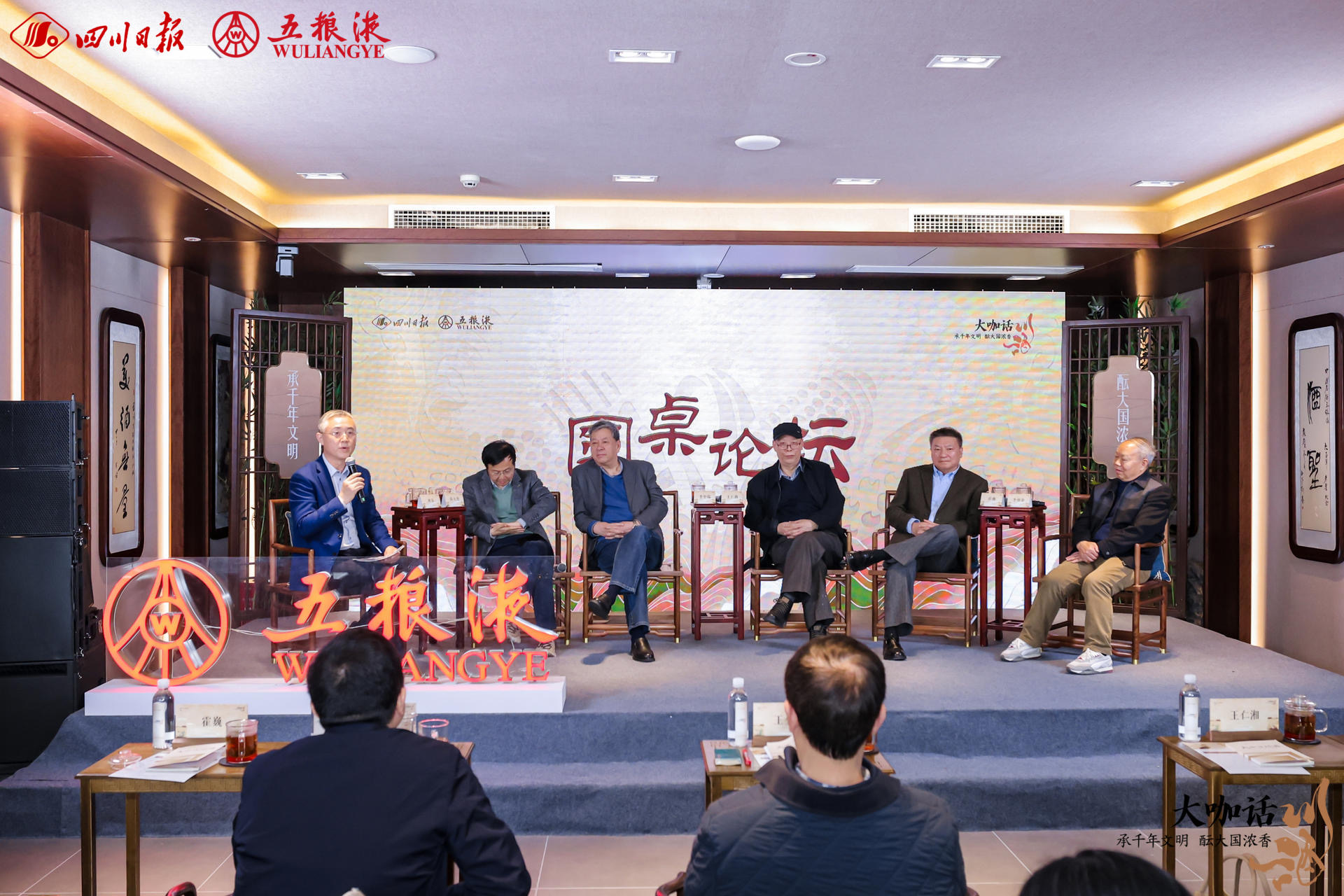
On March 21, 2025, the second season of the Baijiu culture series themed event “Experts’ Insights into Sichuan Baijiu” commenced at Guanlan Hall, situated along the Huanhua Creek in Chengdu. The event was organized by Sichuan Daily All-media and the Sichuan Baijiu Communication Institute of Chuanguan Think Tank, with Wuliangye acting as its exclusive strategic partner.
How do Sichuan’s rivers breed the origin of liquor? Revolving around this topic, authoritative experts from fields such as archaeology, culture, and the alcohol industry gathered together, so as to present a stellar cultural feast through keynote speeches, round-table discussions, and on-site interactions. Meanwhile, the experts engaged in dynamic discussions about the cultural promotion of Sichuan Baijiu in the modern era during the event.
Guests encompassing Wang Shaoxiong, Chief Advisor of the Sichuan Alcoholic Drinks Association, Wang Renxiang, Researcher at the Institute of Archaeology, Chinese Academy of Social Sciences and Director of the Public Archaeology Professional Guidance Committee of the Archaeological Society of China, Huo Wei, Academic Dean of the College of History and Culture (Tourism, Archaeology and Museology) of Sichuan University, Distinguished Professor of “The Yangtze River Scholar” program of the Ministry of Education, and President of the Sichuan Archaeological Society, Li Huarui, President of the China Association for Song Dynasty Studies, Distinguished Professor of “The Yangtze River Scholar” program of the Ministry of Education, and Dunhe Chair Professor at Zhejiang University, Gao Dalun, Dean of the School of Archaeology and Museology at Shanxi University, former Director of the Sichuan Provincial Cultural Relics and Archaeology Research Institute, and President of the Sichuan Folklore Society, Li Xiuyu, Chief Expert of the Institute of Chinese Liquor History and staff member of the Sichuan Provincial Government’s Research Institute of Culture and History, and Jiang Jia, Deputy General Manager of Wuliangye Group Co., Ltd., which is the representative of the event organizers, and Chairman of Wuliangye Liquor Sales Co., Ltd., attended the launch ceremony.
Carrying forward thousands of years of civilization, brewing representative savoury Baijiu from China. The experts highlighted three pivotal keywords to unveil the development of Chinese liquor history and the mystery of “how Sichuan’s rivers give rise to Sichuan Baijiu”.
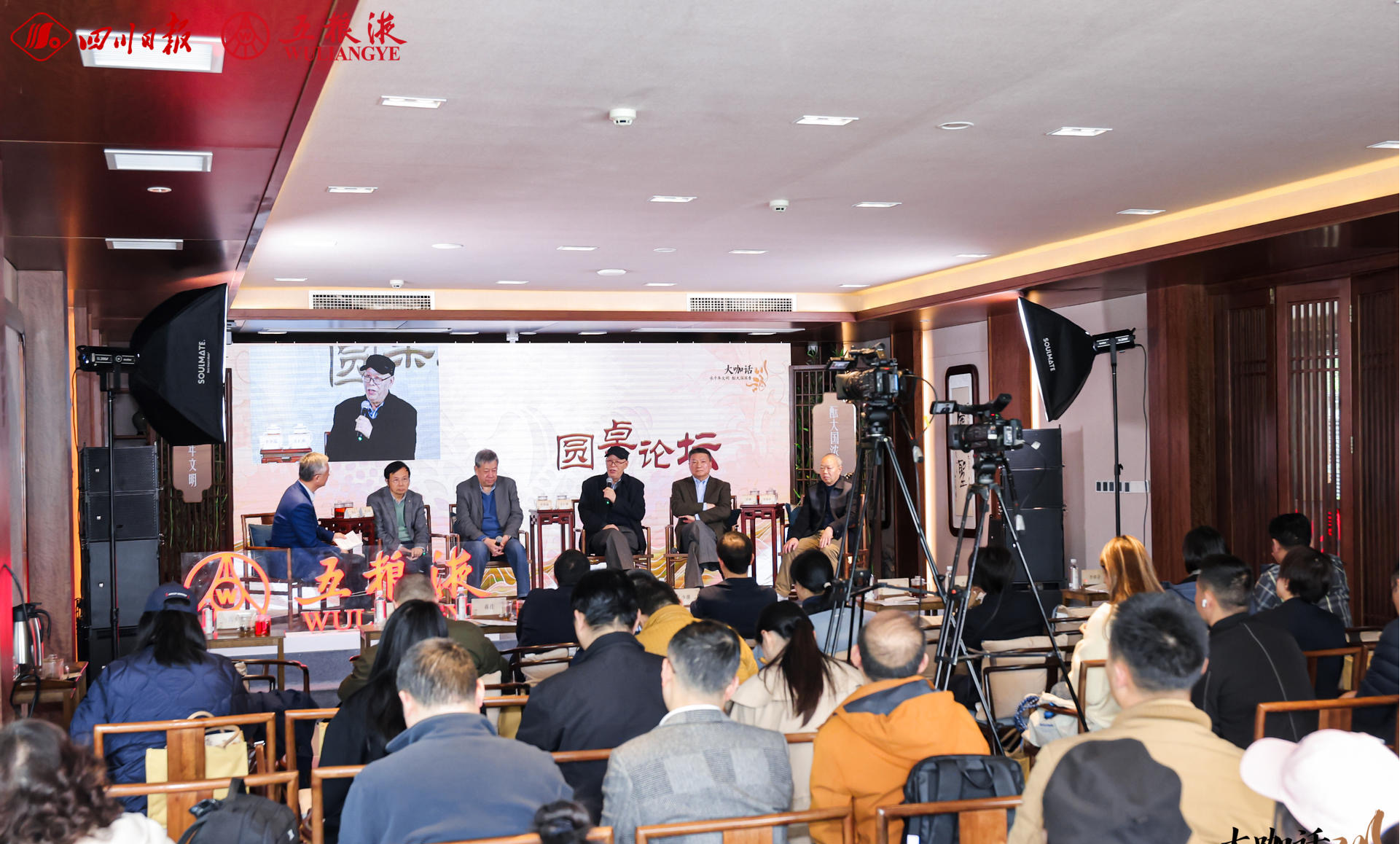
Sichuan’s rivers: The open and inclusive wisdom of brewing forges the legend of “Sichuan Baijiu hold an unparalleled position in the world”
“Liquor stands as a liquid embodiment of time, and the brewing artistry of Sichuan Baijiu, marked by a fragrant, mellow, and refreshing profile, transcends mere physical transformation. Instead, the brewing technique encapsulates an underlying, naturally endowed system, woven together by intrinsic logic, geographic heritage, humanistic ingenuity, and the legacy of ages.” In his keynote address, Wang Shaoxiong explored the theme of “Sichuan’s rivers breed the origin of liquor, making Sichuan Baijiu hold an unparalleled position in the world”. According to Wang, each drop of liquor was a fusion of nature, time, and human craftsmanship. The Sichuan Basin, with its intricate network of mountains and rivers and its majestic natural barriers, served as a “natural cellar” and a “liquor brewing paradise”, a gift from the heavens.
“The harmonious interplay between nature and fine liquor makes Sichuan Baijiu a liquid essence of the spirit of heaven and earth.” Taking Wuliangye as an example, Wang illustrated how the brewing water source of Wuliangye stemmed from deep groundwater in the ancient Minjiang River course. Filtered through rock layers over millennia, the water emerged pristine and rich in more than 20 trace elements beneficial to the human body, laying a solid foundation for the superior quality of Wuliangye.
“Every region has its unique way of sustaining its people. Maybe the ancestors of Yibin uncovered the secret to brewing prime liquor with high-quality water long ago.” Gao Dalun noted that among the ten major tributaries of the Yangtze River, Sichuan claimed four distinct branches. Thus, the intricate and abundant water network provided the Bashu region with a natural advantage in producing top-tier liquor.
In Li Xiuyu’s view, the geographical feature of “rivers and streams converging” played a crucial role in Yibin’s ability to produce fine liquor. Here, the Central Plains culture, Jianghuai culture, and Jingchu culture took root, fostering the unremitting pursuit of liquor among people of various ethnic groups. Consequently, the industry coined the phrase, “Yibin serves as the head of rivers, while Wuliangye leads the realm of liquor”.
“Thriving in diversity while maintaining harmony.” Wang Shaoxiong emphasized that “The five-grain formula is not only a technological breakthrough, but also a cultural recognition of diverse coexistence.” This sort of open and inclusive brewing wisdom vividly reflected the humanistic genes and brewing philosophy of Sichuan Baijiu.
Archaeology: Both literary records and artifacts have proven that the Bashu region is one of the key cradles of Chinese Baijiu
With rivers as its lifeblood, the origin of liquor takes shape. At the convergence of the Minjiang, Jinsha, and Yangtze Rivers, Yibin boasts a brewing tradition stretching over 4,000 years. Hence, could this make Yibin one of the primary sources of Chinese liquor history?
During the round-table discussion, a landmark event in the archaeological world was repeatedly mentioned—the “Archaeological Studies on Wuliangye” project. In 2020, this research project of the “Compass Plan—Value Mining and Display Research of Ancient Chinese Liquor-making Technology” by the National Cultural Heritage Administration was officially launched in Yibin, dubbed the “Capital of Chinese Wine.” Sponsored by the Sichuan Provincial Cultural Relics and Archaeology Research Institute and co-organized by the Yibin Museum, the project provided evidence of Yibin’s multi-grain Daqu brewing technique, distinguished by its “underground Qu liquor fermentation cellars.” It also traced the origins of Wuliangye’s ancient cellars back to the Yuan Dynasty, offering rigorous scientific archaeological support to the study of the origins and evolution of distilled Baijiu in China.
“‘The history of Yibin’s distilled liquor brewing first emerged during the Yuan Dynasty,’ which marks both a groundbreaking insight into the archaeology of Chinese Baijiu and a significant ‘milestone’ in its study.” Several experts, deeply engaged in excavating ancient Sichuan Baijiu brewing workshops—such as Wuliangye’s workshops from the Yuan and Ming dynasties—asserted that “Sichuan’s liquor brewing industry had already reached an impressively advanced stage by the Song and Yuan dynasties.” This conclusion was robustly supported by a blend of literary research and physical archaeological evidence.
“The significance of archaeological research on Wuliangye lies in pinpointing the origins of its Baijiu history during the Song and Yuan dynasties through textual records and tangible artifacts,” Huo Wei explained. He noted that the Song and Yuan periods were marked by vibrant domestic and international interactions, exchanges, and cultural fusions, during which Yibin began to emerge on the historical stage, bolstered by its geographic strengths. In this era, Sichuan Baijiu—exemplified by Wuliangye—served as a vital conduit in the cultural dialogue between China and the West. “In the West, there’s reverence for a god of wine, while in the East, ritual traditions prevail, with wine standing out as a key medium across diverse cultures.”
Why did Sichuan Baijiu achieve its zenith during this era? Li Huarui, author of “The Production, Taxation, and Monopoly of Liquor in the Song Dynasty”, argued that liquor had been a vital source of tax revenue from the Han Dynasty through the Tang Dynasty. However, with the Song Dynasty’s introduction of the liquor monopoly policy, liquor assumed an even greater role in fiscal taxation. Among the various regional liquors, Sichuan Baijiu emerged as the most exceptional contributor.
“The ancient brewing workshops of Yibin stand as compelling proof of the city’s preeminence in brewing among historic wine capitals, yet this is merely the starting point,” Wang Renxiang asserted. From an archaeological standpoint, Wang suggested that Yibin’s brewing legacy could be traced back even further.
Inheritance: The “intangible cultural heritage: edition of Baijiu holds a promising future, with Sichuan river-nurtured Baijiu offering the world a taste of civilization’s grand narrative
Orderly inheritance is the courage of Chinese Baijiu to emerge on the world stage.
“Sichuan Baijiu has never been confined by tradition; instead, it has relentlessly adapted to the demands of each era through practical evolution from ancient times to the present.” Even now, Wang Shaoxiong continues to reflect deeply on how Sichuan Baijiu can address the challenges of inheritance and growth in response to the needs of today’s world.
Wang held that the industrial backbone of Sichuan Baijiu rested on the principle of “preserving tradition while embracing innovation.” The ancient method of Wuliangye’s underground Qu liquor fermentation cellars from the Ming Dynasty stood as a timeless exemplar. From the traditional layout of storefronts ahead and workshops behind to modern intelligent brewing facilities, Sichuan Baijiu had consistently upheld a dynamic and balanced appr
