
Black-necked Crane, out on the Wild Plateau
2022-01-17 01:40:05 by SICC
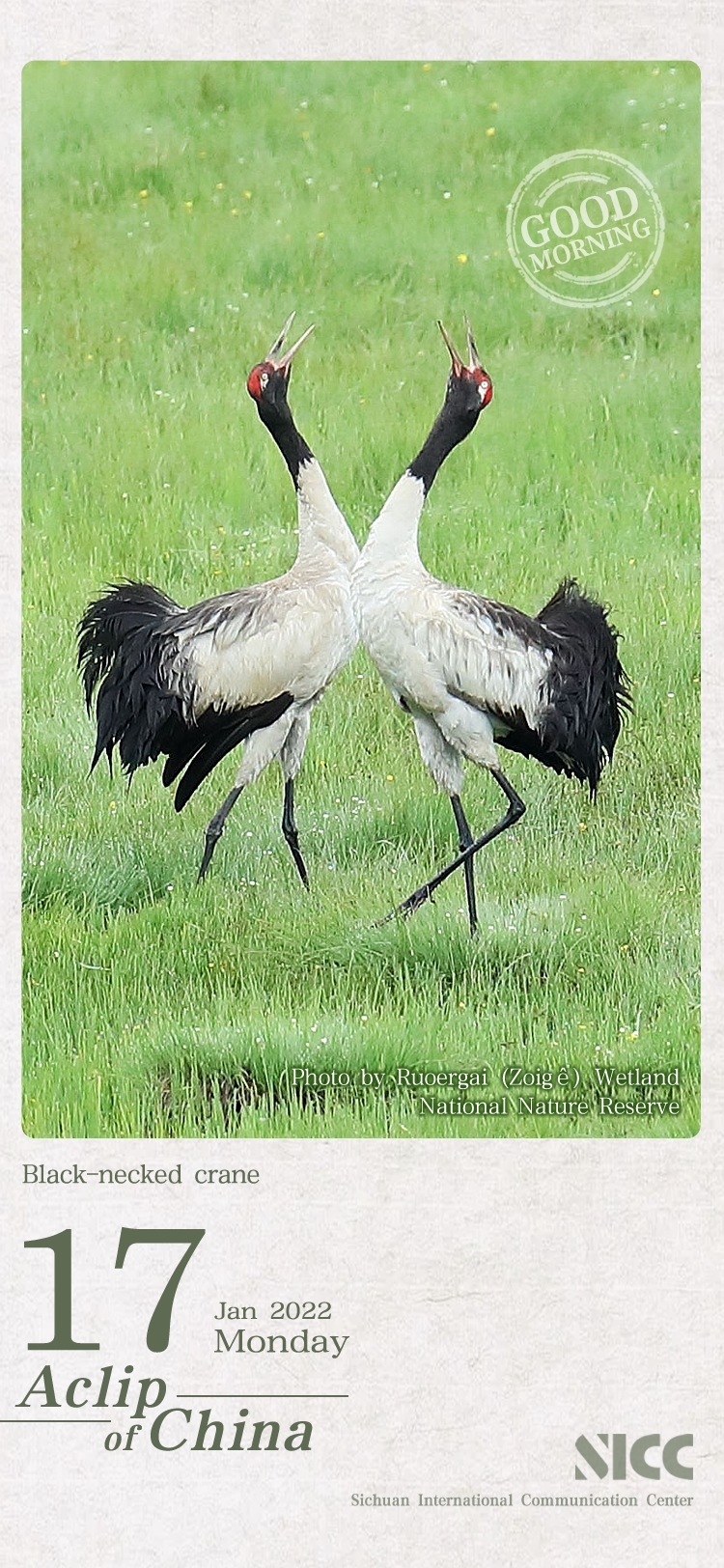
2021年11月,一群全身灰白色,长颈长腿的黑颈鹤飞至四川雅安孟获城景区,这是这里第一次迎来它们的驻足。 第一眼看到黑颈鹤,你可能会把它和丹顶鹤混淆起来。这两种鹤非常相似,脖颈部分都为黑色,头顶都有朱红色。如果想要分辨,有一个诀窍——丹顶鹤头后和体羽均为白色,黑颈鹤则“黑”得更纯粹一些。
In November 2021, for the first time, a flock of long-necked and long-legged black-necked cranes with gray-white bodiesflew to Menghuochengscenic spot in Ya 'an, Sichuan. When you first see a black-necked crane, you might confuse it with a red-crowned crane. The two species lookvery similarwith bothblack neck and vermilion on the top of the head. If you want to tell the difference, there is a trick - red-crowned crane features white plumage on the back of its head and body, while black-necked crane isallblack.
黑颈鹤是世界上唯一生长、繁殖在高原的鹤,它们主要栖息于海拔2500-5000米的高原、草甸、沼泽地带。藏族群众对黑颈鹤十分喜爱,称之为“仙鹤”、“神鸟”、“吉祥鸟”。在藏族史诗《格萨尔王》中,黑颈鹤是格萨尔王的神马守护者,还时常出现在唐卡所绘的长寿图中。
Black-necked Cranes are the only cranes that grow and breed on the plateau,mainly inhabitingplateaus, meadows and swamps at an altitude of 2,500-5,000 meters. The Tibetan people are very fond of black-necked cranes and call them "fairy cranes", "divinebirds" and "lucky birds". In the Tibetan epic poem King Gesar, the black-necked crane serves asthe guardian of King Gesar's divine horse, and often appears in the longevity pictures painted in Thangkas.
作为候鸟,迁徙是黑颈鹤每年的重要日程。3月中下旬,黑颈鹤会成群结队迁往繁殖地,从9月开始,它们又结群南迁越冬。 虽然黑颈鹤飞得不够远,但它们飞得足够高。迁徙的路上,黑颈鹤并不孤单。黑颈鹤夫妻一般十分恩爱。一旦两心相悦,黑颈鹤便会开始以配对的形式活动,并在长途迁徙中相随相伴,不再分离。
As migratory birds, migration isundoubtedlyan annual phenomenon.In mid-to-late March, theywill travelto breeding grounds in flocks, and from September, they will migrate south in groups to spend the winter. They may not t fly far enough, but they fly high enough.
The black-necked cranes are not alone on their migration journey. Black-necked crane couples are generally very attached to each other. Once fallen in love, they begin to move as a pair and stay together for the rest of the migration.
