Have A Cup of Tea in The Century-old Teahouse!
2022-08-30 08:15:28 by Sichuan International Communication Center
没有喝过盖碗茶就不算来过成都。
If you have never had a cup of tea, you can't say that you have been to Chengdu.
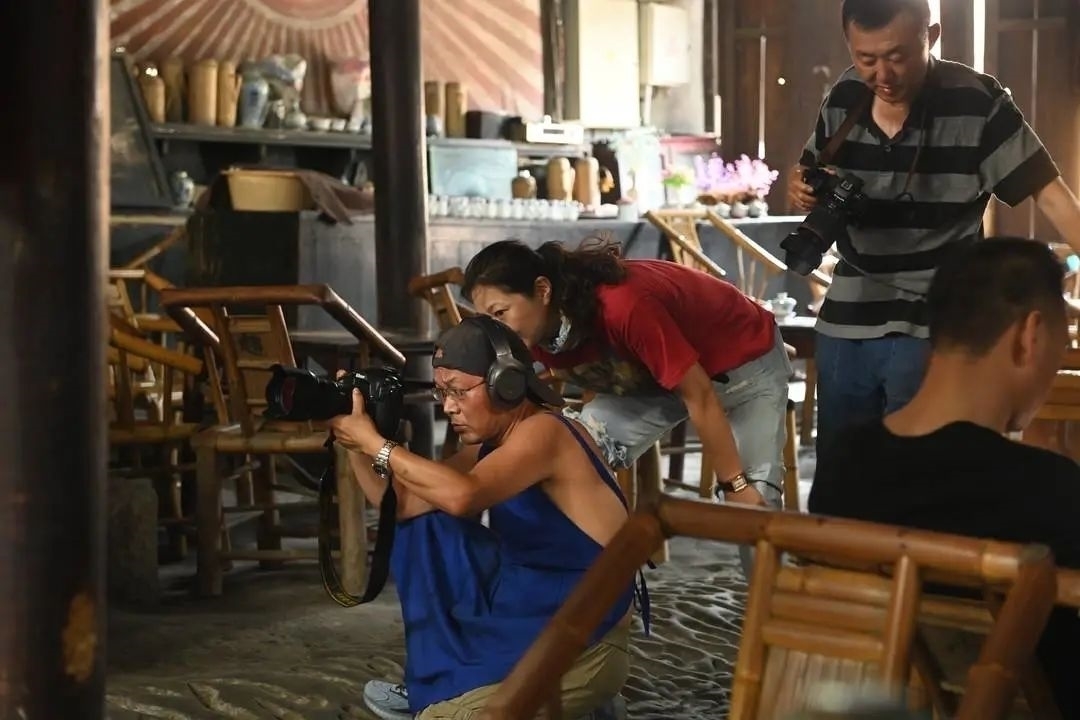
在成都,有一家百年老茶馆。烧水泡茶的老灶台旁堆满了蜂窝煤、石灰刷白的墙壁斑驳脱落、年代感极强的老物件让人瞬间穿越回上个世纪……在双流区彭镇马市坝街,观音阁老茶馆像是时光的见证,仍旧保留着古老的装修风格。
In Chengdu, there is a century-old teahouse. Old stove for making tea is piled up with honeycomb coal; lime painted white walls are mottled and peeling; old objects of great age make people instantly travel back to the last century ... In Ma Shi Ba Street, Peng Town, Shuangliu District, Guanyinge old teahouse like a testimony of time, still retains the old decoration style.
跨越百年的老茶馆
The century-old teahouse
8月中旬,彭镇杨柳河畔的观音阁老茶馆里茶客满座。相传,150年前,彭镇遭遇火灾,几乎整个小镇化为灰烬,唯有此处幸免。当地人认为有观音保佑,所以把这里改为叫观音阁。后在民国时期,这里变身为茶铺,并一直延续至今。
In mid-August, Guanyinge old teahouse on the banks of the Yangliu River in Peng Town was full of tea drinkers. According to legend, 150 years ago, Peng Town suffered a fire. Almost the entire town was incinerated, except here. The locals believe that this place has the blessing of Guanyin, so it was changed to called Guanyinge. Later in the Republic of China era, this place was transformed into a teahouse, and has continued to this day.
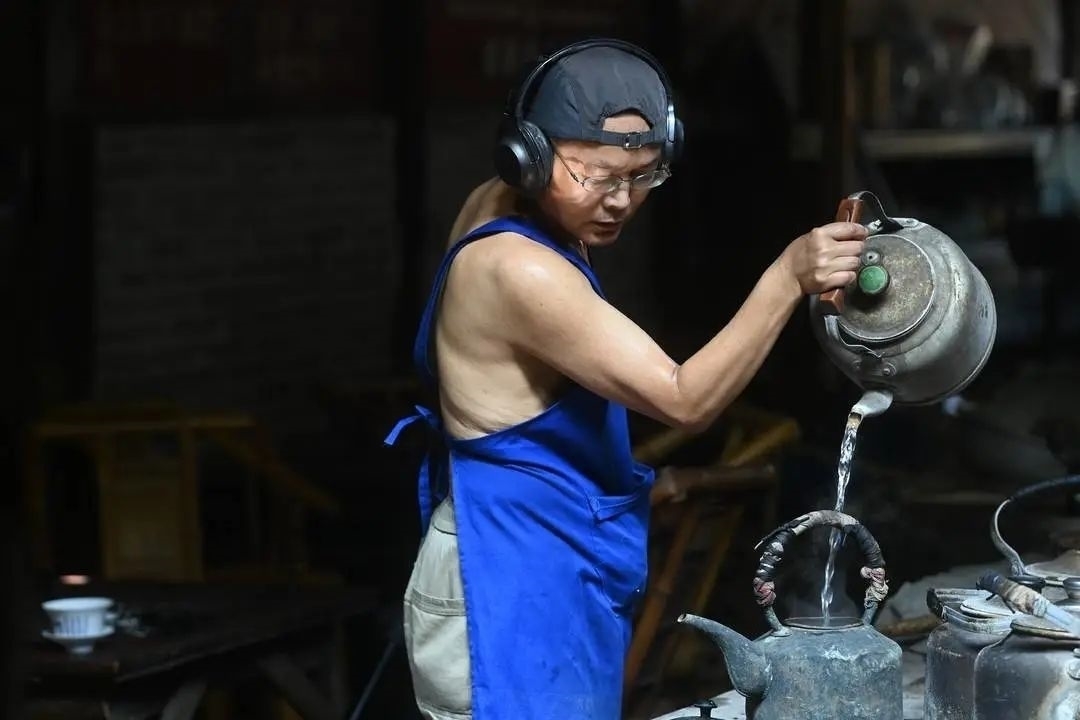
“老板,来碗茶。”“来啰!”话音未落,茶壶已经摆放工整。说话的人便是李强——这间百年老茶馆现在的“主人”。
"Owner, a cup of tea." "Here you go!" The teapot has been placed neatly when the voice did not fall. The person who was speaking is Li Qiang, the current owner of this century-old teahouse.
身穿围裙、头戴鸭舌帽、脖子上还挂着一副耳机,李强的形象怎么也不会让人想到,他已经57岁。一边招呼茶客,一边打理茶馆,这样的日子,李强已经过了26年多。
Li Qiang is wearing an apron and a duck cap, and hanging a pair of headphones around his neck. You won't believe that he is 57 years old. Li Qiang has spent more than 26 years greeting tea drinkers and running this teahouse.

只卖1元的盖碗茶
1 yuan for a cup of tea
对于茶馆,李强有着难以忘怀的记忆。母亲16岁起便在茶馆端茶掺水,姑姑也经营着一间茶水铺,可以说,李强是“泡”在茶水里长大的。
For the teahouse, Li Qiang has unforgettable memories. His mother began to serve tea at a teahouse when she was 16 years old, and his aunt also ran a teahouse. It can be said that Li Qiang was "soaking" in the tea while growing up.
“姑姑经营茶水铺的时候,别家一杯茶卖到七八毛,她一直坚持只卖3毛。”这份情怀,李强也传承了下来。起初的观音阁老茶馆,李强把茶水价格也定价为3毛,直到2003年才涨至1元。
"When my aunt ran the teahouse, others sold a cup of tea for 70 or 80 cents, but she has insisted on selling tea for only 30 cents." Li Qiang also learned from his aunt and set the price of the tea at 30 cents. Until 2003, the price was increased to 1 yuan.
如今的观音阁老茶馆门口,挂着一张牌子,上面写着:“喝茶10元,摄影10元;喝茶加摄影10元”。不过对于当地人,价格仍是1元。“这是茶馆和老茶客之间的默契。”李强说。
In front of Guanyinge old teahouse, there is a sign that says, "10 yuan for tea, 10 yuan for photography; 10 yuan for tea plus photography". For locals, however, the price is still 1 yuan. "This is the tacit agreement between the teahouse and the old tea drinkers." Li Qiang said.
也是因为从不涨价的规矩,观音阁老茶馆让彭镇当地老人多了一个家。茶客里,有住一条街上的,也有住在七八公里外的,每天雷打不动来喝茶。这些茶客中还有环卫工、保安和菜农,一天的忙碌工作后,到老茶馆喝口热茶,也成了他们补充能量的休憩方式。
Also because of the rule of never raising prices, Guanyinge old teahouse makes the local elderly in Peng Town feel at home. Some of them live on the same street, while others live 7 or 8 kilometers away, but they come to drink tea every day. Sanitation workers, security guards and vegetable farmers also come to drink tea. After a day of busy work, coming to the old teahouse for a cup of hot tea has also become a way to replenish their energy.

与老茶馆一起变老
Growing old with the old teahouse
正值暑假,三两个孩童在角落里玩耍,成为茶馆里不一样的风景。这些孩子,都是李强的家人。
It is the summer vacation and several children are playing in the corner, making it a different scenery in the teahouse. In fact, all these children are Li Qiang's family.
“小孩子不能老窝在家里打游戏,要出来耍,和人打交道,接触各种各样的人。”儿时成长记忆,如今开始复刻在后辈身上。李强说,茶客们谈天说地,无形中是为孩子们构建了一个外面的世界。至于孩子们的人生会怎么书写,那又是另一个故事了。
"Kids can't stay at home and play games all the time, they have to come out and have fun, to deal with people and come in contact with all kinds of people." Childhood memories of growing up are now beginning to be replicated in the offspring. Li Qiang said that the tea drinkers talk about the world is also building an outside world invariably for children. As for what happens to the children's lives, that is another story.
茶馆里帮忙打下手的,都是李强的家人。他的父母甚至住在茶馆里,把这里当作真正的家。“经营茶馆这么多年,最感谢的是家人支持。”李强说。
Those who help at the teahouse are also Li Qiang's family. His parents even live in the teahouse, regarding it as a real home. "After so many years of running the teahouse, I am most grateful for the support of my family." Li Qiang said.
“我们做茶馆,不是为了赚很多钱,而是思考为谁服务,要让来的人感觉到舒适,觉得值得。”至于未来,李强也并未做太多打算,“反正再干20年没有问题。”在茶馆里长大,和茶馆一起变老,这是李强的故事,也是一座城市的文化烙印。
"Running a teahouse is not to make a lot of money, but to think about who to serve, to make the people feel comfortable and worthy." As for the future, Li Qiang did not do too much planning, "anyway, I can do it for another 20 years." Growing up at the teahouse and growing old with the teahouse, this is Li Qiang's story, and also a city's cultural imprint.