
Solute to the golden snob-nosed monkey guardian
2023-07-18 09:29:33 by Sichuan International Communication Center
唐玉林一家的世世代代,都生活在位于九寨沟的四川白河国家级自然保护区。这里有一个村子,叫作太平村,数百年来,村民和川金丝猴和谐共生,践行着人与自然的和谐相处。
For generations, the Tang family has lived in the Baihe River National Nature Reserve located in Jiuzhaigou, Sichuan province. In this area, there is a village called Taiping where villagers have coexisted with the golden snub-nosed monkey for centuries, enjoying a harmonious relationship with the animals.

唐玉林从小就跟着在保护区工作的舅爷、父亲观察金丝猴。
他了解金丝猴的喜怒哀乐,总是觉得金丝猴像人一样有着丰富的感情,而他也和这些感情深深地连接着。他认为金丝猴的叫声里至少蕴含七种以上的感情:“噗噗”——笑;“甲甲”——报警;“哎哎”——打招呼;“咕嘎”——惊吓;“哇哇”——撒娇;“呜呜”——高兴;“喔喔”——喊叫。
Tang has observed the golden snub-nosed monkeys with his granduncle and father, who worked in the reserve when Tang was a child. He believes that these monkeys, much like humans, experience various emotions, to which he is deeply attuned. He thinks that the monkey's calls display at least seven emotions: "Pupu" - laughter; "Jiajia" - alarm; "Ai ai" - greeting; "Guga" - fear; "Wawa" - flirtatious; "Wu wu" - happiness; "Wo wo" - shouting.

上世纪60年代,白河金丝猴自然保护区建立,唐玉林的舅爷成为了第一批入驻保护区的工作人员。他在这里二十多年如一日,每天在山里巡视,观察金丝猴的健康状况,也严防火灾,保护猴子赖以生存的生态环境。
In the 1960s, the Baihe River National Nature Reserve was established, and Tang’s granduncle was one of the first staff members to move there. He spent over 20 years in the reserve, patrolling the mountains every day, observing the health of the monkeys, preventing fires and protecting the environment.
耳濡目染,唐玉林的爸爸也成了金丝猴专家,也在保护区里工作了二十多年。唐玉林已经是白河金丝猴自然保护区的第三代护林员。
Influenced by his family, Tang’s father also became a golden monkey expert and worked in the reserve for over 20 years. Tang himself is now the third generation of forest rangers in the Baihe reserve.
唐玉林对白河保护区的一草一木如数家珍,被称为这里的“活地图”。
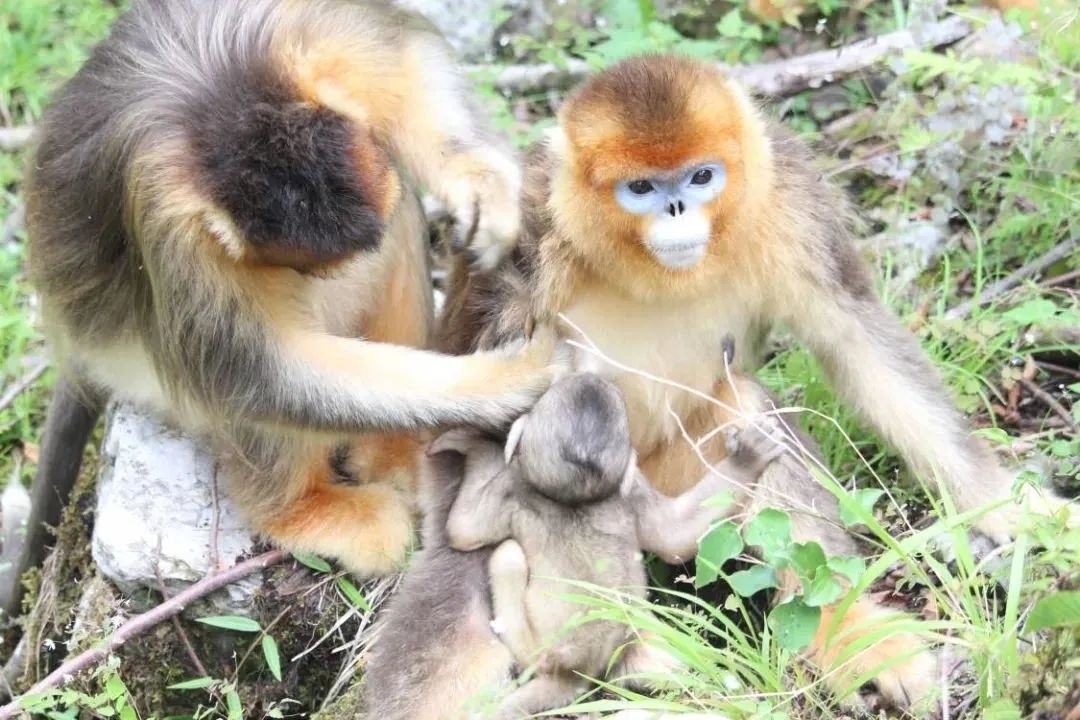
他介绍道,保护区的总面积是一万六千多公顷,最近一次的“猴”口普查显示,这里大概生活着1700多只川金丝猴。这些猴子分为六个群落,每个群落都由几个大的金丝猴家庭组成,跟人类的村落很像。
Tang knows every plant and tree in the reserve, earning him the nickname "living map." He explained that the total area of the reserve is over 16,000 hectares, and the most recent "monkey census” showed that there are roughly 1,700 golden snub-nosed monkeys living here. These monkeys are divided into six communities, each of which are similar to a human village and consist of several large golden monkey families.

唐玉林说:“保护区里还有很多国家保护野生动物,比如黑熊、斑羚、鬣羚,以及大熊猫。其中,一级保护鸟类就有好几种,比如绿尾虹雉,金雕等等。”
"There are many nationally protected wild animals in the nature reserve, such as black bears, antelopes, Tibetan gazelles and giant pandas,” Tang said. “There are also several species of first-class protected birds, such as the green-tailed pheasant and golden eagle."
金丝猴又称仰鼻猴,因为它们的鼻子向上翘而得名,分为川金丝猴、滇金丝猴、黔金丝猴、怒江金丝猴、越南金丝猴五个物种,其中,前三种都是中国特有的珍贵动物。
The golden snub-nosed monkey gets its name from its upwardly turned nose. It is divided into five species — the Sichuan golden monkey, the Yunnan golden monkey, the Guizhou golden monkey, the Nujiang golden monkey and the Vietnamese golden monkey. Among them, the first three are unique to China.

5月22日,生态环境部和中国科学院联合发布了《中国生物多样性红色名录-脊椎动物卷(2020)》,将川金丝猴濒危等级从“易危”降到了“近危”。名录显示,在我国多个川金丝猴保护区的共同努力下,野生川金丝猴种群从2002年的1.4万只,增加到目前约2.5万只,种群分布区域也显著增加,我国保护野生川金丝猴的工作取得了显著成就。
On May 22, the Ministry of Ecology and Environment and the Chinese Academy of Sciences jointly released the Red List of China's Biodiversity - Vertebrate Volume (2020), which lowered the endangered status of the Sichuan golden monkey from "vulnerable" to "near threatened". The list shows that, through the collective efforts of various protection zones in China, the wild Sichuan golden monkey population has increased from 14,000 in 2002 to about 25,000 today, and the distribution of the population has significantly expanded. This shows that protection efforts have been very successful.
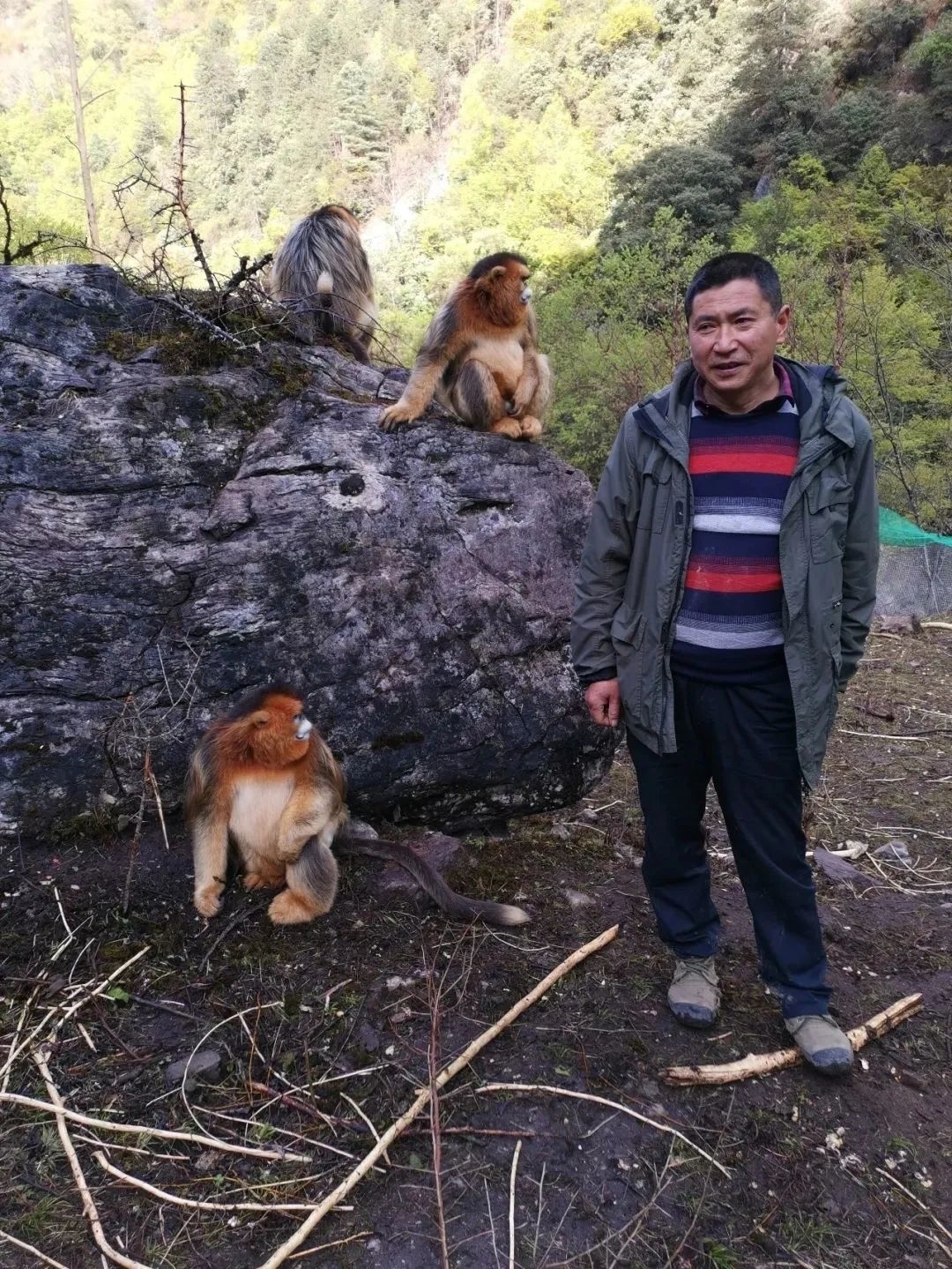
唐玉林说,白河保护区的气候湿润,植被茂盛,为金丝猴提供了丰富的食物。
Tang said that the Baihe reserve has a humid climate and lush vegetation, which serves as a rich food source for the Sichuan golden monkeys.
“所以,保护好这里的生态环境,就是对川金丝猴最大的保护。防火是保护金丝猴的一大重点。”唐玉林介绍道,在白河保护区,过去的40多年内,一起火灾都没有发生过。
"So, protecting the environment here is the best way to protect the Sichuan golden monkey. Fire prevention is a major focus," Tang Yulin explained. In the Baihe reserve, there has been no fire incident in over 40 years.
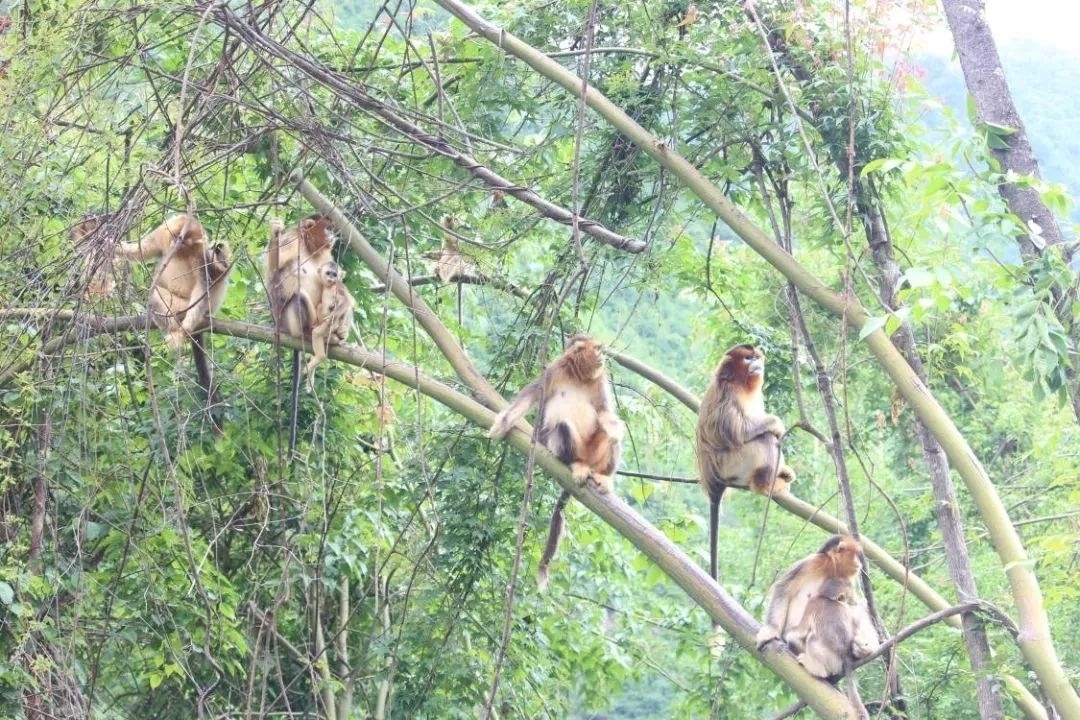
如今,和上世纪80年代相比,白河自然保护区的川金丝猴数量早已经翻倍。
唐玉林说,当前,除了对金丝猴的保护以外,他也很关心保护区得天独厚的自然资源如何能为当地人带来一些经济收益。
Today, the number of Sichuan golden monkeys in the reserve has already doubled compared with the 1980s. Tang said that in addition to protecting the animals, he is also thinking about how to use the unique natural resources in the reserve to bring economic benefits to the local people.

白河金丝猴自然保护区负责人莫诚说:“随着科学技术的进步,我们逐渐可以实现在保护环境的前提下进行一些合理的开发,这让我们看到新的希望。”
Mo Cheng, the director of the Baihe River National Nature Reserve, said: "With the advancement of science and technology, we can gradually achieve some reasonable development while ensuring the protection of the environment, which has given us new hope."
