
An ongoing photo exhibition
2023-05-15 06:46:14 by
进村路口,摆放着乡村老物件的黑白照片;旧箩篼制成的灯箱里,是村民家中的日常生活场景……最近,走进成都市龙泉驿区洛带镇宝胜村,你会看到这样一番充满活力和趣味的场景。村民是主体,村子是展场,田野溪边、村屋树林处处是作品。
Entering Baosheng Village in Luodai Town, Longquanyi District, Chengdu City, you'll find black-and-white photographs of old rural artifacts displayed at the junction; scenes of villagers' daily lives are captured in lightboxes made from old bamboo baskets... Focusing onvillagers,withthe village as theexhibitionhall, the artworks can be found everywhere —in the fields, by the streams, and among the houses and trees.

作为此次“穿过田野 穿过小溪——宝胜村影像驻留计划”的主创摄影师,毛晓初从2018年开始关注、拍摄宝胜村。“我希望通过摄影这个媒介,帮助村民看到自己文化的美。”
As the main photographer for the "Through the Fields, Across the Streams —Baosheng Village Image Residency Program," Mao Xiaochu has been focusing on and photographing Baosheng Village since 2018. "Withphotographyas a medium, I wantto help villagers realizethe beauty of their own culture."
摄影师住进村里,把爱和分享带给孩子们
毛晓初是土生土长的洛带人,高中毕业后尝试过媒体工作、下海经商,后来成为一名专职摄影师,曾四次到南极、两次到北极、五次到非洲,并前往欧美等地拍摄。
Mao Xiaochu was born inLuodai, Chengdu. After high school, she explored various occupationsincluding media and business, beforebecominga professional photographer. Her camera has taken her far and wide— to Antarctica four times, the Arctic twice, and Africa five times, not to mention her numerous ventures to Europe and the United States.

2018年,她偶然走进宝胜村。因为城市化进程加速推进,当地的客家文化、乡土文化传承面临挑战。她便以宝胜村为关注对象,用相机记录村民的生产和生活状况。2021年底,毛晓初租下一间闲置农房,装修成工作室,经常举办文化活动请村民共同参与。
In 2018, she found herself in Baosheng Village by chance. As urbanization rapidly advanced, the local Hakka and rural cultures faced significant challenges. Mao began to recordthe villagers' lives and their means of production. By the end of 2021, she had leased an unused farmhouse, transforming it into a studio where she regularly hosted cultural events for the villagers.

她很快发现,这里的孩子们更需要关注。去年,毛晓初开展了11次面向孩子们的“我们都是向阳花”主题活动,不仅分享自己的摄影故事,还邀请艺术家、旅行爱好者甚至空乘人员,给孩子们读绘本、介绍地理知识、飞行常识等等。
She soon realized that the children of the village needed more attention. Last year, Mao organized 11 "Sunflower Kids" events, where she shared her photographic journey and invited artists, travel enthusiasts, and even flight attendants to read picture books to the children, introduce them to geography and flight basics, and much more.

“点一盏灯,照亮孩子回家的路”
2022年11月,中国摄影家协会副主席陈小波来蓉,到毛晓初的工作室住了几天。两人商量,发起一项“影像驻留计划”。
In November 2022, Chen Xiaobo, Vice Chairman of the China Photographers Association, visited Mao's studio and stayed for several days. They proposed a "Photography Residency Program."
除了利用这些年积累的影像素材,毛晓初还从村民手中搜集了一些老照片,放大后展示在村里合适的场所;她还拍摄了周边几乎所有孩子的笑脸,将工作室对面农房的墙壁刷成蓝绿两色……
Beyond utilizing her accumulated photographic material, Mao collected old photos from villagers, enlargedanddisplayed them in suitable places throughout the village. She photographed the smiling faces of nearly all the village children, painting the wall opposite her studio in shades of blue and green...
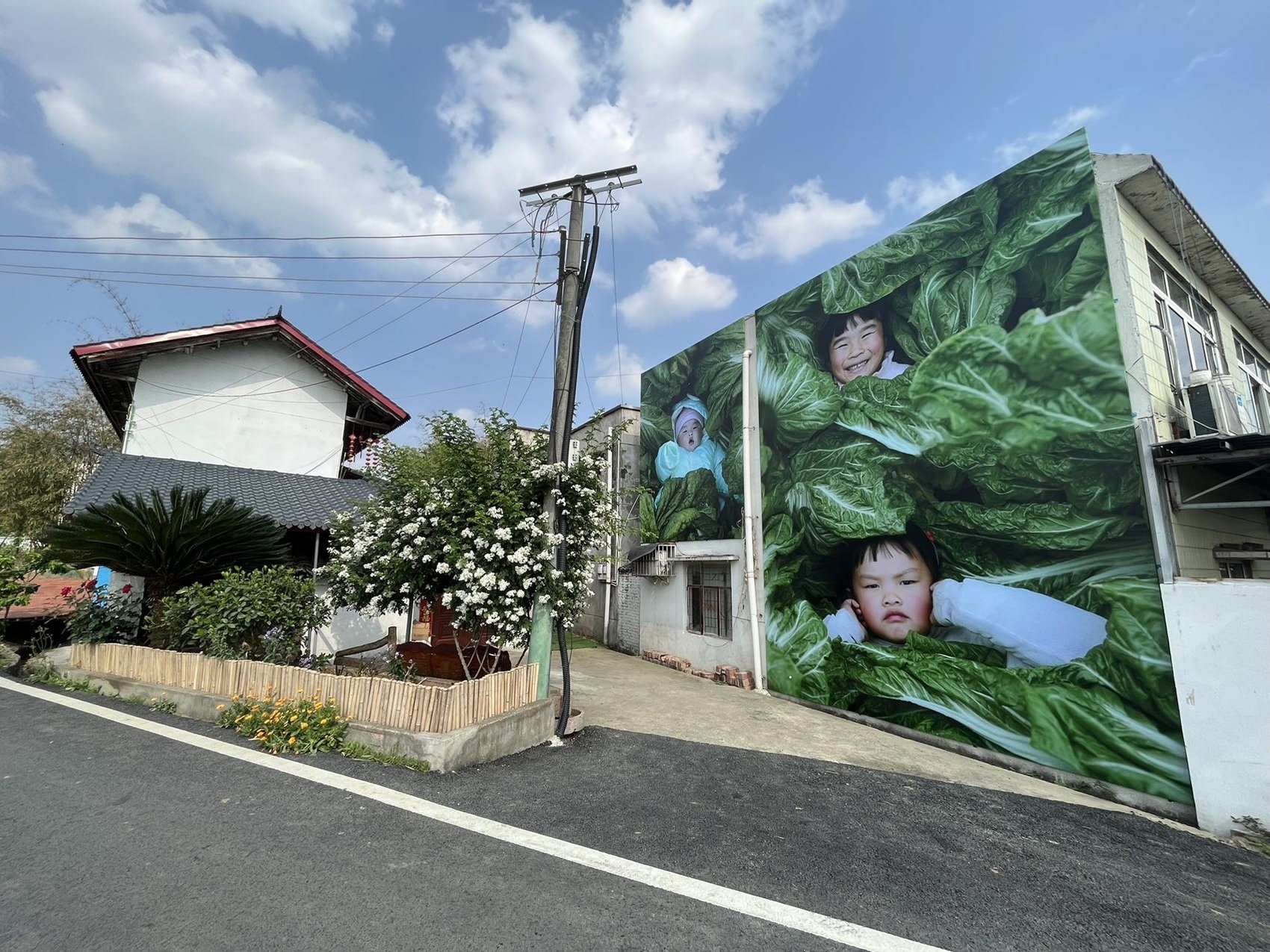
毛晓初记得,有一个孩子说,父母忙于工作无暇接送,天黑回家走在村道上心里害怕,希望村里能安装路灯。
Mao recalls that once a child said that they feared to walk home in the dark, as there was no light on the roads abd their parents were too busy to pick them up.
于是,“点一盏灯,照亮孩子回家的路”,成了策展团队共同的心愿。他们用旧箩篼和灯泡制成灯箱,挂在每家每户门口,每个灯箱上还有一张灯片。有的村民做饭特别好吃,灯片上便是厨房灶台;有的村民家中老人喜欢做鞋垫,灯片上便是鞋垫成品;有的村民喜欢阅读,灯片上便是堆满书籍的床头。
Thus, "To illuminate the children's way home" became the curatorial team's common goal. They crafted lightboxes from old baskets and bulbs, hanging one outside each household. Each lightbox featured a slide - a picture that represented something special about the household. If a villager was known for their delicious cooking, the slide showed their kitchen stove. If an elder in the household enjoyed making shoe pads, a finished shoe pad adorned the slide. If a villager loved reading, the slide would feature a bedside table stacked with books.

一场永不落幕的摄影展
“这是一次乡村影像的实验探索,也是一场永不落幕的摄影展。”陈小波说,“让村民参与其中,打造一场温暖、有趣,又与村民发生关联的摄影展。”
"This is an experimental exploration of rural imagery, and an ongoing photo exhibition," said Chen Xiaobo, "It involves villagers, creating a warm, interesting exhibition that engages with their lives."
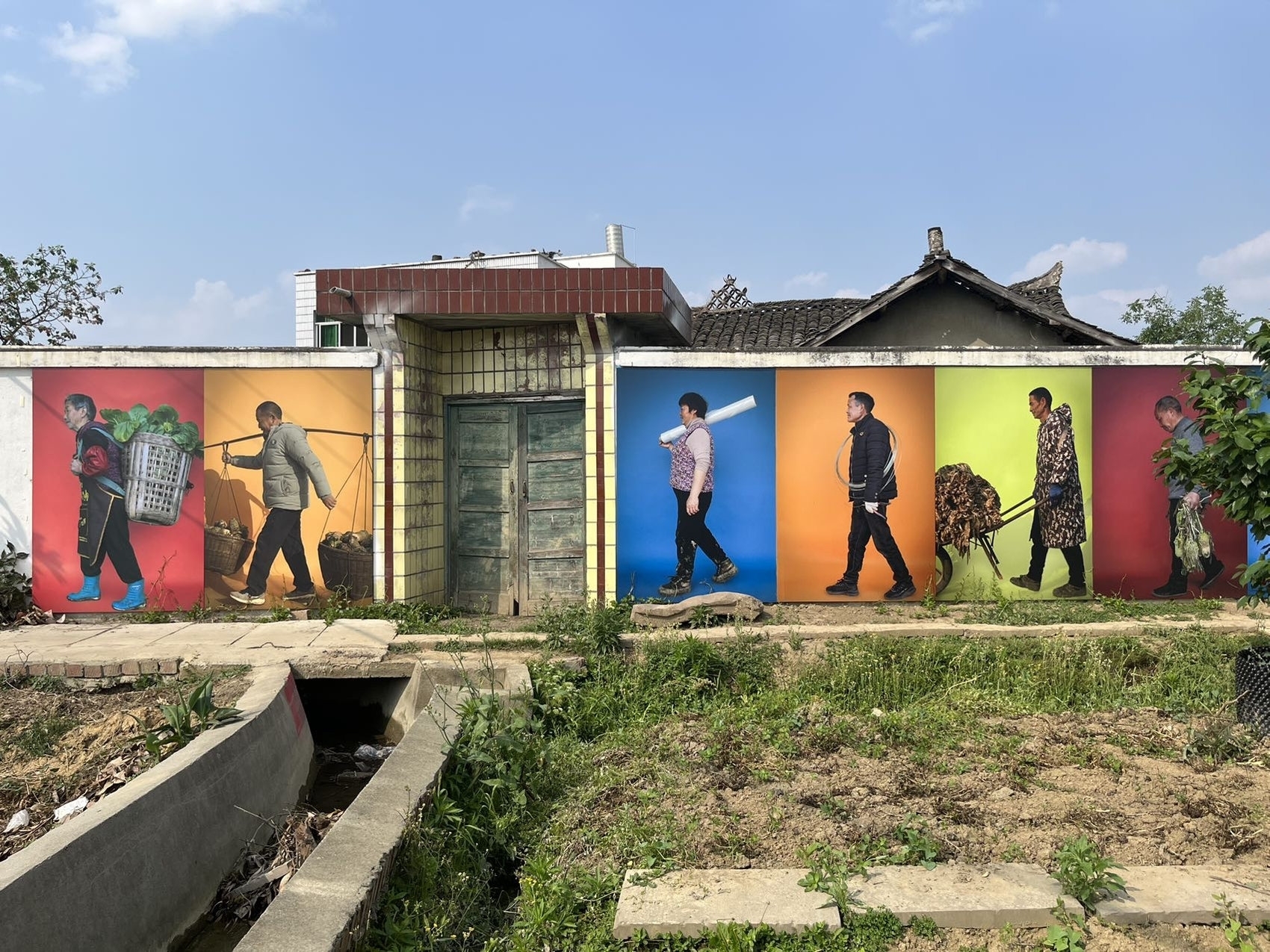
展览开幕后,毛晓初做了最新一期“我们都是向阳花”主题活动,让孩子们交流观展感受。她还买了一批二手相机发给大家,或许下一次展览,主角将是他们自己拍摄的照片。“只要有一个娃娃因此变得更好,我就满足了。”
After the exhibition was opened, Mao hosted the latest "Sunflower Kids" event, where the children shared their impressions of the exhibition. She even purchased a batch of second-hand cameras to distribute, suggesting that perhaps in the next exhibition, the stars would be the children's own photographs. "If even one child is positively impacted by this, I will be satisfied," she said.

现在,毛晓初觉得“责任更重了”,她希望未来通过文字、照片、视频、音像等综合手段,继续更深入地挖掘村民的生活状态,挖掘他们的苦与乐。
Now, Mao feels an increased sense of responsibility. She hopes to continue delving deeper into the villagers' lives in the future, using a combination of text, photos, videos, and audio to capture the spectrum of their joys and hardships.
