
"Taste of Countryside" received praises,creative team focused on "local and present"
2022-01-27 09:27:45 by Chuanguan News

“川味”之《乡厨》首播获好评,主创团队畅谈“本土与当下”
1月25日晚,四川美食文化纪录片《川味》新春特别篇之《乡厨》,第二集在CCTV-2和哔哩哔哩继续开播。
Taste of Countryside,theNew Year special episode of the Sichuan cuisine and culture documentaryTaste of Sichuan,continues with its second episode on CCTV-2 and Bilibili on January 25.
在昨日第一集上线后,《乡厨》收到不少好评。第二集主题为《家乡》,通过4个在家乡里与美食产生种种关联的故事,继续讲述川味百态。
Since its first episode last night,Tasteof Countrysidehas been widely praised. The second episode is themed after Home, continuing to tell Sichuan's cuisine through four stories.
在第二集播出时,记者在成都见到了这部纪录片的总导演彬歌、艺术指导曾颖以及川话版配音罗小刚,共同聊了聊这部纪录片创作的一些心路历程,以及对于作品内容的一些解读。
During the broadcast of the second episode, the reporterfrom Chuanguan News met with Bin Ge, the director ofTaste, Zeng Ying, art director and Luo Xiaogang, the dubber of the Sichuan dialect version in Chengdu to discuss the experience and interpretation of thedocumentary.

《乡厨》是《川味》第四季的先导,此前,接受记者采访时,彬歌透露了整季节目制作的推进情况和创作思路。与前三季相比,《川味》第四季更进一步地将视角聚焦了“人”这一主体上,并且在前期策划和节目制作中,都暗含了“为乡村振兴赋能”这一层深意。
Bin Ge has revealed the creation process of the entire seasonduring the interview.The documentary focuses on people and implies rural vitalization in the preliminary production compared to the previous seasons.
做到第四季,在整个主创团队看来,《川味》并不是一个单纯的美食作品,而是一档具有文化内涵和时代性的纪录片。
Taste of Sichuanis more of a documentary with cultural connotations and topicality than a cuisine program according to the team.
作家曾颖为文本贡献思路立意
Writer Zeng Ying Contributes Ideas
所谓的时代性,彬歌解释,《川味》所拍摄记录的故事和美食,都是当下正在四川土地上正在发生的,其中有一些可能在渐渐消失,有一些则正在兴起,交替和变化,正是当下在真实发生的。
Talking about topicality, Bin Ge said that it tells what is happening right now in Sichuan, which is changing all the time.
作为《川味》艺术指导的曾颖,是一名作家,曾写作了《川味人间》。曾颖与彬歌,多年前就已结识,在《川味》创作过程中,为整体的创作思路和立意,提供了不少建议和把握,也以作家的眼光,为纪录片的审美风格“贡献”了一些高光时刻。“一个地方的美食,与这里的气候条件、生活环境都是息息相关,比如四川人为什么喜欢吃豆瓣,而别的地方没有,当讲清楚了这些来源,也就解析出了这方土地上的人们的生存密码。”
在曾颖看来,《川味》将美食拍得垂涎欲滴,但能够受到如此好的评价并且持续做下去,核心是因为把握住了人——菜是人做的,做给人吃的。
Zeng Ying, the artistic director, is also the writer ofTaste of Sichuan. Shehas known Bin Ge for a long time and has offered suggestions in the overall creative ideas and aesthetic style from a writer's perspective.
"The cuisine of a place is closely related to its climate and living environment. For example, people in Sichuan like eating bean-based sauce, while people from other regions do not.”
Taste of Sichuanmakes food look so delicious and is popularforits core idea that food is made by people, and for people.
“为乡村振兴赋能”,也正是曾颖参与这部纪录片第四季创作时,提炼出来的一个内核。“这些年来,我们走了很多乡村,看到了很多乡村的发展变化。”曾颖表示,而美食,正可以成为一个重要的见证,也可以成为一个重要的承载。
Rural vitalization is the kernel in the fourth season. Zeng Ying said: "We have traveled a lot of places in the countryside and have seen changes over the years and cuisine is an important witness and bond.”
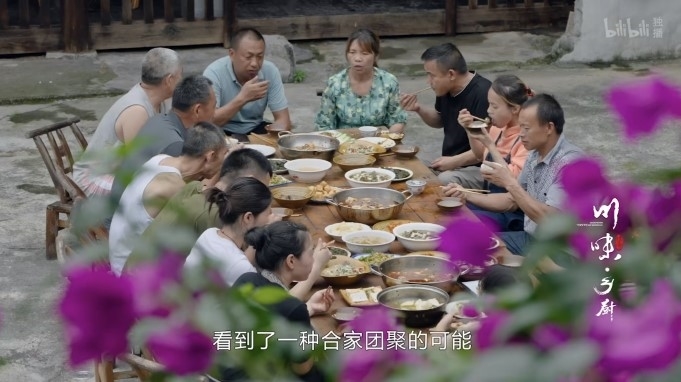
例如当晚播出的第二集中的四个故事,不论是为了母亲的返乡创业者,还是希望逃离城市重回田园的木匠夫妻,找到了美食与乡村发展的连接,开办农家乐、采撷美味山珍,既能养活生活,也能安放心情。
For example, in the four stories in the second episode, whether it's the rural entrepreneurs or a carpenter couple, they all found the connection between food and rural development, running a farmhouse and picking up delicious mountain treasures, life-supporting and relaxing at the same time.
而重庆酉阳县酉水河畔的河湾古寨的故事,则更具有代表性。靠着酉水河,这里的人们有着祖传的做豆腐手艺,随着近年来乡村旅游的发展,当地青山秀水和传统建筑开始吸引一些游客的到来,但如何采访让这些游客从走马观花到真正深入当地体验,在村民大会上,提出了打造招牌豆腐宴,一家家豆腐农家乐建起来,曾经外出务工的年轻人,也渐渐回到村寨。“由此可见,美食已经不仅仅是当地生活的一项技艺,更成为乡村发展、群众致富的技能。
Look at the typical example of He wan ancient village on the Youshui River in Youyang County, Chongqing. People have an ancestral craft of making tofu along the Youshui River. With the development of rural tourism in recent years, the picturesque scenery and traditional buildings attract a large number of tourists. How to get visitors from just a brief visit to a truly in-depth local cruise has always been the focus. At the Village Meeting, the suggestion of creating a signature tofu feast was proposed. After that many Tofu farmhouses were built and young people working outside gradually returned to their villages. It is clear that cuisine has become more than just a skill for local life, but more of a factor for rural development and enrichment of people.
主持人罗小刚用川话讲出“川味”
Host Luo Xiaogang tells Sichuan story in Sichuan dialect
在哔哩哔哩同步上线的《乡厨》四川方言版,由知名主持人罗小刚配音,为这部纪录片增添了独特的四川味道。
Taste of Countryside,simulcasted on Bilibili, is dubbed by the famous host, Luo Xiaogang which adds more Sichuan features.
在《川味》第三季时,罗小刚就与彬歌合作推出了川话版,在一些播出平台上,点击量甚至超过了普通话版本,尤其引发了许多四川观众的共鸣。
In the third season, Luo Xiaogang collaborated with Bin Ge and launched a Sichuan dialect version. It triggered the resonance of many Sichuan viewers, the hits of which even surpassed the Mandarin version on some media platforms.
为了更加地道的表达,在川话版中,使用了许多地道的四川方言词汇,让不少观众直呼“有意思”。
Many authentic Sichuan dialect words are used for a more authentic expression, which amazed many audiences.
实际上,四川地域广袤,不同区域的方言也有所区别。彬歌和罗小刚都是内江人,因此《川味》的川话版,以内江话为基底,融入了许多其他区域的方言词汇。
The dialects of Sichuan differ from region to region. Bin Ge and Luo Xiaogang are from Neijiang, so it is based on the Neijiang dialect and incorporated many words from other regional dialects.
彬歌告诉记者,在进行方言版制作时,还专门整理了一个四川方言词汇手册,收集了100多个四川方言词汇,同时一些画面和文案,都进行了调整。
Binge told reporters that when making the dialect version, a special Sichuan dialect handbook was compiled, collecting more than 100 Sichuan dialect words.
罗小刚曾主持了多档美食节目,坚持用四川方言,也成为他的个人标志和特色。在罗小刚看来,语言与美食一样,是镌刻在一方人的基因中的,这两者之间,也有着密切的关联,而一些方言词汇,似乎更能绝妙地形容当地特色美食的状态,例如“耙dongdong”“热lulu”等等。“特有的川话,形容特有的川味。”
Luo Xiaogang has hosted a number of gourmet shows and using Sichuan dialect has become his personal trademark. He believes that language, like cuisine, is engraved on our minds, and there is a close relation between the two. Some dialect words can describe the local specialties perfectly, such as “pa dongdong” “re lulu” in the Sichuan dialect.
采访时,彬歌还透露,待《乡厨》播出完成后,计划有机会邀请这些乡厨们,一起来做一场地道的川味坝坝宴。
During the interview, Bingo also revealed that he plans to invite chefs from the countryside to cook an authentic Sichuan feast together after the end ofTaste.
